Around my trip to India I did some not-very-systematic reading, and had pretty good luck. All of these books were worth reading and helpful in different ways:
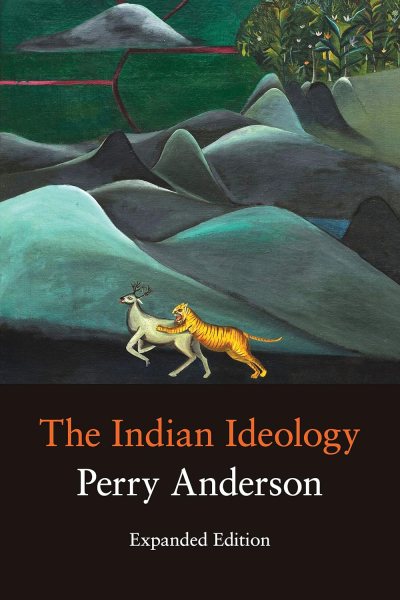
- Perry Anderson, The Indian Ideology (expanded second edition, 2021). Anderson’s range of erudition is impressive–I read this book after finishing his latest, Disputing Disaster, a deep dive into the historiography of the First World War–and he packs a lot of information into his short, polemical account of Indian politics. The book’s aim is to destabilize what he calls the mainstream narrative of India’s liberal intelligentsia: the celebration of a stable, secular, multicultural democracy. He re-examines key episodes in India’s independence struggle and early history to emphasize the enduring roles of religion, caste and social division.
- Rukmini S., Whole Numbers And Half Truths: What Data Can And Cannot Tell Us About Modern India (2022). This book by a data journalist is written to explain India to Indians, not to explain India to foreigners, which makes it more useful and interesting. Some background knowledge is required–you need to know what scheduled tribes are, things like that–but it is clearly written and informative, covering topics from crime to marriage to diet. Her mode is patient, careful explication, going as far as the facts allow and no further. Nevertheless she aims her darts to puncture some of the same liberal illusions targeted by Anderson, broadly arguing that India is fundamentally a conservative society where caste, class and religion are dominant concerns, not a primarily secular one organized around economic interests.
- Ashoka Mody, India Is Broken: A People Betrayed, Independence To Today (2023). Another polemic (does India just inspire polemics?) structured as a detailed history of Indian politics and economic policymaking. Mody’s overriding concern is India’s failure to get onto the East Asian trajectory of export-led manufacturing, and he wants to identify the specific points where it went astray. He puts the blame on two main factors: the failure of the educational system to deliver broad-based improvements in human capital across the population, which is convincing, and the repeated failure of the government to devalue the currency to achieve export competitiveness, which I found less convincing. While hardly impartial, the book is effective in showing how poorly served India has been by its political leadership, and details well the bad decisions and corruption.
- Karthik Muralidharan, Accelerating India’s Development: A State-Led Roadmap For Effective Governance (2024). A very long book, which I have not yet finished but can still highly recommend. It’s probably one of the best books ever written on state capacity, working steadily and patiently through all of the aspects of the weakness of the Indian state, and proposing reasonable and technical fixes. This is another book written for an Indian audience, so there is more micro detail than all outsiders will want, but it is just this forensic examination of the functioning of state institutions that is so valuable. There should be a book like this for every country–in particular the US, which is also facing its own state capacity crisis and needs this kind of engagement with the realities rather than the theories of governance. The book’s bias is more in the underlying assumption that technical fixes are possible, though he acknowledges that some of the social and political problems identified by the other authors on this list contribute to poor state capacity.
 The Tangled Woof