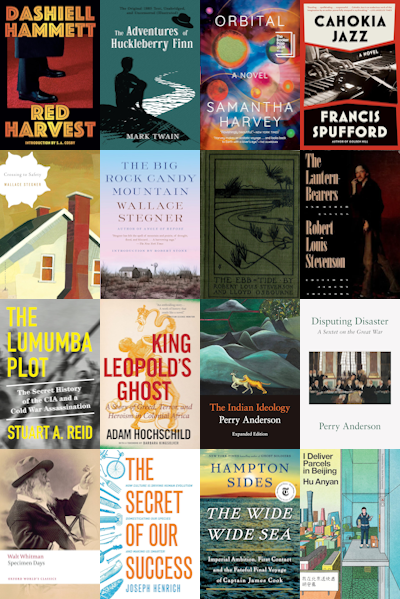
Here are the most memorable of the books I read this year, listed in roughly the order I read them. It seems like reading 19th century authors was a theme in the culture this year, and I ended up participating in this trend without really planning to: Twain, Stevenson, Whitman were some of my highlights.
Fiction
- Dashiell Hammett, Red Harvest. I re-read all of Hammett’s novels this year, and this, his first, held up the best. The later and better-known books seem more and more artifacts of their time: The Maltese Falcon is implausible and its plot famously incomprehensible; The Thin Man‘s clever repartee feels empty. Red Harvest has both a harsh portrait of the breakdown of state capacity and the effects of social violence (the setting is based on Butte, Montana) and a truly harrowing detective plot (the narrator suspects himself).
- Mark Twain, The Adventures of Huckleberry Finn. I read this in tandem with Percival Everett’s James, which re-narrates the same events from a different perspective. Despite all the accolades for James, Twain’s original is, still, the better book. What is remarkable is how much the flaws and virtues of the two novels mirror each other: both start strong, with an immediately captivating narrative voice, and then fall apart at the end, as the characters perform unrealistic actions in service of some authorial conceit.
- Samantha Harvey, Orbital. One of the most perfectly crafted pieces of prose I’ve ever read; short, basically plotless, almost unbearably intense. It is hard to call the book anything other than science fiction, since it is literally fiction about science, though it was mostly ignored by the genre community. Yet it succeeds more in evoking what used to be called the “sense of wonder” than most stuff in the genre does these days. Going to space is awesome.
- Francis Spufford, Cahokia Jazz. A hard-boiled mystery set in an alternative 1920s America, by turns familiar and strange. Spufford is frank that he is imagining a utopia in which the Native American population was not erased by disease and thus could negotiate a political settlement with the European colonizers. But what gives the book its grit and charm is how messy and non-utopian his imagined mixed society is: prejudice, violence, and corruption persist.
- Wallace Stegner, Crossing to Safety. How many novels are there that take as their main subject adult friendship? Stegner’s last, great work is an understated, closely observed portrait of the relationship between two couples. There are no affairs, and only the ordinary dramas of work and family. This year I also re-read his The Big Rock Candy Mountain, written more than 40 years earlier, which is an amazing but very different book: a more ambitious portrait of the character of America, or at least of one very American character.
- Robert Louis Stevenson, The Ebb-Tide. Stevenson’s last published novel is not particularly famous but deserves to be better known. It came out in 1894, and the connecting line of inspiration and influence to Joseph Conrad, whose first book came out in 1895, is clear. There’s a South Pacific setting, a focus on interior psychology, a concern with colonialism. Scott Sumner thinks it might be Stevenson’s best novel.
Nonfiction
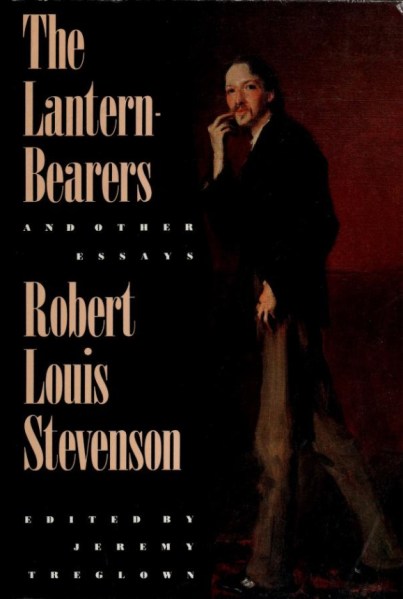
- Robert Louis Stevenson, The Lantern-Bearers and Other Essays. Stevenson is best known as a novelist, but I think I prefer his nonfiction: he had an interesting life and was interested in lots of things, and the sentences are marvelous and daring. All of the essays are out of copyright and readily available online, but this is a good curated selection that is easier to manage. I picked out some of my favorite excerpts here.
- Stuart A. Reid, The Lumumba Plot. Nominally a biography of Patrice Lumumba, this book is actually a gripping, blow-by-blow account of how the Congo stumbled to independence from Belgian rule. The events are tragic, not just for Lumumba but for the people of the Congo, who never really had a chance at being governed well. It’s a thematic and chronological sequel to Adam Hochschild’s earlier King Leopold’s Ghost, which documented the horrific excesses of Belgium’s colonial rule.
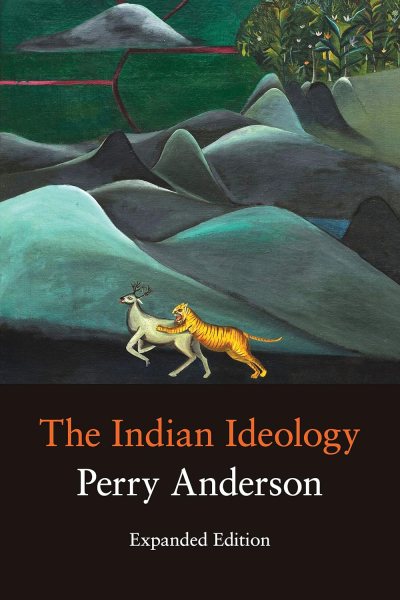
- Perry Anderson, The Indian Ideology. Out of all the reading on India I did this year to prepare for my first visit, this was my favorite: compact, punchy, and argumentative, packed with erudition and information. I also enjoyed Anderson’s Disputing Disaster: A Sextet on the Great War, an investigation into the long-running argument over the causes of World War I through biographical sketches of historians. Not many writers have this kind of range.
- Walt Whitman, Specimen Days. In his introduction, Whitman called this collection of his diaries “the most wayward, spontaneous, fragmentary book ever printed,” and it may still qualify for that distinction even 143 years after its publication. There is a lot of material from his visits to military hospitals during the Civil War; many long, quiet spells observing nature in southern New Jersey, as well as a journey out West. Tying them all together is Whitman’s love for the American landscape and people, and his unique voice, so fresh he still seems like a contemporary.
- Joseph Henrich, The Secret of Our Success. One of the lessons I learned as a young student of anthropology is that culture is both subjective and objective: it exists in our heads, but also outside of our heads as a reality that shapes us. Henrich’s book is a remarkable effort to synthesize some of the core insights of anthropology with evolution and psychology (culture, or the “collective brain,” is the secret to humanity’s success). Not every plank in his argument is convincing, and the research has evolved since the book first came out a decade ago, but the ambition is impressive and the framework holds up.
- Hampton Sides, The Wide Wide Sea. The last voyage of Captain James Cook is one of the more interesting and unique events in history: he was the first European to find the Hawaiian Islands and talk to the people there, and later, returning to the islands after mapping the coast of Alaska, was killed by them. The causes and meaning of those events have been debated ever since, and Sides delivers a careful, sympathetic and engaging account of the entirety of Cook’s final expedition.
- Hu Anyan, I Deliver Parcels in Beijing (translated by Jack Hargreaves). Perhaps the best of the various gig-worker memoirs published in recent years. It’s less of a sociological document and more of a personal one, a story of how someone not well served by China’s educational system or job market gradually found a voice as a writer. (It’s interesting that none of the writers he mentions as inspiration are Chinese.)
Previous lists:
2024 | 2023 | 2022 | 2021 | 2020 | 2019 | 2018 | 2017 | 2016 | 2015 | 2014 | 2013 | 2012




 The Tangled Woof