The best books I read in 2013

Nonfiction
  • The Best American Essays 2012, edited by David Brooks. I read a lot of these kind of collections of shorter nonfiction pieces, but this one really stood out in terms of consistency and quality. I often find Brooks’ columns annoying but he did a great job selecting interesting and well written essays (the 2011 edition by contrast was awful).
  • Essays in Biography, by Joseph Epstein. More than just an essay collection, almost a potted history of mid-twentieth century intellectual life. Epstein is always a great writer and his personal takes on various figures, while not exactly biographies, are unsparing and insightful.
  • A Time of Gifts and Between the Woods and the Water, by Patrick Leigh Fermor. Possibly the best travel writing ever, and I generally despise travel writing. Spectacular prose and a fascinating window onto prewar Europe.
  • Engineers of Victory: the Problem Solvers Who Turned the Tide in the Second World War, by Paul Kennedy. A fascinating analytical history of the second world war that takes the focus away from generals and presidents treats it as a series of problems to be solved, and details just how they were solved. A great read.
  • Freedom From Fear: the American People in Depression and War 1929-1945, by David M. Kennedy. A prize-winning history of the 1930s and 1940s that is always lively, interesting and keeps you turning the pages. The standout for me, having read a lot of more economic histories of the Great Depression, is the discussion of politics and social change in the 1930s.
  • The Crisis of the Seventeenth Century, by Hugh Trevor-Roper. Classic historical essays that are still lively and fresh a half-century after their first appearance The first few especially are amazing pieces that read like whodunits as TR sorts through competing explanations for sweeping historical events before finally arriving, inevitably, at the solution.
Fiction
  • Any Day Now, by Terry Bisson. A young man coming of age is caught up in the social turmoil of the 1960s; a familiar premise and you think you know where it is going, but trust me, you don’t.
  • Old Filth and The Man in the Wooden Hat and Last Friends, by Jane Gardam. A trilogy of sorts about a bunch of old English coots. Old Filth itself is a perfect novel, funny and wry and moving, and the subsequent books extend the story by considering it from different points of view.
  • Tinkers, by Paul Harding. A short and beautifully written book recounting an old man’s vivid memories at the end of his life.
  • The Expendable Man, by Dorothy B. Hughes. I thought I had read all the midcentury good noir out there but had missed this one — will not describe further for fear of spoiling the fantastic twist about a third of the way through that makes this much more than a mystery.
  • The Summer Isles, by Ian R. MacLeod. An unexpectedly moving and personal story set in a Britain that lost the first world war and became a fascist state.
  • Stoner, by John Williams. A perfect novel, hard to describe but wonderful in every way. The story of one ordinary man’s life and its disappointments. I realize that this is the second book on this list I called perfect, and in both cases it is fully warranted and not hyperbole.

The best books I read in 2012

Nonfiction

  • Nothing To Envy: Ordinary Lives in North Korea, by Barbara Demick. An amazing piece of journalism and a window into real life in the world’s most isolated country. Essential reading for humans.
  • The Coldest Winter: America and the Korean War, by David Halberstam. Having never been taught proper American history in school, I never really knew anything about the Korean War other than what I saw on M*A*S*H*, so this really filled in a huge gap in my knowledge. Split equally between close, first-person accounts of key battles and the political maneuvering back in the US.
  • 1491: New Revelations of the Americas Before Columbus, by Charles Mann. Not a new book and I don’t have much to say that hasn’t been said by many other reviewers. Awesome, fascinating on almost every page.
  • Pacific Crucible: War at Sea in the Pacific 1941-1942, by Ian Toll. A terrific piece of narrative history, from which I learned a lot about those pivotal historical moments you hear about in school but never really really understand. It is lifted out of the ordinary by a sweeping account of the role of the Navy in US history, and an extraordinary account of the attack on Pearl Harbor that weaves together tons of first-person accounts of how it was actually experienced.

Fiction 

  • Jamrach’s Menagerie, by Carol Birch. A wonderfully written story of a boy and a tiger at sea in the 19th century. Nothing whatsoever to do with Life of Pi.
  • Telegraph Avenue, by Michael Chabon. The latest by Chabon is self-recommending – the language is wonderful, the story is moving and often hilarious.
  • Open City, by Teju Cole. Very reminiscent of the discursive yet compelling reveries of W.G. Sebald, of which I am also a big fan.
  • A Hologram for the King, by Dave Eggers. Guy goes to Saudi Arabia to give a Powerpoint presentation. Sits in hotel a lot, misses various appointments. And yet the story manages to be very compelling – and written in a spare style completely unlike the over-the-top confessional voice he used for his memoir.
  • The Dragon Waiting, by John M. Ford. A classic of alternate history, retelling the story of Richard III in a Europe where Christianity never spread. Dense, complex and challenging.
  • Capital, by John Lanchester. On balance probably the best novel I read in 2012. Funny, a great read, and very relevant.
  • Bring Up The Bodies, by Hilary Mantel. The sequel to Wolf Hall. Won the Booker. Totally engrossing and awesome in very way, basically.
  • True Grit and Norwood, by Charles Portis. Apparently Portis’ books used to be taught in schools but these days is mostly forgotten. I read True Grit on a whim after seeing the most recent movie adaptation, and it is surprisingly wonderful, mostly because of the very distinctive voice in which it is told. The same is true for Norwood, a short comic novel, except here the voice is of a Southern redneck rather than a frontier widow. The virtuosity of Portis as a writer becomes especially clear when these two books are read together, since they bear absolutely no relation to one another.
  • The Iron Dragon’s Daughter, by Michael Swanwick. A sadly out-of-print classic by one of the most creative SF authors around. Upends almost every fantasy cliche about fairies and dragons with gleeful abandon  in a narrative that compels you by its sheer strangeness and dreamlike logic.
  • Among Others, by Jo Walton. This new book has swept the sci-fi industry awards, winning both the Hugo and Nebula, and it’s not hard to see why – it’s a sci-fi novel about an isolated teenager who reads sci-fi. The premise sounds precious but is not, actually, and the book is wonderfully written in a unique and very genuine voice.

Tech Supply Chain Exposes Limits of Trade Metrics

http://www.wsj.com/articles/SB10001424052748704828104576021142902413796

Not Really ‘Made in China’
The iPhone’s Complex Supply Chain Highlights Problems With Trade Statistics

By ANDREW BATSON
Updated Dec. 15, 2010 12:01 a.m. ET

BEIJING—One widely touted solution for current U.S. economic woes is for America to come up with more of the high-tech gadgets that the rest of the world craves.

Yet two academic researchers estimate that Apple Inc.’s iPhone—one of the best-selling U.S. technology products—actually added $1.9 billion to the U.S. trade deficit with China last year.

How is this possible? The researchers say traditional ways of measuring global trade produce the number but fail to reflect the complexities of global commerce where the design, manufacturing and assembly of products often involve several countries.

“A distorted picture” is the result, they say, one that exaggerates trade imbalances between nations.

Trade statistics in both countries consider the iPhone a Chinese export to the U.S., even though it is entirely designed and owned by a U.S. company, and is made largely of parts produced in several Asian and European countries. China’s contribution is the last step—assembling and shipping the phones.

So the entire $178.96 estimated wholesale cost of the shipped phone is credited to China, even though the value of the work performed by the Chinese workers at Hon Hai Precision Industry Co. accounts for just 3.6%, or $6.50, of the total, the researchers calculated in a report published this month.

A spokeswoman for Apple said the company declined to comment on the research.

The result is that according to official statistics, “even high-tech products invented by U.S. companies will not increase U.S. exports,” write Yuqing Xing and Neal Detert, two researchers at the Asian Development Bank Institute, a think tank in Tokyo, in their report.

This isn’t a problem with high-tech products, but with how exports and imports are measured, they say.

The research adds to a growing debate about traditional trade statistics that could have real-world consequences. Conventional trade figures are the basis for political battles waging in Washington and Brussels over what to do about China’s currency policies and its allegedly unfair trading practices.

“What we call ‘Made in China’ is indeed assembled in China, but what makes up the commercial value of the product comes from the numerous countries,” Pascal Lamy, the director-general of the World Trade Organization, said in a speech in October. “The concept of country of origin for manufactured goods has gradually become obsolete.”

Mr. Lamy said if trade statistics were adjusted to reflect the actual value contributed to a product by different countries, the size of the U.S. trade deficit with China—$226.88 billion, according to U.S. figures—would be cut in half.

To correct for that bias is difficult because it requires detailed knowledge of how products are put together.

Breaking down imports and exports in terms of the value-added from different countries can lead to some controversial conclusions. Some U.S. lawmakers, for instance, argue China needs to let its currency rise significantly against the U.S. dollar in order to reduce the trade gap between the two nations.

The value-added approach, in fact, shows that sales of the iPhone are adding to the U.S. economy—rather than subtracting from it, as the traditional approach would imply.

Based on U.S. sales of 11.3 million iPhones in 2009, the researchers estimate Chinese iPhone exports at $2.02 billion. After deducting $121.5 million in Chinese imports for parts produced by U.S. firms such as chip maker Broadcom Corp., they arrive at the figure of the $1.9 billion Chinese trade surplus—and U.S. trade deficit—in iPhones.

If China was credited with producing only its portion of the value of an iPhone, its exports to the U.S. for the same amount of iPhones would be a U.S. trade surplus of $48.1 million, after accounting for the parts U.S. firms contribute.

Other economists say some aspects of the researchers methodology may have led them to overstate their case. The study, for example, assumes that companies such as Toshiba Corp. and Samsung Electronics Co. that make components for the iPhone wholly assembled them in their home countries.

But many of Apple’s suppliers have manufacturing facilities in China, so it’s likely that some portion of the components they build for the iPhone are made in China as well.

The latest results are broadly similar to analyses made by the Personal Computing Industry Center at the University of California, Irvine, of the trade and manufacture of another Apple product, the iPod. That research also found that Chinese labor accounted for only a few dollars of the iPod’s value, even though trade statistics credited China with producing its full value.

In a speech in September in New York, Chinese Premier Wen Jiabao cited that research to argue that trade tensions between the U.S. and China are overblown. Many of China’s exports are products that are made in China on contract for foreign companies, he said, so the U.S. shouldn’t criticize China for running a big trade surplus.

“Foreign-funded enterprises, including those of the United States, are major beneficiaries” of this system, Mr. Wen said.

—Loretta Chao contributed to this article.

Rising Wages Rattle China’s Small Manufacturers

http://www.wsj.com/articles/SB10001424052748703314904575399111408113090

THE OUTLOOK
Rising Wages Rattle China’s Small Manufacturers

By ANDREW BATSON in Zhili, China
Updated Aug. 1, 2010 12:01 a.m. ET

The effects of China’s rising wages and stronger currency are rippling through the close-knit group of textile and garment makers in the eastern town of Zhili, and challenging the future of small-business success stories like it around the nation.

“We have to raise prices to cope with higher costs,” says Fu Weimin, who runs one of the hundreds of small garment workshops in Zhili, where it seems nearly every business specializes in some part of the production of children’s clothing. “Every year salaries go up.”

Wages in China have been rising for years, but pressure is now particularly strong as the rebound in the nation’s economy runs up against the shrinking supply of younger workers caused by the one-child policy. Big foreign companies have felt the effects, with the local operations of Toyota Motor Corp. and Honda Motor Co. hit by strikes and Hon Hai Precision Industry Co., the world’s biggest contract manufacturer of electronics, promising raises of at least 30%.

But the impact could be even more pronounced on China’s more than 10 million small businesses, which account for 60% of the economy and 80% of jobs. Many small, light manufacturing businesses crowd together in highly specialized “clusters,” particularly here in Zhejiang province on the eastern coast.

na-bh291_outloo_ns_20100801164422

Huzhou, just down the road from Zhili, is noted for its bamboo products. The city of Wenzhou is famous for manufacturing a large share of the world’s supply of cigarette lighters. What they all have in common is a reliance on the low-cost labor that is in increasingly short supply.

“The cluster-based model is labor-intensive. The real question is whether it can survive in the new environment of labor scarcity and higher labor costs,” says Zhang Xiaobo, an economist at the International Food Policy Research Institute in Washington, who has researched the effect of clusters on rural development. “Right now is a critical transitional period. Some clusters will survive, some will collapse.”

Since China relaxed its currency’s peg to the dollar in mid-June, there is added uncertainty for those manufacturers who depend on export markets. The yuan is up by 0.75% against the dollar so far this year.

“If the currency appreciates 5% or 10% then we wouldn’t be able to do this business anymore,” as it would wipe out China’s cost advantage, says Cindy Wu, sales manager of Da Wei Zipper Co. Such fears from businesses are a big reason China’s government, despite outside pressure, is generally expected to limit the pace of its currency appreciation.

Banding together in clusters has helped Chinese entrepreneurs overcome the hurdles to running a business in a state-dominated economy, says Mr. Zhang, the researcher. Start-up costs are lower, because each business can specialize in just one narrow segment. With production split up among many firms, each one can give credit to its customers and get credit from its suppliers, easing the burden of financing. Buyers like clusters because they can find everything they need in one place.

Zhili—the name could be translated as “Weavertown”—has focused on children’s clothes since the late 1980s, when one local factory discovered they were more profitable than pillow covers. Imitators spread quickly, and as the town’s reputation grew it attracted more clothing companies. Today Zhili is a sprawl of low-slung buildings, a mix of family businesses in narrow alleys and larger factory complexes.

Li Qiang started out making children’s clothes in his native Inner Mongolia, but moved to Zhili 11 years ago. Because traders all know Zhili, he can sell much more than he could back home. Plus, he says, the local government is helpful, and “people here are honest.”

“What is holding us back now is finding enough workers,” Mr. Li says. With rising material and labor costs eating into margins, he needs to increase his sales volume to keep up profits. But Mr. Li can’t find enough skilled labor, even with wages already 40% higher than in other provinces. And it’s hard to abandon Zhili’s network and relocate to a cheaper province, a move that would require a big investment.

To cope with the shortage of younger workers, many of Zhili’s factories now recruit married couples in their 30s. Lin Yunjiang, general manager of Haodeli Garment Co., says almost all of his 240 workers are married couples. He has converted his employee housing from single-sex dormitories to individual apartments for couples.

Other entrepreneurs are trying to break out of the dependence on low-cost labor by investing more in capital equipment. “I figured out that a company’s competitive advantage is in its technology,” says Ye Ahua, who founded Bestex Textile Co. six years ago with his sons. He says he invested more than 20 million yuan in equipment for producing high-quality cotton cloth, when most local garment factories invest less than half a million. As a result, the factory needs only 70 workers.

For more entrepreneurs to follow in his footsteps they will need better access to financing than they have gotten from China’s banking system, which favors big state-owned corporations. The government has promised to improve things, and says loans to small businesses are now growing faster than those to big ones.

China Starts Looking Beyond Its Era of Breakneck Growth

http://www.wsj.com/articles/SB10001424052748703609004575354501318242096

China Starts Looking Beyond Its Era of Breakneck Growth

By ANDREW BATSON And BOB DAVIS
Updated July 15, 2010 12:01 a.m. ET

DASHIMEN VILLAGE, China—In this corn-growing hamlet in northern China, signs are emerging that the nation’s supercharged economic growth may be reaching its limit.

A bottomless pool of inexpensive migrant labor has long been one of China’s greatest resources, fueling its manufacturing boom. But all the able-bodied workers have left this village already, leaving mostly the elderly. “All the young men have gone out to work,” says Wang Shuzhen, 58 years old, whose two sons left town, one to work in construction, the other as a driver.

Fewer migrant workers are heading to China’s manufacturing zones along the coasts because villages like Dashimen are tapped out, putting pressure on wages and sparking worries about labor shortages. Job centers in the Pearl River Delta, the manufacturing heartland of southern China, had 9% more vacancies than applicants in the first quarter, according to a survey by China’s labor ministry.

The Chinese economic juggernaut is still outrunning these trends. Government data issued Thursday showed continued robust growth, but at a slightly slower pace. Second-quarter gross domestic product grew 10.3% from a year earlier, down from the 11.9% growth posted in the first quarter.

Some big engines of long-term growth look unlikely to sputter: consumer spending by China’s newly affluent, and the migration of hundreds of millions of people to the nation’s cities. Chinese industries from sheet glass to automobiles to electronics are emerging as potentially deadly rivals to American, Japanese and European champions.

But managing China’s economic trajectory is getting trickier, Chinese officials and economists say. “The growth rates of the past can’t be sustained forever,” says Li Shantong, an economist at the Development Research Center, a government think tank in Beijing. China needs to adapt to a future where exports and infrastructure are less important, and more growth comes from technology and innovation, she says. “It may not be as fast as in the past. But we can’t continue with the same resource-intensive pattern.”

Higher wages at home and low-wage competition from other countries will make it harder for China, already the world’s largest exporter, to maintain rapid export growth. Real-estate bubbles have developed in places like the tropical island province of Hainan, prompting the government to take steps to try to cool those markets so they don’t threaten the financial system.

The favorable demographics that have supplied manpower for economic growth are changing. China’s working-age population, age 15 to 64, has grown continuously. But partly because most families are limited to one child, growth of this working population is slowing, according to the United Nations. The labor pool is expected to peak around 2015, and then decline, according to U.N. projections. In China, manual laborers tend to stop working before age 65, due both to the demands of the work and to employers’ preference for younger workers.

China’s favored tool for supporting growth—vast, bank-financed investments in infrastructure—may not work as well in the future, as it becomes harder to find worthwhile projects. China’s great economic challenge is likely to be ensuring that a transition to slower growth is gradual and manageable, rather than sharp and disruptive.

Growth here has stemmed in part from China’s drive to catch up with wealthy nations on technology, infrastructure and education. Japan, South Korea, Taiwan and Singapore went through similar periods, and the rapid growth there eventually slowed.

“No country grows at 8% to 10% indefinitely,” says Dwight Perkins, a Harvard University economist who correctly forecast the Chinese economic boom ignited three decades ago by market reforms. “In all countries, that growth rate comes to an end.” China’s economic growth has averaged more than 9% a year since 1978. Mr. Perkins figures the high-growth phase has, at most, a decade left to run.

Diminishing growth in China would have profound consequences for the global economy. Resource-rich countries in Latin America and Africa depend on expanding Chinese markets. Mature economies such as the U.S. and Europe look to China as an export market and a new place to invest.

Inside China, sustained high growth has made it easier for the government to put off dealing with a host of problems, from bad loans created by state-controlled banks to sharp social divisions between rural and urban residents. The country’s grand political bargain has been simple: Communist Party rule in exchange for increased prosperity and higher living standards.

Government officials are giving voice to the need to plan for a different kind of economic future. “The international financial crisis has caused a major change in the external conditions for China’s development,” Vice Premier Li Keqiang said earlier this year. The government needs to accelerate overhauls to the structure of the economy, he said, in order to lay a foundation for “stable and rapid economic growth over the long term.”

The most anticipated problem is an end to some 35 years of steady growth of the working-age population, which fueled the expansion when China liberalized its economy. The demographic changes added about 1.8 percentage points of economic growth annually since the late 1970s, according to the Center for Strategic and International Studies, a Washington think tank. But by 2030, the CSIS predicts, the contraction in the working-age population will reduce growth by 0.7 percentage points a year.

In places like Dashimen, in the hills in northern Hebei province, everyone who can physically labor is already working in jobs in the cities. Yin Zhen, the 61-year-old husband of Ms. Wang, says he was a migrant worker himself until employers started passing him over for younger men about five years ago.

With growth of the labor force slowing, migrant workers are in a stronger position to bargain with employers. A central-bank survey this year showed average wages for migrant workers, who traditionally fill the least-skilled slots and have little economic power, rose 17.8% from a year earlier.

Those gains will improve the lives of the poorest urban workers. They also will make it tougher for Chinese exporters of low-end merchandise like apparel and toys to continue to compete mainly on price. Exporters will have to keep boosting productivity to make up for higher wages, and start making higher-end products that are less price-sensitive.

That puts trade, one of China’s great growth drivers, under pressure. China’s exports have grown by an average of 21% a year over the past decade. With markets in Europe and the U.S likely to grow slowly over the next few years, China will be hard-pressed to sustain that pace.

Qi Lihong, import-and-export department manager of Tonglu Spring River Knitting Group, a garment maker in Hangzhou, says higher wages and government-mandated benefits have pushed her labor costs up about 10% this year. To attract workers in the tightening labor market, the company is building nicer dormitories.

The higher costs complicate Spring River’s effort to rebound from the global economic slump. Annual revenues dropped to $28 million last year, from a peak of $40 million in 2006. For labor-intensive products like textiles and clothing, there are now cheaper places to manufacture than China. Average wages in Vietnam and Pakistan are just one-third of China’s. “We can see that more orders are flowing to the low-cost countries,” Ms. Qi says.

On the beaches of Hainan, off China’s southern coast, another threat to China’s continued growth has risen. The office buildings in downtown Haikou, the provincial capital—evidence of a real-estate boom and bust in the early 1990s—now are dwarfed by new luxury apartment buildings and resorts.

Apartments at the Serenity Coast development in the resort town of Sanya start at around $1 million. “Chinese people are getting rich and learning how to consume,” says Xu Nengli, director at Kinderly Real Estate, the project’s sales agent.

Serenity Coast’s sales averaged more than $400 million a month in 2009, and more buildings are still going up. “Everyone thinks this business is easy to do and wants to jump in the market,” Mr. Xu says. New investment in Hainan real estate has more than doubled this year, according to official figures, and prices are up an average of 50%.

Concerns are mounting about a real-estate bubble in Hainan and many other places where the rush to profit from real estate has pushed up prices. Attempting to head off a crisis, Beijing is requiring banks to tighten mortgage-lending standards. Many cities have restricted purchases by nonresidents.

Partly as a result, sales have cooled somewhat, especially in the hottest real-estate markets. But if Beijing applies too many restraints, it could hurt construction, a major source of jobs.

So far, the government has been successful in shielding China from the worst of the global financial crisis, thanks in part to a surge in construction projects such as roads, bridges and airports.

Even before the stimulus, investment accounted for 44% of China’s economy, a higher level than Japan or South Korea ever reached in their modernization drives. The returns on those investments matter enormously for how China grows.

The latest round of public works, however, might not boost the economy as much as core first-wave infrastructure projects, such as the national highway system, did in earlier years.

In Qingdao, a thriving port city in Shandong province, the construction boom is in full swing. The city is squeezed onto the eastern edge of Jiaozhou Bay, with the only room for expansion to the north and west. A highway curves around the bay, but it is often choked with traffic. In response, the local government has begun building a 17-mile bridge across the bay. The cost: $1.4 billion, mostly covered by bank loans. “Economic development drives traffic, and traffic drives economic development,” says Shao Xinpeng, chief engineer of Shandong Hi-Speed Qingdao Expressway Co., the state company building the bridge.

But the bridge will face competition from a much-shorter tunnel also linking downtown Qingdao to the bay’s west side. Min Zhengliang, an economist at Qingdao University, is skeptical. “To spend so much money to save only 20 minutes of driving time is just not worth it,” he says.

China’s banking system, which is mainly state-controlled, has financed many such projects. Banks made loans last year worth one-third of economic output, and this year they are on track to hit 20% of GDP—a total of roughly $2.5 trillion in new credit over two years. (At the peak of the U.S. credit boom, new borrowing through banks and credit markets amounted to 18% of GDP, though China is growing much faster.) That credit load could limit China’s ability to drive future growth through such spending.

Yet China has flourished the past 30 years by constantly reinventing its economy, abandoning failed experiments and pursuing successful ones. Xiao Geng, the Beijing-based director of the Columbia Global Center in East Asia, ticks off a number of must-do policy fixes: improve the social safety net, ease price controls on energy and capital, and alter the dominant role of state enterprises.

“It really requires very dramatic, deep and consistent reforms to have sustainable growth in the future,” he says. “I’m worried about it, but still quite confident they will manage to do it.”

—Kersten Zhang contributed to this article.
China Inc. Looks Homeward as U.S. Shoppers Turn Frugal

http://www.wsj.com/articles/SB125417559519247515

China Inc. Looks Homeward as U.S. Shoppers Turn Frugal

By ANDREW BATSON
Updated Sept. 30, 2009 12:01 a.m. ET

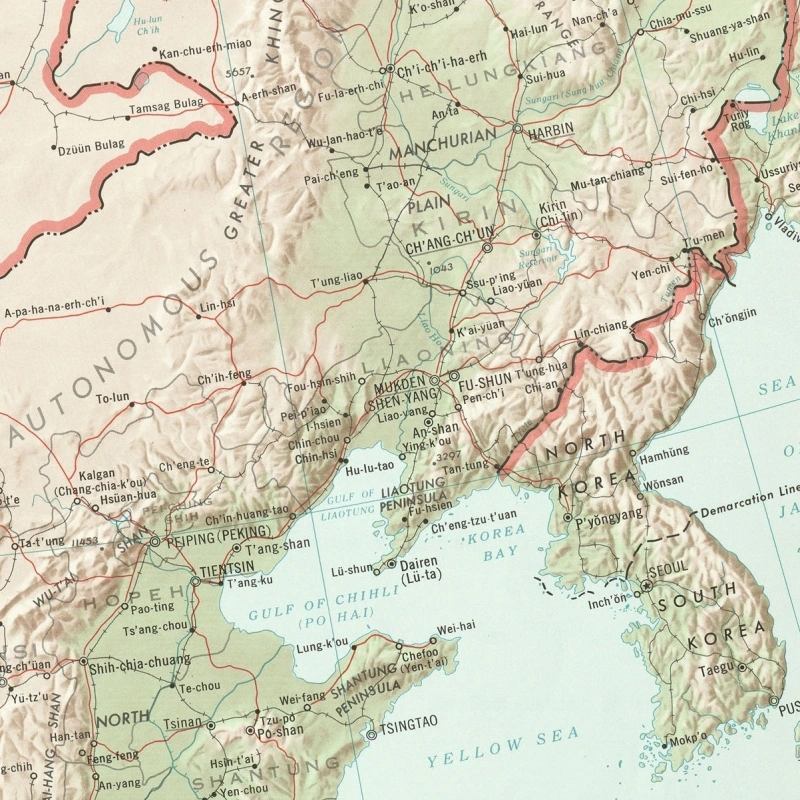
SHUNDE, China — With the longtime engine of global growth, the American consumer, pummeled by recession, some of China’s hugely productive exporters are eyeing a new market: the Chinese.

Bicycle manufacturer Tandem Industries has long supplied big overseas retailers such as Wal-Mart Stores Inc. But Tandem’s American sales have tumbled 40% since September 2008, the month a U.S. credit squeeze turned into a credit panic. So Tandem is about to offer its bikes to riders in its home province, Guangdong, under its own brand and at its own stores.

“China’s ability to consume has now reached a fairly high level. It’s at a turning point,” says Tandem’s general manager, Tom Tseng. Incomes are rising in China and people can afford more high-quality goods, he says, while “in the U.S., people now only want to buy cheap things.”

Chinese businesspeople like Mr. Tseng are adapting to what they believe will be a lasting consequence of America’s deep recession. Savings by suddenly frugal U.S. households soared to an annualized $566 billion in the second quarter, more than quadruple the rate at the start of 2008. While that is important to rebuilding U.S. financial health, it is also sucking demand out of the world economy. China’s exports, after growing for years at a steady 20%-plus rate, recorded a year-over-year drop last November. They kept falling, and in August were down 23% from a year earlier.

Spending by Chinese consumers, meanwhile, is holding up pretty well, partly because of heavy stimulus spending by a government flush with cash. Urban household spending in China was up 9.2% in the first half of 2009, not far off the country’s average overall growth in recent years.

This shifting dynamic shows how the global economic turmoil is pushing China, the world’s second-largest exporter after Germany, to become a more inward-focused economy. Even once world growth gets back on track, China is likely to run into limits on how much more it can expand its export market share, economists say. The World Bank expects that slower export gains in the future will shave about two percentage points off China’s historical growth rate of 10%.

With the recession, Chinese exporters have been taught the dangers of a narrow business model. “The lesson we learned from the financial crisis is not to put all your eggs in one basket. We relied too much on the U.S. market,” says Mr. Tseng, a 42-year-old native of Taiwan. “If we had started domestic sales earlier, our business wouldn’t have declined so much this year.”

Chinese domestic demand isn’t a panacea for exporters. For one thing, domestic demand itself can suffer to some extent when exports decline, because the jobs of so many Chinese are linked to export industries. In addition, China’s consumers simply don’t have the money to drive the global economy in the same way as big-spending New Yorkers and Parisians.

The consumers of the U.S. and Europe each pump more than $9.5 trillion a year into the global economy, even at their current recession-diminished pace. China’s much poorer households spent in aggregate just over $1.5 trillion last year. Per-capita disposable income in the U.S. was $35,486 in 2008, versus $2,270 in China. So even such a huge and growing country is in no position to replace the U.S. and Europe as an engine of global growth.

But with prospects for exports remaining weak (although U.S. imports rose in July), and with Chinese incomes continuing to rise, domestic consumer spending is becoming a bigger part of China’s own growth story. Among the exporters giving the local market a try are, besides the bike maker, a firm that is seeking to sell Chinese parents a talking doll that knows when it is being spoken to.

There’s even a chance the trend could have an effect on the piracy problem. Foreign companies selling in China have long complained that patent violations and copying are rampant, but they have gotten little sympathy in local courts. That attitude could shift if more Chinese manufacturers selling in China start to make the same complaint.

Since American consumers are hesitant to spend at levels they once did, economists have said Asian consumers can help make up the difference and serve as new markets for U.S. companies.

Tandem has been making bicycles since 1992, when much of the area around its home base of Shunde was rural and the local government was eager to attract new businesses. Tandem became one of thousands of small businesses in southern China that learned to thrive on a bare-bones business model: using low-cost labor to assemble products on contract for foreign distributors and retailers. The focus on pure manufacturing let these companies concentrate on keeping costs down and volumes up, without the distractions of design or marketing.

The foundations of that model have weakened in recent years. Empty land is filling up; Tandem’s 124-acre operation butts up against other factories and the few tiny farms that remain. In addition, Mr. Tseng says it has been getting harder to find good workers, leading him to install robotic welding arms to assemble frames. Then came the downturn in overseas demand.

Mr. Tseng saw the first signs of that in July 2008, when the orders at local electronics factories started to slip. Tandem didn’t feel the full brunt until the credit crisis struck the U.S. hard late last year and frightened consumers. “I went to the U.S. in December and saw that car dealerships in San Francisco were empty,” he says.

Some of Tandem’s directors opposed trying the domestic market, worried about distributors who wouldn’t pay their bills, unscrupulous competitors who would flood the market with knockoffs, and steady downward pressure on prices. But Mr. Tseng, convinced the U.S. consumer downturn wouldn’t reverse quickly, argued for giving domestic sales a try.

He says Chinese are becoming more receptive to the alloy-frame racing and mountain bikes Tandem makes for abroad. “The way people use bicycles is changing,” he says. Bicycles were traditionally just a utilitarian form of transport in China, which was called the “kingdom of bicycles” before the recent takeoff of car buying. Today’s urban consumers are more likely to see bike riding as a form of leisure or exercise, Mr. Tseng argues: “Their ideas are gradually changing. China’s consumers are becoming more like other countries’ consumers.”

Driving his sport-utility vehicle through downtown Shunde on a recent day, Mr. Tseng saw domestic consumer demand all about. He pointed to vehicles filling the parking lot of a shopping center. “How much does one of those new cars cost? Where is the lack of consumption?” he asked. “Every car company in the world comes here because of the domestic demand.”

Tandem’s board gave final approval in July to begin domestic as well as export sales. The shift has made the company, which had sales of $114 million last year, more of a normal business, with goals and problems not so different from the multinationals that sell to the Chinese.

Changing course hasn’t been simple. There were bureaucratic barriers. Tandem has been registered as what is called a “processing trade” company. That legal status allows it to import materials duty-free, process them and assemble them into final products — which must then be exported. But processing-trade firms are essentially cut off from China’s domestic economy. To be able to sell locally, Tandem had to register a new “normal trade” company with separate accounts. The legal maneuvering should be completed by November.

Other challenges await, like branding and distribution. A business long focused on making a product to order for other companies needs a change in mind-set and organization. “For us, manufacturing is the easy part. We’ve been doing this for 17 years,” says Vincent Chen, a manager. “Now we are designing the product ourselves, without outsourcing.”

Tandem’s interest in this market may be new, but competition in many consumer goods is intense in China, with multiple foreign and domestic brands crowding store shelves. Big companies like Giant Manufacturing Co. of Taiwan already have a strong presence in the high end of the domestic bicycle market, where Tandem’s products would fall.

So, Tandem is targeting a niche first: children’s bikes, where Mr. Tseng thinks local producers are more vulnerable. “They approach kids’ bikes like toys. We start off from making bicycles, so our quality and safety will be much better,” he says.

There isn’t much need to redesign products. Mr. Tseng’s showroom is already full of colorful children’s designs, from a shocking-pink Barbie brand bike to flame-emblazoned bikes with names like Firestorm and Striker. “Like kids in the U.S., Chinese kids like bikes that are thick and solid looking. And the colors they like are not very different,” Mr. Tseng says.

The company won’t try to sell in existing Chinese stores, dubious that either distributors or retailers would push its products, and concerned about spending a lot on a marketing effort that might fall flat. Instead, it plans to build its own bicycle stores, starting with one in Shunde.

“To build stores and pay for advertising is a lot of money, and you won’t necessarily get a result at first. That’s why we’re starting small and building up slowly,” Mr. Tseng says. “We have to pay our tuition first.”

This means domestic sales aren’t going to make a big difference for Tandem this year. “We will still do exports — I can’t give up that business. But we’re going to work more on domestic sales. We have to have both,” Mr. Tseng says.

The bicycle maker’s strategy wouldn’t work for every export business, by any means. China’s biggest exporters use the country as a base to manufacture for the global market, and most of their exports are electronics and machinery, not consumer goods.

Nonetheless, China’s government is increasingly encouraging those exporters that can to look at the domestic market, just as for years it offered financial incentives to ship goods abroad. Domestic subsidies for purchases of cars and home appliances, such as tax breaks and coupons for discounts, have helped boost local sales of those products in recent months.

Economists say a more vibrant domestic consumer market in China will require changes that enable people to benefit more from the country’s growth, such as liberalizing the financial sector.

Tandem is steeling itself for the near-certain prospect that its products will be knocked off by local competitors. “We haven’t seen pirated goods yet, but expect to once we start selling domestically,” Mr. Tseng says.

Worries about copying didn’t deter doll-maker Mei Ye Plastic Products Co. from launching last year what it hopes will be a blockbuster: a talking doll with voice-recognition technology so it can respond when a child speaks to it. The company, based in the Guangdong province city of Shantou, says the doll is the result of more than three years of research.

It shipped the first models to Russia in June of last year. But the global downturn dashed its hopes of big export sales.

So, factory boss Chen Guoliang decided to look at the domestic market. He ordered the dolls programmed with English and Chinese — enabling the company to pitch them to ambitious Chinese parents as a language-learning tool for their children. The first shipments went out to domestic distributors in December.

In the first half of this year, exports at Mei Ye, which makes many other kinds of dolls as well, were down about 40% from a year earlier. Mr. Chen says domestic sales are replacing about three-quarters of the decline.

The company had some initial hiccups. For the domestic market, the designers’ first instinct was to make the dolls with yellow-toned skin and black hair, to match their Chinese owners. The response wasn’t so good: It turned out many Chinese girls preferred dolls with pink skin and blond hair.

The switch was made, and Mei Ye continues to refine the product. The next generation of talking dolls should hit the Chinese market in October.

—Ellen Zhu contributed to this article.

China Takes Aim at Dollar

http://www.wsj.com/articles/SB123780272456212885

China Takes Aim at Dollar

By ANDREW BATSON
Updated March 24, 2009 11:59 p.m. ET

BEIJING — China called for the creation of a new currency to eventually replace the dollar as the world’s standard, proposing a sweeping overhaul of global finance that reflects developing nations’ growing unhappiness with the U.S. role in the world economy.

The unusual proposal, made by central bank governor Zhou Xiaochuan in an essay released Monday in Beijing, is part of China’s increasingly assertive approach to shaping the global response to the financial crisis.

Mr. Zhou’s proposal comes amid preparations for a summit of the world’s industrial and developing nations, the Group of 20, in London next week. At past such meetings, developed nations have criticized China’s economic and currency policies.

This time, China is on the offensive, backed by other emerging economies such as Russia in making clear they want a global economic order less dominated by the U.S. and other wealthy nations.

However, the technical and political hurdles to implementing China’s recommendation are enormous, so even if backed by other nations, the proposal is unlikely to change the dollar’s role in the short term. Central banks around the world hold more U.S. dollars and dollar securities than they do assets denominated in any other individual foreign currency. Such reserves can be used to stabilize the value of the central banks’ domestic currencies.

Monday’s proposal follows a similar one Russia made this month during preparations for the G20 meeting. Like China, Russia recommended that the International Monetary Fund might issue the currency, and emphasized the need to update “the obsolescent unipolar world economic order.”

Chinese officials are frustrated at their financial dependence on the U.S., with Premier Wen Jiabao this month publicly expressing “worries” over China’s significant holdings of U.S. government bonds. The size of those holdings means the value of the national rainy-day fund is mainly driven by factors China has little control over, such as fluctuations in the value of the dollar and changes in U.S. economic policies. While Chinese banks have weathered the global downturn and continue to lend, the collapse in demand for the nation’s exports has shuttered factories and left millions jobless.

In his paper, published in Chinese and English on the central bank’s Web site, Mr. Zhou argued for reducing the dominance of a few individual currencies, such as the dollar, euro and yen, in international trade and finance. Most nations concentrate their assets in those reserve currencies, which exaggerates the size of flows and makes financial systems overall more volatile, Mr. Zhou said.

Moving to a reserve currency that belongs to no individual nation would make it easier for all nations to manage their economies better, he argued, because it would give the reserve-currency nations more freedom to shift monetary policy and exchange rates. It could also be the basis for a more equitable way of financing the IMF, Mr. Zhou added. China is among several nations under pressure to pony up extra cash to help the IMF.

John Lipsky, the IMF’s deputy managing director, said the Chinese proposal should be treated seriously. “It reflects officials’ concerns about improving the stability of the financial system,” he said. “It’s interesting because of China’s unique position, and because the governor put it in a measured and considered way.”

China’s proposal is likely to have significant implications, said Eswar Prasad, a professor of trade policy at Cornell University and former IMF official. “Nobody believes that this is the perfect solution, but by putting this on the table the Chinese have redefined the debate,” he said. “It represents a very strong pushback by China on a number of fronts where they feel themselves being pushed around by the advanced countries,” such as currency policy and funding for the IMF.

A spokeswoman for the U.S. Treasury Department declined to comment on Mr. Zhou’s views. In recent weeks, senior Obama administration officials have sought to reassure Beijing that the current U.S. spending spree is a short-term effort to restart the stalled American economy, not evidence of long-term U.S. profligacy.

“The re-establishment of a new and widely accepted reserve currency with a stable valuation benchmark may take a long time,” Mr. Zhou said. In remarks earlier Monday, one of his deputies, Hu Xiaolian, also said the dollar’s dominant position in international trade and investment is unlikely to change soon. Ms. Hu is in charge of reserve management as the head of China’s State Administration of Foreign Exchange.

Mr. Zhou’s comments — coming on the heels of Mr. Wen’s musing about the safety of China’s dollar holdings — appear to be a warning to the U.S. that it can’t expect China to finance its spending indefinitely.

The central banker’s proposal reflects both China’s desire to hold its $1.95 trillion in reserves in something other than U.S. dollars and the fact that Beijing has few alternatives. With more U.S. dollars continuing to pour into China from trade and investment, Beijing has no realistic option other than storing them in U.S. debt.

Mr. Zhou argued, without mentioning the dollar by name, that the loss of the dollar’s de facto reserve status would benefit the U.S. by avoiding future crises. Because other nations continued to park their money in U.S. dollars, the argument goes, the Federal Reserve was able to pursue an irresponsible policy in recent years, keeping interest rates too low for too long and thereby helping to inflate a bubble in the housing market.

“The outbreak of the crisis and its spillover to the entire world reflected the inherent vulnerabilities and systemic risks in the existing international monetary system,” Mr. Zhou said. The increasing number and intensity of financial crises suggests “the costs of such a system to the world may have exceeded its benefits.”

Mr. Zhou isn’t the first to make that argument. “The dollar reserve system is part of the problem,” Joseph Stiglitz, the Columbia University economist, said in a speech in Shanghai last week, because it meant so much of the world’s cash was funneled into the U.S. “We need a global reserve system,” he said in the speech.

Mr. Zhou’s idea is to expand the use of “special drawing rights,” or SDRs — a kind of synthetic currency created by the IMF in the 1960s. Its value is determined by a basket of major currencies. Originally, the SDR was intended to serve as a shared currency for international reserves, though that aspect never really got off the ground.

These days, the SDR is mainly used in the IMF’s accounting for its transactions with member nations. Mr. Zhou suggested countries could increase their contributions to the IMF in exchange for greater access to a pool of reserves in SDRs.

Holding more international reserves in SDRs would increase the role and powers of the IMF. That indicates China and other developing nations aren’t hostile to international financial institutions — they just want to have more say in running them. China has resisted the U.S. push to make an immediate loan to the IMF because that wouldn’t give China a bigger vote. Ms. Hu said Monday that China, which encourages the IMF to explore other fund-raising options, would consider buying into a bond issue.

The IMF has been working on a proposal to issue bonds, probably only to central banks. Bond purchases are one way for the organization to raise money and meet its goal of at least doubling its lending war chest to $500 billion from $250 billion. Japan has loaned the IMF $100 billion and the European Union has pledged another $100 billion.

—Terence Poon in Beijing, James T. Areddy in Shanghai, and Bob Davis and Michael M. Phillips in Washington contributed to this article.

China Bets Highways Will Drive Its Growth

http://www.wsj.com/articles/SB122635482375915243

China Bets Highways Will Drive Its Growth

By ANDREW BATSON
Updated Nov. 11, 2008 12:01 a.m. ET

QIJIANG, China — As more of the world falls into financial turmoil, China is hoping that an infrastructure spending spree can help sustain its long record of expansion and rising prosperity.

Much of the $586 billion stimulus package China unveiled this week will go toward building highways, railroads and airports. Already, according to official estimates, infrastructure spending had been increasing by an average of 20% annually for the past 30 years — a tried and true engine that has helped power the Chinese economy’s explosive growth.

The results are evident in this hilly corner of China’s southwest, where a new expressway has cut travel times to the big city of Chongqing to 45 minutes from more than two hours. That’s inspired local businesses to expand and outsiders to look for weekend retreats. Many villages are now resurfacing dirt roads to improve connections and ease travel further. Rather than selling their crop of Sichuan peppercorns from baskets on their backs, local farmers are loading them by the sackful onto trucks. Average annual incomes here reached about 4,100 yuan ($600) in 2007, up from 3,030 yuan ($450) three years ago.

The new road is part of the backbone of China’s national highway system, scheduled for completion this year. Twelve major routes cross the country from north to south and east to west, connecting millions to the wider world and showing the kind of impact China wants from its huge new spending program.

The speed of China’s motorization is stunning — some 30,000 miles of expressways were built in the past decade. Plans call for China’s highway system to stretch 53,000 miles by 2020, surpassing the 47,000 miles of interstate roads in the U.S. currently. China has roughly the same land area as the continental U.S.

Unlike the golden era of the American highway — which started in the 1960s and was mostly complete by the 1980s — this road boom is taking place in a poor, largely rural country where only about 10% of the population have their driver’s licenses.

Skeptics of China’s infrastructure spree worry that new roads and buildings are going unused and will end up being a waste of money. In the poorest areas, some highways are often empty but for the crops farmers spread out on them to dry in the sun.

But China’s expansion of transport infrastructure is often intended less to respond to growth than to stimulate it. A roadside slogan here, splashed in white paint on a rocky mountainside, sums up that philosophy: “For the economy to develop, transport must start off first.”

Says Li Yong, a regional economist at the Chongqing Academy of Social Sciences, “You can say it is wasteful now, but it is not wasteful over the long term.”

Indeed, while China’s economy is often seen as driven by exports — not surprising for a country that exported more than $1 trillion of goods last year, or 9% of the world total — domestic investment contributes far more to growth. In recent years, spending on everything from public works to housing to factory equipment has accounted for about four to six percentage points of China’s 10% average annual growth rate. Such investments tend to be more stable than exports and are now providing a welcome cushion as the global economy slows.

China isn’t immune to the woes of its trading partners, but it is still growing faster than any other major economy. Most forecasts call for China’s growth to slow to 9% or so this year, and around 8% next year. By comparison, the world’s advanced economies, including the U.S., Europe and Japan, are expected to grow by little more than 1% this year, and to contract in 2009, according to IMF forecasts.

“Investment puts a pretty high floor on growth. It acts as an economic stabilizer,” says Ken Peng, an economist for Citigroup in Shanghai. One worry: Infrastructure investment is growing so fast already that it may be hard to accelerate it further.

Just as the U.S. Interstate Highway System radically altered the American economy, China’s new expressways are starting to change lives in ways big and small. Roads have cut transport times, driven down costs in some places and made industry more competitive. Migration is easier, allowing people to look for opportunities elsewhere. Disparate local markets for goods and services are being knit together into regional and national markets. That gives consumers more choices, and allows companies to expand. Developing countries that have been slower to build infrastructure, like India, have seen fewer of these changes.

The rural county of Qijiang lies south of Chongqing, the commercial center of western China, on the way to the mountainous province of Guizhou. Since a new north-south expressway opened in 2002, followed by a spur line running east to west in 2005, Qijiang has become something of a transport hub.

Yang Zhenghua, a genial 34-year-old with a buzz cut, makes the run from Qijiang to Chongqing most days, bringing a truckload of farm produce to a wholesale market in the city. Traveling on the new highway, he can now get to the market earlier in the day, when demand is highest. The shorter journey has trimmed transport costs — his biggest single expense — by around 100 yuan ($15), to around 600 yuan ($90) a load.

For 14 years, Mr. Yang has distributed produce from around Qijiang, supplying farmers with seeds and ordering crops in advance. Last year, he started raising crops himself on land leased from several farmers. “Without the highway, we wouldn’t dare to develop this,” he says, gesturing toward his fields of corn, eggplant and chili peppers. He has 20 farmers working for him on this site, and he is adding more at other locations. Other local farmers are expanding plantations of papaya and Sichuan peppercorns, both high-value crops that can now be sold in bulk because of access to big-city markets.

China laid out its first plans for a national highway system in the early 1990s. Things didn’t really take off until 1998, when local governments seized on infrastructure spending as a way to support growth in the midst of the Asian financial crisis.

Construction moved quickly thanks to a combination of factors. Like other Asian nations, China has historically had a high savings rate, so its financial system was flush with cash. The banks are state-controlled, ensuring that much lending could be channeled to government priorities like infrastructure. Authorities’ embrace of road tolls further eased the financial burden, by providing steady revenues to recoup costs. And since all land in China is ultimately owned by the government, authorities could push through new road projects quickly with a minimum of dissent.

“Our system is very difficult to copy,” says Xu Li of the Transport Planning and Research Institute in Beijing.

Not all of the kinks in China’s highway system have been worked out yet. Speed limits and traffic regulations are poorly enforced, so driving on the new expressways can be harrowing. China has one of the world’s highest rates of traffic deaths, though fatalities have been declining in recent years. Weight limits on trucks are frequently flouted, a problem because overburdened vehicles wear down road surfaces more quickly.

Local road networks also haven’t kept up with the rapid spread of new expressways. Once off the highway and out of the main town in Qijiang, for example, the speed of travel on gravel and dirt roads slows significantly — and can be even slower when late-summer rains turn them to mud.

“Our roads now are mostly dirt,” says Wang Xianlu, who is in charge of road building for the little town of Longsheng, in Qijiang county. Mr. Wang says he’s working to change that. Trucks carrying stones and asphalt to resurface roads are a common sight here, and they often cause traffic jams in the villages as they try to squeeze through narrow lanes already crowded with motorbikes and donkey carts.

Better transport could help make the local economy less dependent on farming. Liu Zhaohua, a 39-year-old mother of two, runs a rural hotel on Dingshan Lake, a scenic spot in Qijiang county that has been getting more visitors from Chongqing. “Business is getting better and better, especially in recent years after the highway was completed,” she says. Her operation has expanded to more than 40 rooms, and pulls in about 90,000 yuan (about $13,000) a year, compared with just 10,000 yuan when she started out a decade ago. “I plan to renovate our building this year so we can earn more money in the future,” Ms. Liu says.

As China’s highway network nears completion, the government’s focus is shifting to issues that got less attention in the headlong rush to build. The method that helped get roads built so quickly, in which a hodgepodge of local governments and private companies took charge of different sections, has been a liability in managing what is supposed to be a unified national system. During heavy snows last winter, for example, only some stretches of certain highways were plowed.

Though the new highways have lowered transport costs for businesses, critics say there is probably room to push them down further. For instance, the total cost of moving and storing goods around the country has fallen from 24% of gross domestic product in 1991 to around 18% now. Yet it hasn’t moved much in the last few years, in part because of high tolls on the highways and poor service on the rails. The U.S., by contrast, keeps logistics costs to around 10% of GDP annually.

The last decade’s explosive growth in automobile use has also come under more public scrutiny in recent years, as air quality worsens. China is the world’s biggest emitter of sulfur dioxide, a major component of the urban air pollution that causes 350,000 to 400,000 premature deaths a year in China, according to a joint report last year by the World Bank and the Chinese environmental agency.

Still, the economic benefits have been real, and sometimes surprising. Zhang Wen, a transport specialist for the Asian Development Bank in Beijing, recalls visiting a village near the western city of Xi’an, where chicken farms had taken off after a new highway opened. Why chickens? Since the new road wasn’t so bumpy anymore, farmers could take eggs to market without them getting broken along the way, says Mr. Zhang. “Farmers know how to take advantage of efficiencies.”

—Kersten Zhang contributed to this article.
China’s Rebuilding Effort Takes On Breakneck Pace

https://www.wsj.com/articles/SB121495154553720997

China’s Rebuilding Effort Takes On Breakneck Pace
Nation Mobilizes To Repair Damage, Resettle Thousands

By Andrew Batson
Updated July 2, 2008 12:01 a.m. ET

DUJIANGYAN, China — Time is running short. It has been nearly two months since a massive earthquake in China’s Sichuan province leveled towns and left millions homeless.

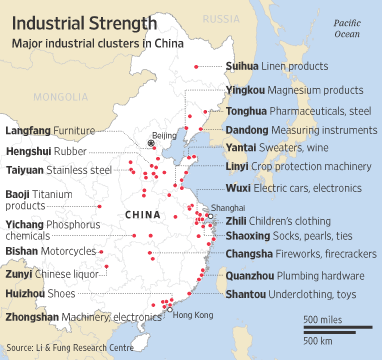
Government officials have decided that by August they have to come up with a plan for rebuilding a disaster zone covering about 50,000 square miles, an area larger than Indiana. Dozens of towns and cities need to be rebuilt, some nearly from scratch. One of the biggest projects will be Dujiangyan, a scenic and historic city that was heavily damaged.

The rapid rebuilding program plays to the strengths of China’s centralized, authoritarian government: its ability to mobilize physical and financial resources across a large nation, and to rouse popular enthusiasm with broad social campaigns.

City governments across China have “adopted” areas of Sichuan, sending in their own people to jump-start reconstruction. The central government, flush with cash from a booming economy, set aside $10 billion for rebuilding in this year alone, with more to come. There has been little of the dickering over budgets and lines of responsibility that delayed the U.S. effort to rebuild New Orleans after it was devastated by Hurricane Katrina.

Yet the breakneck pace set by the government — three months to plan, three years to rebuild — is no small challenge. Dujiangyan, as home to a unique 2,000-year-old irrigation project designated a Unesco World Heritage Site, is under particular pressure to do reconstruction right.

The people charged with rebuilding the city themselves need places to stay. With government offices rendered unsafe by the earthquake, planners set up temporary shop in a damaged building with cracks running up and down the walls and gaps in corners because one wall leans outward. Qu Jun, director of the Dujiangyan City Planning Bureau, keeps a cot in his office. Meals of instant noodles and fruit are taken on folding tables in the parking lot.

Mr. Qu unrolls a map of the city and lays out the problem. “If we don’t do it right now we’ve lost our chance,” he says. “Over 100,000 people are basically homeless in Dujiangyan….It’s inhumane if they stay [in temporary housing] for a long time. Half a year is already too much.”

Few refugees will be lucky enough to spend only half a year in the barracks-like temporary housing now going up around Sichuan. About 7.8 million homes were destroyed by the earthquake, and three times that number were damaged. Even if the planning effort can be finished in August, officials say they won’t be able to start building in earnest until winter.

Finding the space is the trick. The old city center is basically unusable: Mr. Qu estimates it will take two years just to clear out the rubble. The temporary housing also will occupy big swaths of land, further reducing the area available for permanent housing. So he thinks Dujiangyan will have to be rebuilt around a new city center, probably one of the small villages on the outskirts of the current town.

To supplement its own resources, the city government has asked architects and planners from France, Malaysia and Japan to contribute to the rebuilding plan. “Everyone realizes there will be a huge amount of real-estate activity going on in Dujiangyan,” says Harry Lu, head of the Shanghai office of WWCOT, a Los Angeles-based architecture and design firm that is also participating.

But the urgent pace of disaster recovery means throwing standard working procedures out the window. “Usually, in order to do a master plan like this, we need to live on the site for at least three or four months, in order to understand what kind of weather they have, what kind of population, what kind of industry, what kind of flowers grow there,” says Mr. Lu. Instead, he has a month to do everything. “The challenges are really huge. The more I think about this project, the more problems occur to me.”

Big decisions will have to be rushed: Does Dujiangyan now need an airport? What kind of buildings could best survive another quake? The planners know they can’t aim for perfection.

“We can’t guarantee there will be no mistakes in the plan, but we just want to make sure there are no big mistakes,” says Mr. Qu, the head of the city planning bureau. “Maybe after this urgent drive for reconstruction we can focus on improving the old town. Then we may have more time to focus on that. Now what we want to do is settle the people as soon as possible, and help tourism and the supporting industries recover.”

The old city center was, however, one of the centers of Dujiangyan’s busy tourism industry. The city has received more than five million tourists annually in recent years. The city’s main park is still closed to the public, and it is easy to see why.

Liu Xianjie, head of the Sichuan Institute of Urban Planning and Design, stops at the base of a pile of rubble. “Before the earthquake, thousands of people came here every day,” he says, gesturing upwards to an antique temple half-buried in stone and earth. “I’m afraid it will be very difficult for tourism to recover quickly.” To properly restore the Erwang temple — dedicated to the builders of the ancient waterworks — likely will take months of painstaking effort to ensure new work fits with original materials and design.

Nonetheless, tourism seems to be central to how the quake-stricken areas will revitalize themselves. Even away from major destinations like Dujiangyan, many mountain villages in the area have long had some small-scale tourism, offering local sights and rustic hotels. Those sources of income look to become much more important as sharpened safety and environmental concerns restrict industry in the quake-stricken counties.

In Beichuan, a mountainous county northeast of Dujiangyan, a county official says two-thirds of the factories are so damaged that they won’t be able to restart operations in their original locations. There aren’t many obvious options to replace the jobs and incomes lost from industry. Tourism sounds good, but in the absence of established draws local officials are getting creative. The earthquake itself has provided some ideas.

Song Ming, Beichuan’s Communist Party secretary, says he is looking into preserving the Tangjiashan “quake lake” as a tourist attraction. The body of water, formed when landslides blocked a river’s flow, was the subject of news coverage for weeks as soldiers worked to prevent it from collapsing and flooding the homes of millions of people.

“Now the whole world knows Tangjiashan. It’s a brand, and that’s something very valuable,” says Mr. Song, sitting outside at a tent at a resettlement camp in his county. A museum commemorating the earthquake is slated to be built in the old county seat of Beichuan, most of which was leveled by the earthquake.

For the locals, emotions are still raw, and such plans seem distant. “It’s a place of tragedy and sad memories. My family and my house are all gone,” says Yan Chun, a 29-year-old mother from Beichuan who lost her husband and her six-year-old son in the earthquake. “The only comfort for me now is my daughter,” she says, shielding the 4-month-old’s head from the Sichuan summer sun.

Dissent Slows China’s Drive For Massive Dam Projects

http://www.wsj.com/articles/SB119802214926737977

RISING TIDE
Dissent Slows China’s Drive For Massive Dam Projects
Local Critics Scuttle Hydropower Plants; The Right to Say ‘No’

By ANDREW BATSON
Updated Dec. 19, 2007 12:01 a.m. ET

DUJIANGYAN, China — Around 250 B.C., a Chinese official here designed an ingenious system of earthworks that tamed the flood-prone Min River and distributed its water to farmlands. Legend has it that he needed the assistance of a god to complete the task.

The waterworks still stand today, guiding the river at the point where it pours down off the Tibetan plateau and into the fertile plains of Sichuan province.

Now, they have become one of the key battlegrounds in China’s rethinking of the costs and benefits of its massive dam network. Seeking to control floods and produce clean energy, China’s central planners have presided over a relentless dam-building drive: The country’s 22,000 large dams represent nearly half the world’s total. But growing numbers of Chinese citizens are criticizing the environmental and social upheaval caused by the structures, and many point to the ancient Dujiangyan waterworks as a less-intrusive way to control rivers.

Just upstream, environmentalists and sympathetic government officials managed to scuttle a proposed extension of a large dam in 2003, arguing that the project would have diverted water away from the ancient site. Now opponents are turning their attention to a plan to build a series of hydropower plants on a nearby river, the only one in the region that hasn’t yet been dammed.

Dams have emerged as one of the few legitimate subjects of vigorous public debate, one that’s testing the limits of the public’s role in shaping policy in this authoritarian country. Beyond Dujiangyan, other proposed dams in places like Tibet have been put on hold, or scaled back, after public outcry.

“Times have changed. Engineers need to raise their awareness of environmental protection,” says Lu Youmei, the former head of the embattled Three Gorges dam project and now chairman of the Chinese National Committee on Large Dams, a major dam-engineering organization.

In other countries, public debates over dam projects have proved to be turning points in how a society treats environmental issues, says Andrew Mertha, a politics professor at Washington University in St. Louis and author of a forthcoming book on Chinese dams. In the U.S., for example, a 1963 government proposal to build dams on the Colorado River, in the area of the Grand Canyon, unleashed an outpouring of opposition. In 1967, the government abandoned the plan. Many scholars now date the decline of large-scale dam-building in the U.S. to that event.

While often touted as a way to provide clean energy and restrain floods, large dams also cause social dislocation, as whole towns are uprooted to make room for their reservoirs. Dams can also result in complex and sometimes unpredictable environmental changes: Stopping a river’s flow changes its ecology and can allow pollutants and silt to accumulate more easily.

Nowhere have the costs of dam-building been more visible than at China’s Three Gorges, the world’s largest — and perhaps most notorious — hydropower project. Begun in 1994, the dam forced the migration of millions and led to high unemployment in the region, deadly landslides, pollution and other environmental problems. Many of these problems were predicted by the project’s critics in the 1980s. But those who spoke out against Three Gorges, which had been endorsed by China’s top leaders, often saw their careers suffer as a result.

Last September, after years of suppressing criticism, Chinese officials frankly acknowledged a series of problems and said the Three Gorges project could lead to “catastrophe” if its issues aren’t quickly addressed.

Government officials had laid the groundwork for that admission with a gradual reconsideration of their dam-building approach. The shift is part of a broader move by the current Chinese leadership to soften a growth-at-all-costs economic philosophy with greater attention to society and the environment.

In its latest five-year plan, published last year, the government’s new policy is summed up in the ungainly phrase, “orderly development of hydropower on the basis of ecological protection.” It represents a retreat from the previous slogan, to “actively develop hydropower,” which was essentially a government blessing to any and all dam projects.

China isn’t ending its love affair with dams, which have played a central role in Chinese government policy since the Communist Party took power in 1949. The pace of dam building has actually accelerated in recent years as the booming economy has increased demand for the clean electricity that turbines mounted in dams can supply. One hydropower engineer trained in the 1960s, Hu Jintao, is now China’s president.

Even many experts critical of individual projects still believe that hydropower is one of the only ways China can meet its energy needs without causing massive pollution. The argument is more over how dams will be built than whether they will be built at all.

wsj_dujiangyan_graphic

“This is the most concentrated and most active period of dam building in China’s history,” says Liu Dehong, a former maritime-safety official who this year petitioned the government to slow down the pace of dam construction. Planners need to consider the impact of dams on local people and the environment, he says, to avoid any negative consequences. “We should not have a Great Leap Forward in this area,” Mr. Liu says, referring to China’s disastrous forced industrialization of the 1950s, which led to a famine that killed millions.

Some Chinese are particularly protective of Dujiangyan, located in the west of Sichuan province and at the edge of the Tibetan plateau. Every day, tourists stroll through a tree-filled park before coming to a view of a large river splitting in two. That division is the handiwork of Li Bing, an ancient magistrate credited with creating Dujiangyan. Using little more than stone, bamboo and rope, he cleaved the Min River into two channels in such a way that flood waters are automatically diverted.

In 2000, plans were finalized for a dam to be built upstream. Although some articles, which appeared mostly in overseas media, warned the dam could harm Dujiangyan, domestic opposition never gathered steam. Construction on the Zipingpu dam began in March 2001, and finished last December.

In April 2003, local officials held a large meeting to discuss plans for another dam, which they said was needed to regulate the flow of water from the reservoir at Zipingpu into the Dujiangyan waterworks. By then, Unesco, the United Nation’s cultural arm, had named Dujiangyan a World Heritage site, meaning China would get U.N. help in preserving it for posterity and publicity to boost tourism revenue.

This time, the plan sparked an immediate backlash. One major opponent: a new Chinese government bureaucracy created by the Unesco designation and charged with preserving the site’s cultural value.

Opponents said the dam would irrevocably damage Li Bing’s ancient design by altering the water flow and would also be close enough to be visible to tourists. The threat of the dam impinging on the heritage site shifted the ground of the debate from technical and environmental issues to the preservation of a national treasure. The cultural officials proved sympathetic, and granted dozens of interviews to the press, helping create a storm of media coverage opposing the project. That led to a surprisingly quick decision to abandon the dam. By August 2003, it was officially suspended.

“From the perspective of the local authorities, allowing the public to participate didn’t have a very good result,” says Ai Nanshan, a professor of environmental sciences at Sichuan University. Around that time, Mr. Ai and other academics founded the Chengdu Urban Rivers Association, a nonprofit group that advocates keeping rivers in their natural state and has kept an eye on Dujiangyan.

The national environment for dam projects was also beginning to turn. Similar protests over planned dam projects were unfolding elsewhere in Sichuan and in neighboring Yunnan province. Opponents highlighted forced relocation and damage to the environment and spectacular scenery. In Yunnan, they won a suspension of dams planned for the Nu River.

In January 2005, the State Environmental Protection Administration responded to the large number of reports of environmental problems with dams. It issued an urgent notice calling attention to problems at many dams and requiring projects to undergo environmental impact assessments. It blamed a surfeit of dams for causing some rivers to run nearly dry. Environmental officials followed up in February 2006 with new rules requiring public comment on the environmental impact of projects, including dams.

Yet there is a huge industrial and political establishment devoted to dam construction in China, and critics still face long odds.

Dujiangyan’s engineers are now focused on a 28-mile stretch of the Baitiao River, the only one of the six local rivers fed by the ancient waterworks that has not already been built up with dams. Engineers argue the plan, which would add a whole series of small dams and hydropower plants, would help expand the area Dujiangyan can irrigate by adding modern hydraulic technology.

Mr. Ai, of the Chengdu environmental group, says he first learned of the Baitiao River development in April 2006, when one of the group’s volunteers stumbled across a document describing it on a Sichuan government Web site. It was a request for public comment, but the environmental group discovered it just a day before the comment period expired.

The scholars swung into action. They sent letters to the government questioning the economic and engineering logic behind the development. Borrowing a page from their last successful campaign, they argued that development could damage a priceless piece of China’s heritage. But this time, opponents are handicapped by the fact that the planned developments are well downstream from the Dujiangyan waterworks itself, and would never be seen by most visitors.

Mr. Ai argues that at least one free-flowing river should be preserved in the Dujiangyan area to help maintain the spirit of Li Bing’s original design. “It’s like cutting off your foot. How can that not hurt the rest of your body?” he asks. Others say the planned dams could hurt water quality by making the river stagnant. The river currently helps supply drinking water to roughly 10 million people in and around the city of Chengdu.

Dujiangyan officials say they are listening, but want to plunge ahead. “I think we can’t just have opposition every time someone says ‘power plant,'” says Sun Longke, chief engineer of the Dujiangyan Administration Bureau. The Baitiao River project has gone through a thorough impact assessment, he says, and opponents’ fears are unfounded.

In August, the leaders of the project met with Mr. Ai and other critics at a Chengdu restaurant, and both sides said the discussion was cordial. The project leaders curbed their plans a bit. The number of planned hydropower stations has been cut to 10 from 15, and a 10-mile segment of the river will be entirely free of dams, Mr. Sun says. A spokeswoman for the Sichuan provincial government said leaders are still looking closely at the project and have not given it final approval.

While opponents of the Baitiao River project doubt they will succeed in killing it, they hope they can establish precedents for how China’s government should relate to its people.

“The question isn’t whether a single project should go forward or not. The question is whether there is a transparent process to decide things that affect the public interest,” Tan Zuoren, a writer active in the opposition to the Baitiao project, says at one of Chengdu’s tea houses, where intellectuals often gather. “We are training the government. Ordinary people have a right to say no.”

—Kersten Zhang and Shai Oster contributed to this article.