Here in late October 2017, I am reading a lot about the centennial of the 1917 revolution in Russia, and a lot about the 19th Communist Party Congress in China. It seems strange to me that the connection between these two events is not being discussed more.
Surely it is obvious? The most consequential and long-lasting geopolitical legacy of the 1917 revolution in Russia has to be that in 2017 China is still governed by the Communist Party. And yet this fact is glossed over in a lot of the current discussion about the meaning and legacy of the October Revolution. I was struck by the fact that, in Sunday’s special issue of the New York Times Book Review on the revolution, not one book about China was reviewed.
In Russia today, the 1917 revolution hardly seems like a live issue. Shaun Walker has a nice piece in The Guardian pointing out how ambivalent the current government is about embracing the October Revolution, and how it is not being officially celebrated:
Putin has been equivocal in his statements on the revolution but has made it clear that his main issue is the violent seizure of power undertaken by the Bolsheviks. Putin has fetishised the sanctity of statehood, however distasteful the ruling regime may be: whether it be in modern-day Kiev or Damascus, or in tsarist Russia.
“When we look at the lessons from a century ago, we see how ambiguous the results were, and how there were both negative and positive consequences of those events,” said Putin this week, coming back to a thought he has expounded on many times before. “We have to ask the question: was it really not possible to develop not through revolution but through evolution, without destroying statehood and mercilessly ruining the fate of millions, but through gradual, step-by-step progress?”
This, ultimately, is the key message from the Kremlin as the anniversary approaches. Monarchists and the ultra-Orthodox are free to idolise Nicholas II; communists and nostalgics are free to look back on the Bolsheviks as the harbingers of a new civilisation, but state collapse and violent protests are always to be condemned.
Cut to China, where the government is sponsoring the publication of a nice new edition of Lenin’s Collected Works to commemorate the centennial of the revolution, and the government is proudly wrapping itself in the flag of socialism.

Top propaganda official Liu Qibao in September gave a fascinating speech to a meeting commemorating the anniversary of the 1917 revolution, which has recently been officially translated into English. I actually think the whole thing is worth reading, but here are a few excerpts to give a taste:
The October Revolution brought Marxism-Leninism to China. After the First Opium War (1840-1842), China was gradually reduced to a semi-colonial and semi-feudal society and the Chinese nation was plunged into deep suffering. … The October Revolution ignited a new hope for realizing national independence and people’s liberation.
… A century ago, China was poor and weak, and it was bullied by big powers. Since then, our country has gone through many setbacks and hardships before rising up and achieving glory. The Chinese nation has undergone unprecedented changes — from standing up to prospering and strengthening to establishing its position amongst nations of the world.
Never in history have we been closer to the goal of the great renewal of the Chinese nation, and never in history have we had greater confidence and capability to realize this goal. This tremendous change is attributed to the fact that we have chosen the path of socialism which was opened up by the October Revolution…
The epoch-making historical feat of the October Revolution and the major achievements of the Soviet socialism system cannot be negated by dissolution of the Soviet Union. The reasons behind the Soviet breakup are many, including rigidity and conservatism; yet, the root cause was its turning away from Marxism-Leninism and from the socialist path created by the October Revolution.
China’s Communist Party is therefore saying, in so many words, that because of the failure of the Soviet Union, the true legacy of the 1917 revolution today is to be found in China. This of course is propaganda, but it is also in some sense actually true.
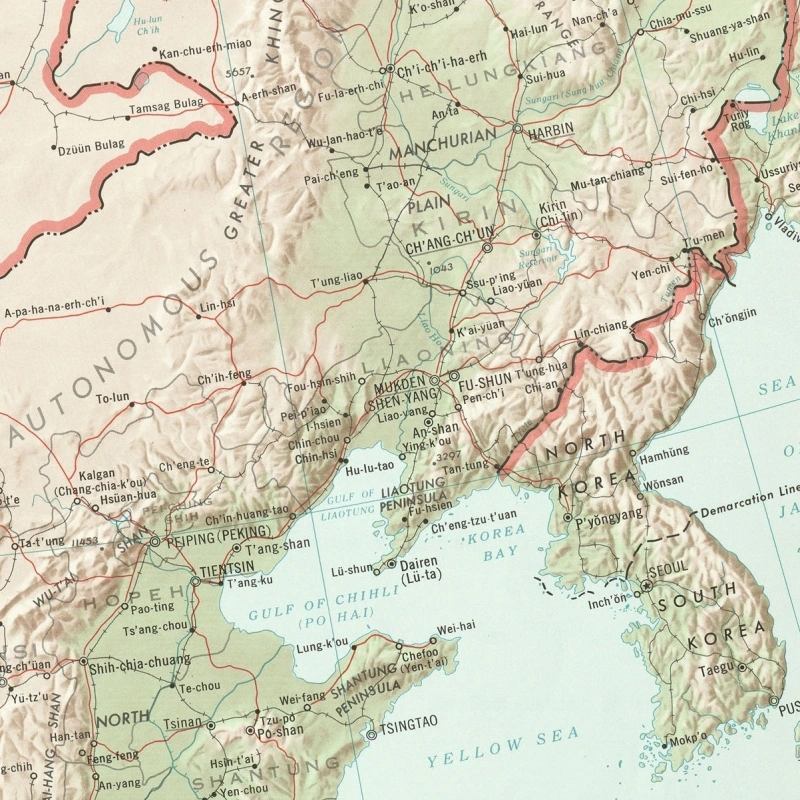
It may be even more true than the Party would like to admit. Although the Soviet Union officially recognized the Nationalist government during China’s civil war, it also quietly put its thumb on the scales to support the Communists during their campaign to capture Manchuria. And it was fear of provoking the Soviet Union that kept the US from intervening more decisively to support the Nationalists. Arguably, the Communist victory in the civil war would have been impossible without this implicit backing of the Soviet Union (see my previous post on this history for more detail).
Because of China, it seems like the question of the legacy of the 1917 revolution is still very much a contemporary one, rather than something that can be relegated to the history books.




 The Tangled Woof