Some accounts of the worldwide return of industrial policy treat it as a turn of the tide in the battle of ideas, the victory of a new way of thinking about the best way to manage economies. But it’s clear what has really shifted the position on industrial policy in the US, EU, and elsewhere are security concerns that did not mainly emerge from economic debates.
While it’s customary for people in government to use circumlocutions like competition, challenges, and concerns in public, everyone knows what the real issue is: that the US and China might get into conflict, and if they do that would blow up the global economy. To reduce exposure to that risk, political leaders want national economies to be organized differently than they are now.
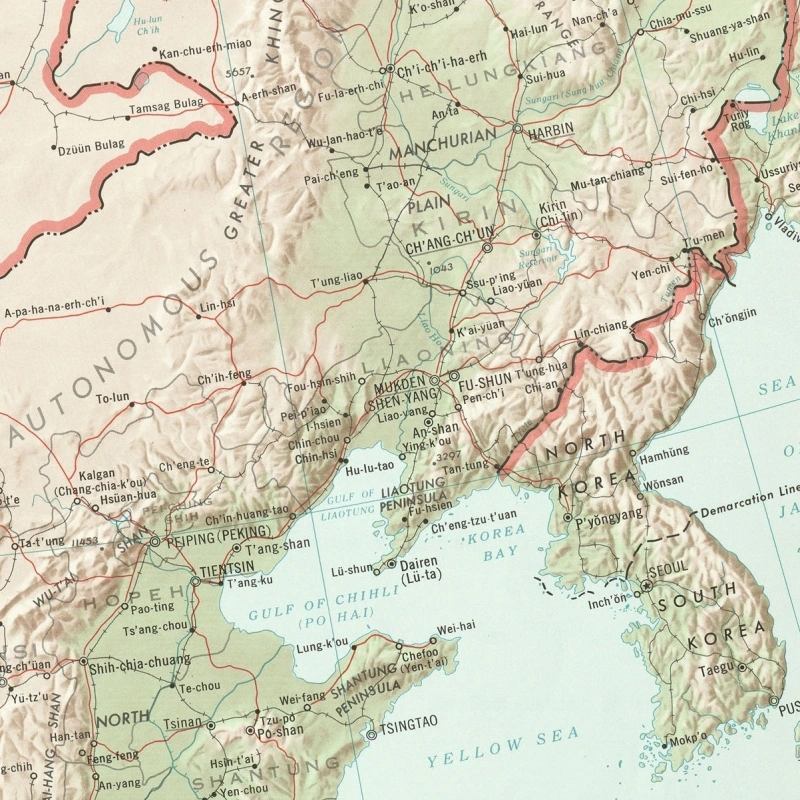
The centrality of security fears was also the pattern in an earlier episode of the emergence of interventionist industrial policy, as I was reminded when I recently stumbled across a 2001 paper, “Threat perception and developmental states in Northeast Asia,” by a Chinese social scientist, Zhu Tianbiao. He argues that the distinctive top-down economic policies of Taiwan and South Korea emerged historically as a response to the threats from mainland China and North Korea respectively. He quotes Park Chung-hee, the Korean general who took power in the 1961 coup and instigated the industrialization drive, as saying: “With a strong enemy across the 38th parallel, this economic struggle takes precedence over combat or politics.”
What I thought was useful about the paper was his suggestion that it is only a particular type of perceived security threat that ends up motivating an industrial policy push. Industrial policy makes sense as a response to a security threat only if the threat is severe enough to require direct government involvement in economic decision-making, and long-term enough so that the resulting economic development will have time to achieve some effects. If the security threat is ambiguous or uncertain, it is hard to achieve the political consensus for a major change in economic policy. And in the case of a severe and immediate security threat, that is to say actual combat, the pushing and prodding of industrial policy would be beside the point: there would be wartime mobilization instead.
Zhu argues that it was only after South Korea and Taiwan emerged from the aftermath of conflict, and the US retreated somewhat from Asia, that their distinctive industrial policy took shape.
US support in both cases made it possible to expect that there would be no immediate war, allowing the leaders of Taiwan and South Korea to think in terms of economic development. At the same time, there was uncertainty associated with US support. It was therefore the combination of expected short-term calm and the uncertainty about long-term outside support that gave rise to the quest for economic independence in Taiwan and South Korea, and made rapid industrialization their top priority.
Similarly, he argues, both Taiwan and South Korea shifted away from highly interventionist policies in the 1980s and 1990s when their security threats became less severe. China under Deng Xiaoping became less threatening: the PLA stopped bombing Taiwan’s outlying islands, and the government started courting Taiwanese investors instead. North Korea did not become less threatening, but the credibility of its threats declined as its economy fell further behind the South; the US also stationed more troops in South Korea and conducted regular exercises.
The receding security threats helped open up economic policymaking to different ideas and interest groups. Although China under Mao had a very different response to Cold War-era fears of invasion–the Third Front was much closer to war mobilization–the easing of those security fears also set the stage for its economic liberalization (for more, see my older post China’s security fears and the Cold War economy).
Those historical episodes suggest industrial policy is likely to remain a prominent part of economic policy in Western countries as long as their security fears are elevated. If there’s a silver lining suggested by those precedents, it may be that the focus on industrial policy means governments judge the threat to be severe, but, thankfully, not immediate.
 The Tangled Woof