The best music I heard in 2015

This is a list of my favorites among all the recordings I heard for the first time this year, not of things commercially released in 2015 (same rules as my books list). I commend you to Ted Gioia’s best of 2015 list for something more current; the list below is purely a product of my own idiosyncratic listening habits. Unsurprisingly, it’s heavy on the jazz, but I have a few other things in there to mix it up. Alphabetical by artist:

  • Henry “Red” AllenWorld On A String. One of the definitive statements of swing era jazz, never mind that it was recorded in 1957 rather than 1937. Incredibly creative solos from Allen and collaborators, including Coleman Hawkins and Buster Bailey.
  • Gary Clark, Jr.Live. A charming young man with a straight-up monstrous guitar sound; while his studio records feel a bit overproduced, this bluesy live setting is ideal. The ghost of Hendrix is definitely hovering nearby, but he would be smiling I think.
  • The GladiatorsStudio One Singles. A long string of roots reggae classics; this collection is more consistent than either their album Trenchtown Mix Up, or the other widely-available collection Bongo Red.
  • Ice Cube – Death Certificate. When the NWA movie came out this year I went back to the records, and the truth is that NWA’s songs don’t hold up that well these days. Ice Cube’s solo stuff really does, however. And somehow I missed this one the first time around: funky, slamming production and hard-hitting rhymes.
  • Andrew JaumeMerapi. A French jazz saxophonist and guitarist improvise with a Javanese gamelan orchestra in a rare but successful mixing of the traditions. A completely ravishing sound; I had been waiting for this album, without knowing it, for years.
  • Thelonious MonkBig Band And Quartet In Concert. Despite having been a Monk fan for many years, I am still discovering great recordings: the long, complex big band arrangements are unique and wonderful, and the quartet statements are definitive.
  • Tiny Parham1928-1930. An unjustly neglected figure of 1920s jazz, Parham’s complex arrangements draw on the same well of exotic “jungle” effects as early Ellington.
  • Ernest Ranglin – Jazz Jamaica From The Workshop. A 1962 session featuring several Jamaican giants playing not instrumental reggae but  proper jazz. The guitar virtuoso Ernest Ranglin is the star; he would go on to fruitfully combine jazz with reggae on albums like Memories of Barber Mack, which I also enjoyed a lot.
  • Moacir Santos – Coisas. Wonderful jazzy miniatures by a largish ensemble led by the Brazilian composer, from 1965. Far superior to his 1970s outings on Blue Note.
  • Sly StoneI’m Just Like You: Sly’s Stone Flower 1969-70. The mellow, minimalist funk of Fresh-era Sly Stone is one of the great sounds in pop music. This collection of singles is like discovering a whole new Sly album from that crucial period; essential.
  • TaumbuEncantado. My most random musical discovery of the year (heard it on the radio in Mexico), a really lovely and creative album of Latin jazz.
  • Lucky ThompsonTricotism. Thompson is one of my favorite tenor saxophonists, with a flat-out gorgeous sound. This classic session features him with minimal accompaniment, the better to showcase his tone.
  • Hozan Yamamoto – Ginkai (Silver World). A Japanese shakuhachi master joins a jazz group for an atmospheric mixing of the traditions. Obscure but worth searching out.

For reference, here’s a link to my 2014 music list.
David Moser recalls the early days of the Chinese jazz scene

David Moser’s piece at The Anthill, “The Book of Changes: twenty-five years in Chinese jazz” is truly delightful and a must-read. Here is one excerpt:

One striking characteristic of Chinese jazz musicians was their uniform reverence for Miles Davis. Almost to a person they preferred the spare, cooler style of Miles to the rapid pyrotechnic displays of other jazz artists. They pointed to his use of empty space and understatement, “saying more with less”, all preferences that, it seemed to me, had a resonance with Chinese visual arts. The best selling jazz album of all time is Miles’s classic Kind of Blue. In the liner notes to the album, pianist Bill Evans compared jazz improvisation to the art of calligraphy. I remember at the time thinking that it was a gratuitous comparison, a trendy invoking of Oriental exoticism. But it turned out my Chinese musician friends also saw commonalities in the two disciplines. The calligrapher, like the jazz artist, spends a lifetime mastering the basic forms in preparation for a spontaneous moment of creation, during which the artist must act in a non-deliberative way to produce one continuous, expressive “line” – for the calligrapher in space, for the jazz player in time – without the option of revising, restarting or rethinking. Each time the result is a unique form reflecting the artist’s mental and emotional state at that moment. Miles’s philosophy of jazz seemed to echo centuries of Chinese aesthetics. He famously told his sidemen, “Don’t play what’s there, play what’s not there.” If that’s not Daoism, what is?

And another:

Our group played nearly every Saturday for four years. The audiences were small but attentive, and I enjoyed the barrage of questions we received after. Puzzled by the long improvised solos, people asked me “How are you musicians able to memorize all those complicated melodies?” I told them that the music was completely ad-libbed, not memorized. “Well, without a score, how can you tell a wrong note from a right one?” Indeed. Or, “If the music is all improvised, then why bother to practice?” And, “How come the trumpet and saxophone all seem to take turns playing, while the drums, bass, and piano play all the time? They should be paid more!”

Many thanks to David for writing all this down. There are also a couple of nice photos showing some musical luminaries in their awkward youth.

Lost masterpieces of jazz-gamelan fusion resurface

One of my favorite musical genres is characterized by daring rhythmic complexity and an ethic of competition among top players, and has its origins in folk traditions but underwent a surge of innovation and modernization during the 1920s. My other favorite musical genre is jazz; I’m talking of course about the gamelan music of Indonesia, particularly Bali.

Jazz and gamelan do have some things in common, as I suggested, but it’s still true the genres are not particularly close. Yet right-thinking people enjoy them both, and there have been occasional attempts to bring them together. I just discovered that the famed German record label MPS has made its back catalog available digitally this year; among many other things, this means that two classic works that fuse jazz and gamelan are now readily available again.

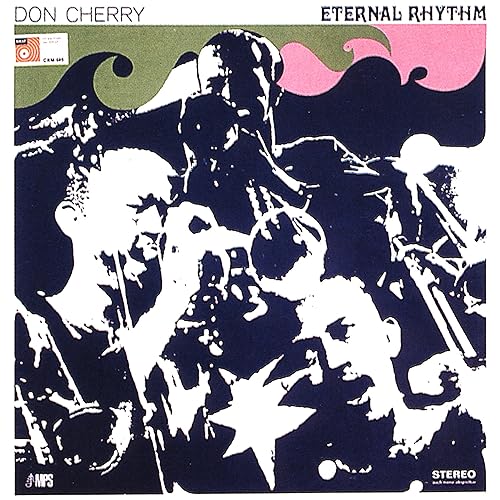
The first is Don Cherry’s wonderful Eternal Rhythm, a long multi-themed suite of the sort he explored after leaving Ornette Coleman’s group. Cherry plays a few gamelan instruments, as well as flute and trumpet, on this 1968 concert recording. The late, great Sonny Sharrock makes an appearance with his crashing electric guitar, along with some other jazz giants, and the whole thing is generally wonderful. This period in jazz produced a lot of useless noodling but this is a masterpiece that seems to point the way to a whole new genre of music.

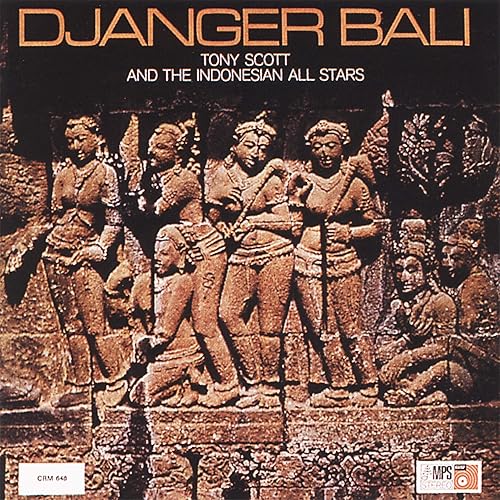
Next up is a new discovery for me, a session the great clarinetist Tony Scott recorded in 1967 with some Indonesian jazz musicians. On Djanger Bali the fusion strategy is different: rather than putting gamelan instruments into a jazz context, a traditional jazz quintet plays gamelan-inspired themes. The session also includes a couple of straight jazz tracks which are not as interesting, so overall the impact is not as deep as Eternal Rhythm, but it’s still a worthwhile listen.

Another great piece of jazz-gamelan fusion is Merapi, a 1996 album that has sadly not resurfaced and is not easily obtainable in physical or digital form. It features the saxophonist Andre Jaume and guitarist Rémi Charmasson playing alongside a full gamelan orchestra–yet a third strategy for merging the two traditions. There’s a lot more of the real gamelan sound here, and I think this is the most ambitious fusion attempt of the three. Again I am surprised that there have not been dozens more sessions exploring the sonic possibilities this collaboration reveals.

The concept of progress: appreciating Ted Gioia’s History of Jazz

Somewhat against my better judgment, I’ve been desultorily reading Ted Gioia’s History of Jazz. These kind of books are dangerous, to me anyway, because in the minutes it takes to read a few pages you can come up with many, many hours of new stuff to listen to. But it has already inspired me to go back and listen again to some great early jazz recordings which have not been on the playlist for many years–in particular, rediscovering the sprightly chamber jazz of Joe Venuti and Eddie Lang has been a real treat. And passages like this one lift the book far above the ordinary:

From its earliest days, jazz had been a forward-looking art, continually incorporating new techniques, more expansive harmonies, more complex rhythms, more intricate melodies. Sometimes this ideology of progress was stated explicitly, as in Beiderbecke and the Chicagoans’ oft-spoken praise of Stravinsky and other contemporary classical composers; in other instances, no words were necessary, as with the implicit modernism of Armstrong’s breakthrough recordings of the 1920s. But whether they expostulated about the future of music or merely announced its arrival through the bells of their horns, the leading musicians of early jazz were modernists in the truest sense of the term. They were admired—or chastised, as the case may be—as daring exponents of the new and bold.

It is easy to lose sight of just how remarkable this modernist bent was, given its context. The concept of progress has played a modest role in most ethnic music traditions. Those who draw connections between jazz and African music miss this important difference. The griots of West Africa, for example, aim to preserve their cultural legacy as it is handed down to them. This is not a mere aesthetic choice, but a cultural imperative: they are the historians of their society and must maintain the integrity of their precious musical heritage. …

Almost from the start, jazz players embraced a different mandate, accepting their role as entertainers and pursuing experimentation with an ardent zeal. This created a paradoxical foundation for jazz, one that remains to this day: for the jazz musician soon proved to be a restless soul, at one moment fostering the tradition, at another shattering it, mindless of the pieces. Even more striking, this progressive attitude of early jazz players came from members of America’s most disempowered underclass. Recall that this music was not only viewed with apprehension by much of the ruling class but was often belittled and derided even within black America’s own ranks. In the face of this hostility, simply preserving the African American vernacular music heritage—saving the legacy of a Buddy Bolden or King Oliver from the oblivion that obscures the early history of most traditional forms of music— would have been a major achievement. But advancing the jazz idiom to produce an Ellington or Armstrong was nothing short of miraculous—and all in the span of a single generation. One searches in vain through all the countries of the world to find another example of such a rapid and dramatic transformation from folk music to art music.

Books like these are a huge organizational challenge because the material can be approached so many different ways: chronologically, biographically, thematically. Gioia has done a good job of using all three approaches; the frame of the book is chronological, but when he introduces each figure they get a full biographical treatment, even when that requires going well outside the chronology of the rest of the chapter. For instance, the xylophonist Red Norvo is discussed early on for his 1930s recordings, but Gioia also assesses his 1950s work with Mingus and other later recordings (the treatment of Norvo is also a good example of Gioia’s generous approach to “minor” figures outside the standard jazz pantheon).

He is also, by the way, an excellent guide to more recent music: his annual best-of lists are wonderful, eclectic and huge.

Here are 10 absolutely killer jazz albums

One reader recently complained to me that there was not enough jazz on the blog. It has indeed been heavy on the economics of late, but since I’m on vacation right now this seems like a good time to remedy that problem. Here’s some jazz listening recommendations, 10 of my favorites. It’s not a top 10 list (I could easily do a few more such lists of albums I like just as much), and the only criterion is that the whole recording has to be excellent, not just one or two great tracks. I also skipped over the obvious ones that everyone knows, like Louis Armstrong or Miles Davis; there’s also no Ellington or Sun Ra, since their output is too big and too great to be reduced to one recording. Most of these are not new favorites but just things that have been called to mind because they came up recently when the iPhone was on shuffle. In alphabetical order:

  • Sonny Criss, Sonny’s Dream (aka Birth Of The New Cool). A masterpiece of modernist big band composition that has been completely and unjustifiably slept on. It’s really a Horace Tapscott album—he did the arranging but does not play—and the complex backgrounds inspire fierce alto sax solos from Criss that he never matched on other recordings.
  • Exploding Star Orchestra, We Are All From Somewhere Else. This group led by Rob Mazurek is the true contemporary heir of Sun Ra—large ensembles, free improvisation, spacey sounds. But I’m actually not a big fan of the 1970s style of squalling collective improvisation, so rest assured that this is something very different. While chaotic the group is intensely beautiful and very listenable.
  • Stan Getz & Bob Brookmeyer, Recorded Fall 1961. Those who, like me until recently, only know Stan Getz for his appearance on the wonderful if ubiquitous Getz/Gilberto are missing out on a great improviser. In this live recording the interplay between Getz and trombonist Brookmeyer is some of the finest I’ve ever heard.
  • Roy Haynes, Out Of The Afternoon. An incredibly powerful quartet album. Roland Kirk’s solos on multiple horns are some of the best he ever recorded. The band is so good, with fantastic and subtle drumming from Haynes, that it’s a tragedy they only made this one album.
  • Masada Chamber Ensembles, Bar Kokhba. One of the first albums I ever heard from John Zorn’s various Jewish-themed composing projects, which he has now been pursuing for more than two decades. And it is still one of my favorites—the tunes are lovely and the eclectic instrumentation, which varies on every track, gives each piece a distinct character.
  • Paul Motian, Garden Of Eden. One of a series of fantastic groups that Motian led in the last decade before his death. His drumming is of course without compare, but the real innovation of his groups, often featuring multiple saxophonists and guitars, is their focus on a distinctive style of collective improvisation more rooted in bebop.
  • Greg Osby, The Invisible Hand. Surely one of the best jazz albums of the century so far, from a modern jazz super group including pianist Andrew Hill and guitarist Jim Hall. Like Hill’s masterpieces from the 1960s, the sound is dark, complex, mysterious, but with stunning flights of invention.
  • Sam Rivers, A New Conception. One of the trio of great Blue Note albums that Rivers recorded in the 1960s. His Fuchsia Swing Song is an acknowledged avant-garde classic, but this album of standards is just as good and much less well known.
  • Allen Toussaint, The Bright Mississippi. A great jazz album from the godfather of New Orleans soul. Toussaint’s strong and rhythmic piano gives every piece a fantastic feel, in touch with the roots but very alive and not at all retro.
  • Mal Waldron & Steve Lacy, Sempre Amore. I have many recordings by this great jazz duo, but this is probably my favorite. The focus on Strayhorn compositions pushes Lacy’s astringent soprano sax and Waldron’s moody piano in a more lyrical direction than on some of their more abstract works.

Style is a special case of technique

That line is from one of the better passages in Philip Glass’ new memoir, Words Without Music. The point is as true of writing as it is of music of course, and it’s interesting that the memoir itself demonstrates it. What I mean is that the memoir does not have much style, because there is not much writing technique in it–a sharp contrast to the very distinctive Glass musical style. Most of the book’s charm comes from how artless it is; often it really does sound like a guy just telling you stories about his life (a guy who happens to be a famous artist). Of course that works better when you are sitting with the guy over a beer. It can get tiresome on the printed page, and there are definitely some longueurs in the memoir. But the occasional insights are still interesting, and the account of his musical education with Nadia Boulanger is clearly very heart-felt:

We sat quietly for only a moment and I understood, suddenly, that somewhere along the way, she had changed the point of the exercise. I had thought she was teaching technique— the how you “do” or “not do” in music. But that was over. She had raised the ante. Now we were talking about style. In other words, there could be many correct solutions to a musical problem. Those many correct solutions came under the rubric of technique. However, the particular way a composer solved the problem, or (to put it another way) his or her predilection for one solution over several others, became the audible style of the composer. Almost like a fingerprint. Finally, to sum this all up, a personal style in a composer’s work makes it a simple matter for us to distinguish, almost instantly, one composer from another. So we know without doubt or hesitation the difference between Bach and Bartók, Schubert and Shostakovich. Style is a special case of technique. And then, almost immediately, we know that, beyond a shadow of a doubt, an authentic personal style cannot be achieved without a solid technique at its base. That in a nutshell is what Madame Boulanger was teaching. Not as a theory, because theory can be debated and superseded. She taught it as a practice, a “doing.” The realization came through the work. Her personal method was to just bang it into your head, until one day, hopefully, you got it. That’s how, in the end, I understood my work with her.


In the future, all economic debates will be conducted through rap battles

That happy future is getting closer, thanks to this excellent discussion of the changing policies of the Chinese government under Xi Jinping, delivered in the hip-hop idiom:

And let’s not forget previous instalments in this genre:

  • the rap battle on currencies on the codependent US-China economic relationship
  • the original Keynes vs. Hayek rap battle, though round two is even better

Jazz discoveries so far in 2015

The blogging has been heavy on the economics of late, so here is some good music that I heard for the first time in 2015:

  • Preservation Hall Jazz Band – That’s It!. By my old-fogey standards, this counts as a new recording–it was issued in 2013. And it’s one of the most fun things I’ve listened to in a while. It is very far from the musty recreations of New Orleans traditional jazz that I feared; the Preservation Hall group on this recording has a lot of younger players, and they are doing all original tunes not standards. The result is lively, rhythmic and feels not at all preserved.
  • Jazz Jamaica From The Workshop. This 1962 session features many of the instrumental giants that would go on to dominate Jamaican music–Roland Alphonso, Tommy McCook, Don Drummond, Ernest Ranglin. For any reggae lover like myself, that is enough to recommend it. But they are not playing reggae here, this is actually properly in the jazz idiom. In a way it feels like a glimpse of an alternate musical future–what if Tommy McCook had gone on to do lots of tenor-and-rhythm dates for Blue Note? It didn’t happen, and I’m happy to have reggae and dub instead, but it’s still fun to listen and ponder. The real star of the session is guitarist Ernest Ranglin, whose virtuosity works well in a jazz context (his great latter-day recording Below The Bassline is a more conscious fusion of jazz and Jamaican rhythms).
  • Moacir Santos – Coisas. Wonderful miniatures by a largish ensemble led by the Brazilian composer, from 1965. Far superior to his 1970s outings on Blue Note.
  • Gil Evans – The Individualism of Gil Evans. The famous Gil Evans-Miles Davis collaborations (Sketches of Spain, etc) are of course classic recordings and I was exposed to them early on in my jazz education. But over the last couple of years I’ve been exploring Evans’ recordings under his own name, many of which are fantastic and much less well known. The moody arrangements on this are fantastic; I particularly liked the slow and spooky cover of Willie Dixon’s “Spoonful.”
  • Gary Burton – A Genuine Tong Funeral. The title is a bit of a joke, as the recording carries a disclaimer that this music has nothing whatsoever to do with Chinese traditional music. It’s a series of longer pieces composed by Carla Bley featuring Gary Burton’s vibes quartet augmented by a larger group with horns. An excellent example of the rethinking of big band music that was going on in the 1960s.
  • New Jazz Orchestra – Le Dejeuner Sur L’herbe. Another innovative big band recording from the 1960s, previously mentioned here.
  • Jan Garbarek – “Hasta Siempre” from Wichi-Tai-To. Garbarek’s early recordings for ECM come highly recommended as masterpieces of the 1970s avant-garde, but I have generally found them to be more miss than hit. One of the hits is this fantastic cover of Carlos Puebla’s tune–a.k.a. “the Che Guevara song”.

Things from the UK that I’m enjoying

And I mean besides the stalwarts of rain, irony and mushrooms for breakfast, all of which I got to sample briefly on a work trip last week.

A recent discovery is Europe in Autumn by Dave Hutchinson. The setting of a future Europe that has splintered into numerous microstates has a ripped-from-the-headlines feel, even though it was published well before Scotland’s close-call referendum on independence. Technology plans almost no role in this imagined future, most of the thinking is about political and social changes and their consequences–a surprisingly rare strategy for any author, genre or otherwise. The book was highly recommended by Adam Roberts, himself a British author of no mean chops, and I did quite enjoy it–the best parts are almost like an Alan-Furst-for-the-2030s in the way they give you a view from the social and geographic margins of Europe. The plot of last third or so of the book rather falls apart, which for me keeps it from being the kind of masterpiece that Roberts calls it, but on the whole it’s both fun and thought-provoking. Previous British entries in this smallish category of “political science fiction” include Ken MacLeod’s excellent Fall Revolution series.

Under the more capacious category of obscure 1960s jazz, we have the UK reissue this year of Dejeuner sur l’herbe, a 1968 album by The New Jazz Orchestra. Neil Ardley is the man behind it, and no, I had never heard of him or most of the British players on this album before either. The rapturous comments on the Amazon.co.uk site call this one of the best jazz albums ever, which it probably is for a certain generation of British jazz listener. I haven’t listened to it enough yet to make that call, but already it is clear that it is in fact very good, and very reminiscent of the great Gil Evans albums of the 1960s. It’s a good reminder that there was some interesting stuff happening in the UK jazz scene back then. In particular I’m a great fan of Joe Harriott, who recorded some lively albums in the idiom of Ornette Coleman, and also some of the first and best attempts to meld jazz with Indian classical music.

The best music I heard in 2014

Like the books list, this is my list of my favorite music that I heard for the (mostly) first time in 2014, not of things commercially released by the music industry in 2014. Generally I spend a lot more time listening to old music than new music, not because I don’t like new music but because I still don’t feel like I’ve listened to all the good stuff already out there. For a guide to newly-released music, you can’t do better than Ted Gioia’s — I still haven’t worked my way through the recordings he recommended from 2012. In no particular order, the music that stood out for me this year:

  • Jelly Roll Morton – Last Sessions: The Complete General Recordings. This is cheating a little bit, since I did not hear this for the first time in 2014, it’s been sitting in my house for years. But it didn’t make as much of an impression when I was first heard it. When I went back to it this year, it was,well, wow. The usual top-jazz-albums-of-all-time lists tend to name his Red Hot Peppers sessions as the must-hear classics, but I think these later recordings are probably more listenable for most people. For me their greatness comes from how they showcase Jelly as a fantastic blues singer, an aspect of his talents you will not hear on the early group recordings.
  • Bob Marley’s live albums. I came to reggae through the back door, so to speak, first getting interested in the more experimental dub side of things and then working my way into roots and more mainstream stuff. So I used to be somewhat sniffy about Bob Marley (“too popular”), an attitude I am now happy to completely reject: the songs are just good. The first Wailers album in particular is fantastic, but the live albums that I stumbled across this year are a revelation. Live! is the more famous recording, but Live At The Roxy may in fact be better — certainly the setting is closer and more intimate, less stadium rock. And I actually prefer the version of “No Woman No Cry” to the one on Live!, which everyone knows because it was included on the ubiquitous Legend compilation. The other great reggae I discovered this year was Israel Vibration’s The Same Song, a roots classic.
  • Warne Marsh – All Music. One of the truly unique voices on the tenor saxophone, who sounds utterly unlike any other jazz player (and how often is that really true?). This is probably my favorite of his recordings though pretty much all of them are worthwhile. In fact it’s another rediscovery — I picked up the LP many years ago at a library sale, but it’s been sitting unheard in a box since I’ve been living in China.
  • Exploding Star Orchestra – Sixty-Three Moons of Jupiter. I love everything this Chicago outfit has put out: they are the true contemporary heirs of Sun Ra and the free-jazz big-band concept he more or less invented. The latest recording is split between the big band work and a CD of leader Rob Mazurek’s electronic compositions. I’m not so into the electronic stuff, but the swinging polyphonic spree of the full orchestra has few equals on this planet.
  • Randy Weston – Little Niles and Highlife. I am a sucker for the African-themed jazz of the 1960s, not because it is really African but because invoking Africa was so often a great excuse to beef up the percussion, focus on rhythm, and generally break into new compositional territory. A series of Weston’s albums are now easily available as part of the Capitol Jazz Vaults MP3 reissue series, and these two were the ones that stood out: Little Niles has great tunes (the title track is a classic) and orchestration, while Highlife busts out the heavy percussion and horns.
  • Barney Wilen – Tilt. A great but largely lost album of 1950s mainstream jazz, played with startling confidence by the then very young French tenor sax star. I wrote more about Wilen here.
  • Fania All-Stars – Live At The Red Garter, Vol. 1 & 2. Kicking salsa recordings from the 1970s. Vol. 1 is the more consistent disc, but “Noche” on Vol. 2 is quite possibly the best Latin jazz track I have ever heard. This year I also went back and listened again to some other Latin jazz I had not heard in a while, and must give a plug to Sabu Martinez’ Jazz Espagnole album from 1958: truly fantastic, a peak of the genre.
  • Lee Konitz & Red Mitchell – I Concentrate On You. A very unlikely concept: Cole Porter songs played by a minimalist duo of alto sax and bass. But I found myself going back again and again to this recording for its pure, melodic beauty. This and other recordings are leading me inexorably to the view that Lee Konitz is one of the most consistently surprising and delightful saxophonists in jazz.
  • Khan Jamal. I love the vibes, but was not familiar with him until I came across two of his classics of the 1970s avant-garde: Drumdance to the Motherland, an indescribable mashup of vibes, guitar, dub echo techniques and freaky clarinet, and The River, a ravishing duet of Jamal on vibes and Bill Lewis on marimba, on the legendary lost Philly Jazz label. Only half of Drumdance is really listenable but that half is great fun, and The River is pure beauty.
  • The dB’s – Falling Off The Sky. An actual new release, just to mix things up. These are just legitimately great, catchy guitar-pop songs, but those are an impossibly rare commodity these days.