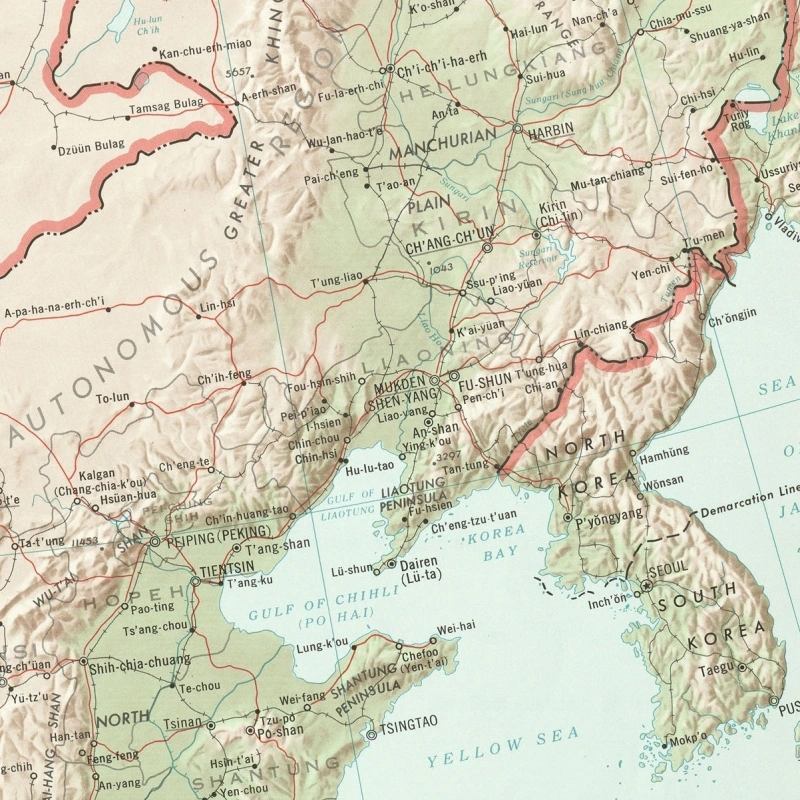
One of things I’ve often heard said about China over the years is that 3-5% growth would be equivalent to a recession, since they are used to growing at 8-10%. That may be true at a national level, but at the local level you can now find places that are in outright recession by anyone’s standards. Mark Magnier at the WSJ did some nice reporting from Jixi, an isolated coal town in the far east of Heilongjiang province, about an hour’s drive from the Russian border. It’s a treat for me to see this otherwise obscure town get a dateline in a major newspaper, since I have been to Jixi a few times.
Jixi was the the slowest-growing city in China in 2013, and things have gotten even worse this year: the local economy has shrunk 3.7% (and yes, that’s negative 3.7%, not growth of 3.7%) and capital spending has fallen by more than 20%. These are obviously horrible numbers, and the cause is also pretty obvious: coal prices have been in the toilet for a couple of years already, and the city is basically built around a big coal mine and doesn’t have much else going on. So it’s not representative of the Chinese national economy, which has a lot more going on than coal. But as I’ve pointed out before, China’s mining belt is in fact pretty large and a bigger part of the economy than many people realize. Jixi may be an extreme example, but China has a lot of coal towns, and most of them are in trouble too.
Is there more to Jixi’s problems than just a coal bust? Sure, any city built on top of a coal mine is going to decline when the coal runs out. But it’s certainly my own impression that Jixi and other places in Heilongjiang have not done a good job on using the windfall gains from the past decade’s resource boom to develop more broadly. There’s a nice quote in Mark’s piece which I think captures some of the distinctive old-school central-planning flavor you find in Heilongjiang (even agriculture is still more state-dominated up there, with large state farms and collectives):
“Heilongjiang was the first to start the planned economy and is the last to give it up,” said Jiao Fangyi, economics and business dean at Heilongjiang University. “We have great ample natural resources, but the good times are over. It’s like we’re begging for food from a golden bowl.”
 The Tangled Woof