My year in blogging, 2016

The second year of this blog has been a good one: total pageviews are up about 33%, and I also wrote more (91 posts against 73 in 2015). My top five posts this year in terms of traffic were:

I’m pleased and surprised that my annual book review topped the list (mostly thanks to Tyler Cowen’s link I think), although less surprised that the admittedly clickbait-y posts on McCarthy and Trump did well. Both the Trump and Xi Jinping posts were mainly translations, which I find I really enjoy doing. The main non-China theme on the blog this year was nationalism, the subject of several posts though none of them definitive.

Other posts that I myself liked, but that did not do so well in terms of traffic, include:

On to 2017!

The Soviet Union’s pivot to Asia

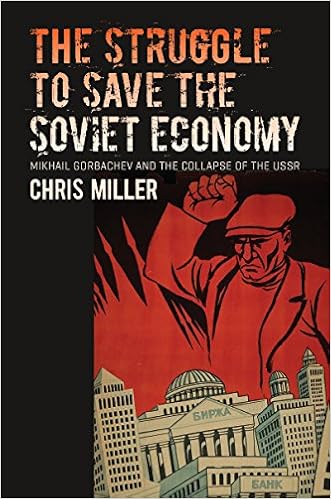
I very much enjoyed Chris Miller’s new book The Struggle to Save the Soviet Economy, which explains just how and why the Soviet Union’s economic problems became overwhelming in its last decade of existence. I was too young when the USSR broke up to do much more than just register the news headlines, so the book helped me get a better understanding of the events leading up to its collapse. One of Miller’s themes is that perestroika was not in fact an ill-considered attempt to rapidly introduce Western neoliberal economics, but rather an attempt to emulate the reforms that China was implementing so successfully at the time:

The stagnation and crises of the 1970s and 1980s in Eastern Europe and in the West convinced Soviet leaders that they needed to look elsewhere for models of reform. The rapidly growing economies on the USSR’s eastern border were the obvious place to turn. Most historians have overlooked perestroika’s Asian roots, but they were clear to contemporaries. Leading economist and Gorbachev adviser Stanislav Shatalin, for example, was asked by a journalist which of the world’s economic models the Soviet Union should emulate. Should it copy the West, or learn lessons from its Eastern European socialist allies? The question of international orientation had vexed Russia since Peter the Great, but like many perestroika-era intellectuals, Shatalin believed it was time for something new. “We need to be more attentive to the experiences of Japan, South Korea, and China,” he said. “It is time to unite the Slavophiles and Westernizers, and turn our face to the east.” …

One irony, many Soviet officials noted, was that China’s policies were not actually new. Not only was Deng’s policy of “reform and opening” similar to Lenin’s New Economic Policy, it also mirrored changes to economic governance mechanisms that some Eastern European countries like Hungary tested in the 1960s and 1970s. …But the Soviet officials who embraced China as a model did so not because they thought Beijing’s policies were unique, but because they believed that China provided compelling evidence of what such reforms could accomplish.

Miller’s argument is not that Gorbachev’s reforms were too aggressive or poorly designed, but rather that their effectiveness was undermined by heavy opposition from entrenched interests in the bureaucracy. With the budget in crisis and inflation spiraling, the incomplete reforms could not stabilize the economy and so it collapsed. (This view is similar to the argument made by Jeffrey Sachs and Wing Thye Woo in their classic 1994 article “Structural Factors in the Economic Reforms of China, Eastern Europe, and the Former Soviet Union”). For me, the book had just the right balance of analytical coherence, narrative drive and use of original sources; a great read and now a late addition to my best books of 2016 list.

Another virtue of Miller’s book is how it gives a sense of the socialist countries compared ideas and borrowed from each other, forming a common and distinctive intellectual universe. For more on this kind of cross-pollination, see a previous post on the influence of the New Economic Policy of the 1920s on Chinese economic reforms of the 1980s, and my short account of how China first looked to Eastern Europe for reform ideas before turning to Japan and Korea.

Cormac McCarthy’s contribution to the theory of increasing returns

I really enjoyed this anecdote about the writing of W. Brian Arthur’s classic article on increasing returns from 1996:

As we are wrapping up the interview, he [Arthur] tells me an anecdote about the creation of that Harvard Business Review article. “I don’t know if you know the writer Cormac McCarthy,” he begins, “but I was very good friends with him at the time. I mailed the draft down to Cormac, who was in El Paso or somewhere like that. When I didn’t hear from him, I called him up and said, ‘Did you like my increasing returns article? It’s for the Harvard Business Review.’ There was kind of a silence on the line. And then he said, ‘Would you be interested in some editing help on that?’ Next time he’s in Santa Fe we spent four days on that piece. He took apart every single sentence, deleted every comma he could find. I said, ‘You can add that piece to your Collected Works, it will be somewhere in between Blood Meridian and All the Pretty Horses.’

“Let’s say the piece was better for all the hours Cormac and I spent poring over every sentence. The word got back to my editor at Harvard Business Review. She called me up, in a slight panic, and says, ‘I heard your article’s getting completely rewritten.’ And I said, ‘Yeah!’ She says, ‘By Cormac McCarthy? What did he do to it?’ And I said, ‘Oh, well, you know, pretty much what you’d expect. It now starts out with two guys on horseback in Texas, and they go off and discover increasing returns.’ And for a couple of seconds she was aghast.”

The full piece is from Fast Company, which has more on how the concept of increasing returns was used and abused by the technology industry in the years since its popularization. And indeed Arthur’s HBR article–it’s worth rereading–is extremely well-written, with many more simple, punchy sentences than are the norm for business or economics writing. It is hard to see any way to improve on the clarity of sentences like:

Increasing returns are the tendency for that which is ahead to get further ahead, for that which loses advantage to lose further advantage.

My guess is that McCarthy probably doesn’t deserve all the credit for the virtues of the prose, as Arthur is himself a very clear thinker and good writer (his book on technology is still one of my favorites). But everyone benefits from a good editor.

The best music I heard in 2016

As with my books list, this is music that I listened to for the first time in 2016, not stuff that was necessarily released in 2016. But I’ve put them in approximate order by release date so the more recent stuff is at the top. A lot of promising stuff has come out just in the last few months that I haven’t listened to yet; I’m particularly looking forward to the new Mary Halvorson album. This year was a bit more jazz-centric than 2015:

    • Sun Ra – The Intergalactic Thing. A release of never-before-heard Sun Ra tapes from the crucial year of 1969, and it’s not going straight to the top of my list? Please. A rewarding dose of clattering percussion and spacey keyboards in the master’s inimitable style.
    • Chris Lightcap’s Bigmouth – Epicenter. An excellent combination of smart compositions and groove; Craig Taborn mostly plays electric piano, providing a cool backdrop to the interplay between tenor saxophonists Tony Malaby and Chris Cheek.
    • Tomeka Reid — Tomeka Reid Quartet. A fresh, lively and generally fantastic recording. The lineup of cello, guitar, bass, drums is unique, but this is not just an avant-garde workout: the compositions are strong and tuneful and the group is swinging.
    • Food – This Is Not A Miracle. I’m a sucker for this group’s combination of searching saxophone, guitar skronk and spacey electronics. The latest recording is also very satisfying, atmospheric listening.
    • Icebreaker — Philip Glass: Music With Changing Parts. A powerful contemporary recording of a classic early Glass piece that is otherwise hard to hear.
    • Ran Blake – Short Life Of Barbara Monk. An overlooked classic from the unheralded year of 1986. The lineup is solidly traditional jazz–tenor sax, piano, bass, drums–but the approach is fascinatingly untraditional.
    • Yusef Lateef – The Centaur And The Phoenix. The soulful multi-instrumentalist fronts a larger ensemble with complex arrangements; a lovely session.
    • Curtis Fuller – Blues-ette. A near-perfect masterpiece of hard bop from 1959, featuring the great tenor saxophonist Benny Golson along with trombonist Fuller.
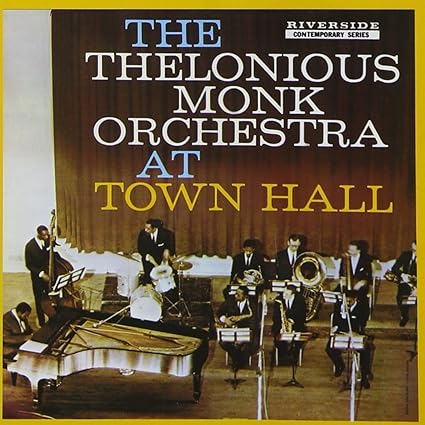
    • Thelonious Monk – Orchestra At Town Hall. The first of only two large-ensemble recordings Monk would make in his lifetime, this 1959 album is a stone-cold classic, every track is gold.
    • Charlie Parker – Charlier Parker. After immersing myself in a lot of Parker this year, I concluded that this is possibly his single finest set of recordings–great sound, and startlingly vibrant performances.
    • The Carter Family – Volume 2: 1935-1941. The Carter Family’s 1928-29 recordings are officially legendary. But these later ones are often more listener-friendly, with better sound quality and more assured performances. An amazing wealth of classic songs.
    • Duke Ellington – The Complete 1936-1940 Variety, Vocalion And Okeh Small Group Sessions. Not just a best of the year, a best of all time–some of the most wonderful jazz ever recorded, at least for my taste. These small-group sessions have the unmistakable Ellington flair for arrangement and color, but often feel looser and more laid-back than the full orchestra. Truly a near-endless supply of casually tossed-off genius.

The best books I read in 2016

These are my favorites of the books that I read during 2016, which are not necessarily books published in 2016 (the same rules as in previous installments). History and Russia were the main themes this year; I did read a fair number of China and economics books, but most of those ended up being fine and useful rather than books I wanted strongly to recommend. I also read less fiction this year than I usually do; not sure why.

Here they are, more or less in the order I read them:

Nonfiction

  • Robert Tombs, The English and Their History. Almost every one of its thousand or so pages is delightfully written and filled with interesting information. I particularly enjoyed the clever structure: after covering each era, Tombs writes a chapter on how it was understood by its contemporaries, later historians, and current research. It’s a wonderful device for disposing of myths and delivering clarity.
  • Lars Mytting, Norwegian Wood: Chopping, Stacking and Drying Wood the Scandinavian Way. Essentially an ethnography of home energy consumption in Norway. It’s hard for me to explain why that is so interesting, but it is.
  • Patti Smith, Just Kids. I never had much time for Patti Smith’s music, so took me a while to pick up this widely-praised memoir; in fact she is a lovely writer with a great eye for detail. The portrait of struggling artists in 1970s New York avoids the obvious pitfalls of self-absorption and name-dropping with its honesty.
  • Mark Miodownik, Stuff Matters: Exploring the Marvelous Materials That Shape Our Man-Made WorldAn exemplary work of popular science writing, exposing the fascinating processes underlying lots of, well, stuff. The section on chocolate is a highlight, so are the ones on cement and steel.
  • Benedict Anderson, A Life Beyond Boundaries: A Memoir. A delightful short book with many reflections on Asia, translation and comparative scholarship. I also re-read his Imagined Communities this yearwhich still ranks as both a great read and wonderful piece of boundary-crossing scholarship (more discussion here and here).
  • Charles Clover, Black Wind, White Snow: The Rise of Russia’s New Nationalism. A fascinating piece of intellectual and political history, from the scribblings of Russian aristocrats to the speeches of Putin, that has only become more relevant since its publication. Check out this excerpt for a taste.
  • René Girard, I See Satan Fall Like Lightning. Perhaps the strangest, most unusual book I have read all year–as well as the one with the best title. Then again, I don’t read a lot of Biblical exegesis-cum-philosophical anthropology, if that is even a category with more than one member. Great social insights from a unique mind (more discussion here).
  • Jürgen Osterhammel, The Transformation of the World: A Global History of the Nineteenth Century. Started on a whim, this book ended up taking over my life for much longer than I anticipated. Exhausting and rewarding in equal measures, it is without peer as a feast of scholarship and knowledge. One of its many themes is how much of the twentieth-century world was born in the nineteenth century, but it defies schematic summary.
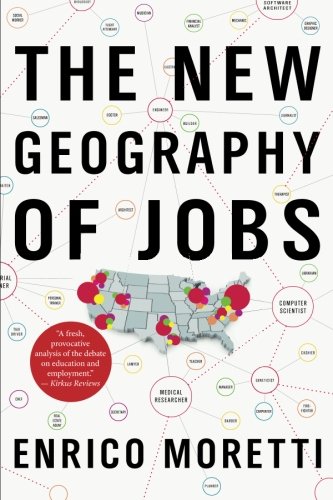
  • Enrico Moretti, The New Geography of Jobs. A very clear explanation of the causes and implications of the one of the more important socio-economic facts of the moment: that “the knowledge economy has an inherent tendency toward geographical agglomeration.” Recent political events suggest that the social downsides of geographical polarization deserve more attention than he gave them in this 2012 book, but I still found it very helpful.
  • Chris Miller, The Struggle to Save the Soviet EconomyA vivid analytical narrative of the last decade or so of the USSR, focusing on the drivers of Gorbachev’s reforms and the factors that ultimately thwarted them. Another interesting theme is how Soviet leaders viewed China’s contemporary reforms.

Fiction

  • N.K. Jemisin, The Fifth Season. A truly surprising and interesting fantasy novel, a species that has become almost extinct in this age of endless variations on the same genre tropes.
  • Eka Kurniawan, Beauty is a Wound. A surreal but always compelling portrait of the tumultuous twentieth century in one Indonesian city; bears comparison to One Hundred Years of Solitude. 
  • Madison Smartt Bell, Straight Cut. A standout noir novel from an unlikely source; reminiscent of the European-expatriates-in-peril stories of Patricia Highsmith.
  • Philipp Meyer, The Son. Three generations of Texans and their frontier legacy of violence; it captures well how one person’s desire for freedom can destroy another’s.
  • John James, Votan. Extravagantly praised by Neil Gaiman, and in fact extremely good and really unlike anything else. A cynical Greek merchant uses primitive mythology to swindle some Germanic tribes, but it becomes increasingly unclear who is using whom; a must for anyone who enjoys the Norse myths.
  • Ted Chiang, Stories of Your Life and Others. Quite simply, one of the best science-fiction short-story collections ever published. Apparently the movie Arrival is based on the title story, which is stunning because it is one of the least visual and most obviously unfilmable narratives I have ever read.
  • Amor Towles, A Gentleman in Moscow. An absolutely charming story of a disgraced Russian aristocrat whose house arrest during the revolution turns out to be the best thing that ever happens to him.
  • Willa Cather, Death Comes for the Archbishop. Strangely titled, since it is actually about the life of a bishop. A mostly plotless but very moving account of French missionaries in New Mexico, sharply evoking loneliness, culture clash, fulfillment.
  • Ursula K. LeGuin, The Found and the Lost: The Collected Novellas. A feast of excellent and mostly recent writing from LeGuin, much of which was new to me (most of the good stuff in the anthologies of her short stories published a couple of years ago I had already read). I also enjoyed Eleanor Arnason’s Ring of Swords, which was recommended by LeGuin herself, and is quite LeGuin-ean in its attention to comparative social structures.

Can economics offer more than a counsel of despair to struggling places?

I just finished Enrico Moretti’s The New Geography of Jobs, an admirably clear book about one of the most important trends of the day: the increasing concentration of American jobs, wealth and economic activity in a small number of urban centers. He argues that technology boomtowns like Seattle and San Francisco are what they are today in large part because of historical accidents that set off positive feedback loops, rather than because of any particularly enlightened policy. This means that it is not very obvious what all the cities that are instead trapped in negative feedback loops, losing population and jobs, should do:

People often have unrealistic expectations of their governments. The role that local governments can play in revitalizing struggling communities is less extensive than most voters realize and most mayors would like to admit. The reality is that a city’s economic fate is in no small part determined by historical factors. Path dependency and strong forces of agglomeration present serious challenges for communities without a well-educated labor force and an established innovation sector.

He is careful not to say that there is nothing to be done in the face of the pitiless onslaught of market forces, but it’s also clear that he thinks, probably quite rightly, that many local development policies (like tax subsidies to large employers) are ineffective and a waste of money. In the end he proposes mostly national policies: substantial increases in research and development funding, improved education, more openness to highly skilled immigrants. Rather than try to hold back the forces that are concentrating the economy in a small number of urban centers, in other words, the US should try to supercharge them, in hopes that even more centers will develop and allow more people to benefit.

The conclusion that benign neglect is the only real option for dealing with regional inequality seems to be the consensus wisdom of the economics profession. Since the US election though, there has been a pretty dramatic backlash against this counsel of despair. Here are three pieces that I found excellent, all of which are worth reading in full.

Adam Ozimek has a quite measured and detailed post:

The level of nihilism espoused by economists about what we can do to help struggling places in the U.S. is, quite frankly, strange. Whenever the issue of helping places is raised, critics jump straight to the most extreme examples, such as former mining towns. But the fact that some places need to shrink, and the costs of helping some places sometimes outweighs the benefits, is a far less powerful point than these critics imagine. Other places have survived the loss of major industries and gone on to thrive. Understanding why this happens sometimes and doesn’t happen other times, and what policymakers can do to help replicate the successes, are crucial policy issues that cannot be pushed aside by pointing out the impossibility or desirability of saving every place.

Finally, it’s important to note that the competition between thriving metropolises and the now-struggling parts of the country need not be zero sum. Increasing the human, social and physical capital of struggling places in this country can reduce the need for economic transfers at the federal level and can help make an overall more tolerant and open society that is better able adjust to the dynamism and globalism needed for a growing modern economy. It may help prevent residents in these places from desperately voting for policies that will only make things worse, like a trade war or immigration restrictions. These policies don’t make any economic sense, but when the best ideas for helping struggling communities consists of getting their most able residents to move away, it becomes a little easier to understand.

In a long and interesting piece, Steve Randy Waldman argues that not all of the self-reinforcing dynamics of urban concentration are necessarily positive, and that the political downsides are now pretty obvious:

Cities are great, but I think the claim that everybody moving to the very largest cities would yield a massive, otherwise unachievable, productivity boost is as implausible as it is impractical. Historically, economic activity was far less concentrated during the decades when America enjoyed its strongest growth. Perhaps technology has changed everything. But perhaps much of the apparent productivity advantage enjoyed by large, powerhouse cities over medium-sized cities is due to creaming, sorting, and particularly high-powered coalitions of rent-extractors, rather than hypothesized quadratic-returns-to-scale human connectivity effects.

Then, of course, there is all the stuff that economic analysis tends to overlook: Community, history, attachment to family, attachment to the land itself, the perhaps quaintly aesthetic notion that a civilized country should not be composed of gleaming islands in a sea of decay and poverty. And politics. Politics seems to be a thing now. Rightly or wrongly (and I think the question is more complicated than many of us acknowledge), the United States’ political system enfranchises geography as well population. …In the American system, piling people into a few, dense cities is a sure recipe for disenfranchising most of the humans. A nation of mid-sized cities distributed throughout the country would both spread the wealth geographically and yield a more balanced politics than the dream of hyperproductive megacities.

Finally, a fantastic and impassioned piece by Ryan Avent also tackles the regional inequality question, among many other recent failures of economics:

The economic literature is pretty clear that moving people from low productivity places to high productivity places is very good for both the people that move and the economy as a whole. It’s also pretty clear that place-based policies designed to rejuvenate regions which have lost their economic reason for being tend not to work very well. And one logical conclusion to draw from these lines of research is that government ought to care about people rather than places, should focus aid to struggling places on things like cash transfers or retraining schemes or efforts to boost the housing capacity of booming regions, and should not be sentimental about the prospect of once proud industrial cities emptying out. And maybe that logical conclusion is the right one.

But maybe that’s not the right conclusion at all. Maybe the right question, once again, is which is likely to be more corrosive of the legitimacy of valuable macroinstitutions: the long-run decline of whole regions of advanced economies, or the inevitable waste and inefficiency that would accompany an effort to revive those declining regions. And perhaps benign neglect would win that argument. Yet the argument ought to take place; economists should not ignore the relevance and importance of macroinstitutions and assume that the inefficiency is the clinching argument.