
There is no problem with small business lending in China

That is not the message you would get from the Chinese government these days, which is devoting an impressive amount of high-level political attention to this issue. Premier Li Keqiang just chaired a State Council meeting which urged banks to deliver more financing to small- and medium-sized enterprises, and at lower interest rates–the latest of many such meetings in which this topic topped the agenda.

In effect, small-business lending is being treated as an urgent national emergency: apparently China’s financial system is systematically failing to deliver what is needed for a healthy economy. Yet it is impossible to see any evidence of this emergency in the data presented in a white paper on the topic published by the People’s Bank of China this week. Here is a brief section of the appendix:

At the end of 2016, the balance of renminbi loans for small- and medium-sized enterprises in China was 42.2 trillion yuan (about 6.1 trillion U.S. dollars), accounting for 56.8% of GDP in the same period, higher than that of Japan (46.1%), Malaysia (22.9%), France (10.0%), Brazil (9.9%), Russia (5.8%), the United States (3.3%, where commercial loans under 1 million U.S. dollars are counted as small enterprise loans) and other countries.

At the end of 2016, China’s SME loan balance accounted for 65.1% of all enterprise loans, higher than Malaysia (43.7%), Brazil (36.9%), France (20.6%), the United States (18.5%), Russia (15.8%) and other countries, only lower than Japan (65.6%) and South Korea (79%).

In 2016, the average interest rate of loans for small and medium-sized enterprises in China was 4.77%, significantly lower than that of emerging market countries such as Brazil (33.50%), Russia (13.03%), Malaysia (7.22%), but higher than that of developed countries such as South Korea (3.58%), the United States (3.46%), France (1.50%), Japan (< 1%).

That’s right: China lends more than twice as much to small businesses, as a proportion of the economy or the banking system, as most other countries, and at a lower interest rate to boot (the data cited are from the OECD’s very useful cross-country survey on SME financing; you can download their detailed data for China here)

Of course, that doesn’t mean small businesses in China have problems getting bank loans–but small businesses everywhere have problems getting bank loans, because they are small and their credit risk is hard to evaluate. There is little evidence this problem is worse in China, and plenty of reason to think that it is actually better. After all, in an economy with a debt-to-GDP ratio of 250%, it is not particularly plausible to assume there are massive shortages of credit.

Almost five years ago I wrote an op-ed for The Wall Street Journal, my alma mater, entitled “Small Business Won’t Save China,” that made these points, and argued that a government drive to deliver aid to small businesses would not actually be very effective. Unfortunately very little has changed since then. Pushing credit to small business is still a politically attractive way of avoiding the structural issues for the private sector in China, and the political pressure on banks to meet arbitrary targets for lending to small businesses has only gotten more intense.
A European inspiration for Chinese decentralization

A lot happened in China in 1978, the year conventionally used as the starting point for the reform era. One of the many fascinating events of that year was the five-week journey of a group of Chinese officials, led by Vice Premier Gu Mu, to France, Germany, Switzerland, Belgium, and Denmark. Today, when such visits are a regular occurrence, it is hard to comprehend the significance of this trip, and just how much it must have blown the minds of the Chinese officials. Gu and other officials saw first hand, and for the first time, just how advanced Western technology was and how high living standards were in these countries.

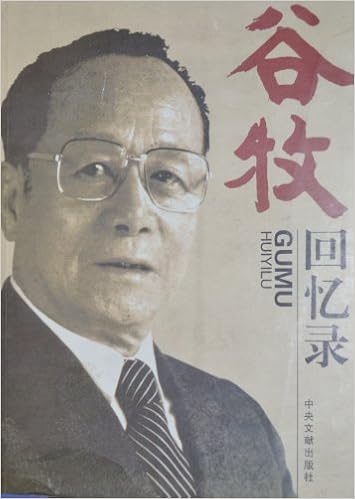
Ezra Vogel, in chapter 7 of his Deng Xiaoping and the Transformation of China, compares the overseas trips that Chinese leaders made in 1978 to the Iwakura Mission of 1871-73, which helped inspire Japan’s modernization. Gu Mu’s authorized memoirs also discuss this trip, and in the book he actually reproduces a large section of the subsequent report he wrote for the Party leadership (I picked up a copy of the English translation of his memoirs at the Foreign Languages Bookstore in Beijing).

His report made a big impression, and is usually credited with helping inspire the high-level decisions made soon after to open China up to foreign trade and develop science and technology. But Gu’s report also discusses several other issues, and I was particularly interested in the part where he argues for decentralizing authority on economic matters to local governments. This was inspired by what he saw in Europe: for instance, Gu remarks on his meeting with the governor of the German state of Bavaria, who offered him a handshake agreement for a $5 billion loan over dinner.

Decentralization would become one of the most distinctive features of China’s reform era, and local governments’ freedom to pursue economic growth is usually given a lot of credit for China’s subsequent success. So it’s worth reading Gu’s arguments in full:

On the improvement of the economic management system. The key to this question is how, under the uniform planning of the central authority, to allow local governments to accomplish more. Chairman Mao once said, one of the important reasons why the economy of European countries had developed so fast was that their countries were comparatively small. The central and local governments had division of power and could handle affairs flexibly. What we saw during our visit bears this out.

For example, in West Germany, the local governments at the state level enjoy relatively wide power. Many affairs can be handled once decided by a state government. This is beneficial to economic growth. Rhineland State only has a population of 3.6 million and it has a revenue of 10 billion DM (about 8 billion renminbi) for the state government to handle. Apart from administrative expenditure, this revenue is used in developing agriculture, local transport, education, urban construction, environmental protection and so on. Industrial construction is invested by capitalists and not included.

We have provinces and municipalities that are larger than some European countries, but their authority in managing the economy is very limited and hence they lack initiative. In planning, finance and managing materials, provinces and municipalities have not become real actors. The local governments do not have much power. For many affairs they have to come to Beijing. Often to address a single problem they have to go to several departments and wait several months without a result. This state of superstructure makes our socialist state machine seem inflexible and poorly adapted to the development of economic foundations.

If this problem is not solved and if we do not give full play to the initiative of local governments under the uniform planning of the central authority, our economy will lack vigor and there will be no high-speed economic development worth talking about.

This is a useful reminder that decentralization is not an immutable feature of the Chinese system, or something that happened automatically just because China is a very large country. Clearly Gu saw that in the 1970s the Chinese system was too centralized to be efficient, and that it needed to be more decentralized. (Jae-Ho Chung’s book Centrifugal Empire: Central-Local Relations in China also argues that the Maoist emphasis on local autonomy in the 1970s was largely rhetorical, with most localities compelled to follow the same political campaigns and economic priorities.)

It’s fascinating to learn that one of the most distinctive features of China’s economic model was, at least in part, inspired by the example of Europe. This history seems particularly relevant now, given that China’s current leadership is often focused on the problems decentralization has created, and looking for ways to push the pendulum back the other way (see this post from 2017 on the recent shift away from decentralization and its potential implications).

Three ways of looking at China and its history

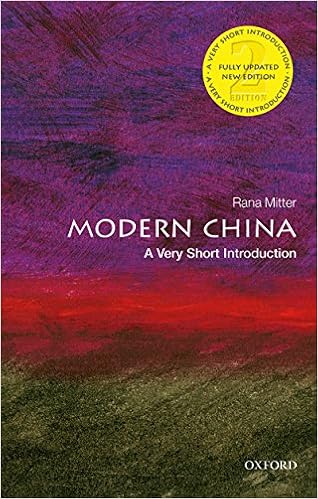
A friend recommended I read Rana Mitter’s Modern China: A Very Short Introduction, and being a big fan of the Very Short Introduction series I was happy to do so. I’m glad I did: although the book surveys some fairly familiar material, it also puts forth some interesting historical ideas. What I found most useful is Mitter’s suggestion that our interpretations of modern Chinese history usually fall into one of three categories (the following are my terms not his):

Traditionalist. This is the view that “China has not essentially changed” despite the upheavals of the 20th century: that Mao and Deng were “new emperors” (as one book put it), that China is fundamentally Confucian and still on the same trajectory as in the rest of its supposed 5,000 years of history. This interpretation is quite common in popular discussions of China, and is implicitly invoked every time someone calls it “The Middle Kingdom” or talks about how Chinese foreign policy is still taking tips from Sun Tzu’s Art of War.

Socialist. This is the view that 1949 is the dividing line in Chinese history, and that the Communist victory in the civil war changed everything. Mitter associates this view mostly with romantic leftists of the 1960s, who were sympathetic to the Chinese revolution and willing to give Mao the benefit of the doubt. But there is a more contemporary version that also has a lot of currency, which emphasizes the present-day continuities with state socialism: how China remains politically authoritarian and how state-owned enterprises still play a major role in the economy.

Nationalist. This is Mitter’s own view: that the true dividing line in Chinese history is 1911, when the Qing dynasty was overthrown, not 1949. Since then Chinese politics has a “mass politics where there was a social contract between government and citizen” in which nationalism provides the major source of legitimacy. Both the Nationalists and the Communists sought national sovereignty, a strong state and economic development: Mitter sees both parties as engaged in “one long modernizing project.”

The standard academic thing to do would be to admit the obvious point that all three views have elements of truth and call for a nuanced combination: clearly some elements of Chinese traditional culture are still relevant, clearly it matters that the Communists and not the Nationalists have been in power since 1949, and clearly nationalism is a central issue in Chinese politics. So it’s nice that Mitter does not do this, and plants his flag firmly in the last camp. One of the more interesting passages in the book is his assertion that:

The Communist Party of today has essentially created the state sought by the progressive wing of the Nationalists in the 1930s rather than the dominant, radical Communists of the 1960s. One can imagine Chiang Kai-shek’s ghost wandering round China today nodding in approval, while Mao’s ghost follows behind him , moaning at the destruction of his vision.

There’s definitely something to this, but ultimately I’m not sure that I buy it. As regular readers will recognize, the legacy of Chinese socialism has been one of the major themes of this blog since I started writing it. So it’s probably no surprise that, if forced to choose among those three views of Chinese history, I might have to choose door #2, the socialist one.

These days it seems like it is not China’s similarities to other modern nations and economies that are most salient, but its differences. And if you interrogate the source of those differences, a lot of the time the answer is socialism and not Chinese traditional culture.

What I’ve been listening to lately

  • Eric Dolphy – Musical Prophet: The Expanded 1963 New York Studio Sessions. A reissue with new material of two of Dolphy’s best albums, Conversations and Iron Man, that hopefully will draw more attention to these somewhat neglected recordings (see this appreciation by Richard Williams for more background). The arrangements for larger groups are quite interesting, but for me the real highlights are the more intimate pieces, especially the duets between Richard Davis on bass and Dolphy on bass clarinet.
  • Joe Lovano – Trio Tapestry. An unusual, minimalist outing for Lovano, a trio with just Marilyn Crispell on piano and Carmen Castaldi on drums. I first heard Crispell in the 1990s when she was a terror of aggressive free jazz; her recent ECM recordings, like this one, display a much gentler side.
  • Hearts & Minds – Electroradiance. Another oddball trio, featuring the Chicago-based bass clarinetist Jason Stein along with Paul Giallorenzo on synthesizer and Chad Taylor on drums. The instrumentation is like something Sun Ra would throw together over a weekend, and indeed the combination of avant-garde sounds with a backbeat is a little reminiscent of some of his 1970s experiments. But altogether it’s a completely original sound, and how often do you encounter that?
  • Matthew Shipp – Pastoral Composure. An excellent and almost-but-not-quite traditional quartet led by pianist Shipp and featuring super-bassist William Parker and Roy Campbell on trumpet. Every tune has a different feel and approach–a kind of variety surprisingly uncommon for jazz albums–making for a very satisfying listen.
  • Philip Cohran – Armageddon. Though a legend of the 1960s avant-garde, Cohran did not leave behind many recordings. All of them are worth hearing for their Afro-spiritual vibe and the powerful sound of his invented Frankiphone, sort of an amplified thumb piano. If this short concert recorded in 1968 does not quite rise to the level of his masterpiece On The Beach, it definitively has its moments.