Why was Kornai wrong about the sustainability of China’s market socialism?

I put János Kornai’s The Socialist System: The Political Economy of Communism on my best books list for last year, but I’ve been slow in writing something longer about it. It’s taken some time for me to think through how to understand China in the context of his arguments.

Kornai’s book is brilliant in its diagnoses of the internal conflicts and problems of “market socialism” or “reform socialism”, in which market mechanisms are permitted but the Communist Party maintains political primacy and a large public sector. This is a still a pretty accurate definition of China’s system. There were so many moments while reading when I wanted to shout out loud in recognition: “Yes! That’s exactly how it is!”

Yet the book finally concludes that market socialism is an inherently unstable and unsustainable system that cannot last. Essentially Kornai argues that the combination of a weakened version of state intervention and the half-hearted embrace of market competition enjoys the vices of both systems and the virtues of neither. A government that no longer truly believes in socialism cannot enforce its plans, while market forces are allowed to operate only inconsistently, so that they amplify rather than alleviate distortions. The inevitable accumulation of economic problems means that the public and officials get fed up with the system and eventually decide to jettison it entirely.
51e4mfbrqbl-_sx331_bo1204203200_

It seems fair to say that this argument has been disproved by how China has developed since Kornai’s book came out (it was written over 1986-91, and published in English in 1992). China’s market socialism has already lasted longer (40 years) than the “real” socialism of the Mao era did (~30 years). And while we don’t know what will happen in the future, it is pretty clear that Kornai thought market socialism should be less stable and enduring than classical socialism, not more:

To sum up, so long as the classical system can be sustained at all, it has a degree of stability and robustness, where the system undergoing the contortions of reform is inherently unstable. There are places where it can only subsist for a short time, and others where special circumstances allow it to continue to for longer, but nowhere has it been able to survive lastingly (and the prediction from the line of thought put forward in this book is that it will be unable to do so in the future).

In fact Kornai’s book contains a pretty accurate depiction of China in the 1980s, which of course he had personally experienced: there was lots of economic volatility and back-and-forth on policy, as well as high inflation and rising popular discontent that culminated in the 1989 protests. But while similar strains eventually led other reforming socialist countries to abandon socialism altogether, this did not happen in China. Instead China in the 1990s mounted a renewed effort to strengthen state institutions and maintain economic growth, which has obviously been very successful.

So what did Kornai miss?

I think one key issue is that China’s growth potential turned out to be much higher than the Eastern European countries with which he was more familiar. Because China under socialism was still a largely undeveloped and agricultural economy, it had enormous potential for high growth driven by structural change. In this respect China in the 1980s was more similar to Korean and Taiwan in the 1960s than it was to the reforming socialist countries of the 1980s, most of which were over-industrialized and internationally uncompetitive. For instance Kornai in the book was dismissive of the potential for market socialist countries to have much success with exports–and of course a successful export sector has made all the difference for China.

This difference in growth potential was probably at least as important as the much-discussed difference between the “shock therapy” style of post-Soviet reform and the “gradualist” style of Chinese reform. Some of China’s most important reforms, such as the household responsibility system of the early 1980s and the downsizing of state enterprises in the late 1990s, were not gradual at all, but were massive changes implemented quite rapidly.

China’s reforms also went further than Kornai allowed for in his book. His generalization was that market socialist countries were willing to allow some space for the private sector, but were never willing to allow the private sector to actually dominate the economy. As a result the economy could never actually become truly subject to the key disciplines of market competition: hard budget constraints and the risk of corporate failure.

It is useless for domestic and foreign advisers to call on the governments of market-socialist economies to be more forceful and impose financial discipline; the requirement cannot be met while public ownership remains dominant.

The menaces of the center are not effective enough; firms are not even afraid they will be implemented. The separation of functions does not apply here. Is the bureaucracy, which is the state, the owner, and the manager all at once, supposed to discipline itself? The budget constraint on firms can only become hard if the firm is really separate from the bureaucracy, that is, if it self-evidently left to itself in time of trouble. The only way of ensuring this separation automatically and spontaneously is by private ownership. …

Is it possible to make the budget constraint on publicly owned firms hard under the prevalent market-socialist system? The four points above provide an unequivocal answer: No, it is not.

Footnote 35: Exceptionally, the hardness of the budget constraint on publicly owned firms can be ensured artificially if there are not too many of them and they are surrounded by privately owned firms in a capitalist system. The behavioral norms of the narrow public sector then resemble the behavior of the dominant private sector of the economy.

In this footnote I believe is contained one of the secrets of China’s success. Over time, the Chinese government has allowed the private sector to become the majority of the economy. (Kornai himself likely played a role in this by helping convince Chinese leaders that the Eastern European reforms were inadequate and not a good model for China to follow.) A larger private sector did not end the problems of state-owned enterprises, and the conflicts and unfairness inherent in the competition between state and private companies. But it did mean that state firms faced at least some market discipline, and thus that their problems did not become overwhelming.

Kornai’s book also placed a lot of emphasis on the fact that in market socialist systems, officials were typically inexperienced and incompetent at managing the economy. Their inevitable mistakes discredited both the government and the concept of market socialism. By sustaining growth over a longer period of time, China was able to establish both the credibility of its system and build up the experience of its economic managers, which in turn made growth more sustainable. In this sense its economic growth created some positive feedback loops.

So I don’t think Kornai’s analysis of how a market socialist economy functions was fundamentally wrong. He was right about the kind of economic costs that state-owned enterprises and other socialist institutions create, and in that respect his book is still a useful guide to understanding China today. But to answer the question of sustainability requires also understanding just how large those costs are, and how much they are offset by positive developments elsewhere in the economy. If underlying growth potential is high and the progress of economic liberalization is consistent, then those costs are more likely to be manageable.
Toward a history of the siege of Changchun

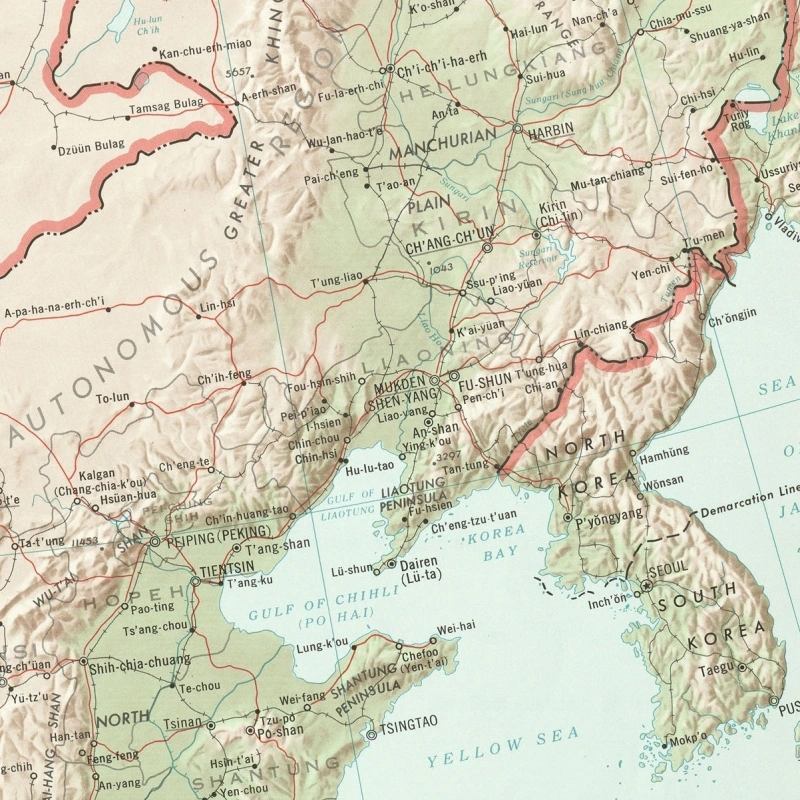
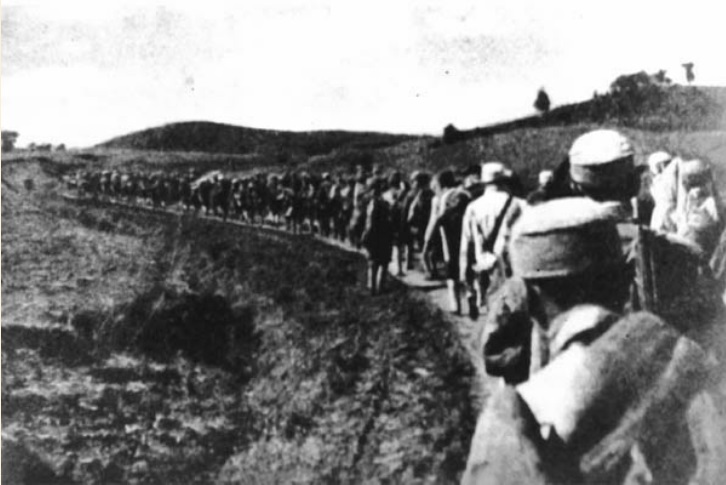
2018 will mark the 70th anniversary of the siege of Changchun, perhaps the greatest atrocity of the Chinese civil war. After Communist troops led by Lin Biao failed in their initial attempt to capture the city, on May 30, 1948, Lin decided to mount a blockade, cutting Changchun off from food and fuel shipments.

The goal was to weaken the Nationalist troops by starving them, and cause enough suffering that the civilian population would stop supporting the troops. The strategy was successful, as the Nationalist forces ultimately surrendered to the Communists in October. But by the time the siege ended, probably around 150,000 people, mostly civilians, had starved to death, and roughly the same number of refugees had fled the city.

Changchun-troops
Communist troops at the siege of Changchun, 1948.

The event is still little known within China and probably even less so outside it, though in recent years more English-language accounts have become available. Andrew Jacobs of the New York Times wrote an excellent article in 2009, using Chinese published sources and his own interviews with elderly survivors, which is still probably the best short introduction. The article’s observations about the fraught nature of historical memory in China are still very relevant: public commemoration of this anniversary is highly unlikely.

The Hong Kong-based historian Frank Dikötter also devoted the opening chapter of his 2013 book The Tragedy of Liberation: A History of the Chinese Revolution 1945-1957 to the siege. In just six pages, Dikötter defly uses Chinese archival sources to convey the suffering of the people of Changchun. The event serves as a kind of synecdoche for all the violence perpetrated by the Communist Party against its real and imagined enemies, one of the chief themes of his polemical book.

A longer, more detailed and less polemical account of the siege is in Harold M. Tanner’s 2015 book Where Chiang Kai-shek Lost China: The Liao-Shen Campaign, 1948The book is primarily a military history and so it does an excellent job of putting the siege in the context of the civil war and explaining the decision-making on both sides. For instance, he makes it clear that siege tactics were unusual for the Communists, and that the political leadership including Mao was initially skeptical of Lin’s plan (though they ultimately supported it). But Tanner also does not shy away from the human cost and the tricky historical politics of the siege.

Both books rely heavily on White Snow, Red Blood (雪白血红) a 1989 book by PLA colonel Zhang Zhenglong whose revelations about the siege caused a sensation on its original publication. In a comparison that would become famous, Zhang likened the siege to the bombing of Hiroshima: “The casualties were about the same. Hiroshima took nine seconds; Changchun took five months.”

Zhang’s book was banned on the mainland, though it was reprinted in Hong Kong. Tanner also cites a 1997 book by the historian Liu Tong, The True Record of the War of Liberation in the Northeast (东北解放战争纪实) which he says comes to similar conclusions about the casualties as Zhang’s. It’s not clear if that book has been banned, though it does not seem to be in print in China any longer; Liu has also published several other books on the civil war in the northeast.

Another source on the siege that has recently become available in English, which I have not read, is a firsthand account by survivor Homare Endo, Japanese Girl at the Siege of Changchun. She was seven years old at the time of the siege. Her Japanese manuscript was first published in 1984, and Endo apparently also wrote a Chinese version, according to this interview.

While there is a long list of topics in Chinese history that deserve fuller treatment in English, it seems to me that the siege of Changchun is a deep, complex, and emotional subject very much crying out for a book of its own.

The best books I read in 2017

As with previous lists, these are my favorites among the books I read for the first time in 2017, not of books only published in 2017. It’s not quite as diverse a list as in the past, as I did a lot of reading on Chinese and Russian history this year and less on other topics. Books are listed roughly in the order in which I read them:

Nonfiction

  • Ian W. Toll, The Conquering Tide: War in the Pacific Islands, 1942-1944. A marvelously clear and vivid history of the first American offensives in World War II, with many good nuggets of economic and social history mixed in. A worthy sequel to his Pacific Crucible.
  • Martin Gurri, The Revolt of the Public and the Crisis of Authority in the New Millennium. Published in 2014, this is so far my favorite book for understanding the political earthquakes of 2016. His arguments about the effect of technology on media and the loss of authority of elites have only gotten more relevant.
  • George Steiner, George Steiner at the New Yorker. There are so many gems in these essays, I will choose one rather than try to summarize: “There is in men and women a motivation stronger even than love or hatred or fear. It is that of being interested—in a body of knowledge, in a problem, in a hobby, in tomorrow’s newspaper.”
  • Ian Johnson, The Souls of China: The Return of Religion After Mao. Wonderful reporting on the survival of traditional religion in contemporary China, filled with insights into all aspects of Chinese life.
  • Donald Hall, Essays After Eighty. Spare, lyrical and unsentimental reports from the unforgiving territory of old age. “The days have narrowed, as they must.”
  • Books about Siberia. My best reading experience of the year was not a single book but a collection of them, on a topic that sits at the intersection of a few of my obsessions: economic geography, socialism, extreme cold. Ian Frazier’s Travels in Siberia is the easiest to recommend, a warm-heated and capacious engagement with the history and reality of Siberia. Fiona Hill & Clifford Gaddy’s The Siberian Curse: How Communist Planners Left Russia Out in the Cold is more for wonks, but is extremely interesting. Out of the huge literature of Russian primary sources about Siberian exile and the Gulag, I have only read Anton Chekhov’s Sakhalin Islandwhich while not a masterpiece is still fascinating.
  • Robert Loh & Humphrey Evans, Escape from Red China. A riveting first-person account of Mao’s ideological purges and the expropriation of private business during the 1950s.
  • János Kornai, The Socialist System: The Political Economy of Communism. This 1991 masterpiece is of far more than historical interest, and still ranks as required reading for anyone trying to understand the Chinese economy. I should have read it years ago.

Fiction

  • Eve Babitz, Slow Days, Fast Company: The World, The Flesh, and L.A. An impressionistic slice of life of Los Angeles in the early 1970s, in which Babitz works very hard to seem superficial but constantly amazes with her insight and turns of phrase.
  • Francis Spufford, Golden Hill: A Novel of Old New York. A novel about social trust and identity that is richly detailed and vividly historical, yet quite contemporary in its concerns.
  • John Kessel, The Moon and the Other. My vote for science fiction book of the year, not genre escapism but a vigorous engagement with ideas and human nature. The story revolves around a matriarchal socialist utopia that must deal with internal dissent and a conflict with radical free-market Iranians.
  • Ge Fei, The Invisibility Cloak. There are many things to like about this short book, but to me it captures very well how contemporary Chinese are both globalized and local, simultaneously trapped in family relationships and adrift in a chaotic society.
  • Robert Seethaler, A Whole Life. Delivers fully on its title despite its compact length. This account of a simple man’s simple life plays down conflict and upheaval in favor of quiet reflection.
  • Julian Barnes, The Noise of Time. A sympathetic imagining of the inner life of Russian composer Dmitri Shostakovich as he struggles with the demands of the Soviet state.
  • Min Jin Lee, Pachinko. An absolutely engrossing Korean family epic, as good as everyone says. Although I’m not done yet, it probably will be the best novel I read this year.

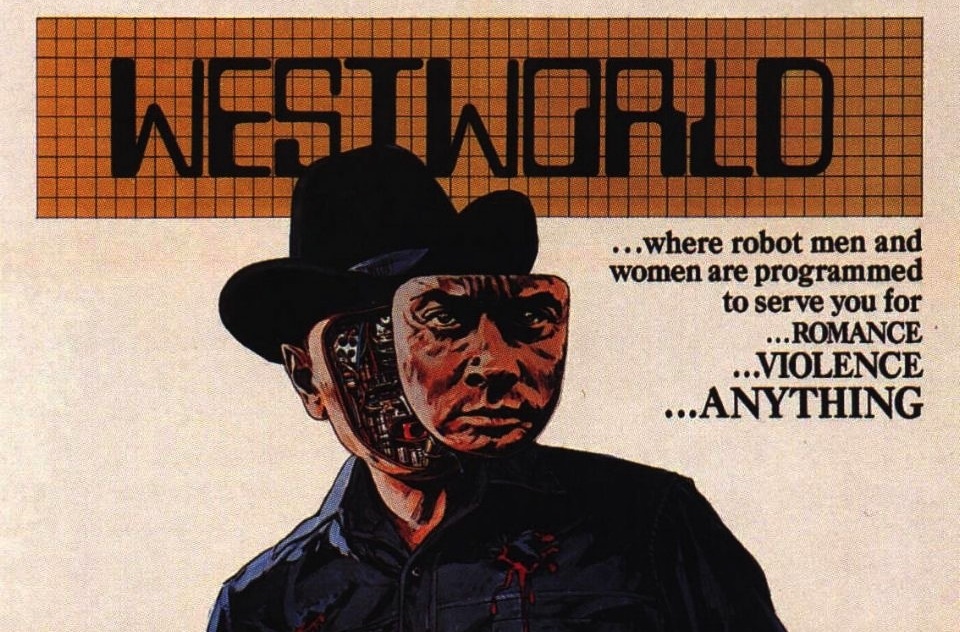
Westworld in China anecdote of the day

This has to be one of the odder side effects of the normalization of diplomatic relations between the US and China in 1979:

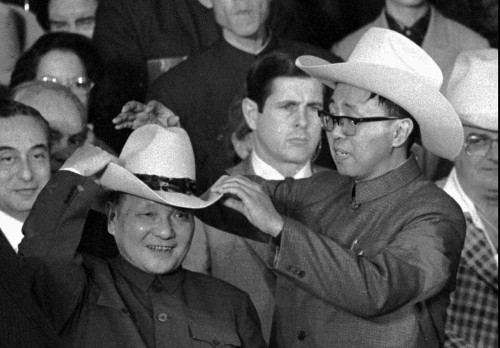
In the middle of all this, to set the seal on new-found friendship, in early February 1979 China’s supreme leader went off on his famous trip to the United States. Screened without commentary to an astounded television audience back home, the diminutive Deng Xiaoping was paraded nightly schmoozing with his new friend Jimmy Carter and assorted U.S. moneybags. Here he was at Simonton, Texas, at a rodeo, buried under a ten-gallon Stetson. There he was, taking tea and sandwiches in the palatial ranch-house style villa of a ‘typical’ American worker.

And this was the week, too, that our local cinema, and no doubt every movie-house in the nation, chose to screen Yul Brunner in Westworld.

Westworld’s story line has leading world statesmen invited to a subterranean lair in a Nevada desert crawling with rattlesnakes. Once there, their brains and organs are dismantled, to be replaced by robotic parts. Heads and bodies are then sewn up to create an end result indistinguishable from the human original. The robot ‘leaders’ are then despatched to their respective countries where they must do the bidding of an evil West World clique bent on ruling the universe.

This daft performance over, as we trooped down the concrete spittle-covered stairs of the cinema, I was all ears for audience reaction. Almost echoing my thoughts, though more literally, an elderly farmer grabbed my coat sleeves and proclaimed loudly: ‘Probably that’s what they’ll be doing to old Deng.’

That is from Richard Kirkby, Intruder in Mao’s Realm: An Englishman’s Eyewitness Account of 1970s China; the author was teaching English in Shandong province at the time.

westworld-original-movie-poster

apdeng1000-500x348

The spectacle of businesses begging to be beggared

Robert Loh’s 1962 memoir, Escape from Red China, recently became available again as a low-priced ebook, and it deserves to be more widely read–and perhaps particularly so at this moment in Chinese history. It is a rare portrait of the early years of the People’s Republic, describing in vivid detail the progress of the Communist Party’s escalating political campaigns (Loh’s book is frequently cited in Frank Dikotter’s history of the period, The Tragedy of Liberation: A History of the Chinese Revolution 1945-1957).

While there are many memoirs of the later Cultural Revolution period from people who experienced it as children or adults, first-person accounts of the previous decade are much rarer. Loh’s account is particularly valuable since he was a family friend of the famous Shanghai “red capitalist” Rong Yiren, and worked for him managing flour mills (Rong is thinly disguised under the pseudonym “J.P. Chan” in the book, but his identity is obvious). Loh thus had firsthand experience of how the Communist Party dealt with private business in this period.

A particularly interesting section of the book is his account of the build-up to the nationalization of private businesses after 1956. Rather than simply expropriate private firms at a stroke, the Party gradually put ever more pressure on them to place themselves in public hands:

The softening-up became apparent in late 1954 when the first pilot projects for Joint State-Private Enterprise were inaugurated. One or two firms from each branch of trade were chosen. The pilot projects were always the best equipped and most profitably operated firms. The State acquired part ownership of these firms by taking over the shares of such “counter-revolutionary elements” as the big investor T. V. Soong, by taking shares in lieu of the fines assessed under [the] Five-Anti [campaign], and even, in a very few cases, by actual investment.

These pilot Joint State-Private Enterprises were given every possible advantage. Their assets were evaluated fairly. The tax levies were just. Government low-interest loans were easily available. Adequate quantities of raw materials were supplied promptly. Labor problems were solved without bother or friction. Priority was given to these firms’ distribution and transportation facilities. In fact, the government saw to it that the pilot projects operated smoothly and showed a healthy profit.

In short, the capitalists who had the State for a joint partner did very well indeed. Each of them was made into a rosy picture of socialism’s glorious future.

On the other hand, the horrors of “free” private enterprise were depicted even more graphically. We “national capitalists” whose firms were not chosen for Joint State-Private Enterprise were “softened up” by being denied all of the advantages given to the pilot project owners.

My experiences at the flour mills were typical. The contempt and animosity I had been receiving from the mills’ Party Secretary became worse. The amount of wheat sent to us by the government had not been enough to keep our mills operating a quarter of the time; now we were sent less. Moreover, the fees paid for our work were reduced. Our losses therefore became even greater. We were still not permitted to go out of business, but bank loans became even harder to get. And, of course, the workers were made to demonstrate more frequently and violently against me.

Later, Loh describes how Mao decided to accelerate the rollout of this model of “joint” enterprises to all private companies. There was enormous pressure to make this appear to happen voluntarily, with local businesspeople handing in their “applications” for state partnership in public celebrations.

All the Chinese Communist propaganda at the time emphasized the “miracle” of businessmen happily surrendering their enterprises. The inference was that they clamored for socialism because its benefits had been proven to them by the patient, kindly, generous, always truthful, meticulously honest and infinitely wise Communists. People in the Communist bloc and the more naïve in the neutralist nations accepted this explanation without question. I have gathered that the Westerners, however, have been confused ever since by the picture of businessmen begging to be beggared.

It is true that the Chinese businessmen did exhibit wild enthusiasm, but they acted out of fear. Each had been made to understand that his future depended on his contribution during the “high tide of socialist transformation.” Once he had given up his enterprise, he knew that his sole means of livelihood would depend on the whim of the Communists. In short, he was struggling with almost hysterical intensity simply for survival.

Moreover, he knew he would not survive at all if he refused to apply for Joint State-Private status. Of the 165,000 firms in Shanghai, I knew of only one whose owner did not make the application. He was an elderly man whose enterprise was a medium-size paper mill. I spoke to him and attempted, for his own good, to make him change his mind. He was too panic-stricken, however, to face the future without the possession of the enterprise which, throughout his life, had been his sole means of security. He quickly lost his possession, of course; immediately after the campaign the government cut off his source of raw materials and refused to place further orders with him. The bank refused him loans. Within two months, he was bankrupt. He was sued by his employees’ Trade Union and by the Tax Bureau. He was arrested and sentenced to the work gangs of labor reform.

escape-from-red-china-book-with-dj-front-cover

I wouldn’t want to overdo the historical parallels with the present moment. But it’s true that the Communist Party is still a master of getting private companies to do what it wants, mainly by demonstrating how difficult life for them can be if they don’t.

The most obvious recent example is the crackdown on a group of high-flying private conglomerates, led by Wang Jianlin’s Wanda Group, which were pressured into abandoning overseas investments and selling billions of dollars of assets. “Wanda will respond to the state’s call,” Wang told Caixin when asked for an explanation of the sudden change of business strategy.

Another very interesting recent story is the reported desire of the government for big internet companies to “offer the state a stake” so that it can have a more direct role in managing social media and online commerce. It is hard not to hear some echoes of that 1950s push for companies to make voluntary applications to the state to take them over.

The 1917 October Revolution lives on in China

Here in late October 2017, I am reading a lot about the centennial of the 1917 revolution in Russia, and a lot about the 19th Communist Party Congress in China. It seems strange to me that the connection between these two events is not being discussed more.

Surely it is obvious? The most consequential and long-lasting geopolitical legacy of the 1917 revolution in Russia has to be that in 2017 China is still governed by the Communist Party. And yet this fact is glossed over in a lot of the current discussion about the meaning and legacy of the October Revolution. I was struck by the fact that, in Sunday’s special issue of the New York Times Book Review on the revolution, not one book about China was reviewed.

In Russia today, the 1917 revolution hardly seems like a live issue. Shaun Walker has a nice piece in The Guardian pointing out how ambivalent the current government is about embracing the October Revolution, and how it is not being officially celebrated:

Putin has been equivocal in his statements on the revolution but has made it clear that his main issue is the violent seizure of power undertaken by the Bolsheviks. Putin has fetishised the sanctity of statehood, however distasteful the ruling regime may be: whether it be in modern-day Kiev or Damascus, or in tsarist Russia.

“When we look at the lessons from a century ago, we see how ambiguous the results were, and how there were both negative and positive consequences of those events,” said Putin this week, coming back to a thought he has expounded on many times before. “We have to ask the question: was it really not possible to develop not through revolution but through evolution, without destroying statehood and mercilessly ruining the fate of millions, but through gradual, step-by-step progress?”

This, ultimately, is the key message from the Kremlin as the anniversary approaches. Monarchists and the ultra-Orthodox are free to idolise Nicholas II; communists and nostalgics are free to look back on the Bolsheviks as the harbingers of a new civilisation, but state collapse and violent protests are always to be condemned.

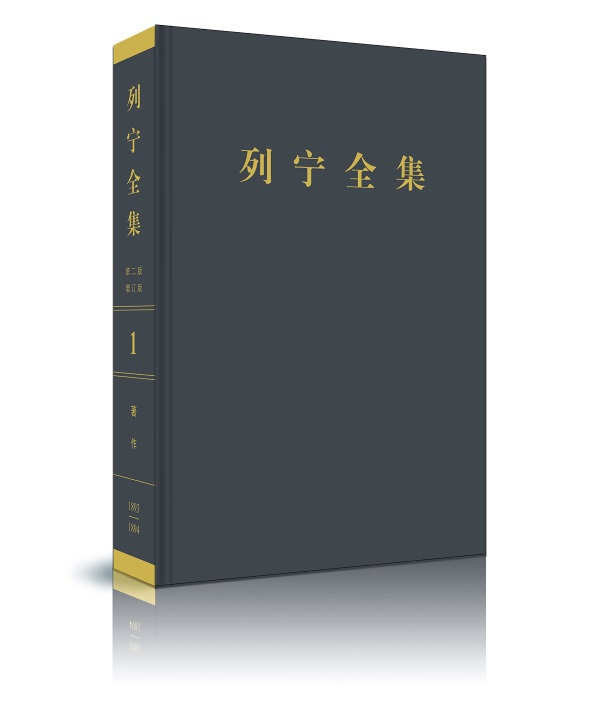
Cut to China, where the government is sponsoring the publication of a nice new edition of Lenin’s Collected Works to commemorate the centennial of the revolution, and the government is proudly wrapping itself in the flag of socialism.

LeninWorks-Chinese

Top propaganda official Liu Qibao in September gave a fascinating speech to a meeting commemorating the anniversary of the 1917 revolution, which has recently been officially translated into English. I actually think the whole thing is worth reading, but here are a few excerpts to give a taste:

The October Revolution brought Marxism-Leninism to China. After the First Opium War (1840-1842), China was gradually reduced to a semi-colonial and semi-feudal society and the Chinese nation was plunged into deep suffering. … The October Revolution ignited a new hope for realizing national independence and people’s liberation.

… A century ago, China was poor and weak, and it was bullied by big powers. Since then, our country has gone through many setbacks and hardships before rising up and achieving glory. The Chinese nation has undergone unprecedented changes — from standing up to prospering and strengthening to establishing its position amongst nations of the world.

Never in history have we been closer to the goal of the great renewal of the Chinese nation, and never in history have we had greater confidence and capability to realize this goal. This tremendous change is attributed to the fact that we have chosen the path of socialism which was opened up by the October Revolution…

The epoch-making historical feat of the October Revolution and the major achievements of the Soviet socialism system cannot be negated by dissolution of the Soviet Union. The reasons behind the Soviet breakup are many, including rigidity and conservatism; yet, the root cause was its turning away from Marxism-Leninism and from the socialist path created by the October Revolution.

China’s Communist Party is therefore saying, in so many words, that because of the failure of the Soviet Union, the true legacy of the 1917 revolution today is to be found in China. This of course is propaganda, but it is also in some sense actually true.

It may be even more true than the Party would like to admit. Although the Soviet Union officially recognized the Nationalist government during China’s civil war, it also quietly put its thumb on the scales to support the Communists during their campaign to capture Manchuria. And it was fear of provoking the Soviet Union that kept the US from intervening more decisively to support the Nationalists. Arguably, the Communist victory in the civil war would have been impossible without this implicit backing of the Soviet Union (see my previous post on this history for more detail).

Because of China, it seems like the question of the legacy of the 1917 revolution is still very much a contemporary one, rather than something that can be relegated to the history books.

Hong Kong’s war of attrition against street hawkers

I enjoyed Christopher DeWolf’s Borrowed Spaces: Life Between the Cracks of Modern Hong Kong, the latest installment I read in the Penguin Hong Kong series. It’s a nice piece of reportage that helps fill in the little-known (to me anyway) history of street life and informal urban structures in Hong Kong.

The book is particularly good at providing an alternative perspective on how Hong Kong’s government actually works. To anyone who has spent time in Hong Kong, the idea that it has the world’s freest economy (as the Heritage Foundation perennially tells us) is just patently, obviously untrue. But even so I was fairly shocked to discover that the government has for decades been actively trying to get rid of the small-scale retail entrepreneurs known as street hawkers:

For years, activity in the streets of Hong Kong was only loosely regulated, but by the 1970s, the government decided it was time to assert more control. The theory at the time was that, as cities transitioned from “third world” to “first world,” such informal uses of urban space would dwindle as the economy developed and people became wealthier. One day, the reasoning went, there would no longer be any need for hawkers, dai pai dong, squatter villages or anything of the sort.

In light of this argument, the Hong Kong government opted for a policy of elimination through attrition. Squatter villages were frozen in place, their residents prohibited from expanding their homes until they could be replaced with public housing estates. Street hawkers were licensed and regulated.  …

The catch was that, while hawkers were still allowed to ply their trade, their licenses were made exceptionally hard to transfer. Even today, when a licensed hawker dies, his or her license can only be transferred to a surviving spouse. The intent was to eventually eliminate all street hawker stalls, and this 1970s-era policy is now well on its way to achieving that goal. In 2015, there were just 6,133 licensed hawkers in Hong Kong; another 1,440 work illegally.

The biggest markets are thriving, including the always busy meat, seafood, fruit and vegetable stalls around Nelson Street and Canton Road, but many of the secondary markets are withering away – not for lack of business, but because the government is actively relocating stalls and buying back hawker licenses in order to clear the streets. Between 2013 and 2015, a total of 481 hawkers surrendered their licenses. …

It is hard not to notice that shrinking opportunities in this part of the economy have coincided, at least, with the general decline in entrepreneurship and social mobility:

The crackdown on informal life isn’t necessarily responsible for the persistent inequality and decline of social mobility in Hong Kong, but there’s a case to be made that it has exacerbated the situation by denying people access to affordable products and the ability to become entrepreneurs.

51jnihqzzml-_sx305_bo1204203200_


The great stagnation of Hong Kong

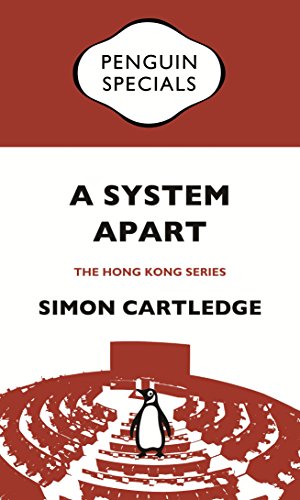
In Hong Kong recently I picked up a stack of the books in the new Penguin Specials series on Hong Kong–which despite being nicely featured in local bookstores are not yet readily available outside the city, or getting much promotion from the publisher. I don’t think they have to be read in any particular order, but I started with Simon Cartledge’s A System Apart (mainly because Simon is an old friend), which is an excellent short overview of Hong Kong’s recent political and economic situation.

The argument, simply put, is that Hong Kong is suffering from severe economic, social and political stagnation:

Hong Kong is stuck, with remarkably little change to show for the last two decades. Its economy is still dominated by a handful of companies, most of them run by ageing tycoons. No new business has risen up to challenge or replace them. No major new industry has been established. The city remains and finance and business center. But its intermediary role has declined in importance over the last twenty years. Across the border, China has created a host of inventive internet and technology giants; Hong Kong cannot point to a single success in these areas.

It is not a place that has failed, but it is one of lost opportunity, of diminished expectations and modest ambition. Despite living on the doorstep of the world’s most dynamic economy of the last two decades, and despite having played a crucial role in that economy’s initial opening and development, Hong Kong has gone sideways.

A further contention is that all these forms of stagnation are interrelated, and trace their origins to the arrangements put in place after Britain’s handover of Hong Kong to Chinese rule. Hong Kong’s peculiar institutions were intended above all to maintain continuity, but in fact resulted in a significant change for the worse:

When China drafted the Basic Law, one of its key aims to put in place machinery to ensure the economy continued running in the same way as before. The obvious way to do this, it seemed, was to allow businesses a big say in policy – hence the decision to make Hong Kong’s first chief executive a businessperson, and to pack the committee which would choose future chief executives with business figures. …

Under colonial rule, the administration, while undeniably pro-business, had always been separate from business itself. The governor was sent from Britain, and the top posts were filled with career civil servants – also all from the UK, until shortly before the handover. While these officials were friendly to business, they were not of business. They may have favored business interests before those of other parts of society, and they also co-opted leading local business figures into government bodies. Nevertheless, to the end, Hong Kong’s colonial rulers maintained strict control over their political power. The Basic Law changed this balance, opening the way for cronyism and corruption and preventing the kind of changes needed that would allow the city to maintain its economy dynamism. …

In the decades after the Second World War, Hong Kong successfully reinvented itself twice. For the first time in the 1950s, after American and United Nations embargoes on trade with China led to it becoming one of the world’s largest makers of light industrial goods. For the second, in the 1980s and 1990s, when it took advantage of China’s opening up to the world, in order to end its reliance on manufacturing and become a services economy centered on trade and finance. Since 1997, despite receiving its worst economic battering in more than half a century, it has undergone remarkably little change.

This economic stagnation, and the accompanying phenomena of slow growth and widening inequality, are clearly related to the increased extremism and polarization in local politics. But as Simon notes, Hong Kong is not exactly the only place in the world to have experienced these kind of political changes:

Many people seem to feel that they are not in control of their lives, and that those running Hong Kong are out of touch with their needs and interests. The senitments are broadly the same as those that to Britain’s Brexit vote and many Americans choosing Donald Trump. In Hong Kong, they manifested themselves in the one-fifth share of the vote for localist and independence candidates in the 2016 Legislative Council elections.

Hong Kong in fact seems to fit well into a common global trend (in high-income societies at any rate) of collapsing support for established political institutions and a rise in the influence of what used to be more marginal movements. So you could question whether Hong Kong’s peculiar institutions are really the cause of its deepening political divide, when places with quite different institutions are suffering from similar problems. The counter argument would be that Hong Kong had much more potential to escape stagnation because it is part of fast-growing China, and yet that potential largely has not been realized.

51te9et2bmcl

Why Siberia is not like the American frontier

After finishing Chekhov’s Sakhalin Island, I felt like I needed to know more about Siberia. Ian Frazier’s Travels in Siberia turned out to be a wonderful guide. Ordinarily I don’t like long, discursive books with no real point, but all of these potential vices are turned into virtues by Frazier’s charming voice. He is particularly good on the surprisingly long and deep history of American involvement in Siberia; here’s one passage that encapsulates many of his themes:

When Wendell Willkie, the American politician, visited Yakutsk in 1942, he said it reminded him of Elwood, Indiana. Willkie grew up in Elwood and thus is another on the long list of Midwesterners who have traveled in Siberia. He came here because of the war. Although Willkie lost to Roosevelt in the 1940 presidential race, he was credited afterward with helping to unify America behind the war effort, and in that capacity he made a round-the-world tour in a U.S. bomber to represent his country and demonstrate the Allies’ mastery of the air. The part of Yakutsk that specifically evoked Elwood for him was the boardwalks on the bigger streets; his hometown had board sidewalks when he was a boy. Willkie also spoke more generally about the heartiness of Yakutsk’s citizens, the simplicity of their tastes, and the place’s “tremendous vitality.” He said, “The town itself seemed, in many ways, like a western town in my country a century ago.”

As possibly the only person on earth today who has actually seen both Yakutsk and Elwood, Indiana, I think I understand what he meant. The Yakutsk Willkie visited was a frontier city, as the Elwood of his youth was a frontier town. Both were lively settlements far from their country’s center (though the one, obviously, much farther than the other). Observers before and after Willkie noted the many similarities between the Siberian and the Western American frontiers—from the hogs running loose in the villages, to the smallpox epidemics that hit the natives, to the rumors of tribes descended from the ancient Hebrews somewhere out in the wilds, to the environmental problems of overplowing and dust storms that came with development, and so on. Willkie’s trip also took him to Cairo, Baghdad, Moscow, and Peking; he stopped in Yakutsk partly because he was going that general direction anyway, and of all the cities he saw, this raw metropolis in the dark of the forest no doubt did look more like someplace in America.

But today I don’t think anyone who saw Yakutsk would be reminded of Elwood, or of anyplace like it. Elwood is another small American town that has passed through stages of early settlement, enthusiastic development, industrial boom, and recent decline. In those terms, its frontier years ended ages ago. Yakutsk, on the other hand, is still a frontier place, still hanging on to the writhing wilderness by its fingernails.

51v-hk8tf3l

In fact Chekhov himself, traveling in 1890, compared Siberia to the American frontier:

When I was sailing on the Amur, I had the feeling that I was not in Russia, but somewhere in Patagonia, or Texas; without even mentioning the distinctive, un-Russian scenery and natural conditions, it seemed to me the entire time that the tenor of our Russian life is entirely alien to the native of the Amur, that Pushkin and Gogol are not understood here, and therefore not necessary, that our history is boring, and that we who arrive from European Russia seem like foreigners.

Yet while Siberia has some “frontier-ness” in common with the American West, the differences are pretty obvious. So why didn’t Siberia end up as pleasant or prosperous as the American West? The geographic determinism argument would be that it is simply much colder and more remote. (A fun fact I learned is that Siberia is so cold not simply because it is far north, but because its east-west expanse means the distances from the climate-moderating coasts are so huge).

The other obvious difference is the one that Chekhov focused on: that Siberia was a penal colony not a zone of free migration. More informed reflections on this theme can be found in Jürgen Osterhammel’s The Transformation of the World: A Global History of the Nineteenth Centurywhich among its many wonders includes a direct comparison of Siberia and the American frontier (in the “Frontiers” chapter, one of my favorites):

In the nineteenth century, the thinking behind the Siberian system was that it would provide a “prison without a roof” for political opponents and marginal social groups, while at the same time providing a labor pool for the giant state projects of colonizing and “civilizing” the region. It was a colonial development program that had much greater affinities with the colonial corvée system than with the pioneering advance into the American West driven mainly by market forces and voluntary decision. At the time of the Russian Revolution of 1905, Western public opinion had long regarded deportation and forced labor as anachronistic and extremely hard to justify. In China, too, it had lost its usefulness to the state, having reached its peak in the eighteenth century. …

The [Russian] state tried to steer … every aspect of the opening of frontiers much more forcefully than in the United States or South Africa. The main contribution of the American state was to make cheap land available to settlers in an orderly manner. The pioneers were completely free individuals: no one could send them anywhere. In Tsarist Russia, by contrast, until the liberalization of agrarian policy under Prime Minister Stolypin, the state intervened to guide the process of settlement. This posed no problem in the case of “state peasants,” but even with other categories, whether dependent or “freed,” the state presumed to act in a guardian-like capacity. Although many settlers eventually shaped their own lives, the settlement frontier was not, as in the United States, theoretically formed by their free decisions.

A further difference with the United States was the small weight of urban settlements. The North American frontier was everywhere associated with the formation of small towns, some of which profited from a favorable transportation location to develop rapidly into major cities. At the western end of the continent, the frontier ended in a densely settled urban zone that did not actually owe its formation to the frontier. No Russian California would ever emerge; Vladivostok did not blossom as a second Los Angeles. But neither did frontier urbanization in the strict sense become a large-scale phenomenon.

Anton Chekhov, the investigative data journalist

I can no longer recall what pointed me toward Anton Chekhov’s Sakhalin Islandbut it is definitely one of my better literary discoveries in a while. In it we see a writer best known for short fiction undertaking a huge piece of nonfiction: a comprehensive account of the penal colony on Sakhalin in 1890, combining travel writing and character sketches with policy analysis and, perhaps most surprisingly, the presentation of vast quantities of data.

Here is some background on what prompted Chekhov’s investigation, which seemed just as out of character to his contemporaries as it does it to us; from the notes to this edition:

At the end of 1889, unexpectedly, and for no apparent reason, the twenty-nine year-old author announced his intention to leave European Russia, and to travel across Siberia to Sakhalin, the large island separating Siberia and the Pacific Ocean, following which he would write a full-scale examination of the penal colony maintained there by the Tsarist authorities. …

Sakhalin, since it was an island, and as far away from central Russia as one could go without leaving the country, was used at the time exclusively as a destination for long-term hard-labour convicts, who – apart from those on life terms – would serve out their sentences, then proceed to live in a local village to serve for several years with the status of a felon who was rehabilitating himself by learning to live a productive life in the community. Finally, when this period of “probation” was over, he or she would have their free-person’s rights restored to them and could leave for the mainland – but were still not allowed back to central Russia; they had to remain in Siberia for life. The authorities hoped by this policy to turn Sakhalin into a thriving colony on the lines of Australia, and numerous dishonest reports appeared in the European Russian press, planted by the government, claiming that this aim was being achieved.

There is a an argumentative core to the book, which is to show that the idea of using prison labor to develop a colony is a hopeless contradiction. The fundamental reason for this is that building up a successful economy and society in a colony requires individual initiative and responsibility, which is what a prison exists to destroy:

A prison is antagonistic to a colony, and their interests are in inverse ratio to each other. Life in the communal cells reduces a prisoner to the condition of a serf, and in the course of time, makes him degenerate; the habits of the life of the herd stifle within him the instincts of a permanently settled man and domesticated householder; his health declines, he grows old and weakens morally, and the later he leaves the prison the more reasons there are to fear that he will not turn out an active, useful member of the colony, but merely a burden to it.

A related theme is that in any competition between exile or convict labor and free labor, free labor always wins, because they do a better job. And therefore that the government idea behind the colony–that forced exile can be an effective economic development program–is fatally flawed. (Of course, this did not prevent the Soviet government from attempting the same thing on a much vaster scale with the Gulag system in the twentieth century.) In this passage Chekhov thinks through what the rational economic development of Sakhalin might look like, and concludes that the penal colony would inevitably wither away:

The major wealth of Sakhalin, and its – possibly enviable and happy – future, lies not, as people think, in fur-bearing animals but in the seasonal fish. … For fishing to take on the significance of a serious industry, the colony should be moved closer to the mouth of the Tym or the Poronai. But this is not the only prerequisite. It is also necessary that free individuals should not compete with the exile population, since there is no type of business in which, where there is a clash of interests, the free would not gain the upper hand over the exiles.

However, the exiles are in competition with the Japanese, who either conduct their fishing in a contraband fashion or else pay duty, and with the officials, who take possession of the best spots for the prison fisheries, and the time is already approaching when, with the construction of the Siberian railway and the development of shipping, rumours of the fabulous wealth of fish and fur-bearing animals will attract the free to the island; immigration will commence, genuine fisheries will be set up, in which the exile will take part not as a proprietor-businessman but merely as a hired hand, and then, judging from similar situations in the past, complaints will begin that the labour of the exiles is, in many respects, inferior to the labour of the free, even to that of the Manzes and Koreans; from the economic point of view, the exile population will come to be considered a burden for the island, and, with the expansion of immigration and the development of a settled and commercial way of life on the island, the state itself will find it more just and profitable to take the side of the free element and call a halt to the process of exile. And so, fish shall constitute the prosperity of Sakhalin, but not of the exile colony.

But there are actually very few of these moments where Chekhov speaks in his own voice to editorialize or tell us what to think: his method is “show, don’t tell,” and the patient accumulation of overwhelming and often heartbreaking detail. As part of his three-month investigation, Chekhov made his own census of the exile population, conducting brief interviews with every household he could find. This provided him with a wealth not only of impressions and anecdotes, but also data. Here is one of the more quantitative passages to give a taste of this aspect of the book:

In order to form a judgement as to the time of the year escapes are most often committed, I have utilized the few statistics which I did manage to find and note down. In 1877, 1878, 1885, 1887, 1888 and 1889, 1,501 convicts absconded. This figure breaks down into months thus:

  • January 117
  • February 64
  • March 20
  • April 20
  • May 147
  • June 290
  • July 283
  • August 231
  • September 150
  • October 44
  • November 35
  • December 100

If one were to draw a curve of the escapes on a graph, its highest points would relate to the summer months and to those winter months when the frosts are heaviest. Obviously, the most favourable moments for carrying out escapes are when the weather is warm, when work is being carried on outside the prison, during the seasonal fish run, when the berries are ripening in the taiga, and when the settled exiles’ potatoes are fully mature, and after these, the time when the sea is covered with ice, when Sakhalin ceases to be an island. Also conducive to the rises in the summer and winter months is the arrival of new parties on the spring and autumn voyages. Least of all abscond in March and April, because during these months the ice breaks up on the rivers, and it is impossible to obtain food either in the taiga or from settled exiles, who by the spring usually no longer have any food left themselves.

In 1889, 15.33 per cent of the average yearly complement escaped from the Alexandrovsk Prison; from the Dooay and Voyevodsk Prisons – where, besides overseers, sentries with rifles also keep guard over the prisoners – 6.4 per cent escaped in 1889, and from the prisons of the Tymovsk District, nine per cent. These figures relate only to the year under review, but if one were to take the entire available total of convicts over the whole duration of their stay on the island, the ratio of those who have run off at various times to the total complement amounts to no less than sixty per cent – that is, of every five individuals whom you see in the prison or in the streets, three, for a certainty, will have already attempted to decamp. From talks with the exiles I gained the impression they had all gone off at some stage. It is rare for anybody, during the course of his sentence, not to arrange a holiday for himself.

The comprehensiveness–geography, population, health, economy–of Chekhov’s account seems characteristically and delightfully nineteenth-century to me. It’s not a perfect book: a nonfiction writer today would use a much less schematic structure, and would try to link the chapters with more of a narrative thread than Chekhov does. But in the end it is a wonderfully vivid and detailed portrait of a particular place at a particular time, which is probably more valuable than a purely personal reflection or polemical argument.

51gnnwjwobl-_sx321_bo1204203200_

One complaint is that although the translation reads very well, it was not well-served by the publisher: in the electronic edition the notes are not linked, making them basically unusable, and in the print edition the type is too small.