The woes of China’s mining belt

Tiff Roberts over at Bloomberg Businessweek gave a nice write-up of a recent piece I did looking at how the impact of lower energy prices on China differs depending on where you are in China.This provides an excuse for me to reproduce one of my favorite maps for a wider audience:

energy-dependence-map-2011

While we stereotypically think of China as a huge consumer of energy and commodities, it is in fact also a big producer of same (one way in which China resembles the US).  Within China, this is essentially a regional phenomenon: the center, south and east are mainly resource consumers (and are inhabited mainly by ethnic Han Chinese). The northern and western provinces are where all the resources are produced (and where ethnic minority populations are larger).

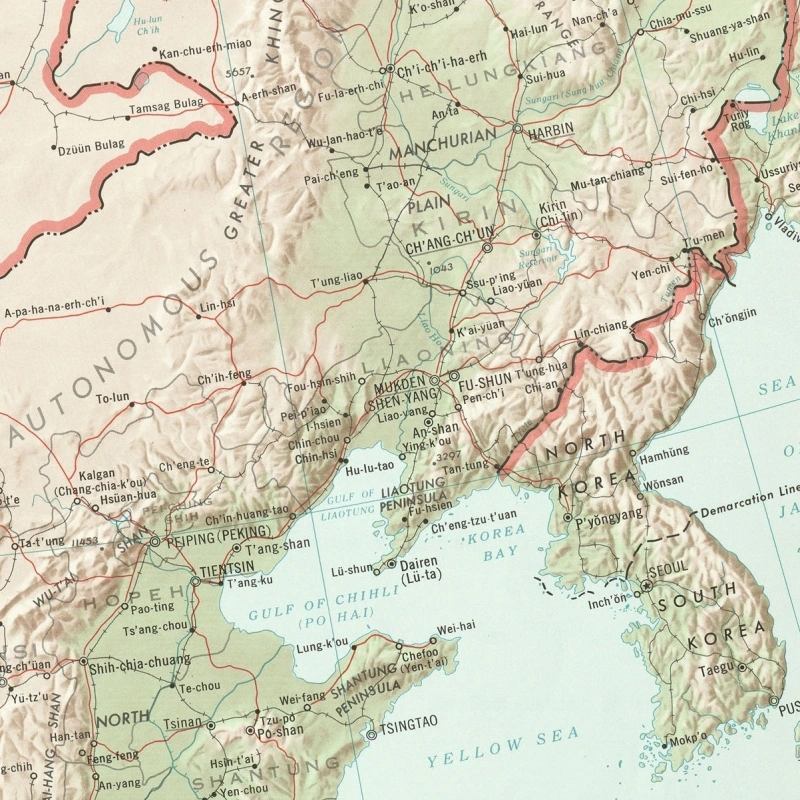
One of the interesting things I learned from this map is that in economic structure terms Heilongjiang and Xinjiang are not that different, even though conventional geography and economic analysis never puts them together. Xinjiang is usually considered an exception to everything in “core China”, because it is so clearly a frontier territory, with different ethnic and economic dynamics (same goes for Tibet). Heilongjiang by contrast is uncomplicatedly part of “core China”. But in fact both have local economies with a high degree of resource dependence. And in historical terms it was not all that long ago that Heilongjiang was not part of “core China”: it is one of the three modern provinces covering the territory of Manchuria, which in the 19th century was an ethnic enclave for China’s Manchu rulers, then a booming frontier region when migration was opened up to Han, then a de-facto colony of Japan. Heilongjiang is obviously much more integrated now but I wonder if its earlier history offers any parallels to some of the dynamics we’re seeing in Xinjiang today

What are small businesses good for?

That’s the big question behind an op-ed I wrote for The Wall Street Journal. The piece addresses some of the measures China’s government has recently taken to make life easier for small business–notably, dramatically lowering the costs involved in registering a new firm. I’d previously written about these changes for our in-house journal the China Economic Quarterly (subscribers only link). The motivation of that piece was mainly to point out that these changes were happening and having a real impact, since the number of new companies being registered has shot up this year. It’s a bit mysterious to me why this particular development has been so scandalously undercovered by the mainstream Western press, since Premier Li Keqiang talks about it all the time and is quite happy to take credit for it. But while it’s mainly A Good Thing to ease company creation, I also had some problems with some of the simplistic official explanations of the benefits that might come from this particular change. So the op-ed piece takes a somewhat different and more critical tone.

For me, this is the key part of the argument:

The founding of many new small businesses doesn’t guarantee increased national productivity. Small companies are often less efficient than large ones because they don’t have the same economies of scale. Small businesses deliver their biggest boost to the economy when they successfully compete with existing businesses—forcing incumbents to raise their game or displacing competitors with a superior product or service. That process requires not just lowering barriers to entry for new competitors, but also lowering barriers to exit for old ones. Creating more private businesses will therefore do China little good if those firms can never successfully compete against entrenched state-owned enterprises.

You can read the rest of the piece here. My thinking for the article was heavily influenced by an excellent overview article in the Journal of Economic Perspectives, which I highly recommend.