The continuing relevance of Kornai for China

It’s feeling like something of a Kornai moment to me: not long after finishing a nice book covering Kornai’s influence on China of the 1980s, I have stumbled across an excellent discussion of Kornai’s ideas apply to China today.

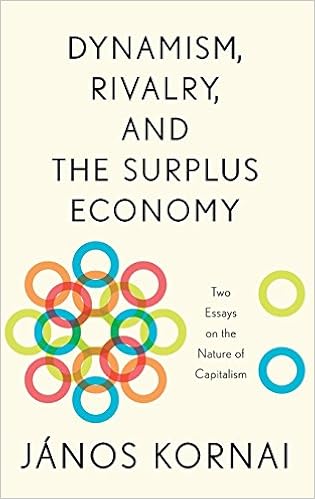
In the latest issue of the Journal of Economic Literature, Xu Chenggang reviews János Kornai’s Dynamism, Rivalry, and the Surplus Economy. Kornai calls the 2013 book a sequel of sorts to his 1992 classic The Socialist System, as it lays out a conceptual framework for understanding capitalism in contrast to socialism. But Xu also uses the review to think through China’s current situation in the context of Kornai’s framework, especially the key concept of the soft budget constraint:

Two pairs of concepts highlight the analytical framework for contrasting capitalism to socialism: shortage economy versus surplus economy and soft budget constraint (SBC) versus hard budget constraint (HBC). Compared with the distinctive feature of socialism called chronological shortage, which was first pointed out by the author in the 1970s, capitalism is characterized as chronological surplus, which means excess supply, including excess capacity and excess inventories, and labor unemployment. …

One of the major challenges beyond understanding “pure” systems is the hybrid system, which covers most of the economies in the world. China presents an interesting case of such a challenge. The pre-reform socialist China was a shortage economy, which is exactly consistent with Kornai’s predictions. Since the reform, China transformed into a particular type of hybrid system, that is, state capitalism, similar to that in Vladimir Lenin’s New Economic Policy. …

The Chinese economy is a super-surplus economy featured by massive over-capacity, which exceeds the over-capacity problem in all leading capitalist economies in the world. Such an extraordinary over-capacity problem is concentrated in the state sector with SBC. The SBC syndrome and the “forced growth” behavior of the SOEs create shortage under the socialist system. This phenomenon raises the issue of why SBC under state capitalism is associated with surplus. …

In contrast to private firms in capitalism, state firms under state capitalism continually produce and expand unwanted and obsolete products because they are protected by SBC (i.e., no “destruction” policy). The monopolistic power and government protection provide SOEs with the privilege of heavily subsidized capital. They imitate other innovations at extremely low costs because of favorable technology transfer deals from advanced multinational firms that are supported by the government and the monopolized super-large scale of the market (e.g., high-speed train technology). …

In socialism, SBC and lack of competition create shortage. Moreover, SBC is a mechanism that hampers competition. Indeed, market competition was weak in the Central and Eastern Europe and Former Soviet Union (CEE–FSU) reformed economies when central planning was replaced by market mechanisms. Different from CEE–FSU reforms, the large-scale entry of nonstate firms, particularly private firms, makes market competition the norm in the Chinese economy. Even SOEs, which are subject to SBC, are driven to fierce market competition and regional competition.

When high-powered incentives associated with these competitions are given to the CEOs of SOEs for market share or for profits and when SBC serves as insurance against insolvency, SOEs are induced to take bold risks in competition for market shares. This situation seems to be the force that produces extraordinary surplus. Thus, the coexistence of fierce product market competition and severe SBC could trigger more drastic over-capacity problems.

This phenomenon in which SBC under fierce competition may exacerbate surplus can also be observed in leading capitalist economies. Examples include the bad loan problems in Japan and the sub-prime mortgage problem in the United States. If the essential mechanism of SBC is the moral-hazard problem created by the removal of bankruptcy threat (broader than bailing out by an ex ante identifiable agent), the sub-prime mortgage scheme in the United States can be regarded as a sophisticated variation of SBC in advanced capitalism.

Like most of Xu’s work, the whole review is worth a read. I also happen to think that Xu’s 2011 article “The Fundamental Institutions of China’s Reforms and Development” is one of the single best things ever written about the Chinese economy; it and other pieces are at Xu’s profile and bibliography page.
What happened to the Chinese arguments for inland infrastructure investment?

There is a pretty overwhelming consensus these days that China is wasting huge amounts of money by building lots of unneeded infrastructure projects in its less-populated inland provinces. A lot has been written on this theme since the 2009 mega-stimulus that launched the infrastructure spending boom, but one of the more recent examples is this piece by Trefor Moss in The Wall Street Journal; here’s a sample:

While President Donald Trump says the U.S. urgently needs to invest in its decaying transport systems, China, if anything, faces the opposite problem of profligate infrastructure spending, according to some economists. Yet after years spent building airports, roads and railways, Beijing outlined plans for more of the same in a recent policy paper.

Under the plan, China would have 260 commercial airports by the end of the decade, up from 207 in 2015. Additions include a second major airport in Beijing at a cost of $11.7 billion, and a second airport for the western city of Chengdu for $10.2 billion. …

Three-quarters of Chinese airports—and virtually all the country’s regional airports—lose money, the then-chief of the civil aviation authority, Li Jiaxiang, said in 2014, in the agency’s most recent public comment on the issue. The agency spent $191 million last year subsidizing loss-making airports.

Airports in far-flung parts of western China are especially vulnerable. The $57-million Libo airport in Guizhou, for example, drew media attention in 2009 for handling just 151 passengers, yet the zombie facility hasn’t been allowed to close.

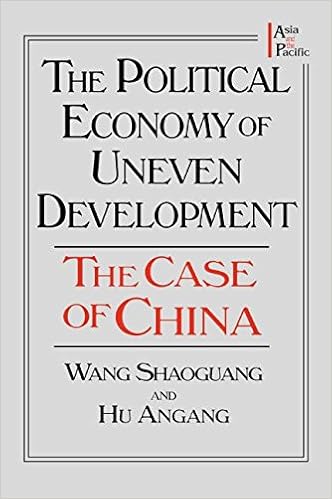
In this context it was interesting for me to recently read an older book that makes a strongly argued case for doing lots of infrastructure investment in inland provinces, with plenty of statistical evidence and full consideration of the relevant economics literature. The book is The Political Economy of Uneven Development: The Case of China by Wang Shaoguang and Hu Angang; it was published in 1999 but is a translated and revised version of a Chinese book composed in 1995. Therefore it very much predates the launch of China’s “develop the West” drive in 1999, and indeed the book seems to be a key source for the intellectual arguments driving that program and subsequent efforts to close the gap between the coast and the inland.

I would summarize Wang and Hu’s main arguments as follows:

  • There is no natural trend for regional disparities to be narrowed through a process of convergence. Market forces do not necessarily cause factors of production to spread evenly around the economy, but can concentrate them in areas that possess initial advantages. And in fact, regional inequality in China in the early 1990s was rising sharply.
  • Regional inequality in China was already extremely high by any international standard, which poses risks to national unity and political stability. (“The China of 1994 would undoubtedly have higher levels of regional inequality [if properly measured using units of similar size] than did Yugoslavia in 1988, just a few years before its disintegration.”)
  • The different endowments of China’s provinces–geography, economic structure, human capital, etc.–are either a function of differences in per-capita GDP or have no statistically significant relationship with per-capita GDP. In fact the numerous historical, geographical and cultural differences among provinces are less important than gaps in transportation infrastructure.
  • Differences in economic growth rates across China’s provinces are mainly driven by differences in investment, and differences in investment are mainly driven by differences in provinces’ local savings. Since local savings levels are themselves determined by the level of economic development, higher-income provinces have a natural tendency to grow faster.
  • These natural advantages could be offset by a capable and committed government that organized inter-provincial capital flows. But policies in the 1980s and early 1990s lead to fiscal decentralization and favoritism for the rich coastal provinces, aggravating rather than alleviating regional inequality.
  • The solution then is for the central government to stop unnecessarily favoring coastal provinces, and instead organize large fiscal transfers and investment programs in inland provinces in order to compensate for their lower savings, boost their growth and put them on a more equal footing with the coastal provinces.

Compared to most academic policy recommendations, these were almost unbelievably influential: two decades of large investment programs for inland provinces have followed. Yet the regional gaps that so worried Wang and Hu have not closed; indeed recently they have widened again. I would be surprised if many people these days would argue that the problem with inland provinces is that they aren’t getting enough infrastructure investment.

So what went wrong? I can think of a few possibilities, which are not mutually exclusive:

  • The differences in endowments among provinces were more consequential than expected, and could not be equalized simply by building more transportation infrastructure in poorer inland provinces. Coastal provinces’ real advantages may have been less about geography, infrastructure and transport costs, and more about greater access to social and business networks abroad, stronger entrepreneurial experience and traditions, and higher levels of education and human capital. Lowering transportation costs for the inland provinces helps, but it isn’t everything.
  • All investment is not created equal — public-sector investment in infrastructure and private-sector investment in manufacturing are not substitutes. Boosting public-sector investment in the inland provinces may have added to their GDP in the short run, but it did less to change their growth potential and economic structure than private-sector investment would have. High rates of public investment also risk entrenching dependency rather than ending it, in much the same way that huge amounts of foreign aid are not always helpful for poor countries.
  • The infrastructure investment boom was in practice not a centrally-organized transfer of capital designed to narrow regional gaps, but more of a nationwide epidemic of soft budget constraints.

The real story of how China took over the world of metals

The fact that China is the world’s largest producer of steel and many other metals is by now one of those ordinary pieces of background information, so unremarkable that is mentioned in passing in news stories without further explanation. Yet it is still a fairly amazing fact, and I suspect that most people, if asked to explain how it happened, would not be able to come up with more than a mix of “China is big,” “government subsidies” and some hand-waving.

The real story is much more interesting, and is well told by my friend Michael Komesaroff in a new paper published by CSIS: “Make the Foreign Serve China: How Foreign Science and Technology Helped China Dominate Global Metallurgical Industries.” The details are the heart of the tale, so it’s hard to summarize, but here are some excerpts to give a flavor of the conclusions:

Since 1978, China’s metallurgical industries have undergone rapid modernization, and they are now characterized by facilities that are among the largest and most technically advanced in the world. For example, in 2015, China turned out 31.67 mt of primary aluminum, accounting for 54.7 percent of world production. In 1990, the average size of China’s aluminum smelters was 22,000 tons per annum (tpa), much smaller than the 190,000 tpa that was then the average for smelters outside China. In 2015, the average Chinese smelter was rated at 330,000 tpa, much larger than the rest of the world where the average was 260,000 tpa. Currently six of the world’s 11 largest aluminum smelters, including the world’s two biggest, are in China, and some of them are equipped with advanced technology that has yet to be used on a commercial scale outside the country. … The examples of aluminum and steel are replicated in many other metallurgical sectors, including magnesium, gold, bismuth, cadmium, copper, lead, nickel, stainless steel, rare-earth elements, and zinc.

china-world-steel

In most cases the rapid transformation of China’s metallurgical industries can be traced to technology acquired in the 1980s and 1990s when Chinese state-owned enterprises (SOEs) purchased obsolete plants from failing foreign peers. The plants were dismantled and transported to China for reassembly. The underlying technology for these facilities was more efficient than what was then being used in China, but from a foreign perspective the plants were small and the technology was usually relatively old and not rated as the world’s best practice. However, for China, the purchase of transplanted foreign facilities was a cost-effective means of growing their understanding of more-advanced metallurgical technologies and this strategy contributed to the country’s emergence as the global leader in the production of most metals.

The specific strategy adopted by China when rebuilding the transplanted facilities was to confine any modifications to those necessary to simplify the process and adapt them to Chinese conditions. Having adapted the imported plants, engineers set out to fully understand the technology before initiating a series of continual incremental enhancements that improved performance. The continual improvements were helped by a rapidly expanding economy with an almost insatiable demand for metals that supported a sustained construction program. Learning from each new project helped China’s engineers make further small enhancements as well as lowering construction costs. The consequence of this strategy is that now China is able to build simple, low-cost metallurgical plants that they staff with abundant low-wage workers performing simple and repetitive tasks. This is the opposite to the West, where capital costs are high because there are few projects, each with a different technology that tends to be complex so it requires highly paid skilled workers. …

Purchasing obsolete foreign metallurgical plants for transport and re-erection in China appears to have been a haphazard, though pragmatic practice that was not Beijing’s official policy; however, the central government did readily give its support when an SOE sought approval for such projects. … For China the timing of these changes was fortuitous in that they followed the oil shocks of the 1970s when the price of oil shot up from $3 to $37 per barrel in a decade, forcing steel and other energy-intensive industries to close or relocate to countries where energy was much cheaper. It was this restructuring of heavy industry that was the prerequisite for successful implementation of China’s policy. China’s abundance of low-cost, relatively skilled labor was another fortuitous factor favoring China because it made the dismantling and re-erection process a viable and competitive option that other countries could not have emulated even if they had wanted the facilities.

The lucky coincidence of a global restructuring of basic industries and the availability of a cheap skilled workforce is unlikely to be repeated, making it highly unlikely that China’s successful heavy industry development model will be replicated anytime soon. It is also unlikely that China could successfully recycle the model for use with anything other than a basic industry that produces a standard product to an international specification. There are examples, such as kaolin and titanium dioxide, where China acquired Western plants or technology designed to produce consumer goods, but was not able to successfully operate their acquisition. Consumer goods have a wide variation in characteristics that are custom designed to appeal to final consumers. …

Much of the criticism leveled against Chinese metals producers is that as a result of Beijing’s support they have built new capacity even when there is no economic justification and that such nonmarket forces have encouraged an enormous increase in new capacity. Because of the global nature of most metallurgical industries, critics argue that excess capacity in China has displaced production in other regions, resulting in localized job losses and even bankruptcies. While the logic of this argument is sound, the facts that justify the argument are questionable on at least two counts: first, China is not alone in subsidizing its metal producers, and second, irrespective of any government support, Chinese capacity is generally newer, more efficient, and cheaper to build than comparable foreign facilities.

Japan’s WWII war machine did not have enough machines

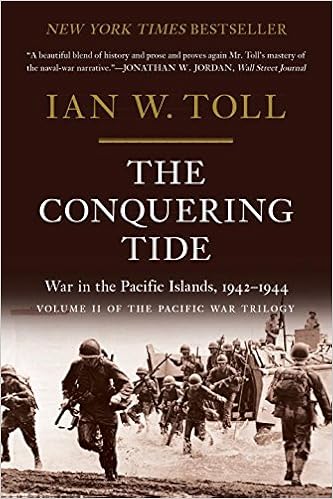
It is not a stirring description of valor in battle, but the following passage from Ian Toll’s The Conquering Tide: War in the Pacific Islands, 1942-1944the sequel to his excellent Pacific Crucible, nonetheless stayed with me for a while:

Japanese war planners had hoped to produce 40,000 new military aircraft in 1944, but the production rate was barely half that level in the fall of 1943. Aviation plants were straining under the pressure of material shortages, maladroit logistics, and a paucity of trained machinists and engineers. Shipping losses bit deeply into deliveries of Malaysian and Jakartan bauxite, the industry’s chief source of aluminum alloys. The Mitsubishi complex in Nagoya had expanded steadily, employing 43,000 workers by the end of 1943, but it had turned out only 1,029 new Zeros in 1943, fewer than half the number demanded by the military services. The Japanese aircraft industry had relied to a disproportionate extent on a small, overworked coterie of talented craftsmen and technicians, and was never optimized for mass production. Belated efforts to introduce standard production-line techniques brought some improvement, but neither Mitsubishi nor the other major aircraft suppliers (Nakajima, Aichi, Kawasaki, Tachikawa, Yokosuka) managed to ramp up output fast enough to fill the military’s ballooning wartime orders.

When a government inspector passed through the Nagoya works in late 1943, he was surprised to learn that newly manufactured Zeros were still being hauled away from the plant by teams of oxen. There was no airfield adjoining the Mitsubishi plant. The new units had to be transported overland to Kagamigahara, twenty-four miles away, where the navy would accept delivery. The aircraft were too delicate to transport on trucks, and the railheads were not convenient. Twenty oxen had died, and the remaining thirty were verging on complete exhaustion. Feed had been obtained on the black market, but the supply was not reliable. Essential wartime deliveries of replacement aircraft thus hung on the fate of a diminishing herd of underfed beasts. Mitsubishi engineers at length discovered that Percheron horses could haul the aircraft to Kagamigahara faster and required less to eat. These ludicrous exertions, when compared at a glance to the arrangements at Boeing, Douglas, or Grumman, tell most of the story of Japan’s defeat.  …

Writing years after the war, Jiro Horikoshi observed that his country could not draw from the deep wellsprings of engineering and technical expertise that existed in the United States. There was nothing in Japan to compare with America’s sprawling complex of universities, research laboratories, design firms, and heavy industries. Japan had a small circle of gifted engineers employed by the navy, the army, and about a dozen industrial firms. Owing to rivalries between the army and the navy and between rival companies and cartels (zaibatsu), much of their work was duplicative and wasteful. All too often their talents were squandered on impractical, profligate, stop-and-start projects that never got off the ground (in some cases, literally). They were resourceful and dedicated, but there were not enough of them. Horikoshi and his colleagues drove themselves to the verge of complete exhaustion and collapse, until the doctors and bosses ordered them to rest. “Such poor management of technical policy created the situation where we had no other choice but to rely on the Zeros [a lightweight plane that US pilots were shooting down in increasing numbers] from the beginning of the war until its end,” Horikoshi wrote, “and this, in turn accelerated Japan’s defeat.”

The image of the starving oxen pulling planes indeed captures so much of the tragic waste that was Japan’s attack on the US.

Toll’s book is really a narrative history of key military engagements, not primarily an economic or social history–but it’s nuggets like this, along with digressions on topics like Hawaiian social history and shore leave in Australia, that help make the book continuously interesting and far from narrowly focused. It’s vividly written and a marvel in clarity, no simple task given the mass of names and the obscure and complicated geography it covers.

The lasting influence of “Kornai fever” in China

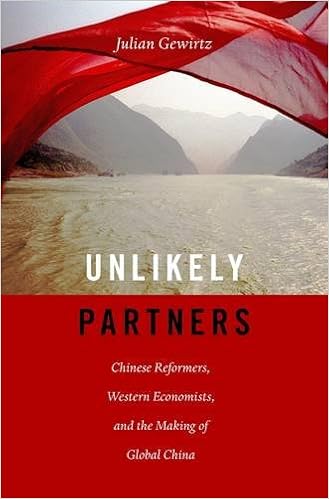
Julian Gewirtz’s new book, Unlikely Partners: Chinese Reformers, Western Economists, and the Making of Global Chinahas gotten rave reviews from plenty of people smarter and more important than me, but I am happy to add my voice to the chorus. It is an excellent general history of economic policymaking in the first fifteen or so years of the reform era (1978-1993), focusing particularly on the intellectual exchanges between a group of Chinese intellectuals and various foreign economists. The “western” in the title should be interpreted very broadly, as the stars of the story are in fact mostly lesser-known scholars from what used to be called the Eastern Bloc.

At the center of this tale is the great Hungarian economist János Kornai, who incisively analyzed the nature and problems of socialist economies. With detailed research and interviews, Gewirtz nicely uncovers the chain of encounters that led to Kornai’s ideas getting wide exposure in China:

Kornai’s major idea presented at the [1981] Athens conference was his analysis of the “soft budget constraint.” This crucial concept showed that, under a planned economy, the firm “is not limited by fear or loss of failure”–in more practical terms, loss-making in the firm’s finances does not bring negative consequences to the firm. … Kornai’s presentation drew a sharp rebuke from V.R. Khachaturov, president of the Soviet Economic Assoication and a vehement supporter of the socialist planned economy. … But an unlikely voice, not heard previously in the conference discussions, spoke up in Kornai’s favor: Wu Jinglian. “In his paper, Professor Kornai had analyzed the functioning of a specific model of a socialist economy. Chinese experience made it easy to understand his analysis,” Wu said. Chinese economists had observed these issues, especially the “paternalistic relationship” of the government and enterprises, “serious waste” in enterprise management, and “the disappearance of the function of prices as carriers of information about supply and demand.” Wu praised Kornai for providing a rigorous conceptual apparatus. …

While at Yale University’s Department of Economics in 1983-1984, the 53-year-old Wu had read Kornai’s Economics of Shortage. Returning to China in 1984, Wu stashed a copy of Kornai’s book in his luggage and, at home, excitedly circulated sections of the book among friends and colleagues. In the minds of this small, elite group of Chinese economists, Janos Kornai seemed like an unexpected friend. …

[in 1985] Kornai had come to China as part of a distinguished group of economists from Europe and North America who would gather with many of China’s leading economists and economic policy makers. … The ostensible topic of his presentation was “could Western policy instruments (especially monetary and fiscal policies) be effective in socialist countries?” Kornai’s career, built on applying sophisticated economic analysis to the economic problems of socialist countries, clearly suggested an affirmative answer to this question–although this idea was relatively new to China. Since arriving in Beijing, Kornai had been listening carefully to discussions of China’s problems, including economic “overheating” and fears of inflation, as well as to the Chinese economists’ sense that they did not have in mind a goal model for the reform. Listening to such discussions, he wrote in his memoirs, “I felt…that I was at home in China, despite the distance and the historical and cultural differences. All the phenomena that came up and the cares and woes were familiar.” …

Kornai’s ideas, transmitted through diverse channels, flooded into Chinese debates, including the 1986 publication of the Chinese translation of Economics of Shortage. Dozens of articles in periodicals introduced an even wider readership to what Dushu, then a prominent liberal magazine, called the “enlightening” views of Kornai, whom they dubbed “the economic theorist that reform cried out for.” “Kornai fever” would go onto fuel sales of over 100,000 copies of the Hungarian economist’s book. Kornai was mentioned hundreds of times in academic and research journals in the period 1986-1989, including in regional and provincial journals in areas as varied as Guangxi, Hubei, Anhui, and Heilongjiang. …

These authors placed particular emphasis on two related aspects of the book: why the shortage economy was innate to socialism and how enterprise behavior under socialism created shortage phenomena—focusing, as a result, on Kornai’s arguments about the “soft budget constraint” and “paternalism.” These ideas, which the reviewers defined as priorities to address in future reforms in China, would remain the most salient aspects of Kornai’s thought for Chinese economists.

This jibes with my own experience; I discovered Kornai’s work from Chinese references to the term “soft budget constraint” in writings on state-owned enterprise reform. But while the soft budget constraint is brilliantly useful conceptual tool, being able to identify the problem of soft budget constraints has not enabled China to solve it. In fact the simplest diagnosis of the problems of the post-2008 Chinese economy is probably that budget constraints, which had been getting harder, became a lot softer.

Kornai’s most important contribution may actually have been to articulate the idea a market economy could still be regulated or managed by the government through indirect means–the fiscal and monetary policies used in Western economies–rather than the direct planning characteristic of socialism.

There is much testimony that Kornai’s presentation on this theme at the 1985 Bashan conference helped many Chinese reformers clarify the direction in which they wanted to head. They knew that they didn’t want a planned economy any more, but they were also very uncomfortable with the idea of an economy completely driven by random market forces. Kornai’s presentation helped square the circle, and Gewirtz shows how the deceptively simple concept of a “market economy with macroeconomic management” eventually became an official goal and (more or less) a reality. Kornai himself recognized how unlikely this whole chain of events was:

It’s very strange that in my own little country [I was ignored] most of the time, and in this giant country I was able to speak at a certain historical moment when one billion people wanted to hear exactly what I wanted to say. That was a very rare moment, and good luck.

Xi Jinping is a giant Deng Xiaoping fanboy

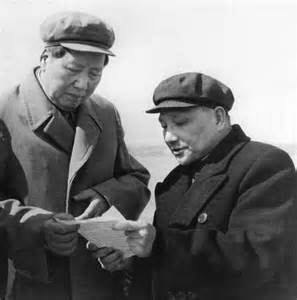
I have long been uncomfortable with the widespread view that Xi Jinping is effectively the second coming of Mao Zedong. With his ever-growing list of titles and powers and overwhelming presence in official propaganda, Xi is regularly accused of undermining the collective leadership system instituted by Deng Xiaoping and returning to an era of one-man rule and personality cults.

I think this view is less an actual historical analysis than an attempt to find a way to criticize Xi in a way that resonates within the Chinese political context. Since “everybody knows” that Mao was bad and Deng was good, saying that Xi is like Mao but not like Deng is just a way of expressing disapproval of the things Xi is doing.

While I’m not a huge fan of all the things Xi is doing either, I think we have to recognize that a lot of what he is doing draws very much on Deng Xiaoping’s legacy rather than Mao’s. Xi’s obsession with high economic growth targets is, for instance, clearly an attempt to show that he is Deng’s successor and is fulfilling the great goals passed down from the previous generation of leaders. I’ve also argued that Xi’s treatment of Mao’s legacy is very much in line with Deng’s own.

Even Xi’s obsessive power-gathering, culminating in his recent official recognition as the “core” of the leadership, can be justified as a Dengist move. While Deng always emphasized that China’s top leadership was collective, he knew that he was the core of that leadership, and he did not think the system could function without a core. Deng did not want arbitrary one-man rule but he did not want squabbling and indecision either. His most direct statement of this was in famous remarks made to senior officials in the Party, a couple of weeks after June 4, 1989 and the designation of Jiang Zemin as the new core leader (Chinese original here):

A collective leadership must have a core; a leadership without a core is unreliable. The core of our first generation of collective leadership was Chairman Mao. Because of that core, the “cultural revolution” did not bring the Communist Party down. Actually, I am the core of the second generation. Because of this core, even though we changed two of our leaders, the Party’s exercise of leadership was not affected but always remained stable. The third generation of collective leadership must have a core too; all you comrades present here should be keenly aware of that necessity and act accordingly. You should make an effort to maintain the core — Comrade Jiang Zemin, as you have agreed. From the very first day it starts to work, the new Standing Committee should make a point of establishing and maintaining this collective leadership and its core.

In this vein I have to recommend a new and brilliant piece by Alice Miller, the doyenne of Chinese politics-watchers, which provides a comprehensive assessment of Xi’s governing style and its relationship to Mao and Deng. She comes down firmly on the Dengist side, as is clear from the title “What Would Deng Do?“; here is an excerpt from the conclusion:

Much commentary among observers on Xi Jinping as the new Mao in Chinese leadership politics portrays him as ruthlessly asserting dictatorial power by purging political adversaries on charges of corruption and by assuming command over all major policy sectors as the “chairman of everything.” Xi has thus overturned the norms of collective leadership installed by Deng Xiaoping 30 years ago to inhibit the rise of another Mao, and he has begun building a cult of personality resembling Mao’s, despite a formal ban in 1980 enacted by the Deng leadership. On this view, Xi Jinping has emerged as the most powerful Chinese leader since Mao himself.

As prominent as this understanding of the Xi leadership has become, it nevertheless suffers from serious flaws. For one thing, several of its specific assertions are simply not the case. Judging by available evidence, Xi has not superseded normal Politburo processes as they worked under his predecessor Hu Jintao and, before Hu, Jiang Zemin. As attested to by public appearances of members of the Politburo Standing Committee, the key decision-making body, the division of policy labor—an intrinsic element of the collective leadership system that Deng Xiaoping implanted—remains in place. …

A more efficient reading of the dynamics of the Xi leadership arises out of the documents of the 18th Party Congress that installed him as top leader in 2012. … The upshot is that Xi and his Politburo Standing Committee colleagues received a mandate at the congress to press a broad array of renewed reforms deemed essential both to China’s advance toward the “double hundred” goals and ultimately to the party’s survival amid a rapidly changing society. To strengthen the ability of the new leadership to press the mandated reforms, the congress downsized the Politburo Standing Committee to make it easier to break the deadlocks that appear to have stymied reforms in Hu Jintao’s later years. And to the same end, Xi was given enhanced public prominence as the front man leading the reform movement, though not at the expense of the collective leadership system that Deng implanted. …

Xi’s model is not Mao Zedong, but rather Deng Xiaoping, the leader who launched the reforms that triggered China’s rise and whose transformative impact Xi and his colleagues hope to emulate.

Mao and Deng

Mao and Deng

What I’ve been listening to lately

  • Mary Halvorson – Away With You. The new album from guitar goddess Halvorson does not disappoint, featuring more of her knotty, exploratory compositions for an ever-growing ensemble. Her group is now augmented by another guitarist, Susan Alcorn on pedal steel, and the interplay between the two guitars is a real highlight.
  • Lester Bowie – I Only Have Eyes For You. The first and probably best album by Bowie’s Brass Fantasy group, lively, fresh and inventive.
  • Steve Lacy – Morning Joy. A crackling 1986 live recording from the late, great Lacy, whose quartet was one of the best working jazz bands of the 1980s and 1990s.
  • Maria Schneider Orchestra – Evanescence. Lovely large ensemble work from the present-day heir of Gil Evans.
  • Art Farmer & Benny Golson – Meet The Jazztet. One of the greatest hard bop recordings ever, from a group that is often and unfairly overlooked.

How the anti-capitalist Cultural Revolution led to the revival of capitalism

Andrew Walder’s essay “Bending the Arc of Chinese History: The Cultural Revolution’s Paradoxical Legacy” was recently recommended to me, and indeed it is an excellent piece (sadly, the full source is behind one of those ludicrous academic paywalls). In it he argues that “the Cultural Revolution laid political foundations for a transition to a market-oriented economy whilst also creating circumstances that helped to ensure the cohesion and survival of China’s Soviet-style party-state.” The reason this legacy is paradoxical is, of course, that the professed goals of the Cultural Revolution were to tear down the Soviet-style party-state and prevent the re-emergence of capitalism. The exact opposite happened.

Furthermore, the historical effects of the Cultural Revolution are one of the fundamental reasons why China and the Soviet Union ended up on such different trajectories. China’s economic reforms of the 1980s were successful in part because they were part of a project of restoring state power and national greatness, and contributed to the strengthening of institutions. The USSR’s economic reforms of the 1980s were not successful because they were a battle against entrenched bureaucratic power, and undermined institutions. Here are some excerpts on this point:

One of the most consequential accomplishments of the Cultural Revolution was that it severely damaged the national bureaucracy, leaving it weak and divided. At the end of the 1970s, it was anything but an entrenched and powerful force capable of defending its privileges and vested interests. Officials at this point in time were grateful to be returned to responsible positions, given real authority over their designated areas of operation, and freed of the constant threat of political accusations for alleged errors. …

Deng would become the acknowledged hero of all those who sought to rebuild the structures of the party-state, purge it of disruptive rebels, and rebuild the Party, economy, and scientific and technical infrastructure. The way in which Deng rose to supplant Hua Guofeng as the Party’s pre-eminent leader at the end of 1978 is testament to the widespread political support that he earned for his efforts during Mao’s last years. …

Mikhail Gorbachev and Deng Xiaoping in 1989

Mikhail Gorbachev and Deng Xiaoping in 1989

When Gorbachev set out to restructure the Soviet economy along more modern and market-oriented lines in the late 1980s, he faced a fundamentally different situation. The Soviet Communist Party, its national apparatus of ministries and bureaus, its massive security apparatus and huge military establishment had not experienced extensive purges for almost 40 years. These centralized structures had grown and enhanced their authority, had accumulated bureaucratic privileges, and were well prepared to defend both against reforms that threatened the status quo. Gorbachev quickly found that his attempts to initiate economic reforms met with delay and obstruction. …

He eventually concluded that the only way to overcome bureaucratic resistance to reconstruction, or “perestroika,” was to reduce the power and influence of the bureaucracy and neutralize the security services and armed forces. This was the origin of “glasnost,” a greater transparency and openness about the flaws and inequities of the Soviet system, past and present, which was a prelude to an attempt to restructure the political system through competitive elections to new national assemblies. By the spring of 1989, Party secretaries of regions and cities were made to stand for election to legislative assemblies, and many of them lost. The momentum of democratization within Soviet structures, however, split the Communist Party and turned into nationalist mobilization that tore the Soviet Union apart. …

Gorbachev’s progressive ideas threatened the vested interests of an entrenched bureaucracy that had grown undisturbed for decades and which now oversaw an enormous military-industrial complex. Deng Xiaoping was in a fundamentally different position. … Deng represented the resurrection of the same forces whose vested interests stood in the way of Gorbachev. Deng was leading the way to their recovery towards a more secure and prosperous future, and as it turned out, an integral part of this package of national revival was the restructuring of China’s command economy. The Cultural Revolution eased the politics of economic reform by bundling that programme together with the revitalization of the party-state. This opportunity was not available to Gorbachev.

Walder also makes the point that the Cultural Revolution, which featured vicious ideological attacks on the Soviet Union, helped push China toward the US; the eventual normalization of relations with the US and the intellectual exchanges with Western economists that followed were also a big factor in the success of Deng’s reforms.

This explanation of the failure of Gorbachev’s reforms is quite close to that in Chris Miller’s new book The Struggle to Save the Soviet Economywhich I recently recommended. Such a historical perspective suggests that the key factor behind the very different Chinese and Soviet outcomes was not gradualism versus shock therapy, or privatization versus state control, but whether the government bureaucracy was enabling change or defending the status quo.

The debate over the alleged higher education glut in China

The latest issue of the Journal of Economic Perspectives has a good group of articles on issues in the Chinese economy; there’s a lot to talk about in there, but the piece on education by Hongbin Li, Prashant Loyalka, Scott Rozelle, and Binzhen Wu is particularly worth flagging. It touches on one of the hotter social debates in China over the past few years: whether the massive expansion of college education since 1999 has created an over-supply of graduates, or is just the beginning of the necessary transformation of the education system to meet the needs of a modern economy.

college-admissions

This debate is interesting not only because it is a very consequential one, but also because the two sides tends to use very different styles of argument. The case for the prosecution tends to rely more on close observation of current social phenomena in China (what you might call anecdotal evidence), while the case for the defense tends to rely more on economic theory. A good example of the argument for an education glut is a recent piece by Edoardo Campanella:

Education is never a bad thing in itself, but the move toward “mass universities” of the type that emerged in the West after World War II is occurring too fast. …

China, with a graduate unemployment rate of 16%, is producing more highly educated workers than the economy can absorb. The wage premium for workers with a bachelor’s degree has decreased by roughly 20% in recent years, and new graduates often must accept jobs – such as street cleaning – for which they are vastly overqualified.

As more Chinese students attend university, fewer are graduating from vocational schools, which teach the skills that the economy actually needs. In fact, the demand for qualified blue-collar employees is so high that in 2015 the country’s 23 million textile workers earned, on average, $645 per month – equal to the average college graduate.

Li et al. in the JEP piece note the same widely-reported factoids: that new graduates take a long time to find jobs, and their starting salaries are often of similar levels to manual laborers. But they counter with a combination of theoretical reasons not to be too concerned by these phenomena, and a more involved estimation of the financial returns to education:

In contrast to this common perception of too many college students, we believe that college expansion is a great policy achievement of China. If we assume that the demand for human capital is fixed in the short-run, then given the unprecedented increase in the supply of college graduates since 1999, it is not surprising that the return to college for young college graduates would decline for a time. However, in the long run, human capital investment can lead to investment in physical capital and skill-biased technological changes, which ultimately will increase the productivity of and return to human capital. In addition, regions and cities in developed nations that experience arguably exogenous shocks to the supply of human capital ultimately also experience increases in the productivity of skilled labor due to human capital spillovers. There is no obvious reason to expect that China’s case would be different in this respect.

Moreover, college expansion could well be a result of rising demand for human capital. Our analysis of data from China shows that the return to college education for the labor force as a whole has continued to rise despite the fast expansion of China’s colleges. In particular, the return for those with 5–20 years of work experience has risen from around 34 percent in 2000 to 41 percent in 2009. A possible reason is the rising demand for skilled workers driven by the influx of foreign direct investment and expansion of trade starting from the early 1990s. The high return to college education for experienced workers implies a high lifetime return (the 10-year lifespan return to college education for the year 2000 graduate cohort is as high as 42 percent), which explains why urban students flood into colleges in spite of the seemingly low short-term return.

My own impression is that the education-glut argument is more popular within China, perhaps because it can be more easily illustrated by tales of struggling new graduates. But the statistics that are usually used to support it seem questionable: if a recent college graduate is making the same wage in their first year of work as a migrant worker is making in their 20th, it’s not obvious that actually indicates the market is devaluing a university education. The proper measure is really the lifetime returns to education, and there seems little reason to doubt that today’s college graduates in China are going to have much higher lifetime incomes than today’s migrant workers without a degree. Perhaps the issue is that new graduates do not feel that the gap between themselves and manual workers is as wide as they expected it to be.

Li and his co-authors do point to some worrying evidence that the quality of higher education in China has in fact suffered as the number of students has massively expanded, an issue that Campanella also highlights. But while Campanella recommends making higher education much more restrictive and shunting most students into vocational education, Li and co. argue for decentralizing and deregulating higher education, so that universities are not mainly trying to meet government-set enrollment quotas but are instead competing to deliver a good educational experience.

A more serious problem than any over-supply of college graduates is likely to be the rather shocking under-provision of high school education for rural students, which the JEP article shows is weighing down the overall education level of China’s workforce.

Are Xi and Trump really so different?

The contrast last week between Xi Jinping giving a pro-globalization speech at Davos and Donald Trump giving his “America First” inauguration speech has captured the imagination of the chattering classes. It has led to the unusual spectacle of the arch-nationalist Steve Bannon and the arch-globalist Martin Wolf actually agreeing on something. Here’s what Bannon told the Washington Post:

“I think it’d be good if people compare Xi’s speech at Davos and President Trump’s speech in his inaugural,” Bannon said. “You’ll see two different world views.”

And here’s Wolf’s latest column:

Xi Jinping, president of China, made a speech last week on globalisation at the World Economic Forum that one would have expected to come from a US president. At his inauguration, Donald Trump made remarks on trade that one would never have expected to come from a US president. The contrast is astounding.

I think there is less to this contrast than meets the eye. A lot of the intellectual class is predisposed to see an epic battle of ideas between globalization and nationalism, and so that is what they saw in the headlines from the speeches. But it has been clear for years that Xi Jinping is one of the premier nationalists of our day: his “China Dream” rhetoric is a not very distant cousin to Trump’s “Make America Great Again.”

In reality, Xi’s speech at Davos had plenty of nationalist self-interest; it was just packaged in a different wrapper. Xi praised globalization not because it is good in the abstract but because globalization has made China rich and powerful.

In the Chinese view, globalization has worked for them not because they blindly embraced Western economic theories, but because they managed the process of globalization appropriately, with a keen eye to China’s national interests:

China has become the world’s second largest economy thanks to 38 years of reform and opening-up. A right path leads to a bright future. China has come this far because the Chinese people have, under the leadership of the Communist Party of China, blazed a development path that suits China’s actual conditions.

Other countries can and should be doing the same:

We should act pro-actively and manage economic globalization as appropriate so as to release its positive impact and rebalance the process of economic globalization. We should follow the general trend, proceed from our respective national conditions and embark on the right pathway of integrating into economic globalization with the right pace.

China has therefore succeeded not because globalization gave them something, but because China has been clever and hard-working in taking advantage of its opportunities:

Such achievements in development over the past decades owe themselves to the hard work and perseverance of the Chinese people, a quality that has defined the Chinese nation for several thousand years. We Chinese know only too well that there is no such thing as a free lunch in the world. For a big country with over 1.3 billion people, development can be achieved only with the dedication and tireless efforts of its own people. We cannot expect others to deliver development to China, and no one is in a position to do so.

Implicit in this line of thinking is that countries for whom globalization has not been a success–a group that Trump and Bannon seem to think includes the US–have only themselves to blame. They didn’t do it right; China did. Trump seems to agree, as he wants to renegotiate US trade deals.

Because China has successfully managed globalization, it thinks globalization is a good thing and wants it to continue. And this is why Xi’s speech is ultimately one of nationalist self-interest. This is not an altruistic conception. In particular, China sees the next stage of its development as involving the spread of its corporations out of its home market and around the globe. So Xi wants to make sure that new barriers are not thrown up in their way:

In the coming five years, China is expected to import $8 trillion of goods, attract $600 billion of foreign investment and make $750 billion of outbound investment. Chinese tourists will make 700 million overseas visits. … we hope that other countries will also keep their door open to Chinese investors and keep the playing field level for us.

If Xi is now trying to present China, however implausibly, as a defender of a liberal global economic order, it’s because he wants something from the rest of the world.