How strategic are China’s state firms?

Dinny McMahon of the WSJ has an excellent profile of a giant but obscure Chinese state-owned enterprise, Sinomach. I have been fascinated by SOEs since I first moved to China, and over the past couple of years I have also spent a lot of time digging into the finances and other technicalities of how the SOE sector works. Dinny’s piece nicely captures a lot of the key facts about the SOE sector today: 1) far from being world-straddling corporate giants, most Chinese SOEs are poorly performing companies suffering from a combination of arbitrary political goals and poor management; 2) a lot of “SOE reform” happened from 1998-2003, but not a lot has happened since, and there is a lot of room to further overhaul these companies — which indeed the government is now trying to do; 3) the government’s support for SOEs is based on the premise that they will develop “strategic” technologies to boost national security and competitiveness, but in fact the actual achievements in this area are decidedly subpar. (Those interested in more data and detail on these issues can look at the paper on SOE reform I wrote for the Paulson Institute.)

To close, here’s one lovely tidbit from the Sinomach story:

Despite China having passed through more than three decades of reform, Sinomach’s Erzhong unit—set up by China’s Red Army in 1958—still adheres to many of the traditional customs of the country’s major state-owned firms. It still pays retirees a living stipend, and runs a sports center with two swimming pools and a television station. Staples of the station’s programming, which is only available on the factory grounds and to people living in residential zones once owned by the company, include a U.S. English teaching program from the early 1990s and training programs for operating and repairing machinery and electrical equipment.

The best books I read in 2014

The list this year has more fiction than nonfiction: I read a lot of great novels this year, but the nonfiction was more hit-or-miss. In alphabetical order by author, since I can’t come up with a satisfying way of ranking them. I usually do a lot of reading in December, and am desperate to get back on my reading schedule after a month or more dealing with moving house and renovating, etc, so I may update this later if I finish something else quite good before Jan. 1.

Nonfiction

  • The Nature of Technology: What It Is and How It Evolves, by W. Brian Arthur. The rare book that delivers exactly what it promises in the title. These days we are constantly inundated with pronouncements, analyses and prognostications about technology and its impact on our lives. Yet for something so important, the general principles of how technology works are very poorly understood. There is an emptiness at the heart of many arguments about technology, which treat it as a mysterious separate universe whose inner laws can only by divined by the cognoscenti. Arthur cuts through the cant with brilliantly clear and simple prose, and logically and rigorously develops nothing less than a General Theory of Technology. We learn to see technologies not as isolated units — “fruits” plucked from a tree, be they low-hanging or high, in one popular metaphor — but as collections of elements that are constantly evolving and combining. Among other things, Arthur explains not only why modern technological progress, once started, is not going to stop, but also why that progress is never consistent or even. I found it tremendously refreshing and very insightful, and all in all an essential toolkit for understanding the world around us.
  • Invention of the Modern World, by Alan MacFarlane. An excellent entry into the crowded field of “how to explain the modern world” books. It attempts to answer the question of where the Industrial Revolution and modern life came from by a deep dive into the particulars of English history. MacFarlane is anthropologist by training, though he has spent most of his career not writing about the traditional societies that anthropologists (ahem) traditionally focus on. Fittingly, however, his argument is essentially anthropological: that the patterns of the modern technological economy reflect a particular social structure, and that England developed this social structure first for a variety of contingent but identifiable historical reasons. Very readable, thanks to its origins as a series of lectures for Chinese students, and while the England-as-origin-of-all-things thesis goes overboard occasionally, it is mostly pretty convincing.
  • Doing Capitalism in the Innovation Economy, by William Janeway. A strange and not always terribly readable book, it was nonetheless one of the most thought-provoking I encountered this year, so makes the list. Janeway is a private-equity investor with an academic bent, and the book uses his own experience to develop general ideas on how innovation and technology work and are financed in the real world. Strangely, the detailed anecdotes about particular companies and technologies were mostly uninteresting, while the general reflections I found excellent (usually it is the other way around).
  • Savage Continent: Europe in the Aftermath of World War II, by Keith Lowe. Not a fun read, but an engrossing and thoughtful one, and consistently fascinating. The book is essentially a survey of all the terrible things people in Europe did to each other after the end of official fighting. Much of the motivation and the value of the book is in just documenting these lesser-known events. But it also develops an argument that much of the so-called postwar political order that we take for granted–the Cold War, division of Germany, etc–was actually driven as much by the events after the cessation of formal hostilities in Europe as it was by the pattern of winners and losers.
  • Forgotten Ally: China’s World War II 1937-1945, by Rana Mitter, and Japan 1941: Countdown to Infamy, by Eri Hotta. This year I fortuitously read a great combination of new books on World War II from an Asian perspective: the first a reconsideration of China’s role in the world war, the second an account of how Japan’s (apparently highly dysfunctional) system decided to go to war against the US. Both are lively and very readable. Mitter argues for a more generous understanding of what Chiang Kai-shek accomplished by not losing the war against the Japanese invaders, where many previous accounts have emphasized his many failures. In particular Mitter says China’s contribution to the global balance of the war is underappreciated: by keeping hundreds of thousands of Japanese troops tied down in China, Chiang limited Japan’s ability to attack other countries and make the war in Asia even worse than it was. The book also has lots of great material from archives on the Chinese experience of the war, including a stunning description of the firebombing of Chongqing. Hotta’s book is a more straightforward narrative history of the runup to the attack on Pearl Harbor–which led to a war that many Japanese knew they could not win. There is a zone of silence at the core of the book, since the available sources just do not tell us enough about what the emperor and those around him were thinking at the time. But it is nonetheless a very useful portrait of how a political system made a series of disastrous decisions that led to its own undoing.

Fiction

  • The Broken Sword, by Poul Anderson. Now that the works of J.R.R. Tolkien have been transformed into multimedia mass-culture extravaganzas, it’s hard to remember a time when “fantasy” referred to anything other than variations on Tolkien’s themes. But The Broken Sword predates the commercial fantasy genre, and offers a glimpse at the road not taken. This book is slim and often grim, Nordic rather than Anglo-Saxon, and in many ways the antithesis of the epic and optimistic Lord of the Rings. It’s a work that, sadly, remains unique, having spawned no followers and no imitators.
  • Life after Life, by Kate Atkinson. One of the central facts of our lives is that they are contingent: we know that things could have happened otherwise. But they didn’t, and so we never really know what might have been. This extraordinary book explores this theme through the conceit of a woman who lives her life over and over again, making different choices and having different accidents, until she gets it “right.” But it’s not the sterile working-out of an abstract philosophical concept, but a concrete, charming and often funny story. The depiction of how the same girl grows up into several very different people is brilliantly true. Hands down the best novel I read in 2014, and criminally overlooked by the various prize-giving outfits.
  • Oryx and Crake, by Margaret Atwood. What would you do if your childhood friend, the one you played videogames and smoked pot with, grew up and decided to kill off most of humanity? I don’t think you would handle it all that well, and the shattered protagonist of this book has plenty of problems. I’ve always had a weakness for life-among-the-ruins post-apocalypse stories, but a wonderful voice and storytelling structure set this one apart and make it truly literary. After reading this, you will want to read Atwood’s two sequels — the last one, MaddAddam, came out this year — but while enjoyable they do not achieve the same hallucinatory power.
  • An Officer and a Spy, by Robert Harris. A novelization of the Dreyfus affair that, like Harris’ previous historical novels, is among the classiest of page-turners. It is no mean feat to make a suspenseful novel about events that are so widely known, but he has managed it. The contemporary resonance of the events is clear but not overdone.
  • Euphoria, by Lily King. As a former anthropologist, how could I resist a novel based on the relationship between Margaret Mead and Gregory Bateson? While I had to read it for these reasons, the rest of you should read it since it is purely a good book. The description of the anthropologists’ fieldwork among the New Guinea tribes rings true, the love story is poignant, and the writing about the joys of intellectual endeavor (the euphoria of the title) is brilliant. It falls apart a bit with an implausible plot twist at the end, but is otherwise thoroughly enjoyable.
  • Submergence, by J.M. Ledgard. A spy is taken hostage in Somalia; a marine biologist ponders the mysteries of existence. The yoking together of two such radically different narratives is occasionally too stylized, but the writing is good and so closely observed as to make up for it, especially in the Somalia scenes. And unlike so much literary fiction it feels deeply interested in real things happening in the world. Runner up in the literary-fiction-set-in-Africa category: The Laughing Monsters, by Denis Johnson.
  • The Last Picture Show, by Larry McMurtry. The classic novel of small-town life and its limits. I also grew up in a small, isolated town, and while my life was nothing like this, the portrait is true and spare. I also read McMurty’s Horseman, Pass By this year, which has the same setting and some similar themes, but this is better.
  • American Splendor, by Harvey Pekar. Sadly, I can’t claim to be cool enough to have read this before the movie came out. But I loved the movie, and reading the original comics has been on my to-do list for a long time, and I’m very glad to have finally done it. The tagline is “ordinary life is pretty complex stuff,” and you have to admire how aggressively Pekar mines banal interactions with coworkers and others for his material. It does not always work, and some of the later pieces are too self-absorbed, but the best moments are a true and deeply personal artistic achievement.
  • We Are Not Ourselves, by Matthew Thomas. The sample first chapters on the Kindle version hooked me with a promise of a lyrical but closely observed portrait of Irish immigrants in the 1950s. Bait-and-switch: the book turns into something completely different along the way, much in the way that actual life does. Most of the novel is a heartbreakingly clear portrait of age and infirmity. Perhaps longer than it absolutely needed to be, but I never regretted the time spent on these pages.
  • Shaman, by Kim Stanley Robinson. Yes, it’s a novel about “primitive” life in the Ice Age. And yes, it’s actually good. Unlike almost any of the other attempts to imagine this part of human history, Robinson’s depictions of early tribal life are realistic, plausible and moving. And the nature writing is fantastic. Compelling and truly original.

Where to find China’s recession

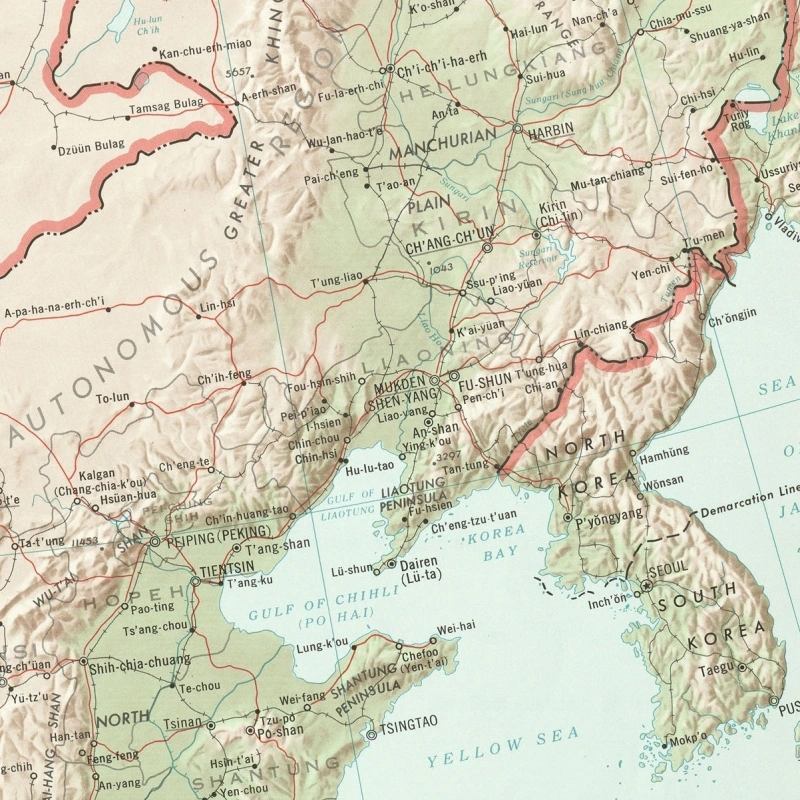
One of things I’ve often heard said about China over the years is that 3-5% growth would be equivalent to a recession, since they are used to growing at 8-10%. That may be true at a national level, but at the local level you can now find places that are in outright recession by anyone’s standards. Mark Magnier at the WSJ did some nice reporting from Jixi, an isolated coal town in the far east of Heilongjiang province, about an hour’s drive from the Russian border. It’s a treat for me to see this otherwise obscure town get a dateline in a major newspaper, since I have been to Jixi a few times.

Jixi was the the slowest-growing city in China in 2013, and things have gotten even worse this year: the local economy has shrunk 3.7% (and yes, that’s negative 3.7%, not growth of 3.7%) and capital spending has fallen by more than 20%. These are obviously horrible numbers, and the cause is also pretty obvious: coal prices have been in the toilet for a couple of years already, and the city is basically built around a big coal mine and doesn’t have much else going on. So it’s not representative of the Chinese national economy, which has a lot more going on than coal. But as I’ve pointed out before, China’s mining belt is in fact pretty large and a bigger part of the economy than many people realize. Jixi may be an extreme example, but China has a lot of coal towns, and most of them are in trouble too.

Is there more to Jixi’s problems than just a coal bust? Sure, any city built on top of a coal mine is going to decline when the coal runs out. But it’s certainly my own impression that Jixi and other places in Heilongjiang have not done a good job on using the windfall gains from the past decade’s resource boom to develop more broadly. There’s a nice quote in Mark’s piece which I think captures some of the distinctive old-school central-planning flavor you find in Heilongjiang (even agriculture is still more state-dominated up there, with large state farms and collectives):

Heilongjiang was the first to start the planned economy and is the last to give it up, said Jiao Fangyi, economics and business dean at Heilongjiang University. We have great ample natural resources, but the good times are over. Its like were begging for food from a golden bowl.

A French jazz discovery

If I started a sentence with “The great French jazz saxophonist…” how would you finish it? Yeah, me neither. Until this year, when I discovered the great French jazz saxophonist Barney Wilen. This happened more or less randomly – I picked up a recent box set of the French label Vogue on a whim because it was cheap and had lots of CDs in it. One of them was Wilen’s 1957 debut as a leader, Tilt, which is out of print and not easily available elsewhere. And what a debut – a huge tone, brawny confidence, great melodicism. He’s as good as, and somewhat reminiscent of, Sonny Rollins from the same period – for instance, they both handle Monk tunes superbly. Since that initial discovery I’ve slowly digging out other items in his discography. Probably his most famous other appearance is Miles Davis’ soundtrack, Ascenseur pour l’échafaud, though that’s really a showcase for Davis. But Tilt itself easily qualifies for true lost classic status.

barney_tilt_12

Find a city, find myself a city to live in

I talked to Kevin Hamlin of Bloomberg recently about urbanization; Kevin’s big story is out and he was kind enough to quote me. The piece is about the debate among China scholars over the best strategy for urbanization. While we may think of urbanization as a natural process, government policy plays a big role in China given the institutional restrictions on urbanization through the hukou system, and heavy state involvement in urban planning and investment. China’s policy over the last decade or so has been to favor a “distributed” model of urbanization that tries to encourage population flows to smaller cities, and reduce the concentration in megacities. I think the most charitable explanation for this choice is that they want to distribute the economic gains from urbanization more widely across the country. The justification you hear more often is that big cities are too big and crowded and just can’t get any bigger; it is hard to be charitable about this view, since it seems to put a higher priority on the people who already live in Beijing and Shanghai and earn high incomes than on the people who don’t live in Beijing and Shanghai and don’t earn such high incomes.

My view, which I think is shared by a number of foreign observers, is that the current policies of favoring small cities just don’t make that much sense, and aren’t particularly effective anyway. The economic gains from urbanization come from the economies of scale and scope (and network effects, etc) offered by big cities, so there are more of those gains in big cities than in small ones. This is reflected in labor markets, and so migrants in search of higher wages go to bigger cities rather than smaller ones. Obviously China is a big place and not everyone is going to be able to live in Beijing, Shanghai or Guangzhou/Shenzhen. But with better planning and infrastructure those cities could cope with larger populations. Instead using that money to build infrastructure and housing in smaller cities that have difficulty attracting new migrants seems a much chancier proposition that is much more likely to result in spending being wasted. I am pretty disappointed that all the fuss about urbanization since Li Keqiang took over as Premier has not resulted in a deeper rethinking of this issue. The new urbanization policies announced earlier this year look a lot like the old urbanization policies, in that they call for restraining growth in big cities and encouraging growth in small cities.

The hierarchy of Chinese restaurant workers

This recruitment poster appeared the other day outside a (fairly large) noodle shop near my office. The thing I like about these ads is how they give you a clear view into the amazingly hierarchical world of low-end service jobs. Here we have no fewer than 11 distinct jobs advertised, along with pay grades (which make a pretty useful labor market datapoint as well). And this is for a noodle shop serving dishes that cost about $2.

restaurant_wages

In the halcyon days of my youth, I recall American restaurants posting a simple “Help Wanted” sign, possibly with the addendum “Inquire Within.” And when I worked in a pizza parlor, we had basically two job types: people who worked the front, and people who worked the back.

Chinese restaurants, for reasons I have yet to divine, have a much more elaborate division of labor. For instance, most restaurants have not only fuwuyuan (“servers”), who are usually female and take your order and bring you the bill, but also duancaiyuan (“dish carriers”), who are usually male and who carry the dishes from the kitchen to your table. In my experience this fine distinction does not actually improve service quality: since the duancaiyuan are not allowed to actually talk to you, you can’t ask them for more tea, or to bring the rice now, or whatever. Which means you still have to flag down a fuwuyuan even though someone has already come to your table. The noodle shop in question is not structured as a sit-down restaurant, so it doesn’t have this particular division. But it is seeking a lot of different skill sets for the kitchen. And there is an ironclad distinction between someone who works the cash register, and someone who brings the food (the latter is paid RMB400 a month less).

The woes of China’s mining belt

Tiff Roberts over at Bloomberg Businessweek gave a nice write-up of a recent piece I did looking at how the impact of lower energy prices on China differs depending on where you are in China.This provides an excuse for me to reproduce one of my favorite maps for a wider audience:

energy-dependence-map-2011

While we stereotypically think of China as a huge consumer of energy and commodities, it is in fact also a big producer of same (one way in which China resembles the US).  Within China, this is essentially a regional phenomenon: the center, south and east are mainly resource consumers (and are inhabited mainly by ethnic Han Chinese). The northern and western provinces are where all the resources are produced (and where ethnic minority populations are larger).

One of the interesting things I learned from this map is that in economic structure terms Heilongjiang and Xinjiang are not that different, even though conventional geography and economic analysis never puts them together. Xinjiang is usually considered an exception to everything in “core China”, because it is so clearly a frontier territory, with different ethnic and economic dynamics (same goes for Tibet). Heilongjiang by contrast is uncomplicatedly part of “core China”. But in fact both have local economies with a high degree of resource dependence. And in historical terms it was not all that long ago that Heilongjiang was not part of “core China”: it is one of the three modern provinces covering the territory of Manchuria, which in the 19th century was an ethnic enclave for China’s Manchu rulers, then a booming frontier region when migration was opened up to Han, then a de-facto colony of Japan. Heilongjiang is obviously much more integrated now but I wonder if its earlier history offers any parallels to some of the dynamics we’re seeing in Xinjiang today

Small Business Won’t Save China

http://www.wsj.com/articles/small-business-wont-save-china-1410281985

Small Business Won’t Save China
To succeed, private Chinese companies of all sizes must be able to compete with state-owned enterprises.

By ANDREW BATSON
Sept. 9, 2014 12:59 p.m. ET

These are good times for China’s small businesses. Despite a steady slowdown in economic growth, new companies are being founded at the fastest pace in a decade. Small businesses have long complained of difficulty getting loans from the state, but roughly 30% of corporate loans now go to small firms, up from 20% a few years ago. A government notorious for favoring state-owned enterprises now regularly praises small firms and offers them help.

“The government has the responsibility, and the obligation, to create better conditions for your businesses,” Premier Li Keqiang told small business owners in July. Beijing has told state banks to expand their loans to small businesses faster than the rest of their loan books. Mr. Li has also eased regulatory burdens to starting new companies, for example eliminating onerous requirements that anyone registering a company deposit large sums in a bank account to show they can pay the bills. Judging by the 21% increase in registered private companies this year, entrepreneurs are taking advantage of the change.

But this friendliness to small business isn’t enough to solve China’s economic problems. China does need stronger private firms as it tries to move away from its excessive reliance on public investment to support growth, yet the government’s trumpeting of good news for small businesses betrays a misunderstanding of their real role in the economy.

The core issue for private Chinese companies of all sizes is their ability to compete with state-owned enterprises. For the government to hand out favors to small businesses—rather than ensuring a level playing field for all companies—risks confining entrepreneurs to a ghetto of small shops and service companies where they can’t challenge state firms’ hold on strategic sectors. The Communist Party’s “glass ceiling,” which keeps private firms from becoming dominant players in industries other than the Internet, hasn’t been shattered.

Nor did small businesses have it so bad before the reforms of the past two years. The population of private companies has been growing by double-digit rates since the 1990s. In 2012, 40% of all firms were three years old or younger. China’s registered-capital requirements were indeed high by global standards before the latest change, which took effect in March, but most other startup costs were relatively modest.

Small businesses everywhere find it hard to borrow from banks, and there is little evidence that this phenomenon is more severe in China. According to the Organization for Economic Cooperation and Development, loans to small- and medium-sized enterprises accounted for 24% of U.S. corporate lending in 2012—a rate below China’s.

So why all the official and public attention on China’s small businesses? The conventional justification, repeated in Beijing as often as elsewhere, is that small businesses create most jobs. Premier Li has credited his deregulatory measures with helping keep job creation humming this year even as growth slowed. Yet this is only a partial view: Small businesses create a lot of jobs but also destroy a lot of jobs, as most new companies fail. Permanent job gains come from those few small firms that become successful large firms.

The founding of many new small businesses doesn’t guarantee increased national productivity. Small companies are often less efficient than large ones because they don’t have the same economies of scale. Small businesses deliver their biggest boost to the economy when they successfully compete with existing businesses—forcing incumbents to raise their game or displacing competitors with a superior product or service. That process requires not just lowering barriers to entry for new competitors, but also lowering barriers to exit for old ones. Creating more private businesses will therefore do China little good if those firms can never successfully compete against entrenched state-owned enterprises.

If Beijing really wants to help the private sector and small business, it should slash the ranks of inefficient SOEs. There have been steps in this direction: 19 provinces have put together plans for overhauling local SOEs, and Beijing is now pushing even the biggest firms to shape up.

But the government seems more interested in using antitrust legislation to make examples of foreign multinationals than in breaking up state-backed oligopolies. Tolerance for real corporate failure remains low: This year friendly officials have organized informal bailouts for many companies near bankruptcy or default.

Thus while Beijing has embraced the “creation” part of the creative destruction that drives market capitalism, it still needs to get more comfortable with destruction.

Andrew Batson is the China research director for Gavekal Dragonomics.
What are small businesses good for?

That’s the big question behind an op-ed I wrote for The Wall Street Journal. The piece addresses some of the measures China’s government has recently taken to make life easier for small business–notably, dramatically lowering the costs involved in registering a new firm. I’d previously written about these changes for our in-house journal the China Economic Quarterly (subscribers only link). The motivation of that piece was mainly to point out that these changes were happening and having a real impact, since the number of new companies being registered has shot up this year. It’s a bit mysterious to me why this particular development has been so scandalously undercovered by the mainstream Western press, since Premier Li Keqiang talks about it all the time and is quite happy to take credit for it. But while it’s mainly A Good Thing to ease company creation, I also had some problems with some of the simplistic official explanations of the benefits that might come from this particular change. So the op-ed piece takes a somewhat different and more critical tone.

For me, this is the key part of the argument:

The founding of many new small businesses doesn’t guarantee increased national productivity. Small companies are often less efficient than large ones because they don’t have the same economies of scale. Small businesses deliver their biggest boost to the economy when they successfully compete with existing businesses—forcing incumbents to raise their game or displacing competitors with a superior product or service. That process requires not just lowering barriers to entry for new competitors, but also lowering barriers to exit for old ones. Creating more private businesses will therefore do China little good if those firms can never successfully compete against entrenched state-owned enterprises.

You can read the rest of the piece here. My thinking for the article was heavily influenced by an excellent overview article in the Journal of Economic Perspectives, which I highly recommend.

Jazz genius reincarnated as Chinese electric bicycle

XinRi_logo

The ways that Chinese companies use the English language are, well, unpredictable, but many years of living in Beijing and deciphering Chinglish signs did not prepare me for this. The products of a Chinese maker of electric cycles, Xinri Group, use the English brand Sun Ra. This is a surprisingly creative and appropriate rendering of the Chinese, which literally means “New Sun” (it’s pronounced sheen-ruh in the original, which doesn’t really roll off the tongue for English speakers). It also of course is the name adopted by one of the twentieth century’s greatest jazz musicians, a personal favorite of mine for many years now.

XinRi_vehicle

Sun Ra himself had a sense of humor and a sense of the absurd, so who knows, he probably would enjoy the whole thing.