Jürgen Osterhammel unearths the “prehistory of the present day”

I tend to like my nonfiction books compact in size and focused in argument–as an old hack I prefer prose that is tight–but two of my favorite reads this year have radically defied this rule. Robert Tombs’ The English and Their History, which I started last year but did not finish until January, is a thousand pages in length in the print edition, basically every one of which is delightfully written and filled with interesting information (the book has been widely praised already but continues to win fans, such as Dan Wang).

The latest tome that has engrossed me almost despite myself is Jürgen Osterhammel’s The Transformation of the World: A Global History of the Nineteenth Centurywhich I bought on a whim when it made a (rather surprising) appearance as Kindle daily deal. His approach is really the exact opposite of Tombs’: narrative is rejected more or less entirely in favor of a thematic and topical approach. This strategy in fact helps keep the book consistently interesting, despite its enormous length (I’m only about two-thirds through): the treatment of each topic and subtopic is quite focused, with well-chosen facts and balanced judgments delivered in snappy sentences.

One of the book’s themes is, as he says early on, that “the nineteenth century belongs to the prehistory of the present day.” This is far from the only theme, and indeed some of the my favorite parts of the book focus on aspects of the 19th century that are quite different from 20th- and 21st-century experience (the chapter on frontiers is a particular highlight). But it is one of the delights of the book to repeatedly come across little origin stories of various aspects of modern life. Here a few examples, starting with basic stuff like foreign policy:

In the nineteenth century it is possible to speak for the first time of an international politics that sets aside dynastic considerations and obeys an abstract concept of raison d’état. It presupposes that the normal unit of political and military action is not a princely ruler’s arbitrary patrimonium but a state that defines and defends its own borders, with an institutional existence not dependent on any particular leadership personnel.

And economic and social statistics:

The nineteenth century can be seen as the century of counting and measuring. The idea of an all-embracing taxonomy now grew into a belief that the power of number—of statistical processing or even “social mathematics,” as the Marquis de Condorcet, a bright star of the late Enlightenment, put it—could open up truth itself to human reason. It was in the nineteenth century that societies measured themselves for the first time and archived the results.

Also major social phenomena like mass migration:

No other epoch in history was an age of long-distance migration on such a massive scale. Between 1815 and 1914 at least 82 million people moved voluntarily from one country to another, at a yearly rate of 660 migrants per million of the world population. The comparable rate between 1945 and 1980, for example, was only 215 per million. …Diaspora formation as a result of mass migration was ubiquitous in the nineteenth century. Only the French stayed at home.

And branded consumer goods:

The 1880s saw the birth and marketing of the branded product, with strategies planned like military operations. Singer’s sewing machine and Underberg’s herb liqueur in its characteristic bottle were present at the dawn of brand-centered marketing. It could develop because the serial production of articles of mass consumption was now a technical possibility. … Branded goods rapidly spread around the world, so that by the early years of the new century the petroleum lamp burning oil from Rockefeller’s Standard Oil Company, along with Western artificial fertilizer and cigarettes, could be found in remote Chinese villages.

Suburbs:

Suburbanization, understood as a process whereby outlying areas grew faster than the inner core and commuting became a normal part of life, began in Britain and the United States around 1815. It would eventually be taken to extremes in the United States and Australia, whereas Europeans would never develop such a fondness for living outside the city center. … The technically advanced suburb of 1910 still feels close to us today: we describe it without hesitation as “modern.” In comparison, the pedestrian city of the early nineteenth century was positively medieval.

Beach vacations:

By 1840 the bathing resort had taken shape in England and Wales, with most of the characteristic features that we still see today. The prototype was Blackpool on the West Coast, whose 47,000 permanent residents catered (in 1900) for more than 100,000 vacationers. …Subsequently the seaside resort owed its growth to increased leisure time, greater affordability, and good railway and highway connections. By the turn of the century there were coastal resorts of more or less the same kind all around the central Atlantic and the Mediterranean, on the shorelines and islands of the Pacific, on the Baltic Sea, in the Crimea, and in South Africa.

And a phenomenon that I did not even think of as particularly modern, the dominance of coastal cities:

The nineteenth century was the golden age of ports and port cities—or more precisely, of large ports, since only a few could handle the huge quantities involved in the expansion of world trade. In Britain, exports in 1914 were concentrated in twelve port cities, whereas at the beginning of the nineteenth century a large number of cities had been involved in shipping and overseas trade. … It is probably the case that in every historical era before the nineteenth century, most of the largest cities and main centers of power or cultural splendor were not situated on the coast: Kaifeng, Nanjing, and Beijing; Ayudhya and Kyoto; Baghdad, Agra, Isfahan, and Cairo; Rome, Paris, Madrid, Vienna, and Moscow; and not least, Mexico City.

But this barely begins to convey the huge scope and wonderful variety of the book. A Chinese translation will be published in November, allowing me to recommend it to more friends.

osterhammel-chinese

Why didn’t I read René Girard in Anthropology 101?

René Girard’s I See Satan Fall Like Lightning is perhaps the strangest, most unusual book I have read all year–as well as the one with the best title. Then again, I don’t read many works of Biblical exegesis-cum-philosophical anthropology, if that is even a genre. It was strongly recommended by a French colleague after Girard passed away last year, and not having been familiar with Girard before, I decided to fill that hole in my education.

And indeed I feel like I should have encountered him much earlier. I See Satan Fall Like Lightning may not have been the best place to start for a Girard newbie, but it does contain some of the most concise, most powerful and beautifully written statements of the key insight of social science: that human beings are not autonomous monads but fundamentally social beings, whose thoughts and actions are shaped by the people around them. (Peter Thiel, who has been vocal about Girard’s greatness, seems to have put these insights to more practical use than me or most of my classmates in anthropology did.)

Girard takes an unusual route to get to this insight, using scraps from the Bible and the Greek myths more in the manner of a literary critic, but he expresses it as well or better as any of the greats of twentieth-century social science. He might not want to be put in the company of Claude Levi-Strauss, about whom he was quite scathing, but it’s hard not to see the similarities in their grand ambition to construct a philosophical anthropology. Here’s a spectacular passage, in which Girard builds an account of human nature and culture out of just one of the Ten Commandments:

The tenth and last commandment is distinguished from those preceding it both by its length and its object: in place of prohibiting an act it forbids a desire: “You shall not covet the house of your neighbor. You shall not covet the wife of your neighbor, nor his male or female slave, nor his ox or ass, nor anything that belongs to him.” (Exod. 20:17)

Without being actually wrong the modern translations lead readers down a false trail. The verb “covet” suggests that an uncommon desire is prohibited, a perverse desire reserved for hardened sinners. But the Hebrew term translated as “covet” means just simply “desire.” This is the word that designates the desire of Eve for the prohibited fruit, the desire leading to the original sin. The notion that the Decalogue devotes its supreme commandment, the longest of all, to the prohibition of a marginal desire reserved for a minority is hardly likely. The desire prohibited by the tenth commandment must be the desire of all human beings in other words, simply desire as such. …

If individuals are naturally inclined to desire what their neighbors possess, or to desire what their neighbors even simply desire, this means that rivalry exists at the very heart of human social relations. This rivalry, if not thwarted, would permanently endanger the harmony and even the survival of all human communities. Rivalistic desires are all the more overwhelming since they reinforce one another. The principle of reciprocal escalation and one-upmanship governs this type of conflict. …

Even if the mimetic nature of human desire is responsible for most of the violent acts that distress us, we should not conclude that mimetic desire is bad in itself. If our desires were not mimetic, they would be forever fixed on predetermined objects; they would be a particular form of instinct. Human beings could no more change their desire than cows their appetite for grass. Without mimetic desire there would be neither freedom nor humanity. Mimetic desire is intrinsically good.

Humankind is that creature who lost a part of its animal instinct in order to gain access to “desire,” as it is called. Once their natural needs are satisfied, humans desire intensely, but they don’t know exactly what they desire, for no instinct guides them. We do not each have our own desire, one really our own. The essence of desire is to have no essential goal. Truly to desire, we must have recourse to people about us; we have to borrow their desires.

This borrowing occurs quite often without either the loaner or the borrower being aware of it. It is not only desire that one borrows from those whom one takes for models; it is a mass of behaviors, attitudes, things learned, prejudices, preferences, etc. And at the heart of these things the loan that places us most deeply into debt–the other’s desire–occurs often unawares.

The only culture really ours is not that into which we are born; it is the culture whose models we imitate at the age when our power of mimetic assimilation is the greatest. If the desire of children were not mimetic, if they did not of necessity choose for models the human beings who surround them, humanity would have neither language nor culture. If desire were not mimetic, we would not be open to what is human or what is divine.

Mimetic desire enables us to escape from the animal realm. It is responsible for the best and the worst in us, for what lowers us below the animal level as well as what elevates us above it. Our unending discords are the ransom of our freedom.


Those waiting for the demise of the nation-state may be waiting for a while

Robert Shiller makes a valiant attempt to push back against the current climate of pessimism and nationalism in a recent Project Syndicate piece, arguing that increasing empathy will eventually reduce the political and emotional salience of the nation-state:

For the past several centuries, the world has experienced a sequence of intellectual revolutions against oppression of one sort or another. These revolutions operate in the minds of humans and are spread – eventually to most of the world – not by war (which tends to involve multiple causes), but by language and communications technology. Ultimately, the ideas they advance – unlike the causes of war – become noncontroversial.

I think the next such revolution, likely sometime in the twenty-first century, will challenge the economic implications of the nation-state. It will focus on the injustice that follows from the fact that, entirely by chance, some are born in poor countries and others in rich countries. As more people work for multinational firms and meet and get to know more people from other countries, our sense of justice is being affected. …

Ultimately, the next revolution will likely stem from daily interactions on computer monitors with foreigners whom we can see are intelligent, decent people – people who happen, through no choice of their own, to be living in poverty. This should lead to better trade agreements, which presuppose the eventual development of orders of magnitude more social insurance to protect people within a country during the transition to a more just global economy.

To put this in the terms of Dani Rodrik’s globalization trilemma, the argument is that the natural direction of human history is to choose economic integration and democratic politics over the nation-state. It seems that this was Rodrik’s own hope when he originally formulated the trilemma, though recent events like the UK’s vote for Brexit have made that direction seem much less inevitable. Shiller seems to think of political change as a kind of widening circle of intellectual empathy: over time, the boundary of empathy widens from your immediate neighbors, to include people of different races, different religions and eventually different nations.

I think this is an insufficiently anthropological approach that neglects how actual social institutions create more powerful ties than an abstract sympathy. Re-reading this year Benedict Anderson’s wonderful book on nationalism, Imagined Communities (it still ranks as one of the best reads of any academic book ever) has reinforced my feeling that this kind of purely intellectual approach neglects the very things that have made the nation-state a powerful and persistent institution. The nation-state is not an arbitrary oppressive illusion that people will see through once they become sufficiently advanced. Rather, it is a specific social institution like any other; to quote Anderson:

All communities larger than primordial villages of face-to-face contact (and perhaps even these) are imagined. Communities are to be distinguished, not by their falsity/genuineness, but by the style in which they are imagined.

The nation is imagined but it is not imaginary; it is founded in actual shared experiences, real relationships and established institutions, and these generate an emotional attachment. Anderson again:

Regardless of the actual inequality and exploitation that may prevail in each, the nation is always conceived as a deep, horizontal comradeship. Ultimately it is this fraternity that makes it possible, over the past two centuries, for so many millions of people, not so much to kill, as willingly to die for such limited imaginings.

For the nation-state to become politically irrelevant in the way Shiller suggests, it is not enough for people to be polite to the foreigners they see on their computer screens. Rather, the nation-state would have to be superseded by another “imagined community.” And this is a little difficult to (ahem) imagine.

What new social institutions are now creating shared experiences that could eventually supersede the nation-state? Many early nationalisms were based on shared experiences of imperialism and colonialism. So it makes some sense to argue that the nation-state’s successor is being bred by the experiences produced by the contemporary strain of global capitalism.

The multinational corporation is the example favored by Shiller; another obvious one is the European Union. The much-remarked age difference in the UK’s Brexit vote–youth overwhelmingly voting to remain–could perhaps be an early sign of changing attachments. A new generation, raised in the reality of a united Europe and taking pan-European travel and job opportunities as their rightful birthright, perhaps is indeed starting to imagine a community that supersedes the nation-state.

But is a multinational Europe (or Nafta, or whatever) in fact a community, or just a much wider field on which individuals pursue economic self-interest and career advancement? Do the participants in these multinational zones really see themselves as a community–are they forming emotional relationships rather than just engaging in arms-length market exchanges? I am not saying the answer is obviously no, but neither is it obviously yes.

I suspect it will not be until something more than economic self-interest binds together the emerging multinational class that the nation-state will be finally replaced by some other institution. I think this comment of Anderson’s is still an effective riposte to Shiller’s argument, despite having been made back in 1983:

In themselves, market-zones, ‘natural’-geographic or politico-administrative, do not create attachments. Who will willingly die for Comecon or the EEC?

Some light summer reading

Since summer is winding down, a few notes on some recent fun reading:

  • John James – Votan. Extravagantly praised by Neil Gaiman, and in fact extremely good and really unlike anything else. Our narrator is a cynical Greek merchant out to swindle the German tribes living outside the Roman Empire’s sway. But his dry and humorous account is increasingly undercut by our sense that something more serious is going on, as he finds himself acting out ancient tales. A must read for anyone who has ever enjoyed the Norse myths.
  • N.K. Jemisin – The Fifth Season. Actually I read this at the beginning of the summer, but since it is has just won a Hugo Award, I figure I can join in the praise. I have been getting pretty burned out on recent genre fiction, very little of it seems worth the time, but this was excellent–truly surprising and exciting, and how often does SF&F, and particularly fantasy, actually surprise these days? The only off note for me was one section narrated in the second person, which felt forced and ultimately unnecessary.
  • China Mieville – The Last Days of New Paris. Mieville is definitely a phenomenon but an inconsistent one. This book (really a novella) starts off in a wonderfully disorienting way, plunging you into its madcap premise of surrealism come to life in WWII Paris. But about halfway through you figure out the plot is just a straight hero-kills-the-evil-monster. For me this was the same problem with his first book, Perdido Street Station–extravagantly complex worldbuilding as a backdrop to a highly pedestrian hero-kills-the-evil-monster plot.


Was actually existing socialism really an egalitarian system?

Branko Milanovic’s Global Inequality: A New Approach for the Age of Globalization has an aside (one of its many asides) on how socialism contributed to the narrowing of income inequality in the postwar decades:

A great leveling that was more radical than the one that occurred in the West took place in countries that, following Russia in 1917– 22, became socialist after World War II. …The socialist great leveling was produced in a simple manner. First, most enterprises were nationalized, which, as in state-owned enterprises in the West, resulted in a more compressed wage distribution…wages of low-skilled workers were relatively high and wages of high-skilled workers relatively low. Nationalization of the means of production had two other effects on income distribution. It abolished income from property, income that is always heavily skewed toward the rich, and it almost eliminated the entrepreneurial return, since private entrepreneurship was banned or pushed to the margins. …Finally, guaranteed jobs and thus the absence of unemployment (with a few exceptions), widespread pensions (often with the exception of agriculture), and subsidization of staple goods (thus ensuring that subsidies were progressive) completed this picture.

In other words, education and property ownership, the two most powerful determinants of income in market economies, were made irrelevant.

Without disputing any of these facts about income inequality, it still seems to me that this portrait omits some important aspects of socialist systems. Income inequality became less important under socialism because money income became less important. But political and/or bureaucratic position often replaced income as the driver of differential access to goods and services.

The roots of socialist inequality are well explained by Stephen Lovell in his The Soviet Union: A Very Short Introduction (recommended by Brad DeLong, and indeed a nice summary of key themes in Soviet history):

Already in the early days of the Bolshevik revolution we can see at least three different economic principles at work. The first was a powerful sense of egalitarianism born of historical injustice: the working people had been kept down by landowners and bourgeois who had enriched themselves at the expense of others’ toil, and it was now time to right the balance. …The second principle was coercive centralization along with hostility to market activity – and even to money itself. … The third principle was that of discriminatory distribution in favour of those groups in society most supportive of, or useful to, the Bolshevik regime. …These three principles sometimes contradicted each other, and in any case were hard to work practically.

This third principle turned out to be quite important. Socialism as practiced in the USSR, China, and elsewhere was a Leninist system, meaning that politics was organized around the idea of a disciplined “revolutionary vanguard” leading the country. This principle meant that some people were more important to the revolution than others, and were treated as such. Obviously this was somewhat in tension with the ideological egalitarianism of the Marxist part of Marxism-Leninism, but the Leninist component has proved to be much more enduring. In the Soviet system, political status replaced income as the determinant of inequality. One simple example was food; here is Lovell again:

From the start of 1931, a four-class provisioning system was instituted across the country. At the top of the hierarchy came workers in heavy industry in the capital cities and other major centres; at the bottom came white-collar workers. The top two classes made up only 40% of the people on rations, but received almost 80% of supplies. …

The material well-being of Soviet people would until the very collapse of the USSR depend on their workplace – namely, on the particular closed distribution system that they had at their disposal. In the hungry 1930s and 1940s, this would often be a matter of allotments or farms controlled by an enterprise that would provide its employees with a subsistence minimum. Later on, in the 1960s and 1970s, enterprise directors would establish more elaborate reciprocal relationships with shops, farms, and warehouses, thus slightly alleviating the conditions of the shortage economy for their workers.

Marty White’s excellent 2014 paper, “Soaring Income Gaps: China In Comparative Perspective,” finds a similar pattern in pre-reform China: inequality of income was indeed narrow under socialism, but income was probably not the most relevant indicator of actual well-being:

Centrally planned socialist systems do not systematically promote egalitarian distribution, but instead bureaucratic allocation, and in practice, socialist bureaucrats tend to produce societies that are quite unequal, although unequal in ways that are somewhat distinct from capitalism. …

Urban state employees were [before 1978] provided with subsidized housing and a package of benefits and subsidies that was worth more than their meager salaries, while rural commune members (then 80 percent of the population) received none of these benefits and were bound to the soil as virtual “socialist serfs,” unable to migrate and gain access to the official favoritism enjoyed by urbanites.

North Korea seems to have taken this Leninist style of bureaucratic inequality to its logical extreme with its songbun system of political classification; as in the 1930s famine in Russia, in the 1990s famine in North Korea there is evidence that the politically favored were allocated more food.

One important question about the increases in inequality in China and Russia after the transition from full-blown socialism is whether they should be understood not only as the re-emergence of income inequalities suppressed under socialism, but also as the translation of the inequalities of status under socialism into the currency of the new market economy. This in fact would be precisely what some of the leftist critics of market reforms in those countries feared would happen.

Is China’s growth now increasing rather than reducing global inequality?

Here is an interesting tidbit from Branko Milanovic’s latest book, Global Inequality: A New Approach for the Age of Globalization. Much of the book is about the recent, unusual combination of a trend for inequality to rise within countries (as the upper classes take a larger share of each nation’s income) and a trend for inequality between countries to fall (as rising incomes in developing countries narrow the gap between the haves and have-nots on a global basis). China has been the main driver of the latter dynamic, but we may already be at a turning point in that trend–one that will require India to keep growing if global inequality is to keep falling:

Population-weighted intercountry inequality has been uniformly decreasing since the late 1970s, since about the time when China introduced the “[household] responsibility system” (de facto private ownership of land) in rural areas and growth picked up. Moreover, convergence (the decrease in intercountry, population-weighted Gini values) has been remarkable and has accelerated in the first decade of the twenty-first century. We have already seen that this movement was the key factor behind the decrease in global inequality and the broadening of the global middle class. …

China’s role as the main engine driving the reduction in global inequality becomes less important as the country gets richer. In 2011, China’s mean per capita income, calculated from household surveys and expressed in international dollars, was 22 percent below the global mean and was greater than the mean incomes of 49 percent of the people in the world (assumed to have the mean incomes of their countries).

The world will very soon be in the position where China’s high growth rate begins to add to global inequality, not detract from it. India’s mean income is currently ahead of only 7 percent of the world population, and India cannot be expected to “turn the corner,” that is, to become, in average per capita terms, richer than more than 50 percent of the world population, in the next twenty years. Thus it will, if it grows fast, take over from China as the main engine of global income equalization.

The technicalities are interesting and worth citing in full:

Footnote 16: In the case of the Gini coefficient (with which we work here), the point at which a unit begins to add to inequality depends on its rank (let’s call it the “turning point rank”), that is, the number of units from which it has a higher income, but also on the initial Gini. The turning point rank formula is i > ½ (G + 1)( n + 1) which for a large n simplifies to i > ½ (G + 1) n, where i = the turning point rank (the rank i runs from 1 to n), n = total number of units, G = Gini coefficient. Note that the turning point is n/ 2 (i.e., the median) only when the Gini is zero. For the derivation of the formula, see Milanovic (1994).

With the current level of population-weighted global Gini being around 0.54, the turning point rank is 0.77n. That means that China’s mean income has to be such that, when all individuals in the world are ranked by the mean incomes of their countries, 77 percent of the world population is left behind China. But because China’s population is 20 percent of world population, for a Chinese person to be at that (“turning”) point, he or she needs to leave behind only 57 percent (77 − 20) of the world population. Currently, as we have seen, China’s mean income exceeds the mean income of 49 percent of world population. This means that China needs to leave behind just an additional 8 percent of people in the world to begin adding to global population-weighted inequality. This could already be happening by the time this text is being read.


Three books on Russia

I’ve been on a bit of a Russia kick in my nonfiction reading of late. In part that was because I felt like knowing more about the history of Communism would help me understand China better, and in part because I just wanted to know more than what I learned from my initial immersion in its 19th-century literature at university. So far I’m batting a thousand, as all three of the books I somewhat randomly chose have turned out to be very worthwhile:

  • Orlando Figes, Revolutionary Russia 1891-1991: A HistoryA concise and very nicely written general history, which did exactly what this kind of book is supposed to: conveyed the big picture in a clear and vivid way, and made me want to learn more about many specific questions.
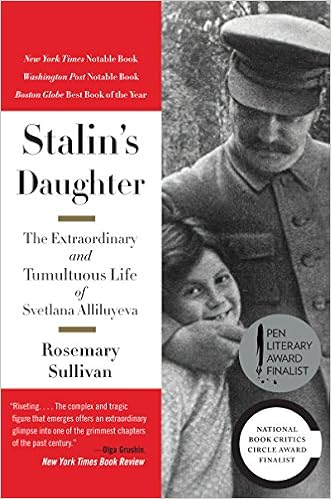
  • Rosemary Sullivan, Stalin’s Daughter: The Extraordinary and Tumultuous Life of Svetlana AlliluyevaOverly long, as is so often the case with biographies, but still consistently fascinating and moving. She was dealt a horrible hand from birth, and tried valiantly to live an ordinary and decent life anyway–it is impossible not to feel sympathy for her, though she also made many poor choices. The book is definitely about her and not really about Stalin, though it still conveys something of an insider’s perspective on the USSR.
  • Charles Clover, Black Wind, White Snow: The Rise of Russia’s New NationalismOne of the most interesting pieces of intellectual and political history I’ve read in a long time. The book starts as quirky historical detective story, digging out the origin of some unlikely ideas in an unusual cast of characters, including Russian aristocrats and structural linguists. Then it morphs into a more journalistic account of recent Russian political history, detailing how those unlikely ideas came to have real political force. Altogether an excellent explanation of where Russia is today and how it got there, highly recommended. Check out this excerpt for a taste.

I haven’t decided what Russia book I’m going to tackle next, but I do feel like I need to know some economic history of the Soviet Union, and have added some recommended titles to my list.

What is nationalism anyway, and why is it so powerful?

I’ve had nationalism on the brain lately–thinking about the history of Chinese nationalism, reading about Russian nationalism–so I was predisposed to interpret the UK’s vote to leave the EU as being driven by nationalism. I found Fintan O’Toole’s essay arguing that the Brexit movement was an undeclared English (not British) nationalist movement very convincing, and it looks quite prescient in light of the actual results. Yet a number of my British colleagues and friends did not agree that the term nationalist applied.

I realized that I was not operating with a clear definition of nationalism, without which I was not going to win that particular argument. So my task is to come up with one–an objective definition of nationalism as a social phenomenon, that does not use the term as a rhetorical synonym for patriotism, or racism, or right-wing politics, or what have you.

Ernest Gellner

Ernest Gellner

The classic definition comes from Ernest Gellner, the great anthropologist and philosopher, who argued that nationalism is about political legitimacy: legitimate government requires that the boundaries of the state and the boundaries of the nation/people/ethnos coincide. One state per nation, one nation per state:

Nationalism is primarily a political principle, which holds that the political and the national unit should be congruent.

This principle is now so widely accepted–“self-determination of peoples” is right there in the UN Charter–that it is easy to take for granted. But it was and is a revolutionary argument, and Gellner used it to explain the breakup of the 19th-century European empires (and later the Soviet Union) into smaller, more ethnically homogeneous states.

Secession from an entity that is too large or foreign to be legitimate is the quintessential nationalist political movement. The most principled arguments for Brexit–self-government and the supremacy of Parliament–are thus in fact the most nationalist (again, I am not using nationalism as a pejorative term but as a descriptive one). If starting point is that the nation-state is the proper form of government then it is indeed hard to see the EU–a state without a nation–as a fully legitimate government.

John A. Hall, in his biography of Gellner, notes a few issues with Gellner’s original formulation. First, the focus on how European empires split into smaller countries means it may not be as helpful in understanding nationalism in large countries whose borders are not particularly contested. A theory of nationalism that does not explain Chinese, Indian, Russian or Japanese nationalism is probably not a very useful theory. Second, it doesn’t perfectly jibe even with the history of classical nineteenth-century nationalist movements such as the Czech, who originally agitated for better treatment within Austria-Hungary rather than outright independence. Hall concludes that a different definition of nationalism is required:

Not every nation seeks its own state. Nationalism is better defined in the simplest terms as the desire for the national group to prosper.

There is clearly something to this, but Hall’s proposal feels a little too baggy and capacious: who doesn’t want their government to do good things? I would try to tighten up the definition a bit, and propose that nationalism is the argument that a legitimate government is one that works to raise the status and prosperity of the nation/people. This formulation builds on rather than replaces Gellner’s original one, since it still presupposes that government is the representative of a definite group, however it may be defined (an “imagined community” in Benedict Anderson’s phrase).

The ingroup-outgroup dynamics that are inherent to nationalism clearly resonate with a lot of people, though they can manifest in different ways. Nation-states that arise out of polyglot empires (e.g. China and Indonesia) seem to have a strong attachment to the details of maps and national boundaries, while those that are more monoglot in their self-imagination may focus more on ethnic differences (much of Europe). But that’s not all that nationalism is about. Chinese nationalism from the 20th century days was consistently focused on national “wealth and power” (fuqiang), and this has also been the unvarying theme of its post-Mao politics. The most recent versions of Russian nationalism have in fact meant an increase rather than a decrease in the nation’s foreign entanglements–which are popular because they are perceived as raising the status and power of the Russian people, however much they complicate the one state per nation idea.

This definition of nationalism should be a neutral one: nationalism seems to be neither inherently left wing or right wing, good or bad (it’s good to recall Benedict Anderson’s comment that “nations inspire love, and often profoundly self-sacrificing love”). Rather, nationalism offers powerful arguments about political legitimacy that can appeal across the political spectrum, which resonate because they do in fact reflect important aspects of people’s real lives (rather than being purely theoretical or based on economic self-interest). That flexibility and emotional force may be some of the reasons why nationalism, born in the late 18th or early 19th centuries, continues to be so potent well into the 21st century.

I can’t resist closing with a fantastic, acerbic quote from Gellner, on how nationalism has proved to be so much more powerful than other ideological movements:

Just as extreme Shi’ite Muslims hold that Archangel Gabriel made a mistake, delivering the Message to Mohamed when it was intended for Ali, so Marxists basically like to think that the spirit of history or human consciousness made a terrible boob. The awakening message was intended for classes, but by some terrible postal error was delivered to nations. It is now necessary for revolutionary activists to persuade the wrongful recipient to hand over the message, and the zeal it engenders, to the rightful and intended recipient. The unwillingness of both the rightful and the usurping recipient to fall in with this requirement causes the activist great irritation.

From our current perspective, the spirit of history’s mistake looks like delivering the message of Marxism in the first place. The long, painful experimentation with this highly ideological form of government seems to have put down surprisingly shallow roots. Stalin fairly early on abandoned pure Marxism for a version heavily flavored with Russian nationalism, and China’s Communist leadership did something very similar once the ideologue Mao Zedong was out of the way. The Marxist component has only gotten more diluted in the ensuing decades. Eric Hobsbawm’s comment that “Marxists as such are not nationalists” is absolutely right as a matter of principle–it’s just that there were never so many true Marxists to begin with.

Benedict Anderson on the classical heritage and nationalism in Europe vs Asia

I enjoyed reading Benedict Anderson’s short memoir A Life Beyond Boundaries. I did a lot of Southeast Asia at university and so read many things by Anderson and his colleagues at Cornell, so it was a treat to learn some of the history and personalities behind those classic works. It’s mostly an academic rather than personal memoir, but the theme of learning different languages and understanding different cultures runs throughout, starting from his classical British public-school education.

In the conclusion Anderson uses an elder scholar’s privilege to speculate about grand historical themes, and suggests some ways in which Europe’s classical heritage differs dramatically from the cultures he has studied in Asia. He thinks that these differences make Europe somewhat less susceptible to narrow nationalism than Asia–which may not be what recent news headlines from Europe immediately bring to mind, but is still an interesting idea. Here’s the passage:

The Roman Empire was the only state ever to rule a large part of today’s Europe for a long period – even if this era is extremely remote in time. But it was not a ‘European’ state, since it controlled the entire Mediterranean littoral, a large part of today’s Egypt and Sudan, and much of the Middle East, and it did not rule Ireland, Scandinavia or much of northeastern Europe. Furthermore, over time, it drew its emperors from many parts of the Mediterranean world. No European state or nation has had any chance of claiming exclusive inheritance from this extraordinary polity, nor has any of Christianity’s multiple sects. The Empire is not available for nationalist appropriation, not even by Italy. Here there is a huge contrast with China and Japan, and probably also India, where antiquity is easily nationalized. …

Even better, a substantial part of the extraordinary philosophical and literary production of Graeco-Roman Antiquity survived into early modern times, thanks to monkish copyists in the West, but also to Greek-speaking Christian Arab scribes under the rule of Byzantium. As time passed, their translations into Arabic allowed Muslim thinkers in the ‘Maghreb’ and Iberia to absorb Aristotelian thought and pass it on to ‘Europe’. This inheritance offered ‘Europe’ intellectual access to worlds (Greek and Roman) which in profound ways were alien to Christian Europe: polytheistic religious beliefs, slavery, philosophical scepticism, sexual moralities contrary to Christian teachings, ideas about the formation of personhood from the bases of law and so on. Direct access to these worlds depended on a mastery of two languages which for different reasons were both difficult and alien. … Better still, [they] gradually became ‘dead’. That is, neither ancient Greek nor ancient Latin belonged to any of the countries in Europe.

For all these reasons (and others I have not mentioned), Graeco-Roman antiquity brought Difference and Strangeness to European intellectual and literary life right through till the middle of the twentieth century. Just as in fieldwork, this awareness of Difference and Strangeness cultivated intellectual curiosity and enabled self-relativization. There were city-states and democracy in ancient Greece. The Roman Empire was much larger than any other state in European history, and as its ruins were spread almost all over Europe, one could recognize its greatness no matter where one might be. The literature, medicine, architecture, mathematics and geography of Graeco-Roman antiquity were clearly more sophisticated than those of medieval Europe. And all of them were products of pre-Christian civilizations, products which had pre-dated the appearance of ‘messianic time’. While China and Japan tried to bar Difference and Strangeness with their ‘closed-door’ policies, Europe came to hold antiquity in high regard and adopted it self-consciously as its intellectual heritage. …

Before the late seventeenth century, when some French intellectuals began to claim the superiority of their civilization, none of the European countries denied that the civilization of antiquity was superior to its own, and they competed against each other to learn more about it in order to be civilized. Whether in wartime or peacetime, no country could boast that it was the centre of civilization, a European version of ‘sinocentrism’ as it were, and throw its head back declaring it was no. 1. Innovation, invention, imitation and borrowing took place incessantly between different countries in the fields of culture (including the knowledge of antiquity), politics, global geography, economics, technology, war strategy and tactics, and so on.

Nothing like this existed in East Asia, nor even South Asia. In East Asia, China and Japan both set up their geographical and cultural boundaries and often attempted to shut out the ‘barbaric’ outside world with drastic closed-door policies. The necessity of competition with other countries over politics, economics, technology and culture was only scarcely felt. Southeast Asia was probably the closest parallel to Europe. It was diverse in terms of culture, language, ethnicity and religion. Its diversity was further magnified by the historical lack of a region-wide empire (which was associated with frequent political turmoil), and later by the colonial rule of various Western powers. It also resembled Europe in its openness to the outside world through trade.

Probably the best single part of the short memoir is the chapter on comparison and translation; you can read much of that in a long excerpt over at the London Review of Books.

The next book I want to read about the Chinese internet

Like most people I’ve talked to, I enjoyed reading Duncan Clark’s Alibaba: The House That Jack Ma Built. The book starts off with a bit too much entrepreneur hero worship, but quickly finds its rhythm and ends up being a very engaging tale of the Chinese internet’s early days. I lived through some of the events Duncan relates (as a technology reporter for Dow Jones in 2001-2003), and enjoyed being reminded of some now-forgotten figures of those bubbly times. The book is easy to recommend for those who don’t know the story of Alibaba’s rise (i.e. most people outside China), and for getting a sense of the wacky world of the Chinese internet.

Still, most of the action of the book takes place before 2012, and I think another book will be needed to properly tell the story of the more recent development of the Chinese internet. Alibaba’s story has gotten more complicated since 2012, and it is becoming less easy to fit into easily digestible archetypes about heroic entrepreneurs. Duncan acknowledges this in his closing paragraphs:

Jack’s fame stems from the story of how a Chinese company somehow got the better of Silicon Valley, an East beats West tale worthy of a Jin Yong novel. His continued success, though, is becoming a story of South versus North— of a company with roots in the entrepreneurial heartland of southern China testing the limits imposed by the country’s political masters in Beijing.

Since Xi Jinping became president of China in 2012, high-profile entrepreneurs have found themselves increasingly subject to scrutiny and sanction from the Chinese government. One high-profile real estate entrepreneur, Vantone Holdings’s Feng Lun, even blogged— then later deleted— the following message: “A private tycoon once said, ‘In the eyes of a government official, we are nothing but cockroaches. If he wants to kill you, he kills you. If he wants to let you live, he lets you live.’” …

Jack is already the standard-bearer for China’s consumer and entrepreneurial revolution. Now he is advancing on new fronts, such as finance and the media, that have long been dominated by the state.

Forged in the entrepreneurial crucible of Zhejiang and fueled by his faith in the transformative power of the Internet, Jack is the ultimate pragmatist. By demonstrating the power of technology to assist a government confronted with the rising expectations of its people for a better life— from the environment, education, and health care to continued access to economic opportunity— Jack aims to create the space for him to fulfill even greater ambitions.

So what should the next book about the Chinese internet cover? In part it must necessarily be less about the startup phase and more about strategic positioning of the three giants of the Chinese internet–Baidu, Alibaba, Tencent–in the same way that writing about the English-language internet has to be about the strategic positioning of Google, Amazon, Apple, Facebook, etc (out of the Chinese trio, Alibaba has the more charismatic leader, but Tencent is just as interesting a company, and deserves a book of its own).

And in part it has to tell the story of the complicated relationship between the government and the internet companies, which, it seems safe to say, is not like what we see anywhere else. Alibaba’s Alipay online payment service (run by a separate company called Ant Financial) is on its way to becoming a de-facto state-owned enterprise, as major state institutions have put lots of money in its last two rounds of venture capital fundraising. Part of Alibaba is in turn investing in state-owned enterprises as it tries to show how its technology can be of service to the state. Jack Ma and the heads of the other are now regularly called to appear at government meetings on internet policy, which tend to emphasize security issues and state control. The story behind all these events will certainly not be easy to dig out, since no one involved has much incentive to be forthcoming. But that’s the story that needs to be told.