How long was China Communist?

In the grand scheme of things, not that long at all.

I’ve been reading a lot about the Soviet Union lately, and there are indeed these two large, multiethnic, Communist states have many things in common. But I’m starting to think that the most important difference might be a very simple one: the fact that Russia and the other Soviet republics were Communist in the strict economic sense–central planning and controlled prices–for much longer than China was.

Central planning in Russia could just be dated from the October Revolution of 1917 to the collapse of the Soviet Union in 1991. A more precise chronology might be from 1918, when the Bolsheviks nationalized industry and centralized distribution of grain, to the liberalization of prices and other economic reforms in 1992. But it’s 74 years either way: that’s two generations.

Think of what that means in terms of life experience: someone who was 25 years old during the Soviet economic reforms of 1985 would have been born in 1960; assuming an average childbearing age of 25 (on the high side), their parents would have been born in 1935, well into the Stalin’s rule. They would have to go their grandparents to find someone with any memory of how to survive in a non-planned economy. By contrast, a Chinese person who was 25 in 1985 would have had parents who had grown up in a non-planned economy, and could pass on useful experience and family business traditions.

I have not come across much systematic examination of this issue, but there’s an interesting discussion in a 1994 paper by Mark Selden, “Pathways from Collectivization: Socialist and Post-Socialist Agrarian Alternatives in Russia” (JSTOR link), who notes that while Chinese farmers eagerly embraced the decollectivization of agriculture, Russian ones did not:

Where does the call for reform or transformation of collective agriculture originate? In Russia pressures for reform have emanated from the highest levels of political authority, specifically, in recent times, Gorbachev, Yeltsin, and some of their close associates. Pressures for change have been weak and resistance strong not only among middle- and lower-level officials, but also among farmers in the collective and state sectors.

Most significant, in contrast to the Chinese experience, is that virtually no pressure for privatization has come from the vast majority of collective and state farm workers, few of whom have thus far shown any inclination to claim land for private cultivation other than the private plots available to collective and state farm workers. Moreover, there has been powerful resistance from collective and state farm administrators who are well-positioned to thwart the reform agenda. …

In recent generations numerous Russian farmers have made the transition from the rhythm of the agricultural cycle regulated by sun and season to the eight-hour day of the industrial worker. They have moved from the sickle to the combine harvest and from animal power to electricity and diesel power, but at the same time many have lost whatever command they and earlier generations may have had of the multiple skills of cultivation, marketing, and borrowing while becoming specialists in one or a few areas of agricultural production. For such people, the combination of wage and welfare guarantees, plus continued access to the private plots that produce approximately 25% of the value of Russian agriculture remains an attractive one. To abandon the guarantees provided by collective and state farms seems to most farmers a risky march toward an uncertain future.

Most important for comparative purposes is the fact that three generations of collective experience eradicated many of the habits, as well as the multiplicity of skills required for effective management of family farms in a market economy. By contrast, while Chinese farmers historically consumed a substantial portion of their harvests within the family, they also had a long and deep familiarity with private land ownership and the workings of local markets. And 30 years after collectivization, as family farms re-emerged in China, there remained an experiential basis, including networks of relationships and historical memories, on which Chinese family farms and market activity could be resurrected.

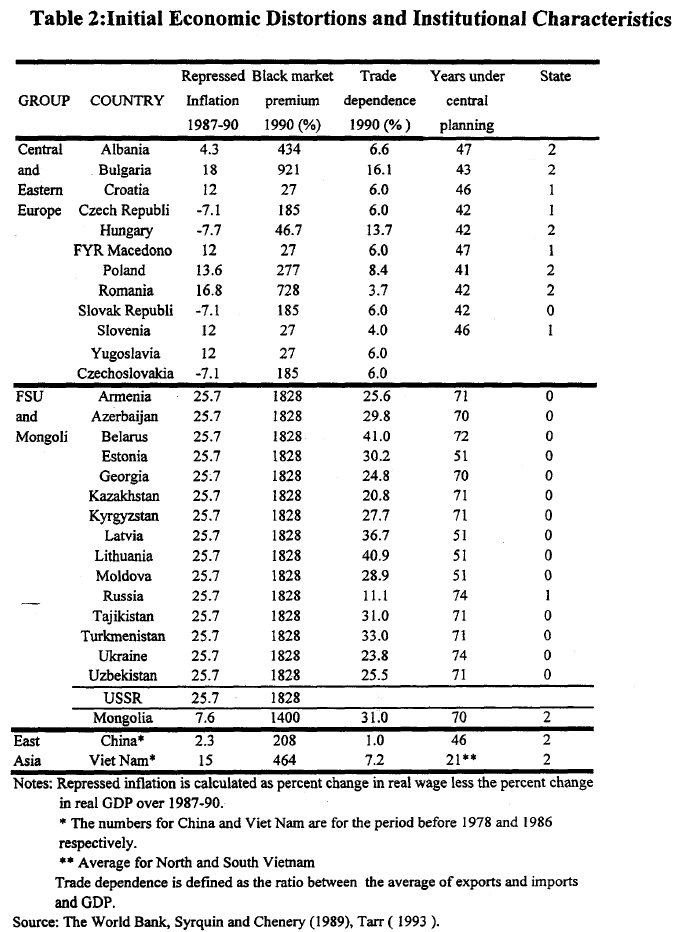
A 1997 World Bank paper also used a variable appropriately dubbed “market memory” to compare the different starting points and trajectories of transition economies in Asia and Europe; it is defined as the number of years under central planning. I’ve reproduced a table from the paper below:
WPS1866-table

Again we see Russia and Ukraine topping the list with 74 years of central planning experience. The other Soviet republics are given 70 or 71 years, reflecting the fact that the USSR was formally established in 1922, so central planning got a slightly later start in other regions. The Baltic states of Estonia, Latvia, Lithuania, and Moldova were incorporated into the USSR in 1940 as a result of the Molotov-Ribbentrop Pact, and so had 51 years. And then the various Eastern European states became Communist at even later dates, in the aftermath of the Second World War.

I’m not sure why China is given 46 years of central planning in the table, which seems like an obvious error. The simplest dating would be from the establishment of the People’s Republic in 1949 to the beginning of economic reforms in 1978, or 29 years. This could probably be fine-tuned, as 1978 was mostly a political landmark. Local experiments in both rural and urban areas did begin then, but the breakup of agricultural collectives did not really take off until 1982, and nationwide changes to the management of non-agricultural companies had to wait until 1984. On the other hand, the beginning of central planning could perhaps be pushed forward until 1952 or 1953: the Communist Party after its victory in the civil war initially focused on stabilizing the economy, and took a few years before moving full-on to nationalization and five-year plans. Still, roughly three decades.

But it’s possible to argue for an earlier date for the collapse of central planning in China, on the basis that during the Cultural Revolution actual government authority over the economy had significantly eroded. The work of the Hong Kong-based historian Frank Dikötter offers some evidence for this:

If the Great Leap Forward had destroyed the credibility of the Party, the Cultural Revolution undermined its very organization. The extent to which ordinary villagers reconnected with the market in the last five years of the Chairman s reign is amply illustrated by evidence from the archives. …

Wealthy regions joined those mired in poverty in a silent revolution that subverted the planned economy. In villages along the southern coast, people raised ducks, kept bees, grew fish, baked bricks and cut timber, always in the name of the collective. By late 1971, in the county of Xinchang, Zhejiang, which housed a population of roughly a quarter of a million people, some two-thirds of all villagers were independent – or “go-it-aloners” in the parlance of the time. Much of this was done with the tacit consent of the local authorities, who rented the land to individual households in exchange for a portion of the crop. A year before Mao Zedong’s death, the habit of leaving the collectives to try one’s luck on private land or in underground factories was described as “widespread” throughout the province. …

Some wealthier villages not only planted profitable crops for the market but also began establishing local factories. This was common in many parts of Guangdong. In Chaoan, just outside Shantou, where entire villages had been reduced to poverty after embroidery was declared to be “feudal” at the height of the Cultural Revolution, historic links with the overseas community were revived after the Ministry of Light Industry lifted the trading restrictions in 1972. Two years later, up to half of the women in some villages once again specialized in drawn work and embroidery. …

The growth of cottage industries in the Yangtze Delta followed old manufacturing habits and trading routes that predated liberation. They were revived as soon as the hand of the state weakened. Much as Shantou had a long tradition in exporting embroideries to overseas markets, for many centuries the villages around Shanghai had specialized in household goods, ceramics, cloth, silk and other handicrafts. … The extent to which rural industry reconnected with its past in the early 1970s is shown by statistics: in Jiangsu province as a whole, industry represented a mere 13 per cent of total output in the countryside in 1970, but a phenomenal 40 per cent by 1976. These factories were often collective, if in name only.

That’s from his article “The Silent Revolution: Decollectivization from Below during the Cultural Revolution“; see also this previous post on how the Cultural Revolution prepared the way for the economic reforms of the 1980s.

So you could even argue that effective central planning in China was only practiced for a couple of decades, and, in at least some places, traditions of rural private industry were already reviving well before 1978. The long-term damage to China’s human capital and institutions from the detour into central planning was certainly significant, but was probably much less than in some other Communist countries. The post-1978 “reform era” is now closing out its fourth decade, and so has already lasted quite a bit longer than the planned economy did.

On this note, spare a thought for the people of North Korea, where Communist rule has now endured 72 years and counting, and is much more regimented and isolationist than the Soviet Union was in its last decades. The experiences of North Korean defectors to the South have already made it clear that the North’s people are very poorly equipped to manage in a market economy–much worse than East Germans were when the Berlin Wall fell.

time-under-central-planning

The divergence over the Great Divergence is narrowing

Stephen Broadberry, Hanhui Guan, and David Daokui Li have updated their impressive paper compiling estimates of Chinese per-capita GDP over about one thousand years (“China, Europe and the Great Divergence: A Study in Historical National Accounting, 980-1850“), with results that help shed light on one of the great debates in economic history: just when and by how much did incomes in Europe start to overtake those in China?

Our estimates indicate that Northern Song China was richer than Domesday Britain circa 1090, but Britain had caught up by 1400. Also, China as a whole was certainly poorer than Italy by 1300, but at this stage, it is quite possible that the richest parts of China were still on a par with the richest parts of Europe.

By the seventeenth century, however, China as a whole was already substantially behind the leading European economies in the North Sea area, despite still being the richest Asian economy. Even allowing for regional variation within China, it is clear that the Great Divergence between China and Western Europe was already well under way by the first half of the eighteenth century, before the start of the Industrial Revolution.

Although this clearly contradicts the early statements of California School writers such as Pomeranz (2000) and Wong (1997), it is broadly consistent with the later views of Pomeranz (2011), who accepts that his early claim of China on a par with Europe as late as 1800 was exaggerated, and is now willing to settle for an earlier date between 1700 and 1750.

We think this is encouraging, because it shows how engagement between researchers using primarily quantitative methods and those who tend to put more weight on qualitative methods can result in a new consensus that challenges the original position of both sides in a major debate.

The California School were right to claim that, taking account of regional variation, historical differences in economic performance between China and Europe were much less than was once thought. However, the early claims of the California School went a bit too far: China and Europe were already on different trajectories before the Industrial Revolution, as European economic historians have traditionally maintained. The Great Divergence did not begin as late as the nineteenth century.

But you don’t have to take their word for it; Kenneth Pomeranz himself has weighed in with a blogpost reviewing some of this recent research:

A recent paper by Stephen Broadberry, Hanhui Guan and David Daokui Li suggests that Britain must have overtaken the Yangzi Delta in per capita GDP by the first quarter of the 18th century. This is, of course, materially different from my claim in The Great Divergence that the Yangzi Delta had not fallen significantly behind until well into the second half of the 18thcentury, and maybe not until 1800…

I think it is noteworthy that a debate between an early and a late 18th century divergence represents a considerably different intellectual landscape than the one we would have if we relied on Maddison’s GDP numbers, or on the non-quantitative work of David Landes, Deepak Lal, and various others – or for that matter, on an earlier attempt by Guan and Li to estimate comparative GDPs, which had previously claimed that a huge gap already existed in the 15th century. …

Admittedly, that is far from the rough parity I had originally suggested at 1800, and would now be inclined to put at somewhere around 1750 instead; there are some plausible adjustments that I think would narrow the gap further, but that is not really the point for now.  Instead I would emphasize that despite continuing disagreements and continuing data problems – the latter of which will probably never be fully solved – we have made some progress in narrowing the range of plausible answers about when and how much divergence occurred in these terms.

On the whole I see this as an example of the virtues of quantification in social science: when disagreements are about empirically measurable quantities, rather than abstract principles, it should be easier to resolve them. But still, how often does that actually happen in economics?

broadberry-china-table

Welcome to the land of soft openings

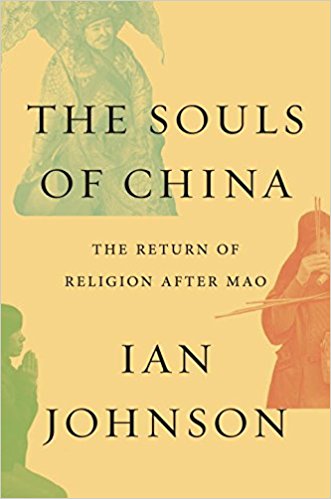
I’m about halfway through Ian Johnson’s The Souls Of China: The Return of Religion After Mao , but it’s already clear it’s the China book of the year. Not just because the subject matter is fascinating and undercovered, but also because it is packed with insights about all aspects of contemporary China.

I hope to blog more about the discussion of religion later, but for now I really want to share the following passage, which despite being more or less tossed off as an aside is a fairly profound insight into how China works:

China is the land of soft openings: projects are first announced to big fanfare, structures erected as declarations of intent, and only then filled with content. In this sense, developing a new ideology to unify China is similar to building a shopping mall: the deal is publicized, the building goes up, a few stores open, but only years later are all the shops and restaurants open for business, and only after a number of anchor tenants have gone bankrupt. This makeshift model differs from how Westerns like to see projects–envisioned and planned thoroughly, then completed according to that design. But it has its own logic. If viable, the project goes ahead; if not, backing out is easier.

Keeping this pattern in mind is a good way to maintain a clear head when dealing with the latest grandiose Chinese announcement.

The frenzy of commentary on China’s Belt and Road Initiative has, for instance, generally not done this. Much of this makes the fundamental mistake of not understanding that the initiative is indeed in soft opening mode, and talking about it as if it is a massive and detailed plan for infrastructure development (it isn’t). On the other hand, that doesn’t mean that it’s correct to take all the official rhetoric about shared prosperity at face value, as too many ludicrously overwrought op-ed pieces have. A makeshift structure that gets filled in over time is, I think, exactly the right way to think about it.


(Disclosure: Ian is a friend and former colleague, so I was predisposed to like his book. But I’d recommend it anyway.)

41x86djhvkl-_sx329_bo1204203200_

Why most older Chinese women do not work

Here is an interesting paper by Wenchao Jin with a good account of why Chinese women stop working at such an extraordinarily young age. I like that it is attentive not only to the details of public policy but also of social institutions:

In 2013, the employment rate among 55-64-year-old urban women in China stands at 27%, well below the rates seen in most other countries at all levels of development. The urban female 55-64 employment rate is around 50−55% in the UK, Thailand (which has similar GDP per capita to China) and the Philippines (which has lower GDP per capita). …

The first and foremost explanation is the low pension age for urban women. The biggest public pension schemes set the formal retirement age at 50 for female workers and 55 for female ”cadres” or managers, and 60 for men. However, there are different rules for people with special circumstances like disabilities and compliance is not perfect, so the age at which a woman becomes eligible for a public pension can be as early as 45 or as late as 60. According to the China Health and Retirement Longitudinal Study 2011, 90% of current female pensioners completed the retirement process by 55. …

The second explanation of low employment rate among older females is their adult children. First, (expected) financial transfers from children when one is old and frail reduce the need to accumulate a large stock of assets through working. About 60% of women in their 50s live with their children, and about 70% receive financial support from their non-coresident children in the last year. There is some evidence that the financial transfers from children respond to parental incomes. Thus, transfers from children have a wealth effect as well as an insurance effect, both of which have implications for parents’ decisions on labour supply and saving.

Moreover, demands from adult children for domestic services such as grandchild care mean less time is available for paid work in the market. In urban China, the majority of women have grandchildren before 60 and, conditional on having grandchildren, the majority spend time looking after their grandchildren for an average of more than 30 hours a week. Moreover, I find that urban female employment is significantly negatively correlated with having grandchildren (conditional on her own age, education and so on), and this correlation comes from those women with more educated children. This is consistent with the hypothesis that parents cooperate with their adult children when choosing between market and domestic labour supply and leisure.

Older women are thus both pushed out of the labor force by the official retirement age, and also pulled out by demands of family. At least the first of these factors is likely to change over time, as the Chinese government has confirmed it plans to gradually raise official retirement ages for men and women. (The normal retirement age for women in most OECD countries ranges from 60-67.) The model developed in the paper suggests the effects of this change would be extremely large:

Raising the female pension age from its current level (which varies across individuals and has a mean of 50.6) to 60 would increase the employment rate by 28 percentage points on average over age 50-59. The average age at which women leave the labour force would also increase from 52.9 in the baseline to 55.7.

When provinces fought back against reform

Here is an interesting and little-known episode from the early days of China’s reform era, dealing with the early days of the household responsibility system in the 1980s. The adoption of this system, a fancy name for allowing individual farmers to manage their own plots, is one of the most storied episodes in Chinese economic reform, and is often portrayed as a kind of bottom-up revolution by farmers fed up with collectives.

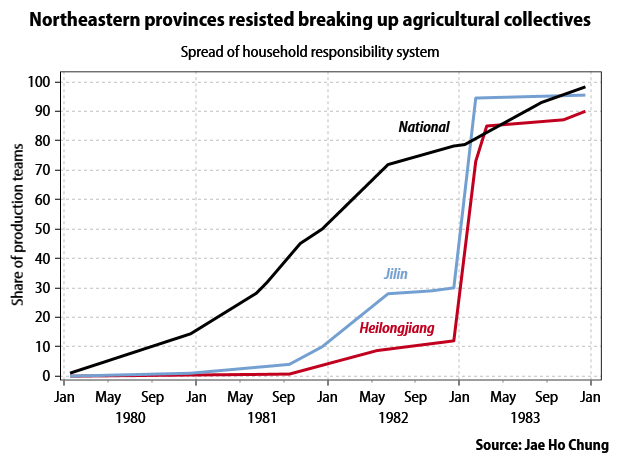
The household responsibility system did indeed spread rapidly once Deng Xiaoping and the central government endorsed it, but there were some holdouts. The governments of the three northeastern provinces–sometimes called the “little Soviet Union”–had a strong attachment to Soviet- and Mao-style collectives that could practice large-scale mechanized farming, and fought back against the household responsibility system:

Because the problems of collective farming were so widely recognized for so long, unless the center’s preference did not differ, many provinces were willing and eager to adopt the system of household farming. If the new policy could bring about enhanced productivity and increased income, there would be little lost on the part of the provincial authorities. Furthermore, household-based experiments of the 1960s provided some assurance about the workability of the new system.

The same could not be said of a few “resisters”: Heilongjiang, Jilin, and Liaoning. The average compliance rate for these three provinces was only 26.9 percent in December 1982. Even in December 1983, the rate stood at 92.1 percent, still lower than the national average by 6.2 percent. The common factor for these Northeast provinces was a complex relationship between the size of land available to individual households, the average size of a production team, and the specific type of mechanization pursued there. Unlike elsewhere in China, the Northeast provinces had an exceptionally large plot of land for each household, which was not susceptible to manual labor or even small machinery-based mechanization.

Spread of HRS

Heilongjiang, for instance, highlighted the unique characteristics of the province as follows: “Our province has one outstanding difference from the rest of the country: our province is a region of modernized large-scale agriculture…with a mechanization level of 60 percent…. This indicates the advanced level of our production forces. Therefore, the implementation of the household responsibility systems should proceed in accordance with these local characteristics.”

Even after Central Document No. 1 [of 1982] was issued, Heilongjiang was still of the position that the scope of household-based farming was to be confined only to poor teams (accounting for 15 percent of all teams there) with low levels of mechanization and that the pace of implementation should be gradual in accordance with the principle of safeguarding local interests. Liaoning’s and Jilin’s positions differed little from that of Heilongjiang throughout 1982–1983.

Over time, Beijing came to identify the pace of local compliance with the legitimacy of the policy, thereby raising the level of urgency for the reform. Soon, Beijing put political pressure on the noncomplying provinces, starting in the second half of 1982. In July, Premier Zhao Ziyang visited Liaoning and called for an immediate popularization of the household responsibility reform in the Northeast. In August, Hu Yaobang went to Heilongjiang, where he criticized the sluggish pace of decollectivization there. In October, Du Runsheng of the Rural Development Research Center issued a stern warning: “In carrying out the household responsibility reform, we have to continue liberating our ideology and relax control…. A few regions are still unwilling to act on the demands of the masses by refusing to change the ‘one big bowl’ situation.”

Beijing’s pressure reached its apex with the speech by Wan Li, vice-premier in charge of agriculture at the National Agricultural Secretaries Conference in November. Wan remarked: “Comparatively speaking, the household responsibility reform has not been successful in all corners of our countryside. In fact, there exists certain ‘passivity’ in many areas and, in some areas, such passivity is of a very bad sort…. The implementation of contracting to the household has not been very smooth due to the obstruction on the part of some leading cadres.”

Heilongjiang and its first party secretary, Yang Yichen, did not succumb to the pressure from Beijing. One day after the publication of Wan’s speech, Yang delivered his own at the Prefecture, County and City Party Secretaries’ Work Conference: “In determining which responsibility system to implement, we have to value the opinions of the masses that will eventually choose a system on the basis of their local conditions.”

The center drew the last card: personnel reshuffle. In February 1983, Yang Yichen was transferred to Beijing as the supreme people’s procurator-general. Given that his transfer had already been decided in December 1982, Yang’s speech was apparently the last expression of his firm stance on the household responsibility reform. With Yang’s departure, Heilongjiang’s pace of implementation skyrocketed within two months, from 12 percent in December 1982 to 73 percent in February 1983. Because Yang’s successor, Li Li’an, was known to be sympathetic to the decollectivization reform, Heilongjiang’s household responsibility reform took off thereafter.

The quote is from Jae Ho Chung’s Centrifugal Empire: Central-Local Relations in China.

The topic of local resistance to reform seems timely, as it’s emerged as a persistent theme under Xi Jinping. Premier Li Keqiang made headlines in 2014 when he called local officials “passive” and “lax,” and this year Xi Jinping devoted much of a meeting of his reform task force to urging better implementation of reform plans.

The comparison with the 1980s episode helps clarify some of the differences: it doesn’t look like China is experiencing ideologically driven local opposition to specific reforms. Rather, as investigations into the resistance to reform have found, the central government is making huge numbers of contradictory demands on local officials, and then punishing them severely when things go wrong. The result is an understandable lack of willingness to take risks and make commitments, quite the opposite of the valorization of local initiative and experiments in the 1980s.

The socialist urbanization series

In 2014, China adopted what it called a “new-style” urbanization policy. But it was more like “everything old is new again.” Rather than resetting priorities, the policy reinforced many of the existing tendencies: a desire to control and even reduce the population of the largest cities, and a preference for pushing population flows into smaller cities.

These goals are now being backed by ever more forceful measures, as the government adopts coercive methods to reduce the population of Beijing and Shanghai, and launches megaprojects to resettle people in entirely new cities. Understanding this development has been a recent obsession of mine. Here’s what I have learned so far:

Update. Here are a few other posts on the same theme, made after this was first posted. I’m putting them here so all the postings on this topic can be more easily found:


Friedrich Engels is still shaping Chinese cities, 120 years after his death

In my last post I wrote about how China’s distinctive urbanization policies–capping the population of big cities and encouraging population flows to smaller and inland cities–are a holdover from the planned-economy era. In the 1950s, the new People’s Republic adopted much of the Soviet model including its urban strategy, which guaranteed good benefits to the existing residents of big cities but tried to avoid extending those benefits to many more people, instead promoting the growth of smaller urban centers.

But where does this distinctive set of ideas about the right way to organize cities come from? After doing some more reading, I have come to the conclusion that these are not just arbitrary choices of authoritarian governments, but part of the intellectual heritage of socialism itself. It goes all the way back to the founding fathers.

Marx’s collaborator and editor Friedrich Engels (1820-1895) argued that socialism should pursue not only the public ownership of the means of production, but also a significant geographical redistribution of population and industry in order to reduce their concentration in large cities. These ideas are stated most clearly in a passage from his Anti-Dühring. Although long by blog standards, I’m reproducing all of it here so that the logic of the original is not lost:

Water-power was local; steam-power is free. While water-power is necessarily rural, steam-power is by no means necessarily urban. It is capitalist utilisation which concentrates it mainly in the towns and changes factory villages into factory towns. But in so doing it at the same time undermines the conditions under which it operates. The first requirement of the steam-engine, and a main requirement of almost all branches of production in modern industry, is relatively pure water. But the factory town transforms all water into stinking manure. However much therefore urban concentration is a basic condition of capitalist production, each individual industrial capitalist is constantly striving to get away from the large towns necessarily created by this production, and to transfer his plant to the countryside. This process can be studied in detail in the textile industry districts of Lancashire and Yorkshire; modern capitalist industry is constantly bringing new large towns into being there by constant flight from the towns into the country. The situation is similar in the metal-working districts where, in part, other causes produce the same effects.

Once more, only the abolition of the capitalist character of modern industry can bring us out of this new vicious circle, can resolve this contradiction in modern industry, which is constantly reproducing itself. Only a society which makes it possible for its productive forces to dovetail harmoniously into each other on the basis of one single vast plan can allow industry to be distributed over the whole country in the way best adapted to its own development, and to the maintenance and development of the other elements of production.

Accordingly, abolition of the antithesis between town and country is not merely possible. It has become a direct necessity of industrial production itself, just as it has become a necessity of agricultural production and, besides, of public health. The present poisoning of the air, water and land can be put an end to only by the fusion of town and country; and only such fusion will change the situation of the masses now languishing in the towns, and enable their excrement to be used for the production of plants instead of for the production of disease.

Capitalist industry has already made itself relatively independent of the local limitations arising from the location of sources of the raw materials it needs. The textile industry works up, in the main, imported raw materials. Spanish iron ore is worked up in England and Germany and Spanish and South-American copper ores, in England. Every coalfield now supplies fuel to an industrial area far beyond its own borders, an area which is widening every year. Along the whole of the European coast steam-engines are driven by English and to some extent also by German and Belgian coal. Society liberated from the restrictions of capitalist production can go much further still. By generating a race of producers with an all-round development who understand the scientific basis of industrial production as a whole, and each of whom has had practical experience in a whole series of branches of production from start to finish, this society will bring into being a new productive force which will abundantly compensate for the labour required to transport raw materials and fuel from great distances.

The abolition of the separation of town and country is therefore not utopian, also, in so far as it is conditioned on the most equal distribution possible of modern industry over the whole country. It is true that in the huge towns civilisation has bequeathed us a heritage which it will take much time and trouble to get rid of. But it must and will be got rid of, however, protracted a process it may be.

This is a complex and not totally consistent set of ideas. Both Marx and Engels did on various occasions praise the intellectual and other advances that accompanied 19th century urbanization. But, as in the above passage, they also criticized environmental degradation and the living conditions of the urban proletariat. Engels saw urbanization and industrialization as a necessary part of progress, but not as the ultimate end goal. So while he did not oppose urbanization and industrialization per se, he thought they should be done differently under socialism. It’s this commitment to pushing back against the natural dynamics of urbanization that became a hallmark of socialism.

These ideas would likely have remained vague and unformed suggestions had they not been put into very forceful practice by the leadership of the Soviet Union. The following remark by Lenin in 1914 show particularly clearly how he was influenced by this strand of Engels’ thought:

Capitalism breaks for all time the ties between agriculture and industry, but at the same time, through its highest developed, it prepares new elements of those ties, a union between industry and agriculture based on the conscious application of science and the concentration of collective labor, and on a redistribution of the human population–thus putting an end both to rural backwardness, isolation and barbarism, and to the unnatural concentration of vast masses of people in big cities.

Lenin was particularly fond of talking about what Engels called the “abolition of the antithesis between town and country”. Agricultural collectivization was a big part of this concept: making agriculture more like industry, organized into big, capital-intensive state farms. The enormous suffering and dislocation that were caused by collectivization in both the Soviet Union and China are well known. But the drive for geographic redistribution of industry and the urban population is a less widely appreciated aspect of the same concept. Since cities spring up around industry, spreading industry evenly around the country also means spreading cities evenly.

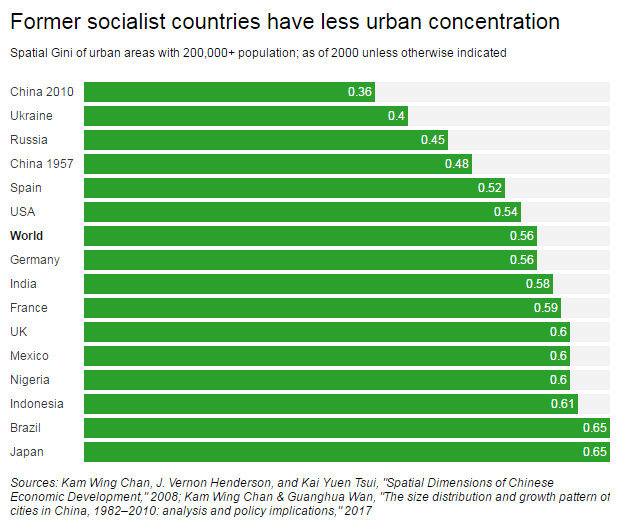
The evidence for how important these ideas about geographical redistribution is less in what leaders said than in what the Soviet Union did. It did in fact pursue a massive redistribution of the population across Russia’s vast expanses, founding many new cities and attempting to limit the concentration of population in Moscow. Even today Russia and Ukraine have much less concentrated and more distributed urban populations than is the global norm:

socialism-urban-concentration

China today has an even lower degree of urban population concentration than Russia, probably because it has been practicing socialist-style urbanization policies fairly consistently since the 1960s. Indeed, Mao followed Lenin and Stalin in being a proponent of Engels-style “equal distribution of industry.” Here is a passage from his famous 1956 speech on the economy, “On the Ten Major Relationships“:

In the past our industry was concentrated in the coastal regions. By coastal regions we mean Liaoning, Hopei, Peking, Tientsin, eastern Honan, Shantung, Anhwei, Kiangsu, Shanghai, Chekiang, Fukien, Kwangtung and Kwangsi. About 70 per cent of all our industry, both light and heavy, is to be found in the coastal regions and only 30 percent in the interior. This irrational situation is a product of history. The coastal industrial base must be put to full use, but to even out the distribution of industry as it develops we must strive to promote industry in the interior. …

It does not follow that all new factories should be built in the coastal regions. Without doubt, the greater part of the new industry should be located in the interior so that industry may gradually become evenly distributed; moreover, this will help our preparations against war. But a number of new factories and mines, even some large ones, may also be built in the coastal regions.

What scholars politely call China’s “distributed” pattern of urbanization could therefore more accurately be called the “socialist” pattern of urbanization. Given that two of the world’s largest countries have this pattern, a big chunk of the Eurasian landmass is affected. It is rather amazing that some 19th century polemics against urbanization would have such an enormous effect on the physical landscape and living conditions of hundreds of millions of people.

Is this just a costless esthetic preference for a different type of urban layout, or a more serious economic problem? I increasingly incline to the latter view. The World Bank’s unbelievably thorough Urban China report from 2014 amounts to an extended argument about the economic costs and lost opportunities resulting from a distributed urbanization policy and the limits to migration in the hukou system:

In an economic sense, these administrative barriers work like an expensive tax on migration; based on current productivity differences between agriculture and urban occupations in industry or services, every 1 percent more migration from rural to urban areas would yield 1.2 percent more GDP. At the current level of mechanization, agricultural surplus labor is estimated to be 105 million people, and this could increase as China’s agricultural modernization accelerates. If China’s migration rates had matched those of Korea’s in the past, China’s economy would be nearly 25 percent larger today.

The report argues that China does not need to particularly favor big cities, but that it should adopt neutral urbanization policies rather than continuing to try to limit overall migration and redirect population flows into smaller inland cities. But that argument has not been successful: the “new-style” urbanization plan adopted in 2014 in fact reinforced measures to restrict growth of the largest cities, in the much the same terms as in the 1950s. China is becoming more not less committed to the socialist pattern of urbanization.

In Beijing’s population cap, echoes of the Maoist and Soviet eras

One of the most visible Chinese government policies of late is the campaign to reduce the population of Beijing (and Shanghai); in order to push out migrants, their children have been expelled from local schools, and the shops and markets they work at have been demolished. Lucy Hornby at the Financial Times has a good summary:

The Chinese capital will cap its population at 23m “long-term residents” by 2020 “and keep it at that level for the long term”, a city government notice said. The permanent population of Beijing’s central districts dropped by 353,000 last year, according to municipal data released last week. The capital’s official population is now close to 22m. …

In the past two years Beijing has torn down wholesale markets and made it harder for children to attend school in order to force out migrant families. In 2016 the capital tore down 30m square metres of small shops, restaurants and fruit stands deemed “illegal construction”. It is targeting the destruction of 40m sq m this year, shrinking the land zoned for construction to 2,760 sq km by 2030 while expanding parks and gardens.

dvlt-fyepsch3409397

Former shops in Beijing’s Tuanjiehu neighborhood

In both the population caps and the increasingly harsh methods used to implement them, it is easy to hear echoes of the planned-economy era. In 1955, for instance, State Planning Commission chairman Li Fuchun launched China’s first five-year plan with an exhortation to control the size of large cities and shunt population elsewhere:

Our present task in urban construction is not to develop the large cities on the coast, but to develop medium and small cities in the interior and to restrict appropriately the expansion of the large cities. The present blind development of the coastal cities is a problem that has to be corrected.

60 years later, the government is still capping the growth of China’s largest cities, and Premier Li Keqiang is still saying “We will promote the development of small towns and small and medium-sized cities in the central and western regions”–a rather striking continuity.

The justifications that 1950s planners offered for controlling the growth of big cities also sound very familiar. Here is an excerpt from a 1958 article in the Workers’ Daily by one Zhao Qingwu, entitled “Why Must We Reduce Urban Population?” (translated in Christopher Howe & Kenneth R. Walker, The Foundations of the Chinese Planned Economy: A Documentary Survey, 1953-65):

Urban public communications, hotels, restaurants, department stores, hospitals, cultural establishments, and many other public places, were overcrowded and inconvenient. None of the measures proposed to alleviate this were able to keep pace with the requirements of the increased population, and this has placed a heavy burden on the cities. Moreover, since the rural population, which is blindly flowing into the cities, cannot find work, hardships easily arise in those peoples’ lives. They drift about the streets to such an extent that a minority get led astray by bad elements. They steal, swindle and engage in other criminal activities that endanger the normal social order of cities. From analysis of the above circumstances, we can see clearly that we must reduce urban population, restrict peasants from blindly flowing into the cities, and lighten the cities’ burden.

Again, the contemporary narrative about overcrowding and the “city disease” is very similar.

Chinese planners seem to have inherited this distaste for large cities from the Soviet Union, which was the direct inspiration for much of what China did in the 1950s. The following discussion is from Fiona Hill and Clifford Gaddy’s The Siberian Curse: How Communist Planners Left Russia Out in the Cold, a very interesting book on Soviet economic geography:

In addition, in the 1950s and 1960s, Soviet urban planners became concerned about the impact on the USSR of trends in the West toward increasingly large cities. They attempted to prevent the development of so-called “city-giants” by trying to cap the population of large Soviet cities at 250,000– 300,000. …

From the very beginning of the Soviet regime, state planners sought to limit Moscow’s population. The internal passport and propiska system of 1932 [a Soviet analogue to China’s hukou system] was designed not only to control internal migration in the USSR, but also to prevent a massive influx into the Russian capital. In 1935 the Communist Party Central Committee tried to cap Moscow’s population at five million, but in the aftermath of World War II, postwar reconstruction efforts drew more and more villagers from surrounding areas to Moscow.

The interesting question is why there is such a strong continuity in how Chinese officials think about cities, since so much else has changed in China. For instance, one of the planned-economy justifications for controlling urban populations was that it was necessary to economize on “unproductive” investment in housing in order to put more money into heavy industry. Contemporary China has if anything completely reversed this logic, going to ever greater lengths to continue high levels of investment in housing. But it is still trying to “economize” on urbanization by limiting access to the higher-quality and more-expensive social services offered to residents of the big cities.

The decision to cap the population of Beijing and Shanghai also shows a very clear judgment that the potential decrease in welfare of existing residents (through crowding and congestion) is more important than the potential increase in welfare of new migrants (through higher incomes). The government thinks it should provide more amenities to the extremely well-off residents of megacities rather than allow more people to become well-off residents of megacities.

Such a deeply inegalitarian value judgment is embedded in China’s hukou system, which divides the population into groups with different rights and privileges. Increasingly the hukou system is not just enforcing a division between urban and rural people, but between different tiers of urban people. Here is a passage from “The Origins and Social Consequences of China’s Hukou System,” a 1994 article by Tiejun Cheng and Mark Selden, that I found enlightening:

Throughout the People’s Republic policymakers have consistently assumed both that the countryside could absorb virtually unlimited supplies of labour, and that feeding the rural population was the responsibility of each locality. The administrative and welfare responsibilities of the state would in essence be confined to the small minority of the population living in urban areas. One reason for this hypersensitivity to urban problems is the fact that the new state accepted more or less axiomatically from the start (presumably derived from Soviet practice) a responsibility that no previous Chinese state had ever assumed: to provide jobs and subsidized food and housing for all urban residents.

While the planned economy that guaranteed jobs and housing for all urban residents may be gone, it seems that some of the underlying political assumptions–that the state should look after the welfare of some urban residents first–still remain.

Somehow I’m not surprised that Chinese housing subsidies also mainly benefit the better-off

By now a fair amount of research has established that the U.S. tax deduction for mortgage interest, though often called a middle-class tax break, mainly benefits wealthier people. China differs from the U.S. in that it tends to deliver its subsidies less through the tax system and more through elaborate bureaucracies.

But some interesting new research indicates that China’s main main housing subsidy–a kind of “housing savings account” with an employer match–is also very unequal in its impact. These are what seem to be the key findings of a report on the housing fund by the China Institute for Income Distribution (Caixin has a summary of the report in English and Chinese; unfortunately I can’t find the full text of the report online):

  • About 124 million workers were paying into the housing fund in 2015, or approximately 40% of the urban workforce. Which means that roughly 60% of the urban workforce does not benefit from the subsidies available through the fund.
  • Coverage of the fund is also highly skewed to public-sector workers. About 90% of workers in public institutions (schools, hospitals) are covered by the fund, as are 70% of workers in state-owned enterprises (who generally have above-average incomes). But only 50% of workers at foreign-invested enterprises are covered, and only 10% at domestic private firms, probably because fewer private employers want to pay for the benefit.
  • The number of workers who actually use the money in the fund is relatively small, probably because the application process is difficult and takes several months. The report estimates that only about 30% of the workers who have ever paid into the fund have actually withdrawn money from it.
  • Use of the fund is also highly skewed by income. The report estimates that on an annual basis, 0.9% of workers in the bottom 20% of urban incomes withdraw from the fund, while 4.7% of workers in the top 20% of urban incomes do so.

Perhaps, despite the many other major differences between China and the U.S., the political economy of “middle-class” housing subsidies is ultimately pretty similar.

The caveat to this is that the housing fund is far from the only form of housing subsidy out there; since 2010 China has engaged in a massive government-sponsored effort to build low-income urban housing. But that program has also been dogged by suspicion that its cheap apartments go to people with connections rather than the deserving poor.


New industry clusters are springing up in the same old places

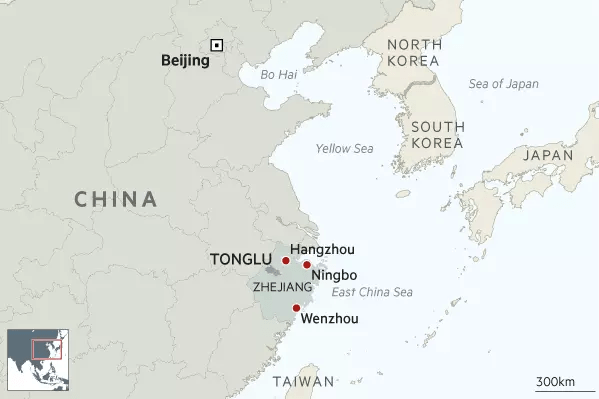
You have to love the fact that all four of China’s main private-sector express-delivery companies–the guys shuttling all those Taobao packages around the country–are from the same tiny place. Gabriel Wildau at the Financial Times recently did a nice piece on the phenomenon, and Bloomberg has also picked up on it. It’s one of the most striking examples of the “cluster” phenomenon you can find.

tonglu

But here’s the thing: the Tonglu cluster, for one of the biggest new-economy growth sectors, is right next to a bunch of other, older clusters. Zhejiang is famous for its specialized light-industry concentrations; a very good World Bank history of these clusters tells the stories of Haining for warp-knit cloth, Qiaotou for buttons, Yiwu for zippers, Yongkang for metalware; Wenzhou for cigarette lighters is another well-known one. Years ago I visited Zhili, a children’s clothing cluster, to write a piece for the WSJ.

At the time it was common to worry about the future of these places because of rising labor costs. But exports from China and Zhejiang have in fact held up better than many expected. And the Tonglu example suggests that Zhejiang’s real competitive advantage is not low labor costs, but a highly flexible and entrepreneurial economy that can adapt quickly to changing trends. This structure has deep historical roots: Zhejiang (along with Jiangsu) has had one of the least state-dominated economies of any Chinese province for as long as statistics have been kept.

If the coastal provinces are transitioning successfully from export-oriented industry to high technology and services, then patterns of regional advantage are being entrenched rather than overturned by structural changes in the economy. Enrico Moretti, in his The New Geography of Jobs, argued that “the knowledge economy has an inherent tendency toward geographical agglomeration.” China certainly seems to demonstrate the point: Just six provinces–Beijing, Shanghai, Guangdong, Jiangsu, Zhejiang, and Shandong–account for about 60% of national R&D spending. The same six provinces account for about 40% of national investment in information technology and software. The clusters of the future seem likely to appear not very far from the clusters of the past.