What is socialist about “socialism with Chinese characteristics”?

Deng Xiaoping’s classic slogan is wonderful because of its strategic ambiguity: just what are those Chinese characteristics anyway? And this slipperiness has led to a tendency to think of “socialism with Chinese characteristics” as a kind of dodge, a way of saying, yeah, China is really capitalist but we just don’t want to admit it, wink wink nudge nudge. I’m not sure that was ever correct, and no one less than Xi Jinping himself seems to be urging us not to think that way. In his now-famous speech on Deng’s legacy, Xi had a pretty good one-liner: “Socialism with Chinese characteristics is socialism, and not some other -ism.” And Xi repeated that line again in his speech on Friday for the 95th anniversary of the founding of the Communist Party.

Yet for a speech that was billed as heavily ideological, and whose theme was supposedly the eternal verities of Marxism, there is not a huge amount of ideological content to be found. To me the speech feels not so much ideological as highly nationalist. Xi says the Communist Party’s main achievement is not realizing socialism in one country, or some other Marxist shibboleth, but “the march of the Chinese nation with its more than 5,000 years of civilization toward comprehensive modernization.” There is plenty of Deng-style pragmatism (“Whether socialism with Chinese characteristics is good depends on the facts, on the judgment of the Chinese people”) and focus on economic growth (“Development is the Party’s top priority in governing and reviving the nation, and is the key to solving all of China’s problems”).

So it would be easy to interpret “socialism with Chinese characteristics” as just meaning whatever makes China rich and strong. And such an interpretation would be pretty consistent with Deng’s own fundamentally nationalist perspective. Yet I’m not sure we can really view the Communist Party as pure maximizing pragmatists completely unconstrained by history or ideology–surely it does make a difference that the Party comes out of the socialist tradition? Of course, the most obvious consequence of the Party’s historical trajectory is its commitment to authoritarian rule. The political meaning of “socialism with Chinese characteristics” is so obvious that it hardly needs stating: the continued rule of the Chinese Communist Party. Or, as Xi put it on Friday, that the “choice of the Chinese Communist Party to lead China’s great revival is correct.”

But I’ve also been wondering whether there are other, more purely economic consequences: what do Chinese leaders think are the fundamentals of socialism that they cannot abandon and still call themselves socialist? So far, I’ve come up with two answers. And as so often, one of Deng’s own pithy comments provides the best summary. In a 1985 interview with American journalists, Deng said: “In the course of reform we shall make sure of two things: one is that the public sector of the economy is always predominant; the other is that in developing the economy we seek common prosperity, always trying to avoid polarization.” I think that’s exactly right.

I would propose, then, that in practical terms the “socialism” part of “socialism with Chinese characteristics” means 1) a continued large role for state-owned enterprises, and 2) generous regional development policies aimed at offsetting the inequalities produced by market forces.

That the Communist Party is committed to SOEs will probably not surprise many people. Still, it’s worth recalling just how deep the historical roots are. The economic model that China’s post-1978 leaders have been working with owes a lot to Lenin’s New Economic Policy of the early 1920s in Russia. To recover from the excesses and economic disasters of the early Bolshevik period, Lenin proposed a mixed-economy model, in which market mechanisms and private firms play a major role but SOEs occupy a strategic position (the famous phrase “the commanding heights” is often attributed to Lenin at this time, but it appears only in fragmentary form in his collected works; Nikolai Bukharin, the theorist of the NEP, should probably get the credit). This mixed model did not last long in Russia, but it has persisted for some decades now in China. Given that Chinese Communist Party documents still refer to “the basic economic system with public ownership playing a dominant role,” I am probably on pretty safe ground in saying that the Party feels that it cannot give up SOEs.

The regional development angle may be a bit less obvious. But I think it also has deep roots in a different strand of socialist thought: Maoist egalitarianism. Here a good guide is John G. Gurley’s 1970 essay “Capitalist and Maoist Economic Development,” a treatment of Maoism that is unusually sympathetic. Gurley introduced a distinction between capitalist “building on the best” (investing in the places and people with the greatest comparative advantage) and Maoist “building on the worst” (deliberately investing in the places and people that are disadvantaged). Here’s how he summarizes the difference:

Capitalist development, even when most successful, is always a trickle-down development. …. In many ways, then, Maoist ideology rejects the capitalist principle of building on the best, even though the principle cannot help but be followed to some extent in any effort at economic development. However, the Maoist departures from the principle are the important thing. While capitalism, in their view, strives one-sidedly for efficiency in producing goods, Maoism, while also seeking some high degree of efficiency, at the same time, in numerous ways, builds on “the worst.” … Maoists build on the worst not, of course, because they take great delight in lowering economic efficiency, but rather to involve everyone in the development process, to pursue development without leaving a single person behind, to achieve a balanced growth rather than a lopsided one.
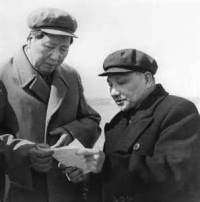
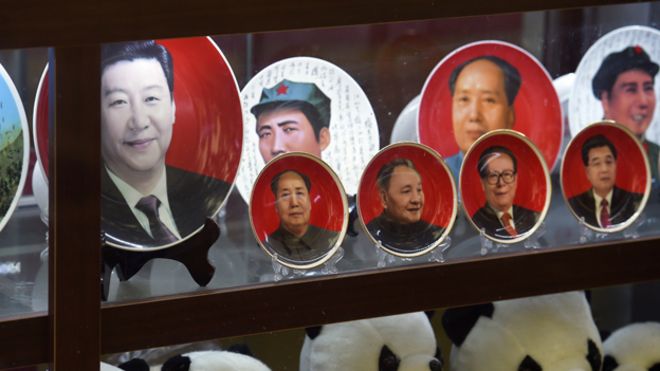
Mao and Deng

Mao and Deng

Deng was very explicit that his reforms rejected Maoist egalitarianism in its pure form; what he derided as “everyone eating from the same big pot” was a recipe for poverty and backwardness. But he also made clear that his acceptance of some economic inequality was purely instrumental; as he told Mike Wallace“We permit some people and some regions to become prosperous first, for the purpose of achieving common prosperity faster. That is why our policy will not lead to polarization, to a situation where the rich get richer while the poor get poorer.

So at the level of principles egalitarianism was not totally abandoned. And one of the most consistent ways in which this principle has been expressed is in repeated efforts to boost China’s less developed regions: from the inland development projects of the 1960s and 1970s, to the “Great Western Development” project launched by Jiang Zemin in 1999, to the “Revitalize the Northeast” campaign under Hu Jintao after 2003. All of those plans were very clearly in the spirit of “building on the worst.” In the latest egalitarian gesture, the State Council announced, just before the Party’s July 1 anniversary, an aid program for the isolated mountainous areas where Communist revolutionaries sheltered during the civil war.

So a large role for state-owned enterprises and regional development plans are features, not bugs, in the China economic model. Unfortunately a lot of the obvious waste, inefficiency and misallocation in the Chinese economy in recent years are also attributable to these features. If I’m right about the political importance of these two policies, then fixing those problems could be quite challenging.

Of ice cream and industrial restructuring

The home of “Iron Man” Wang, the original Chinese hero of heavy industry, is, it turns out, also in the ice cream business. Rooting around in a freezer on a recent, very hot summer weekend, I came up with a bar of ice cream bearing the “Daqing” brand. This surprised me since Daqing is better known as the site of China’s largest oil field, and the inspiration for innumerable 1960s propaganda posters about the exploits of its model workers, particularly the aforementioned Wang Jinxi. But here was its name proudly displayed on the wrapper of what turned out to be a pretty tasty ice cream bar:

DaqingIceCream

The ice cream bar was indeed actually made in Daqing, but rather than disguise the fact that they’re making food near a lot of toxic chemicals, the manufacturers are going all out to highlight their roots. Why? I can at least speculate. Daqing itself is indelibly associated with the Cultural Revolution, when Mao held it up as the national example of how revolutionary fervor could work economic miracles. While personally I find Cultural Revolution nostalgia creepy, it’s still a real phenomenon: some people imagine the 1960s as a less materialist, less complex, more virtuous time. The logo with its echo of socialist-realist woodcuts, the plain one-color wrapper, the proud “product of the Northeast” declaration–all these combine to evoke simpler times and convey a kind of straightforward authenticity.

Some people like to say that the Northeast was the first to adopt the planned economy and the last to abandon it, and that economic legacy is not usually thought to be a positive one. But it is still part of the region’s distinctive identity, so you might as well use it to sell stuff (the maker of the Daqing ice cream bars also sells ice cream under other brands without the socialist trappings). Of course there is something odd about using nostalgia for the high-Maoist era to sell mass-market consumer goods today, since the 1950s and 1960s in China were definitely not a time of consumer abundance. Ice cream was such an exotic luxury that it might be sampled only once a year–a far cry from the ubiquitous and cheap delights of today.

Is making ice cream in Daqing a sign of something else–perhaps the long-awaited emergence of a “consumer-driven” Chinese economy? It is true that Heilongjiang province, where Daqing is located, and the other northeastern provinces are under lots of pressure to diversify away from dying industries. The latest in a series of government plans to “revitalize” the northeast declares, correctly, that the region’s industrial structure is tilted toward traditional heavy industry and state-owned enterprises. Vice-minister of industry Feng Fei, returning from a recent inspection tour of the northeast, noted approvingly that some local governments were “promoting investment in sectors like car parts and food processing, fostering new economic growth drivers.” Ice cream has been made in Daqing since at least 2002 (when Baixing, the maker of the Daqing bars, was founded), but perhaps it is one of the industries of the future.

Yet there is a long way to go to shift the northeast’s industrial structure–you need to sell a lot of ice cream to match the economic impact of a giant oil field. Around two-thirds of Daqing’s GDP comes from oil and petrochemicals; food processing contributes just 2.5% (still higher than I would have guessed). And the city of Daqing itself accounts for a quarter of Heilongjiang’s GDP, which means that the Daqing oil industry alone generates about 18% of Heilongjiang’s GDP (on 2014 statistics). That’s huge, making it easier to understand why nominal GDP growth collapsed along with oil prices last year.

And in case it’s not obvious–yes, this whole post was basically just an excuse to write something else about Chinese ice cream.

Deng Xiaoping was an outstanding Chinese nationalist

That is an interesting and important statement from Peking University’s Niu Jun, from a roundtable commenting on the recent Pantsov and Levine biography of Deng (for what it’s worth, I agree with the consensus of the reviewers that the bio is vividly written and has interesting insights, but is marred by mean-spirited editorializing). Deng has variously been portrayed as a reformer, a revolutionary, and a dictator, but rarely first and foremost as a nationalist. Niu argues that this was one of the important things distinguishing him from other leaders of his generation, particularly Mao:

I think that Deng Xiaoping: A Revolutionary Life pays insufficient attention to another prominent facet of Deng’s identity. Vogel’s book does likewise. If one is assessing Deng’s life, one should state that he was an outstanding Chinese nationalist. There were not many such among his generation of Chinese communist comrades-in-arms. This year, “The Nine-Day Whirlwind” [aka Mr. Deng Went to Washington], a documentary film screened in China, included an interview with former U.S. National Security Adviser [Zbigniew] Brzezinski. Facing the camera, he recalled one of Deng’s talks during his January 1979 visit to the United States. Deng remembered his sojourn in France as a young man on the ‘Diligent Work Frugal Study’ program. Deng said that when he arrived in Paris, what impressed him most deeply was how backward China was in comparison. So he resolved to save his motherland and help it become a powerful country. This was the key to his becoming a Communist, because he saw this as the only way forward. …

Deng’s nationalism was manifest above all in his dealing with Sino-Soviet relations. … Deng’s method of dealing with the normalization of Sino-Soviet relations after Mao demonstrates, on the one hand, that in the Sino-Soviet theoretical debates, he was a firm supporter and executor of Mao’s policies. On the other hand, he also had important differences with Mao. In comparison with him, Deng was more of a nationalist. Put simply, Mao’s opposition to Soviet ‘revisionism’ was rooted in a more utopian way of thinking. He thought that Khrushchev’s reforms were to take the capitalist road. Of course, Mao loathed so-called Soviet chauvinism that was displayed toward the “fraternal countries,” but replacing the Soviet Union as the leader of the international Communist movement and continuing to promote the world revolution were obviously more important to him. Deng’s subsequent words and actions show that he was more inclined to oppose the Soviets for having humiliated China and for posing a threat to China’s security. His ‘anti-revisionism’ was more a matter of following and implementing Mao’s thought while his ‘anti-Sovietism’ accorded more with his own nationalist inclinations and was a distinctive feature of his foreign policy once he was in power.

In his talks with Soviet President Mikhail Gorbachev in May 1989, Deng stated that both sides were at fault with regard to the theoretical dispute, but more important was that the Soviet Union had not accorded China equal treatment. This had been a problem through several periods from Tsarist times to the Soviet era. Deng stated that the humiliation inflicted on China from Russia and the Soviet Union was almost as serious as Japan’s aggression from the same era and was extremely detestable. This talk marked the normalization of relations between the two countries thirty years after they had fallen out with each other. Deng’s lengthy speech was the result of very long deliberation on his part. For Deng the theoretical dispute was not significant; it was the Soviet attitude and the harm and threat it posed to China that were the real sources of the deterioration of relations between the two countries.

Deng and Khrushchev in 1960

Deng and Khrushchev in 1960

Deng’s much-praised pragmatism was rooted in his nationalism: whatever made China stronger was good. In 1980, Deng’s nationalism meant recognizing that China was weak and underdeveloped, and doing what was necessary to strengthen its global position and drive economic growth, including borrowing ideas and capital from Japan. By 1990, nationalism increasingly meant taking pride in China’s accomplishments and standing up to real or perceived slights. Vogel’s biography of Deng recounts how an anti-foreign, and specifically anti-Japanese, tone was adopted in government propaganda to shore up its popular support after the chaos of 1989:

After 1989, when Western countries were imposing sanctions, there was a widespread patriotic reaction against foreign sanctions. To many Westerners, sanctions on China were a way of attacking Chinese leaders who used force on June 4, but to Chinese people the sanctions hurt all Chinese. Patriotic “education” linked nationalism to the Communist Party, as the Communists in World War II appealed to patriotism and nationalism to rally support against the Japanese. Conversely, criticism of the Communist Party was ipso facto unpatriotic. … Within weeks after the Tiananmen tragedy, Deng began emphasizing his patriotic message. The Propaganda Department skillfully publicized anti-Chinese statements by foreigners that caused many Chinese, even students who advocated democracy, to feel outraged.

There’s little question that nationalism has become the dominant political theme in China since Xi Jinping took over the top positions in 2012. While a lot of commentary has emphasized how Xi is breaking with recent precedents, the continuities with previous leaders, particularly Deng, are still quite strong. Xi’s nationalism may be another, underappreciated way in which he is building on Deng’s legacy.

Inertia is not helping China’s inland provinces

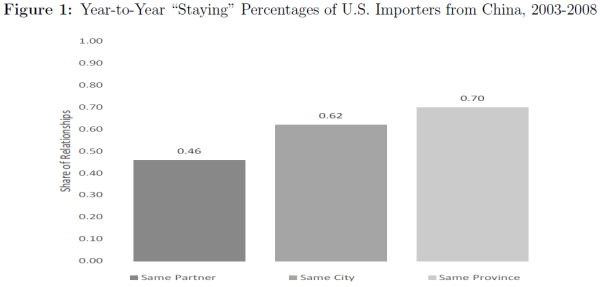
There is an interesting new Federal Reserve paper by Ryan Monarch that looks at some very detailed data on the relationships between US companies and their Chinese suppliers. The main finding is what he calls the inertia in these relationships: US importers tend to be reluctant to change Chinese suppliers, even to get a lower price. And when they do change suppliers, they often go to one that is located not very far from the old one. Here’s the key graphic and the author’s summary:

monarch-importers-fig1

Two facts are clear from Figure 1. First, there is a significant share of U.S. importers who maintain the same supplier over time. Even though the number of potential exporting choices is increasing over this time period, the share of importers using the same supplier year-to-year is 45.9%. As a benchmark, given that there are an average of 30 Chinese exporters to the U.S. per HS10 product in the data, if importers were choosing their partners randomly each year, the probability of staying would be 1/30, or 3%. Thus path dependence is far higher than would be expected if importers were choosing their supplier randomly. Secondly, among those firms who do choose to switch, approximately one-third of all importers remain in the same city as their original supplier. Using a similar benchmark as above, random exporter selection would imply a 12-13% chance of staying in the same city. Thus there is strong inertia keeping firms in their original city, even if they choose not to use the same supplier as before.

Much of the rest of the paper is about how making it easier for US companies to find trusted new suppliers could lower import prices. I’m more interested in a different angle: what this importer inertia means for the Chinese suppliers and for regional development within China.

Chinese exporters are clustered in the coastal provinces, and for years people have been talking about how rising labor costs in those provinces will push manufacturing inland. The government has embraced this putative trend as a development strategy, building up infrastructure in the inland provinces to lower transport costs and actively encouraging relocation (see for instance this good Reuters piece on the drive to develop textile manufacturing in Xinjiang). Yet despite conventional wisdom and government policy, the inland provinces’ share of Chinese exports is only marginally higher than it was a decade ago.

coast-vs-inland-export-share

Inertia helps explain why: existing trade relationships, concentrated in the coastal provinces, change only slowly, and when they do change the geographic shift is likely to be close. The need to maintain customer relationships is thus likely another reason for why manufacturers in the coastal provinces are not in fact so terribly eager to relocate inland. Here is a good observation from a recent Bloomberg article on Guangdong:

By moving elsewhere in China, factories may be able to trim wage bills or gain access to cheaper land, but they lose the concentration of suppliers, logistics and services that Guangdong has built up over 30 years. Gao Dapeng, CEO of Desay SV Automotive Co., which makes car navigation systems in Huizhou, said the overall cost saving of moving to an inland province like Chongqing is only about 10 percent, and it would mean the plant would be hundreds of miles from its suppliers. He said the company is not sure if the relocation is worth that.

It seems like the network effects and economies of scale and scope that China’s coastal provinces have developed are fairly powerful advantages, against which the cheaper labor and cheaper land in inland provinces are not proving as attractive as expected. Or to put it a different way, the cost of switching suppliers remains high, despite policies aimed at reducing it. The same issue could be affecting the lower-wage Asian economies who have been trying to grab export market share from China–which they have, but not as much as some economists expected, as Mark Magnier reports in the WSJ.

Saving labor isn’t everything: charts on capital in China

The excellent Scholar’s Stage blog reminded me to go through the Asian Productivity Organization’s latest  APO Productivity Databook, a feast of growth accounting data that has been sitting in my to-read pile for a while now. While I also like the consumption chart that Greer chose, my own favorite chart from the report is below; it’s pretty striking.

APO-labor-capital-price

While it’s possible there are some data problems in their estimation (that’s a pretty steep hockey stick), the direction of the trend is quite plausible. There is plenty of anecdotal evidence that the incentive to substitute capital for labor in China has been quite strong recently. And the government is not shy about using subsidies and other industrial policy to push things even further in that direction. Here is a recent piece from the FT:

Across the manufacturing belt that hugs China’s southern coastline, thousands of factories like Chen’s are turning to automation in a government-backed, robot-driven industrial revolution the likes of which the world has never seen. Since 2013, China has bought more industrial robots each year than any other country, including high-tech manufacturing giants such as Germany, Japan and South Korea. By the end of this year, China will overtake Japan to be the world’s biggest operator of industrial robots, according to the International Federation of Robotics (IFR), an industry lobby group. The pace of disruption in China is “unique in the history of robots,” says Gudrun Litzenberger, general secretary of the IFR.

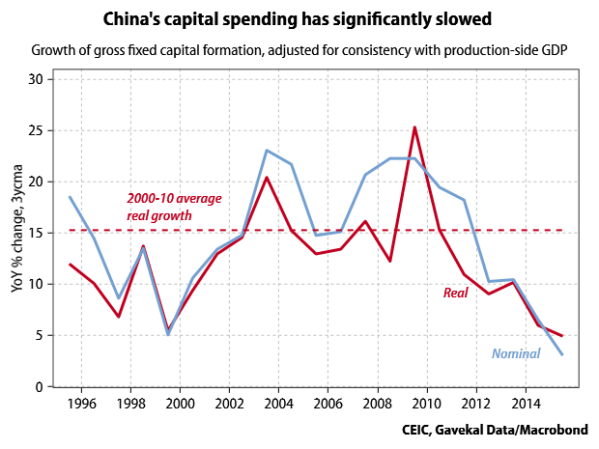
Yet over the exact period during which it became much more compelling for companies to invest in capital rather than labor, overall investment spending in China nonetheless slowed substantially. The chart below is my estimate of real growth in capital formation in the national accounts (a better if less timely indicator than the monthly fixed-asset investment numbers). Gross investment growth was about 5% in 2015, against an average of 15% over the previous decade.

capex-slowdown

What’s going on here? How can investment growth be so weak when the incentive to substitute capital for labor is so strong? As for almost all macro questions about China, housing is a big part of the answer (a theme I have hammered on before; see this rant and this more sober post). Residential construction drove a big chunk of that 15% annual growth in the past, but housing now looks like it has moved off the steep part of the S-curve and on to the flatter part. With residential construction stalling out, it’s hard for aggregate investment to grow very fast. It will take a while for robots to compensate for that.

What Xi Jinping really said about Deng Xiaoping and Mao Zedong

It’s been hard to escape the Xi-is-the-new-Mao meme of late, especially with the anniversary of the Cultural Revolution offering an occasion for historical reflection. Andy Browne’s piece in the WSJ is one of the better overviews of the question, noting high up the many important ways in which Xi is not the new Mao; Andrew Nathan’s article in the New York Review of Books is also very much worth reading. Both authors point out an important statement by Xi on the legacies of Mao Zedong and Deng Xiaoping; here is Browne, whose shocked reaction was probably shared by many:

He has declared that it is just as unacceptable to negate Mao’s 30 years in power as it is to speak critically of the 30 years that followed under Deng. He has set side-by-side, on equal footing, a period marked by spasms of mass killing and destruction and an overwhelmingly peaceful era that saw the greatest economic progress in human history.

This naturally piqued my curiosity, so I looked up the original remarks by Xi, which he made on January 5, 2013 in a speech entitled “Some Questions on Maintaining and Developing Socialism with Chinese Characteristics.” The speech is indeed very interesting for how Xi positions himself relative to the legacies of Deng and Mao. There is an official summary from Xinhua which covers the main points, including the statement that Browne and Nathan focus on: “we cannot use the historical period after reform and opening to deny the historical period before reform and opening, nor can we use the historical period before reform and opening to deny the historical period after reform and opening” (不能用改革开放后的历史时期否定改革开放前的历史时期,也不能用改革开放前的历史时期否定改革开放后的历史时期). But I also dug up the full text of the speech, which though not online is in an official book of Party documents (十八大以来重要文献选编), and this has more context and some very direct language, which makes it easier to understand what Xi is getting at. Here is my translation of the most relevant section of the speech:

For our Party leading the people in building socialism, there are two historical periods: before “reform and opening” and after “reform and opening.” These are two interrelated periods that also have major differences, but the essence of both periods is that our Party was leading the people in the exploration and practice of building socialism. “Socialism with Chinese characteristics” was created in the new historical period of “reform and opening,” but it was created on the basis of New China having already established the basic socialist system and carried out more than twenty years of work. A correct understanding of this problem requires grasping three points.

First, if our Party had not taken the decision in 1978 to carry out “reform and opening,” and to unswervingly push forward “reform and opening,” socialist China would not be in the good situation it is today–it is even possible it could have faced a serious crisis like the Soviet Union and Eastern Europe. At the same time, if in 1949 New China had not been established in a socialist revolution, and accumulated important ideas, materials and institutional conditions, gaining both positive and negative experiences, it would have been very difficult for reform and opening to proceed smoothly.

Second, although the ideological direction, policies and practice of building socialism in these two historical periods were very different, these two periods are not separate from each other, and are not at all fundamentally opposed. Our Party has in the process of building socialism proposed many correct positions, but at the time they were not properly implemented; they were only fully implemented only after “reform and opening,” and we will continue to adhere to them and develop them in the future. Marx said long ago: “Men make their own history, but they do not make it as they please; they do not make it under self-selected circumstances, but under circumstances existing already, given and transmitted from the past.”

Third, there must be a correct evaluation of the historical period before “reform and opening.” We cannot use the historical period after “reform and opening” to deny the historical period before “reform and opening,” nor can we use the historical period before “reform and opening” to deny the historical period after “reform and opening.” The practice and exploration of socialism before “reform and opening” built up the conditions for the practice and exploration of socialism after “reform and opening;” the practice and exploration of socialism after “reform and opening” is to maintain, reform and develop the previous period. …

The reason I emphasize this question is because this is a major political issue that, if not handled properly, will have serious political consequences. The ancients said: “To destroy the people of a country, first go at their history.” Hostile forces at home and abroad often write articles about the history of the Chinese revolution and the history of New China–they stop at nothing in attacking, vilifying and slandering, but their ultimate purpose is to confuse people and to incite the overthrow of the Chinese Communist Party and our country’s socialist system. Why did the Soviet Union disintegrate? Why the Soviet Communist Party fall from power? One important reason is that in the field of ideology the struggle was very intense–fully negating the history of the Soviet Union and the Communist Party, negating Lenin, negating Stalin, promoting historical nihilism and confused thinking. Party organizations at all levels hardly did anything, and the army was not under the leadership of the Party. In the end, the Soviet Communist Party, this great Party, was scattered, and the Soviet Union, this great socialist country, fell to pieces. This is a cautionary tale!

Comrade Deng Xiaoping pointed out:  “On no account can we discard the banner of Mao Zedong Thought. To do so would, in fact, be to negate the glorious history of our Party. On the whole, the Party’s history is glorious. Our Party has also made big mistakes in the course of its history, including some in the three decades since the founding of New China, not least, so gross a mistake as the ‘Cultural Revolution’. But after all, we did triumph in the revolution. It is since the birth of the People’s Republic that China’s status in the world has been so greatly enhanced. It is since the founding of the People’s Republic that our great country, with nearly a quarter of the world’s population, has stood up — and stood firm — in the community of nations.” He also stressed: “The appraisal of Comrade Mao Zedong and the exposition of Mao Zedong Thought relate not only to Comrade Mao personally but also to the entire history of our Party and our country. We must keep this overall judgement in mind.”

This is the vision and thinking of a great Marxist statesman. Think for a moment: if at that time we had fully negated Comrade Mao Zedong, could our Party still stand firm? Could our country’s socialist system stand firm? If it does not stand firm, then the result is chaos. Therefore, correctly handling the relationship between socialism before and after “reform and opening” is not just a historical issue, in fact it is mainly a political issue. I suggest that everyone take out the “Resolution on Certain Questions in the History of Our Party Since the Founding of the People’s Republic of China” and read it again.

I think it is not quite right to read this as Xi glorifying everything about Mao, and saying China made just as much progress during the Great Leap Forward as it did after 1978. What Xi is saying is that the legitimacy of the Communist Party China rests on the whole history of its rule, and that if the legitimacy of Party rule is questioned for one historical period, then it can be questioned for other historical periods. Deng felt the same way, and what Xi is doing in this speech is forcefully repeating Deng’s own evaluation of Mao. The 1981 resolution on Party history that Xi cites is best known for how it assigned primary blame for the Cultural Revolution to Mao personally. But the resolution’s overall assessment of Mao is rather balanced, and Deng himself insisted on this. The quotes from Deng that Xi mentions are remarks Deng made during the drafting of the resolution, and some other Deng comments from the same source make the point very clear:

Comrade Mao Zedong was not an isolated individual, he was the leader of our Party until the moment of his death. When we write about his mistakes, we should not exaggerate, for otherwise we shall be discrediting Comrade Mao Zedong, and this would mean discrediting our Party and state. … What we have achieved cannot be separated from the leadership of the Chinese Communist Party and Comrade Mao Zedong. It is precisely this point that many of our young people don’t sufficiently appreciate.

The parallel that both Deng and Xi very clearly had in mind is the Soviet Union, and the backlash against Stalin that began with Khrushchev’s famous “secret speech” acknowledging Stalin’s crimes. Chinese leaders clearly view the “negation” of Stalin that Khrushchev began as fatally undermining the legitimacy of the Soviet Party, and leading inevitably to its collapse in subsequent decades. And they are not alone in this judgment. Here is the historian Orlando Figes on the impact of Khrushchev’s 1956 speech, from his excellent Revolutionary Russia, 1891-1991: A History:

The speech changed everything. It was the moment when the Party lost authority, unity and self-belief. It was the beginning of the end. The Soviet system never really recovered from the crisis of confidence created by the speech. How could people continue to believe in a revolution that had killed so many in the people’s name? In leaders who had told so many lies? For the first time the Party was admitting that it had been wrong— not wrong in a minor way but catastrophically. How could it rebuild its credibility?

Exactly. I do not see much daylight between Xi Jinping and Deng Xiaoping in terms of their positions on Mao Zedong and Communist Party history. Xi is very much following in Deng’s footsteps here, though he may be departing from Deng’s legacy in other ways.

The salt monopoly and the purpose of state-owned enterprises

For those interested in the intersection of obscure Chinese industries, regulatory politics and ancient history (you know who you are), the top story of the week is without question the long-awaited announcement of some reforms to liberalize China’s salt monopoly (here’s a news story and the original Chinese document).

China’s salt monopoly is one of the best examples of a more general principle: state-owned enterprises are often used as a substitute for regulation. Where institutions are weak and compliance difficult to enforce, as they are in most developing countries, state-owned enterprises can be a reasonably effective way to accomplish policy goals. Rather than create a whole complex of rules and try to convince people to follow them, the government can just tell an SOE what to do. The policy goal the salt monopoly accomplished for China was ensuring that salt was iodized, an important public health measure. Although news stories love to emphasize the salt monopoly’s ancient roots, in fact its latest iteration is only a couple of decades old, and was the result of a conscious decision to revive the monopoly to achieve this specific goal.

china-national-salt

My favorite account of this history is a classic WSJ piece by Leslie Chang from June 2001. I’m quoting from the piece at length because I cannot find it on the WSJ website, probably because it is so old. As she makes clear, the monopoly was able to achieve the public health goal, though this did not come without costs and distortions. And making the transition away from the SOE model to a more sustainable system is quite tricky, as the long debate over reforming the salt industry shows.

LIZI, China — Pei Nuwa touches her neck where she has a swelling the size of a small melon. She remembers a time when almost every extended family in this farming village had someone with a goiter like hers.

“The ones who had it have all died, and now the young people and the children don’t have this,” says Ms. Pei, a 67-year-old who has tiny eyes and skin wrinkled like parchment.

Ms. Pei doesn’t know why goiters became rare, but the answer is sitting in a clear plastic bag on a grimy counter in her single-room house. It is iodized salt. Minute amounts of iodine consumed regularly — the equivalent of just a teaspoonful over a lifetime — can prevent goiter and other thyroid-related disorders.

How this bag of salt arrived in this farming hamlet in the northwestern province of Gansu represents a triumph of public health. Five years ago [i.e., 1996], only a third of the Chinese population, then 1.2 billion, consumed iodized salt. The lack of iodine in the diet caused a range of health problems, from goiters to the severe mental retardation known as cretinism to lower IQs, among a generation living in rural areas. Today [i.e., 2001], more than 90% of Chinese eat iodized salt.

But this success also underscores the halfway nature of economic reform and decentralization in China. While Beijing has quietly shifted the responsibility and funding for key social services such as education and health care to provincial governments, there are no self-regulating mechanisms or built-in incentives that force officials to carry out their duties. …

To ensure that millions got iodized salt, Beijing officials reinstated a national salt monopoly that had existed in some form for more than 2,000 years, until private operators emerged about a decade ago. The state fixed salt prices to restore the industry to profitability and wrote laws that criminalized the sale of private salt. Hundreds of private salt producers were closed, and the remaining operators were consolidated into giants that formed the monopoly. The state also put together a 400,000-person bureaucracy to run the operation, including a 25,000-strong “Salt Police” with officers in gold-braided uniforms.

The original salt monopoly was set up in 117 B.C. during the Han dynasty. For nearly two millennia, the imperial family controlled the lucrative monopoly, one of the empire’s biggest sources of revenue. Salt financed campaigns of expansion, built the fabulous villas of the merchants of Yangzhou and inspired one of the most famous policy debates of the imperial era. In 81 B.C., supporters of a monopoly in iron and salt argued that it would serve the public good, while opponents said it would stifle individual enterprise.

The monopoly’s current revival stemmed from public-health concerns. By the 1980s, Chinese officials had made headway in fighting iodine deficiency by providing iodine injections in villages with a high incidence of goiter. But the same years brought economic liberalization and an explosion of private enterprise, including manufacturers flooding the market with usually cheaper noniodized salt. By the early 1990s, this unregulated salt trade, combined with little official oversight, was erasing the public-health gains of the command-economy days. In Gansu, consumption of iodized salt dropped to just over 60% in 1991 from 90% two years earlier. …

The network of control and the costs have a downside: They heighten the appeal of smuggling illegally produced salt, which can be sold more cheaply and without paying taxes. In a case two years ago, a group of salt smugglers from neighboring Ningxia beat up five salt policemen who caught them trying to ship three tons of rock salt into the province. The ringleader is still at large. Another case involved a high-speed car chase, the confiscation of six tons of unlicensed salt, fines and jail time for the perpetrators. In faraway Hebei, several officials were recently brought in for round-the-clock questioning in connection with widespread sales of private salt. …

Health experts say that system’s functioning depends on whether official attention — and the monopoly — can be sustained. Some are troubled by recent state media reports linking monopoly-affiliated companies with smuggling, which could feed arguments that the monopoly should be dismantled. Its supporters say the market should be opened to competition, but only after good production methods and habits are ingrained. “China needs to maintain this monopoly for at least 10 more years,” says Ray Yip, a Unicef adviser in Beijing. “After that, it will be safe.”

A bit more than 10 years, it turns out. This seems like good news at the margin, though it certainly does not look like China is now ready to let a regulatory apparatus replace the policy functions of its SOEs across the rest of the economy. In many strategic areas, like energy and telecommunications, regulation-by-SOE seems to be as strong as ever.

The next book I want to read about the Chinese internet

Like most people I’ve talked to, I enjoyed reading Duncan Clark’s Alibaba: The House That Jack Ma Built. The book starts off with a bit too much entrepreneur hero worship, but quickly finds its rhythm and ends up being a very engaging tale of the Chinese internet’s early days. I lived through some of the events Duncan relates (as a technology reporter for Dow Jones in 2001-2003), and enjoyed being reminded of some now-forgotten figures of those bubbly times. The book is easy to recommend for those who don’t know the story of Alibaba’s rise (i.e. most people outside China), and for getting a sense of the wacky world of the Chinese internet.
Still, most of the action of the book takes place before 2012, and I think another book will be needed to properly tell the story of the more recent development of the Chinese internet. Alibaba’s story has gotten more complicated since 2012, and it is becoming less easy to fit into easily digestible archetypes about heroic entrepreneurs. Duncan acknowledges this in his closing paragraphs:

Jack’s fame stems from the story of how a Chinese company somehow got the better of Silicon Valley, an East beats West tale worthy of a Jin Yong novel. His continued success, though, is becoming a story of South versus North— of a company with roots in the entrepreneurial heartland of southern China testing the limits imposed by the country’s political masters in Beijing.

Since Xi Jinping became president of China in 2012, high-profile entrepreneurs have found themselves increasingly subject to scrutiny and sanction from the Chinese government. One high-profile real estate entrepreneur, Vantone Holdings’s Feng Lun, even blogged— then later deleted— the following message: “A private tycoon once said, ‘In the eyes of a government official, we are nothing but cockroaches. If he wants to kill you, he kills you. If he wants to let you live, he lets you live.’” …

Jack is already the standard-bearer for China’s consumer and entrepreneurial revolution. Now he is advancing on new fronts, such as finance and the media, that have long been dominated by the state.

Forged in the entrepreneurial crucible of Zhejiang and fueled by his faith in the transformative power of the Internet, Jack is the ultimate pragmatist. By demonstrating the power of technology to assist a government confronted with the rising expectations of its people for a better life— from the environment, education, and health care to continued access to economic opportunity— Jack aims to create the space for him to fulfill even greater ambitions.

So what should the next book about the Chinese internet cover? In part it must necessarily be less about the startup phase and more about strategic positioning of the three giants of the Chinese internet–Baidu, Alibaba, Tencent–in the same way that writing about the English-language internet has to be about the strategic positioning of Google, Amazon, Apple, Facebook, etc (out of the Chinese trio, Alibaba has the more charismatic leader, but Tencent is just as interesting a company, and deserves a book of its own).

And in part it has to tell the story of the complicated relationship between the government and the internet companies, which, it seems safe to say, is not like what we see anywhere else. Alibaba’s Alipay online payment service (run by a separate company called Ant Financial) is on its way to becoming a de-facto state-owned enterprise, as major state institutions have put lots of money in its last two rounds of venture capital fundraising. Part of Alibaba is in turn investing in state-owned enterprises as it tries to show how its technology can be of service to the state. Jack Ma and the heads of the other are now regularly called to appear at government meetings on internet policy, which tend to emphasize security issues and state control. The story behind all these events will certainly not be easy to dig out, since no one involved has much incentive to be forthcoming. But that’s the story that needs to be told.

Why is China not a “transition economy”?

When I first started working on the Chinese economy, most of the research I read compared China to other Asian economies, particularly the “miracle” economies of Japan, South Korea and Taiwan. Grouping these economies together, despite their differences, is fairly easily justified by their exceptionally high growth performance over a long period of time.

But if we think back to the late 1970s and early 1980s, before China had that growth track record, it was not at all obvious that it belonged in the club. South Korea, Japan and the US were allied with the US, and China was, despite its feud with the Soviet Union, still very much part of the international socialist community. The term “transition economies” now conventionally refers only to Eastern Europe and former Soviet Union, and so leaves out by the far biggest example of an economy in transition away from central planning. So how exactly did China end up in the Asian growth miracle club, rather than the transition economy club? Some recent reading has helped me to understand this history better.

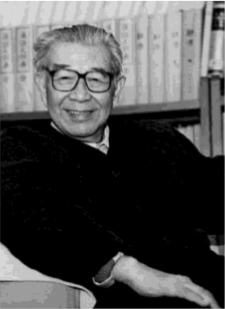
Yu Guangyuan

Yu Guangyuan

The examples of other socialist countries were in fact of great interest in China for a time. In the early years of the reform era, from roughly 1978 to 1985, there was a strong emphasis on establishing that economic reforms were ideologically consistent with socialism. One of the key figures in this effort was Yu Guangyuan, a Marxist theoretician/economist associated with Deng Xiaoping (he passed away in 2013). Yu presented China as one of several socialist countries in the world, all of whom had borrowed the Stalinist system from the USSR, all of whom had encountered problems in applying it to their own conditions, and all of whom were all trying to reform the socialist model. Hungary had had its “Goulash Communism” and Yugoslavia its “workers’ self-management” for years already. This rhetorical strategy emphasized how China was part of the global socialist movement, and how it risked falling behind even smaller socialist countries who were reforming.

Here is Yu on how the example of the Eastern European countries played an important role in early thinking about economic reform, from the preface to a recent anthology of his works:

After World War II, the Communist League of Yugoslavia seized power and proclaimed Yugoslavia a socialist country. Later, the League had differences with Joseph Stalin and was expelled from the socialist camp. Accordingly, the Communist Party of China also refused to recognize Yugoslavia as a socialist country and suspended its relations with the Communist League of Yugoslavia. In the 1950s and 1960s when the Chinese and Soviet parties were engaged in a polemic, we still regarded Yugoslavia as a negative example.

In 1978, a delegation of the Party Central Committee visited Yugoslavia. The delegation was headed by Li Yimang, with me and Qiao Shi being his deputies. Our mission was to conduct field inspections and contacts and then submit a report to the Party Central Committee on the basic conditions of that country and on whether interparty relations should be resumed. Before that, I had contacted some economists from the Soviet Union and Eastern European countries for their views on reform but never conducted any field inspection.

Yugoslavia’s practice left a deep impression on us. From this inspection, we drew a conclusion that socialist countries could have diverse economic models. The delegation submitted a report to the Party Central Committee after the visit. The report held that Stalin tried to impose the Soviet economic system and model on Yugoslavia but Joseph Tito rejected them, which led to a deterioration of the Soviet-Yugolsav relations, and that Yugoslavia was a socialist country and the Communist League of Yugoslavia was a party upholding socialism. Based on this report, the Party Central Committee decided to recognize Yugoslavia as a socialist country and to resume its relations with the Communist League of Yugoslavia. This meant that the Party Central Committee changed its views on the diversity of socialist models…[which] represented an ideological shake-off of the party from the shackles of the Soviet model. …Nevertheless, many people indicated they could not accept the Yugoslav ‘autonomy’ system. In fact, our reform later did not follow that road.

…At the end of 1979, the Party Central Committee dispatched me to head a delegation to visit Hungary for a reform inspection. This inspection deepened our understanding that socialism could have diverse models, and enabled us to have more understanding of many concrete issues in the course of reform.

Yu also sponsored much of the early wave of research into the ideas of Mikhail Bukharin, the theorist behind the mixed-economy model adopted in Russia in the 1920s under the label of the “New Economic Policy” (see this previous post for more). But it is nonetheless the case that once the reform drive got beyond broad political conceptions and into practicalities, China took relatively little from the examples of Hungary, Yugoslavia, Poland and the USSR itself. Rather than restricting itself to models drawn from the international socialist brotherhood, China started looking to countries that were politically more distant but geographically closer.

One of the turning points in this shift is generally held to be the Moganshan conference of August 1982, organized with assistance from the World Bank. Edwin Lim, an early World Bank official in China, recalled the result in a 2005 account (source here):

Other than Adrian Wood and myself, all the other international participants were East European practitioners in Soviet-type reforms, particularly price reforms. Two major conclusions came out of this conference. First was that price reforms of the type attempted in the Soviet Union and Eastern Europe—more price adjustments than fundamental reforms of price-setting mechanisms—were not seen as true reforms. China thus began to look beyond the Soviet Union and Eastern Europe for its reform strategy. By the end of the decade, China was far ahead of the Soviet Union in moving toward a market economy. Second was the consensus among both international and Chinese participants that China simply did not have the margin of error to consider rapid reforms or shock therapy.

Another famous meeting of economists in 1985 helped cement the shift. Again from Lim:

Three years later, following the publication of the second Bank economic report, the question the reformists faced was how to manage a market economy and, particularly, the transition to it from a command economy. To address that question, we organized what has become known in China as the Bashan Boat Conference. The premier attached a great deal of importance to this conference and wanted many of the senior economic policymakers to participate. To ensure their complete attention, the conference was held on a boat (the Bashan) that floated slowly down the Yangtze River through the Three Gorges for seven days. Spouses of the international participants were invited, and each day the boat would dock to allow them to go sightseeing while the conference continued.

The foreign participants to this conference, in addition to Adrian Wood and myself, included Jim Tobin, the Nobel Laureate from Yale, who explained the basic principles of macro-management in a market economy; Sir Alec Cairncross of Oxford, who talked about management of a market economy, particularly the postwar experience of the United Kingdom in dismantling the wartime price control and rationing systems; Otmar Eminger, former president of the Bundesbank, who talked about the role of an independent central bank in macro-management as well as the German experience in dismantling the wartime control economy; Michel Albert, former head of the French planning commission, who talked about indicative planning in a market economy; and Janos Kornai of Hungary, who talked about behavior of a planned economy that may persist in a reformed scenario.

The decisive intervention may have been that of Janos Kornai, judging from how Ezra Vogel summarizes the result:

By the end of the conference, Chinese participants, already doubtful about the appropriateness of Eastern European models for China, were thoroughly convinced that the structural problems in socialist economies—such as the “soft budget constraints” that permitted firms to survive even with low performance and cycles of overproduction—were systemic problems in planning systems. This marked the end of the use of Eastern European reform models and greater acceptance of the role of markets.

If the fellow travelers in Eastern Europe did not have the answers, who did? There were some strong contenders not far away. Here is Vogel again (both quotes are from his Deng Xiaoping and the Transformation of China):

In the early 1980s, while Chinese leaders were exploring the experiences of Eastern Europe and making use of World Bank advisers, they were also studying Japanese experiences. Although Japan was a member of World Bank, Japanese efforts to work with China were generally done bilaterally and were conducted on a larger scale than China’s relations with any other country. Although China was also interested in the Taiwan and South Korea experiences in modernization, mainland China did not have direct relations with them until the late 1980s so their experiences in the early 1980s did not play a major role in shaping Chinese views. …

In the 1980s, Japanese gave more aid and built more industrial plants in China than did citizens from any other country. The Japanese factories built in China set standards by which China measured its progress in achieving efficient industrial production. For the study of modern science, the Chinese looked overwhelmingly to the United States. But more new machinery to build assembly lines in Chinese factories came from Japan than from anywhere else. Prime Minister Ikeda’s income-doubling plan for the 1960s became the inspiration for Deng’s goal of quadrupling the gross value of industrial and agricultural output in the 1980s and 1990s. And from 1974 on, Deng met more delegations from Japan than from any other nation.

By 1985, the idea that China would join the ranks of fast-growing East Asian countries was no longer ludicrous, though not exactly widely accepted. The Harvard economist Dwight Perkins was one of the first to posit that China would follow the high-growth East Asian path and not the less exciting example of the European transition economies. The following passage is from his 1986 book China: Asia’s Next Economic Giant? (note the question mark! a sign of the times):

Reform in the Chinese case means moving closer to at least certain key features of the economic strategy and economic system found elsewhere in East Asia. In concrete terms that means retaining an emphasis on an expanding role for foreign trade, household-based agriculture operating in response to market forces, and a substantially enhanced role for the market in industry subject to continued state guidance but not direct control. … Hungary and Yugoslavia, for example, have achieved reforms in their economic systems that go well beyond those currently in force in China in many respects, but no one contemplates 6 to 8 percent growth rates in GNP in those countries over the next decade or two. … Japan, South Korea, Taiwan and other others have demonstrated that GNP growth rates of 8 percent a year and even higher are feasible in the post-World War II era. In terms of per capita income, level of capital formation, and degree of income inequality China has characteristics similar to those of its East Asian neighbors when they entered into sustained periods of rapid growth.

Ultimately, the reason why China favored Asian over East European models was most likely that those models were more relevant to its conditions on the ground. Despite the political affinity with other socialist states in Europe, China’s economic structure at the start of the reform era was quite different, and more similar to the other Asian economies at the beginning of their growth take-off processes. The classic statement of this argument is a 1994 article by Jeffrey Sachs and Wing Thye Woo, “Structural Factors in the Economic Reforms of China, Eastern Europe, and the Former Soviet Union,” (JSTOR link):

China began reform as a peasant agricultural society, EEFSU as urban and overindustrialized. China faced the classic problem of normal economic development, the transfer of workers from low-productivity agriculture to higher-productivity industry. In EEFSU, the problem is structural adjustment: cutting employment in inefficient and subsidized industry to allow new jobs in efficient industry and services. …Crucially, China’s agricultural workers had nothing to lose, indeed much to gain, from the dismantling of socialism, while much of the industrial and even agricultural work force in EEFSU has plausible fears that dismantling the old system could leave them worse off, at least in the short run.

These days, the differences between China and the other Asian “miracle” growth stories are becoming more apparent–the most important being the continued large role of state-owned enterprises in its economy (the best summary of those similarities and differences is the last chapter of Joe Studwell’s How Asia Works). I wonder if, in this context, comparisons of China to the European “transition economies” will soon start to seem more relevant.

A Singaporean perspective on American and Chinese nationalism

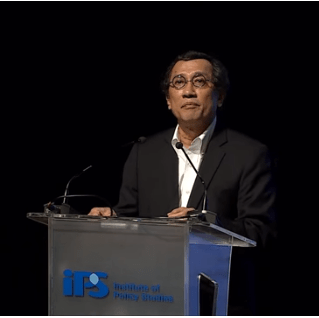
I enjoyed this talk from long-time Singaporean diplomat Bilahari Kausikan for its relatively objective view of the peculiarities of both the US and China, and how it roots the difficulties the two countries have in their respective sense of identity. I’ve pulled out some of the key passages below:

The essential source of American and Chinese nationalism is a sense of exceptionalism; the US and China both consider themselves exceptional countries. But the conclusions they draw are different.

America is an inclusive culture that wants everyone to become like it and believes that the world would be a better place if this were so. … China’s rise has been psychologically unsettling to many in the West because in China, capitalism flourishes without democracy. This is regarded as unnatural and illegitimate because it punctures the western myth of the universality of its political values and of the inevitability of the development of political forms similar to its own. Unlike the former Soviet Union, China cannot be dismissed as an economic failure and thus challenges in a very fundamental way the western sense of self which assumes its political and moral superiority as a key element. …

I think the US knows that preservation of CCP rule is the most vital of Chinese core interests and is reluctant to endorse this explicitly. The US deals with the CCP pragmatically; it has no choice. But to invest CCP rule with legitimacy requires a redefinition of American values, including a de facto abandonment of the idea of universality that is apparently too painful to bear. …

China has an exclusive culture that rejects the notion that anyone could become like China as impossibly pretentious. To China, the best others can do is humbly acknowledge China’s superiority and the sooner we do so the better for everyone.

This is a very ancient and deeply ingrained feature of China’s approach to international relations. Throughout its history, China took great pains to preserve the forms of its centrality, at least in its own mind, even when the facts were otherwise. It never lost its sense of superiority even when powerless before the West and Japan. Now that China has re-emerged as a major power, this sense of superiority has become the underlying cause of the difficulties in China’s relations with many countries. The attitude that China is entitled to have its superiority acknowledged and that failure to do so can only be due to recalcitrance or ill-intention, is why I think China will always suffer a deficit in ‘soft power’ and evoke resentment. …

One of the basic functions of diplomacy is to see the world through your competitors’ eyes in order to understand the frame of reference he is operating within, and thereafter one of the basic purposes of statecraft to use what means are available and appropriate to manoeuvre him into your preferred frame of reference or if this is not possible, to operate within the same frame in order to achieve your purposes. A stable modus vivendi can only be reached if all parties are operating within the same frame of reference. Are the US and China operating within the same frame of reference? I think they do substantially but not entirely and therefrom arises the complexity and risks of the relationship. Can they be brought within a common framework? That is not yet clear. …

If a new modus vivendi requires the US to acknowledge that different political systems can have their own legitimacy, it requires China to resist the temptations of triumphalist nationalism.

There’s a lot more, but I had to condense more than usual to keep this post from getting too long; a transcript and video of the full talk is at the link.

bilahari-kausikan