Somehow I’m not surprised that Chinese housing subsidies also mainly benefit the better-off

By now a fair amount of research has established that the U.S. tax deduction for mortgage interest, though often called a middle-class tax break, mainly benefits wealthier people. China differs from the U.S. in that it tends to deliver its subsidies less through the tax system and more through elaborate bureaucracies.

But some interesting new research indicates that China’s main main housing subsidy–a kind of “housing savings account” with an employer match–is also very unequal in its impact. These are what seem to be the key findings of a report on the housing fund by the China Institute for Income Distribution (Caixin has a summary of the report in English and Chinese; unfortunately I can’t find the full text of the report online):

  • About 124 million workers were paying into the housing fund in 2015, or approximately 40% of the urban workforce. Which means that roughly 60% of the urban workforce does not benefit from the subsidies available through the fund.
  • Coverage of the fund is also highly skewed to public-sector workers. About 90% of workers in public institutions (schools, hospitals) are covered by the fund, as are 70% of workers in state-owned enterprises (who generally have above-average incomes). But only 50% of workers at foreign-invested enterprises are covered, and only 10% at domestic private firms, probably because fewer private employers want to pay for the benefit.
  • The number of workers who actually use the money in the fund is relatively small, probably because the application process is difficult and takes several months. The report estimates that only about 30% of the workers who have ever paid into the fund have actually withdrawn money from it.
  • Use of the fund is also highly skewed by income. The report estimates that on an annual basis, 0.9% of workers in the bottom 20% of urban incomes withdraw from the fund, while 4.7% of workers in the top 20% of urban incomes do so.

Perhaps, despite the many other major differences between China and the U.S., the political economy of “middle-class” housing subsidies is ultimately pretty similar.

The caveat to this is that the housing fund is far from the only form of housing subsidy out there; since 2010 China has engaged in a massive government-sponsored effort to build low-income urban housing. But that program has also been dogged by suspicion that its cheap apartments go to people with connections rather than the deserving poor.


New industry clusters are springing up in the same old places

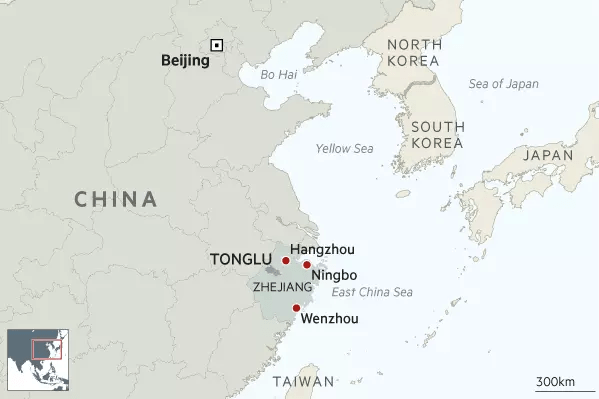
You have to love the fact that all four of China’s main private-sector express-delivery companies–the guys shuttling all those Taobao packages around the country–are from the same tiny place. Gabriel Wildau at the Financial Times recently did a nice piece on the phenomenon, and Bloomberg has also picked up on it. It’s one of the most striking examples of the “cluster” phenomenon you can find.

tonglu

But here’s the thing: the Tonglu cluster, for one of the biggest new-economy growth sectors, is right next to a bunch of other, older clusters. Zhejiang is famous for its specialized light-industry concentrations; a very good World Bank history of these clusters tells the stories of Haining for warp-knit cloth, Qiaotou for buttons, Yiwu for zippers, Yongkang for metalware; Wenzhou for cigarette lighters is another well-known one. Years ago I visited Zhili, a children’s clothing cluster, to write a piece for the WSJ.

At the time it was common to worry about the future of these places because of rising labor costs. But exports from China and Zhejiang have in fact held up better than many expected. And the Tonglu example suggests that Zhejiang’s real competitive advantage is not low labor costs, but a highly flexible and entrepreneurial economy that can adapt quickly to changing trends. This structure has deep historical roots: Zhejiang (along with Jiangsu) has had one of the least state-dominated economies of any Chinese province for as long as statistics have been kept.

If the coastal provinces are transitioning successfully from export-oriented industry to high technology and services, then patterns of regional advantage are being entrenched rather than overturned by structural changes in the economy. Enrico Moretti, in his The New Geography of Jobs, argued that “the knowledge economy has an inherent tendency toward geographical agglomeration.” China certainly seems to demonstrate the point: Just six provinces–Beijing, Shanghai, Guangdong, Jiangsu, Zhejiang, and Shandong–account for about 60% of national R&D spending. The same six provinces account for about 40% of national investment in information technology and software. The clusters of the future seem likely to appear not very far from the clusters of the past.


What is the real driver of the Russian revanche?

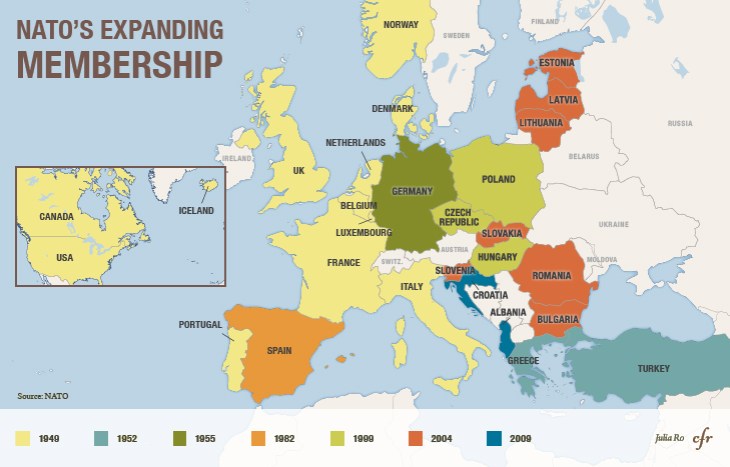
The deterioration of US-Russia relations, and Russia’s shift to increasingly repressive domestic politics and an increasingly aggressive external stance, is one of the most important shifts in global politics over the past couple of decades. One of the standard explanations for this worrying trend is that it is Russia’s natural reaction to what it could only perceive as aggression by the West: the expansion of NATO up to Russian borders. Indeed, just such an outcome was predicted by many Russia hands when NATO expansion was first proposed. Here is George F. Kennan’s famous 1997 op-ed in the New York Times: 

And perhaps it is not too late to advance a view that, I believe, is not only mine alone but is shared by a number of others with extensive and in most instances more recent experience in Russian matters. The view, bluntly stated, is that expanding NATO would be the most fateful error of American policy in the entire post-cold-war era.

Such a decision may be expected to inflame the nationalistic, anti-Western and militaristic tendencies in Russian opinion; to have an adverse effect on the development of Russian democracy; to restore the atmosphere of the cold war to East-West relations, and to impel Russian foreign policy in directions decidedly not to our liking.

nato_map_final

The new “Russia Beyond Putin” issue of Daedalus (available on Kindle) has an interesting piece by Keith A. Darden, “Russian Revanche: External Threats & Regime Reactions,” which suggests a slightly different narrative. Rather than NATO expansion per se, he argues, it was NATO’s shift to a doctrine of external intervention that catalyzed Russia’s fears:

NATO expansion – which began in the mid-1990s – was not well received in Russia, but NATO expansion alone appears to have been insufficient to raise the specter of a threat to Russia’s territorial integrity. Russia’s security doctrine in 1997, which followed the invitation of Poland, Hungary, and the Czech Republic to join the NATO alliance, did not explicitly identify NATO or the United States in the list of threats Russia faced. Indeed, external military threats hardly merited mention.

This changed with Kosovo. The NATO bombing of Yugoslavia in 1999 shifted perceptions completely: it showed that the alliance could (and would) be used for offensive out-of-area operations to intervene in the internal affairs of a sovereign state without United Nations approval. Russian leaders immediately registered the potential threat. The link of external (U.S./NATO) military power with internal opposition (the Kosovo Liberation Army) to undermine a rival government came to be perceived as a new model of warfare and the “foundation of a unipolar world.”

In Russia’s October 1999 National Security Concept – the first following the Kosovo War – international influence in Russia’s internal politics was identified as a threat to national security. An expansion of the domestic control of the state was articulated as strategically necessary to prevent external actors from undermining Russia’s internal security. In a world of asymmetric Western power, the notion that a state’s internal opposition could be exploited by outside powers to undermine a regime created a perverse incentive for some regimes to circumscribe or eliminate the internal pluralism essential to democratic rule. …

The extra-constitutional ouster of Viktor Yanukovych’s government [in Ukraine] and the seizure of power by a pro-U.S., pro-NATO, and anti-Russian coalition clearly marked a sharp increase in the perception of threat in Moscow, triggering a full triad of balancing efforts (military, internal, and ideological). As a military response, Russia used its newly revamped special forces to quickly invade and annex Crimea and to sustain a separatist insurgency in eastern Ukraine. By May 2014, the Russian security doctrine identified color revolutions as a form of hybrid warfare used by the United States as the primary external threat.

If Russia’s anti-Western reaction is not a uniquely Russian phenomenon, but instead an instance of a more general trend, then this interpretation makes sense. Only Russia was threatened by the expansion of NATO. But many countries could reasonably feel threatened by the West’s new willingness to overthrow governments it dislikes.

Darden suggests that China has followed a similar trajectory for similar reasons. And indeed it is true that China’s government perceived the “color revolutions” of the early 2000s in much the same way as Russia did, as “organizational pro-Western proxies used by the U.S. to oust unfriendly leaders.” The broader conclusion is not very cheerful:

To place the Russian reaction in broader context it is useful to recall historian and diplomat E. H. Carr, who pointed to the relations of power that underlay normative commitments in international affairs. Writing in the 1930s, but looking back at the ideologies of predominant states, Carr noted that internationalism and universalism were ideologies of states that aspired to world leadership – to hegemony. Universal values suit the powerful, Carr thought, for they justify universal intervention and interference in the internal affairs of other states, something only the powerful are capable of. “Pleas for international solidarity and world union,” Carr wrote, “come from those dominant nations which may hope to exercise control over a unified world.”

Similarly, Carr noted that the ideological reaction of rising powers was a function of positions of relative weakness. “Countries which are struggling to force their way into the dominant group naturally tend to invoke nationalism against the internationalism of the controlling powers.” Universalism, whether liberal or communist, is the ideology of the dominant. The aspiring or declining powers mobilize nationalism and particularism.

In the antiliberalism of great powers like Russia and China, we see the paradoxical effect of the singularity of American power and dominance: a defensive inversion of dominant norms. For states strong enough to mount a challenge, and with a prior history of framing internal pluralism as a source of external threat, resistance to U.S. power will present as an antiliberalism that is likely to shape domestic institutions. It is depressing that the primary effect of a world dominated by liberal democratic states may not be the gradual extension of democracy and the normative assimilation of the world’s nondemocratic emerging powers, but it should not come as a surprise. The primary effect of muscular liberalism may be to generate an opposing reaction.

Ren Zhiqiang has an acerbic take on Xi Jinping’s urban planning

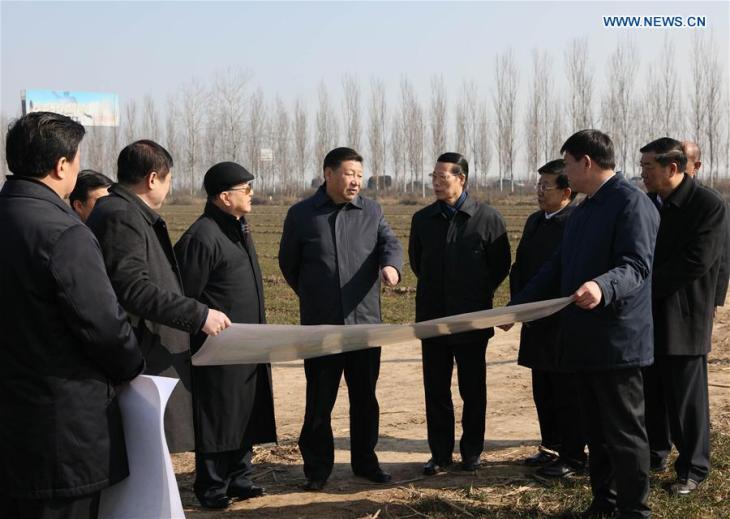
There’s been an extraordinary amount of hype about the government’s plan to build a new city southwest of Beijing; some are saying it could be China’s biggest public-works project ever. The plan for the Xiongan New Area was personally overseen by Xi Jinping himself, according to an official account, and it has been lauded as a qian nian da ji, or roughly a “great plan for the next millennium.”

136206714_14921344615981n

Xi Jinping inspects the Xiongan New Area

Xiongan is the latest development in the Beijing-Tianjin-Hebei integration plan, a pet project of Xi’s that aims to develop the regions around the capital. The official line is that the creation of the new city will ease Beijing’s pollution and congestion problems by allowing some less essential facilities and functions to be relocated out of the capital. But the enormous propaganda blitz has not permitted much detailed discussion of the specific benefits and costs of these initiatives.

So this seems like a good moment to air some critical views, which are not being permitted much space domestically. The piece below was published by the outspoken property tycoon Ren Zhiqiang in August 2015, before Ren was censured for his public criticism of Xi Jinping’s policies. The article has been repeatedly deleted from Chinese internet sites, though it can still be found by searching for its title. Since the Xiongan announcement, the piece has been getting forwarded around again, and its argument is still relevant.

Here is my somewhat abridged translation:

Once again a new wave of construction is being prepared, in the name of Beijing-Tianjin-Hebei integration and to support the development of the capital. It has really made everyone excited! But after reading these propaganda documents and summaries, I do not see there is anything that should make people happy.

China has shouted out the slogan of “urban-rural integration” before, but why was there no way to achieve such a goal? The root cause is that there was no way to break down the restrictions on free movement and migration in the hukou system. And this has produced a whole series of related problems.

In the planned economy era, population movements were restricted, and the people’s communes used the so-called “integration of government administration and economic management” to tie farmers to the land. After the reform of the household responsibility system and national identity cards, farmers could leave their land and go to the cities. But the hukou system did not allow them to change their identity as peasants. “Rural migrant workers” took the place of the working class. Social security, healthcare, education, housing, family–all are still linked to the land.

Whenever I see these slogans of “urban-rural integration” and “Beijing-Tianjin-Hebei integration” I think, if we cannot make human rights equal, and completely eliminate all vestiges of these differences [created by the hukou system], then how can we discuss integration? Can Hebei and Tianjin people equally share all the rights of Beijing hukou holders? Can they share Beijing’s benefits of education, health care, social security, employment and so on?

This so-called integration is nothing more than Beijing squeezing out the industries, businesses, and people that it doesn’t want, and arranging them in Hebei and Tianjin. In this way Beijing can still enjoy the goods and services they provide, but does not have to bear the burden they put on Beijing. The end result of this so-called integration is to dump a big burden on the surrounding areas, in order to ensure that Beijing can meet its goal of strictly controlling its population.

Even the purchase of housing in Tongzhou [a suburb of Beijing where some city government offices are being relocated] by people who have a Beijing hukou and pay taxes in Beijing has become a barrier that integration cannot cross. So how can the population of Hebei and Tianjin be integrated?

Urban density is the result of market competition, and also the result of a choice between urban and rural areas. Not to acknowledge the role of competition and choice, and to attempt to use the government’s administrative power to force integration, must result in failure.

Market competition necessarily leads to concentration of technology, resources, human capital and innovative capability; these resources will be matched with the most advantageous areas, where their returns are highest. Currently they are being concentrated in cities, especially large cities. No administrative power can change these flows and this concentration. Economic rules cannot be changed by decree.

Some people say the equalization of public services and public resources can solve this problem. Can public services really be equalized? Yes, they can. But this requires the whole society to have reached a relatively high level of economic development. Currently even developed countries like the U.S., U.K., Germany, and Japan cannot achieve this goal, so how can China in its current circumstances achieve it?

Let me ask a question: to punch someone with the most force, do you open your fingers, or close them into a fist? If we took those great professors who are concentrated in Peking University and Tsinghua University and “equalized” them by sending them to backward regions, would this raise or lower the overall level of education? If all of Beijing’s good doctors were “equalized” out into backward areas, would this improve the level of health and research capabilities?

Does the process of “integration” and “equalization” raise the efficiency of resources? Or is it just the use of [political] authority to redo the allocation of industries and human resources? And will the market agree?

When Tongzhou prevents people who do not have a local hukou from entering, can it develop talents on its own? It is hard to see how blocking talented people from moving in can benefit Tongzhou’s overall development. When Beijing strengthens these kind of restrictions in order to control its population, can it attract talented people? How can you know who can become a great entrepreneur or political leader?

When urban incomes are so far above rural incomes, when incomes in Beijing are so far above those in Hebei and Tianjin, how can people not be allowed to seek those high-income jobs? 38% of China’s rural population is engaged in agricultural work, but this only generates 9.5% of its GDP. This is root cause of the urban-rural divide and income gap. If urbanization cannot be used to lead more farmers to change their economic role, how can this income gap be eliminated?

All countries in the world have faced the same conflicts in the process of urbanization, but there is not one that has used administrative power to limit urbanization. All have dealt with it by using market methods and allowing people to freely choose. And in fact when people in the cities can get along harmoniously, this raises the efficiency of cities. …

After many years of reform in which China has moved from complete public ownership to allowing some private ownership, most people have already become property owners. Even more people are working hard in hopes of becoming property owners. So the allocation of financial and other assets is decided by their owners, not by administrative power. If it limits property owners’ freedom to deploy their assets, then they will have no choice but to move abroad.

The backward areas of Hebei may feel that these industries that Beijing is getting rid of are actually an advance for them. Those industries that Beijing thinks use too many resources and generate too much pollution can perhaps generate higher incomes than agriculture. But is it only possible to reduce pollution in advanced regions, or is it also possible to reduce pollution in backward regions? Is this kind of transfer of industries being more responsible to society and to nature, or is it just passing off responsibility?

Perhaps the final goal is still to integrate Beijing, Tianjin, and Hebei, and to optimize the city of Beijing. But this goal is not one that can be decided by administrative power.

Today China Mobile just canceled roaming charges among the three regions [of Beijing, Tianjin, Hebei]. But how many restrictive policies have not yet been canceled? Can cars without Beijing license plates freely enter Beijing? Why can Beijing create restrictions, but Tianjin and Hebei cannot? Can this lead to integration?

When a society based on small farmers modernizes, individuals become the main actors in both economic production and social life. The prosperity of a region or a city, and even of a nation and a people, depends on the innovative capabilities of individuals, and is decided by the depth and extent of innovation. It is not something that can be decided by administrative power. When any administrative official limits or blocks an individual’s innovative capacities and ability to choose their environment, it must weaken the spirit and development of innovation, and harm the overall economy.

This so-called integration is not a market-based process. A shift to rely once again on administrative power to arrange the pattern of economic development must ultimately be a failure.

In conclusion, when CCTV is cheering for Beijing-Tianjin-Hebei integration, a rational understanding of the story behind it may be necessary. A clear head leads to fewer mistakes.

I don’t really agree with Ren’s market fundamentalism, which is rather explicitly a counsel of despair for everywhere but the most developed urban centers. It is however another example of how economically-liberal thinkers in China are increasingly hostile to the government’s regional development policies, which they see as a huge waste of resources recalling the failures of the planned economy.

But I think Ren is right to call attention to how the grand plans for “integration” call for lots of more-or-less forcible relocations of people and industries, but do nothing to break down the hukou system’s institutionalized discrimination based on geographic origin. On the whole I think China could do with less focus on building new development zones and more focus on liberalizing migration.

Nobody is worried about South China anymore

Over at The Economist, Vijay Vaitheeswaran has a special report on the Pearl River Delta that is almost unrelenting in its enthusiasm. The conventional wisdom on South China now seems to have come full circle–there’s not a lot of stress anymore about its manufacturing being hollowed out by competition from low-wage manufacturers. Instead, South China’s future looks solid (at least, as long as it can hold off rising sea levels). There are some nice examples in the piece:

When wages shot up, many pundits predicted a bleak future for the delta, with factories decamping en masse to cheaper places in Asia. … Many firms have considered leaving, and those in highly labour-intensive industries (such as low-end textiles or shoes) have indeed left. But most firms have stayed, keeping the bulk of their operations in the delta but hedging their bets by investing in cheaper regions. Some have set up factories in cities in China’s interior, others in South-East Asia.

Tommi Laine-Ylijoki, who manages the supply chain for the consumer business at Huawei, a Chinese multinational based in Shenzhen, emphatically rejects the idea that rising costs might force him to shift manufacturing out of the PRD. He says he did look into moving inland, but found that the cost differential was only 20-30%—and his entire supplier base is in the delta. He also wants his factories and suppliers to be close to his R&D team because he believes that “collaborative manufacturing” promotes innovation. Huawei outsources the production of most smartphones, but keeps about a tenth in-house to maintain the “touch and feel” of mass manufacturing. Given the PRD’s outstanding logistics, manufacturing and supply chain, he says, “I can’t think of a better place to be in the world to do this.”

Wong Chap Wing, a native of Hong Kong, runs a factory in Dongguan, an industrial city north of Shenzhen. Hip Fai, his privately held firm, stamps metal parts for things like printers and copiers. The energetic septuagenarian started dye- and mould-making in 1966, and recalls a time when migrants were grateful for a job. “There are not enough technical workers now,” he complains. Young people turn up their noses at factory work. He used to pay 600 yuan a month, but now they demand 5,000.

The future is not bright for workshops that cannot upgrade. Mr Wong looked into shifting to a cheaper location inland but decided that the savings were too small. He says that many low-end subcontractors in his area are closing down. Looking at the antiquated equipment and the throngs of workers in his factory, it seems this greasy and noisy place, too, may face extinction.

Turn a corner, though, and you spot the future: a hybrid assembly line where shiny Japanese robots are mingling with human workers. Mr Wong spent 200,000 yuan on each robot but expects to get his money back within three years because his reconfigured assembly line is much more productive. Looking back, “I could not imagine my factory full of robots,” he reflects. “I came here for the cheap labour.”

The reasons the interviewees give for this continued strength are by now familiar ones: the potential labor cost savings in other places are small relative to the advantages from Guangdong’s network economies, and those labor cost issues can anyway be dealt with through technological upgrading and automation. Vijay also makes some of the same points Dan Wang did about Shenzhen’s manufacturing base increasingly becoming a hub for hardware innovation.

But if these factors are good news for South China, they are not really such great news for the rest of the country. The downbeat view that South China would find its advantages competed away over time was at the same time an optimistic view that other regions would be able to rise. If other regions can’t effectively compete away South China’s advantages, then it’s going to be harder for them to replicate South China’s path to prosperity.

Vijay’s piece asks “what the country can learn” from the Pearl River Delta, but doesn’t really answer the question other than to issue one of his magazine’s usual exhortations for government to “stay out of the way” of entrepreneurs. Aside from the fact that that’s not what the government actually did, it’s not very helpful. The usual hands-off policies are just a recipe for entrenching developed regions’ existing advantages. China is generally not very interested in hands-off policies anyway, and is doing a lot to try to help its disadvantaged regions–but it’s not obvious the current approach is the right one either.

With its entrenched regional disparities, it seems like China could be suffering from some of the same issues as the eurozone–but in reverse. In the currency union, the prosperous core dominates the setting of monetary policy, which means it has generally been too tight for the troubled periphery. In China, nationwide monetary policy is easy in order to aid troubled inland provinces, which means it is probably too loose for the prosperous coast. Indeed, one of the main macro risks in China at the moment is the overheating of property markets in prosperous coastal cities, which with decent fundamentals do not really need all that much stimulus.

Layoffs and the limits of state-enterprise reform

I recently came across an interesting paper by Daniel Berkowitz et al. entitled “Recasting the Iron Rice Bowl: The Reform of China’s State Owned Enterprises” (here’s a working paper version). They come up with a fresh interpretation of the peak period of SOE reform (roughly 1997-2007), arguing that the main effect of reform was to greatly lessen the political pressure on SOEs to hire lots of employees. Once that pressure was released, SOEs could become more profitable by laying off workers and spending on new capital rather than new employees; as a bonus, the remaining SOE employees got much higher wages.

We find that SOEs profitability increased primarily for two reasons: first, because the elasticity of substitution between capital and labor exceeds unity and SOEs had preferential access to capital, SOEs could become profitable by increasing their capital intensity: And, second, the state placed its SOEs under less political pressure to hire excess labor. We also find that, with the exception of the top central SOEs, in general SOEs became profitable without having impressive productivity gains. …

It is striking that overall employment in SOEs during 1998-2007 fell by 62.9%, while employment within private and foreign firms grew by 644% and 202%, respectively. It is also striking that SOEs increased the capital intensity of their production processes more aggressively than private and foreign firms. During 1998-2007, the aggregate capital intensity grew by 34%; however, the 127% growth within SOEs was much more rapid than the 68% growth within private firms and the negligible (-6.7%) growth within foreign firms. While the capital intensity for SOEs in 1998 was 0.89 and comparable to the foreign firms (0.99) and higher than private firms (0.48), by 2007 the SOEs’ aggregate capital intensity of 2.03 was roughly 2.5 times and 2.2 times higher than in the private and foreign sectors.

There are two other noteworthy patterns for labor and wages. First, the overall real wage in manufacturing grew by 162%, and these gains were most pronounced within SOEs (228%), then within private firms (136%) and, lastly, within foreign firms (114%). State-sector real wages in 1998 were close to private-sector real wages and roughly one-third lower than foreign-sector wages. By 2007, state-sector wages were roughly equivalent to foreign-sector wages and almost 50% higher than private-sector wages. Second, labor’s share of value added fell by 7.9 percentage points. This change was most pronounced for SOEs (a 14.1 percentage point decline) and then private firms (a 6.7 percentage point drop), and negligible within the foreign sector. Thus, labor’s share within SOEs fell because the declining rate of employment exceeded the increasing rate of wage growth.

Ending the state sector’s historic role as an absorber of excess labor was an important achievement. But having too many workers was not the only thing dragging down SOE performance. The important corollary of these findings is therefore that the internal restructuring of SOEs was rather limited despite apparently impressive improvements in profitability.

On the authors’ analysis (which is confined to the industrial sector) SOEs became more profitable but not much more productive. SOEs that were privatized did become more productive than SOEs that were not privatized. Since privatization largely stopped after 2007, this channel for improving productivity went away.

I have previously argued that calling a halt to SOE privatization was a policy mistake that should be reversed, and this paper supports that line of argument. The deterioration in both SOE profitability and productivity since 2008 by themselves make a strong case that the achievements of the 1997-2007 reform period were less substantial than widely perceived at the time. In hindsight the cyclical boom in the economy was probably much more important.

The paper’s data on the decline of SOE jobs and rise of SOE wages also help shed light on other questions. In more recent years there has been a fair amount of public resentment of the high salaries of SOE employees. It seems plausible this was aggravated not just by SOE wages moving higher, but also by SOE jobs becoming much fewer and harder to get. The pattern of keeping discipline on employment and focusing on capital-intensive expansion strategies has, at least in my impression, continued since 2007. There has been some increase in total SOE employment since 2010, but a very modest one.

SOE-employees

What I’ve been listening to lately

  • Mike Watt & Missingmen. I caught the recent Beijing show by Watt & co which was a revelation. The famously short Minutemen songs were woven together with more recent works in an almost unceasing flow; a kind of improvisational punk-jazz-funk suite with radical shifts in rhythm and tone. Watt is one of the best rock bass players ever, and gave his all in the performance; it inspired me to go back and watch the lovely Minutemen documentary “We Jam Econo.”
  • King Tubby – Shalom Dub. Describing dub is difficult, it’s always some variation of booming bass, clattering drums, spacey horns. So explaining why some dub is good and some isn’t is hard; the good stuff just, well, works. But the difference between the good stuff and the rest is enormous, and it’s immediately obvious this early recording from the legendary King Tubby has plenty of the good stuff.
  • Gil Evans – There Comes A Time. A tragically overlooked large-ensemble masterpiece. On this session, Evans’ typically wonderful horn arrangements incorporate some of the “spiritual jazz” sounds of the 1970s–synthesizers, vibes, electric guitar, heavy percussion–in an inspired synthesis that brings him into Sun Ra territory.
  • Freddie Hubbard – Breaking Point. A very high-quality modernist Blue Note session from 1964, in fact Hubbard’s debut. The compositions are complex and impressive, and the always underrated James Spaulding has great contributions on alto and flute.

Is it too late for China to reverse the over-concentration of elite education?

China has devoted an enormous amount of resources to improving transportation and other infrastructure in its historically poorer inland provinces. The theory was that this would remove the physical barriers preventing these places from developing. It’s a theory that looked plausible in the 1990s but feels less so today, as big regional gaps remain after almost 20 years of big-budget infrastructure projects. The infrastructure in even poorer Chinese provinces is already quite good; the problems that remain are unlikely to be caused by a shortage of transport links.

As the structure of the economy shifts, gaps in physical infrastructure may be getting even less relevant. The government likes to highlight the fact that China’s services sector is now larger than the industrial sector, and is growing faster. But for a government strongly concerned about regional inequality, for good reasons, this structural shift is a mixed blessing. All the evidence suggests that the high-technology and modern services sectors that the government is so eager to encourage have a much greater tendency to cluster in a small number of places. This type of clustering seems to be driven more by access to skilled employees and networks of related companies than transport costs for shipping containers. So the changing structure of the economy seems likely to reinforce existing regional inequalities rather than narrow them.

To me that suggests that China’s government should start focusing more on equalizing the distribution of universities than of highways. It is of course true that China has massively expanded the availability of university education across the country. But the country’s top universities–the kind that are most likely to generate superstar researchers and entrepreneurs–are still extremely concentrated in just a few places: Beijing above all, and also Shanghai and neighboring Jiangsu province. The table below I compiled from Shanghai Jiaotong University’s standard ranking of Chinese universities:

It’s striking how the current distribution of top universities perpetuates patterns around a century old: China’s first Western-style universities were founded in places with more Western influence, which meant coastal cities. The main elite (indeed only) universities pre-1949 were in places like Beijing (Peking University and Tsinghua), Tianjin (Nankai), Shanghai (Jiaotong, Fudan, Tongji), Jiangsu (Nanjing University), Zhejiang (Zhejiang University), Guangdong (Sun Yat-Sen University). The main exception to this rule is Wuhan in Hubei province, which was the site of one of China’s first modern universities and still has a decent cluster of good schools.

The overwhelming dominance of Beijing in the list above is also hard to miss. It’s not just that it is home to both of China’s top two universities, but that it has so many other top-ranked schools as well. I think this is a post-1949 phenomenon, part of the enormous bulking up of Beijing that has occurred in the last few decades. While the Communist Party did make conscious efforts to redistribute resources to some inland provinces, it also transformed Beijing from a mostly administrative center into a major economic one. Beijing gets an enormous amount of government favoritism (the Summer and Winter Olympics, to take just one example) because, as the capital, its glories are automatically the nation’s glories.

While having a top university does not guarantee that a particular place will become a high-tech hub, it at least increases the odds. But with so many top universities concentrated in so few places, other cities face very long odds in challenging the current high-tech dominance of Beijing, Shanghai and Shenzhen. Note in particular how six of China’s poorer provinces, with large ethnic-minority populations, do not have even a single one of the nation’s top 200 universities. Shifting this pattern is not easy, since elite universities are not formed overnight or by government decree. But supporting educational experiments, like private universities or partnerships with foreign schools, in places outside the existing club of top cities could be a start.

So far, my favorite book about the 2016 election is one that came out in 2014

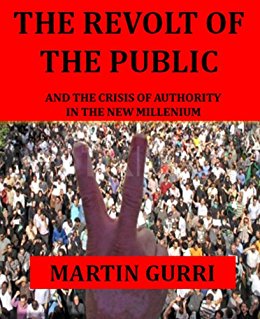
Like many good books, Martin Gurri’s The Revolt of the Public and the Crisis of Authority in the New Millennium is about One Big Idea, though the implications take a while to work through. It’s basically a story of how technology and media are changing politics.

Though Gurri does not, I found it helpful to put the idea in economists’ terms: a dramatic increase in the supply of information and media has pushed down its value. For many established institutions, this has meant a decline in influence, as their once-authoritative statements must now compete for attention and truth-value with a growing horde of statements from the margins. The struggles of old-line newspapers, political parties, and governments in the new environment are thus all of a piece:

The grand hierarchies of the industrial age feel themselves to be in decline, and I’m disposed to agree. They evolved to operate on a more docile social structure – one in which far less information circulated far more slowly among far fewer persons. Today a networked public runs wild among the old institutions, and bleeds them of the power to command attention and define the intellectual and political agenda. Every expert is surrounded by a horde of amateurs eager to pounce on every mistake and mock every unsuccessful prediction or policy. Every CRU has its hacker, every Mubarak his Wael Ghonim, every Barack Obama his Tea Party. Nothing is secret and nothing is sacred, so the hierarchies some time ago lost their heroic ambitions and now they have lost their nerve. They doubt their own authority, and they have good reason to do so.

Gurri really won my heart when he brought this insight together with the work of the great anthropologist Mary Douglas, who had an uncanny knack for creating powerful and useful analytical frameworks:

Another way to characterize the collision of the two worlds is as an episode in the primordial contest between the Center and the Border. The terms were employed by Mary Douglas and Aaron Wildavsky in another context, long before the advent of the information tsunami, but they are singularly apt for our present condition. “Center” and “Border” can be applied to organizations embracing specific structures, ideals, and beliefs about the future. The two archetypes are relative to each other, and perform a kind of dance which determines the direction of social action.

The Center, Douglas and Wildavsky write, is dominated by large, hierarchical organizations. It frankly believes in sacrificing the few for the good of the whole. It is smug about its rigid procedures. It is too slow, too blind to new information. It will not believe in new dangers and will often be taken by surprise. The Center envisions the future to be a continuation of the status quo, and churns out program after program to protect this vision. The Border, in contrast, is composed of “sects” – we would say “networks” – which are voluntary associations of equals. Sects exist to oppose the Center: they stand firmly against. They have, however, “no intention of governing” and develop “no capacity for exercising power.” Rank means inequality, hierarchy means conspiracy to the Border. Rather than articulate programs as alternatives to those of the Center, sects aim to model the behaviors demanded from the “godly or good society.” Making a program is a center strategy; attacking center programs on behalf of nature, God, or the world is border strategy.

If this is starting to sound a bit like what happened in the primaries last year, that is no accident. Gurri I think provides a useful way of thinking about the realignment of politics made clear by the 2016 election in the US, and the UK’s Brexit referendum:

I was trained, as even the youngest of us were, to think in terms of the old categories: to think, for example, that the direction of American politics depended on the balance between Democrats and Republicans. Yet both parties are, in form and spirit, organizations of the Center. Both are heavily invested in the established order, offering the public minor differences in perspective on the same small set of questions. Surprises in America’s political trajectory are unlikely to come from the alternation of Democrat and Republican. The analyst searching for discontinuities – for the possibility of radical change – must wrench his mind free of the old categories and turn to the subterranean strife of hierarchy and network: in the political parties, between “netroots” activists and a variety of Tea Party networks on one side, and the Democratic and Republican organizations on the other. There, different languages are spoken, potent contradictions can be found. …

The book is consistently interesting, and although he refrains from making explicit predictions it nonetheless often feels quite prescient. Gurri’s blog extends the analysis into 2016, though that piece will make more sense after having read the book.

51eiqavwepl-_sx260_

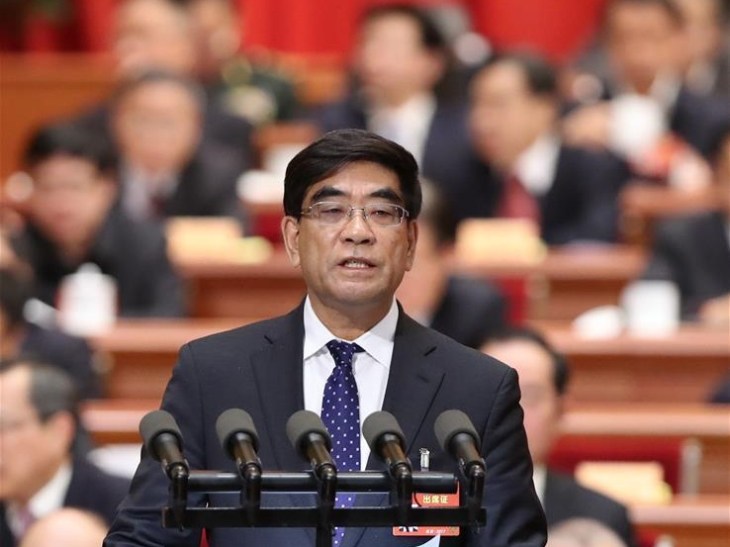
Fu Chengyu’s frank talk on SOE reform

China’s annual legislative session, which closed last week, was not a particularly newsworthy event despite being the subject of many news stories. It featured many unedifying public displays of loyalty to General Secretary Xi Jinping, and even less dissent and debate than than usual.

In the current Chinese climate where frank discussion of economic problems and constructive criticism of economic policy is very rare, the intervention during the session by former SOE executive Fu Chengyu was I thought fairly noteworthy. Fu previously ran two of China’s biggest SOEs, CNOOC and Sinopec, and was widely considered an effective, forward-looking and market-oriented executive.

It’s not surprising that Fu is critical of the current program of state-owned enterprise reform; just about everyone who has looked at it has come away pretty depressed. What’s interesting is that he is both willing and able to speak his mind. The following is my translation of his statement on March 9, as reported by Xinhua (the Chinese original is here); it’s a bit dense with Chinese policy jargon, but the main thrust is still pretty clear I think.

1. We cannot confuse reforming the supervision of state assets and enterprises with the reform of state enterprises themselves, and we cannot use reform of the supervision of state assets and enterprises to replace state-enterprise reform.

Today there are some prominent and widespread phenomena in the national implementation of state-enterprise reform. The first is a focus on reforming the supervision of state assets and enterprises, and a weakening of the reform of state enterprises’ own management and operational systems. In some places this supervisory reform has replaced enterprise reform. The second is that the Third Plenum’s call for a transition from “managing state assets” to “managing state capital” has been weakened. The third is that “mixed ownership reform” is seen as a restricted area, and so reform is excessively timid and cautious. The fourth is that internal reforms for the vast majority of state enterprises, particularly reforms to allow the market to play a decisive role in the allocation of resources, have basically not gotten off the ground. Lots of people are watching from the sidelines and not many people are doing anything; most enterprises are waiting and few enterprises are actually trying something.

2. It is not clear who should be the main actor in state-enterprise reform, and an impetus for reform is lacking among enterprises. First, in terms of reform implementation, different levels of government have in reality already become the main driver of reform, while enterprises are just implementing the reforms. When enterprises are not fully participating in the design and planning of reforms, it is difficult to be optimistic about the results. Second, reform in fact means innovation, and innovation cannot be ordered from the top down, but must be explored from the bottom up. Regulatory agencies cannot control every aspect of reform, and cannot just issue a lot of documents to direct state-enterprise reform. Third, because the agency for reform has been moved up to the government, this has created a discordant situation: what the government wants to change is very difficult to change, while what enterprises want to change they dare not change.

3. We lack an environment that protects enterprise leaders who undertake reform, so state-enterprise executives have many concerns about reform. In surveys a very common reaction is heard: “if I do a good job I get no recognition, if I do a bad job I get a bad assessment; if there is a conflict I have no protection, if there’s a problem it’s my responsibility; if I do a lot there are a lot of problems, so not doing anything is the best option.” …

Fu Chengyu

Therefore I suggest the following:

First, clarify the main actors in reform and highlight the main goals of reform. The principle of the separation of ownership rights and operation rights should be followed to allocate responsibility for state-enterprise reform. The regulatory agencies at different levels of government are the owner’s representative for state-owned assets and have regulatory responsibility for state-owned assets and state-owned enterprises, so they should be the main driver for reforming supervision of state assets and state enterprises. State-owned enterprises are the responsible authority for operating state-owned assets, so they should be the main driver for reforming operation and management, and should take responsibility for state-enterprise reform. I suggest that the regulatory agencies at different levels of government delegate authority for reforms internal to state enterprises to the enterprises themselves. Government agencies can handle the overall direction and principles, and be in charge of supervision. Enterprises should be allowed to draft their own reform plans, in accordance with national laws and regulations and relevant policies on state-enterprise reform, so that responsibility for reform passes to enterprises and their executives.

Second, create an environment that creates incentives for reform and protects those who take the initiative. The glorious achievements of state enterprises over more than 30 years of reform, and the important contribution of enterprise leaders to state enterprises’ development, should be fully affirmed. Policies to encourage and protect enterprise leaders who undertake daring reforms should be drafted, to create a specific, feasible, and fault-tolerant system. I also suggest that auditing, disciplinary and personnel agencies develop related policies to incentivize reform and protect initiative in their respective areas.

Third, focus on making breakthroughs in mixed-ownership reform. The Central Economic Work Conference proposed mixed-ownership reform as an important opening for a breakthrough in state-enterprise reform, and this is very significant. I suggest that the scope of enterprises in trials of mixed-ownership reform be expanded, and that the current trials of mixed-ownership reform at third-tier subsidiaries be expanded to second-tier subsidiaries and even to the group level. This will increase the dynamism of state enterprises’ own reforms, and also show China’s efforts at deepening reform; it will also attract large amounts of private capital back to the real economy, thereby lowering financial risk.

None of Fu’s proposed changes are particularly revolutionary, but they still prompted rather hyperbolic praise from Li Jin, a prominent commentator on SOE reform, which I interpret as relief that rational criticism and policy discussion still seem to be possible:

If our delegates all spoke as directly as Fu Chengyu, pulling together public opinion so that the soul of the people can develop, then there would be great hope for China’s state-enterprise reform, and the dream of the rejuvenation of the Chinese nation will eventually be fulfilled. I hope China will have more heroes of reform like Fu Chengyu.