What I’ve been listening to lately

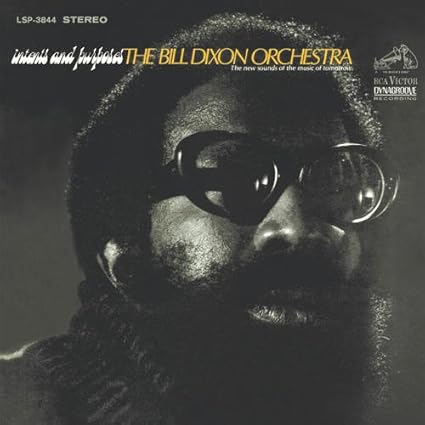
  • Bill Dixon – Intents and PurposesThis 1967 recording by trumpeter Dixon is easily lumped together with the free jazz of the era, but in fact it was mostly through-composed. And it really does not sound like much from that time, or since: a moody and often delicate piece of orchestral jazz.
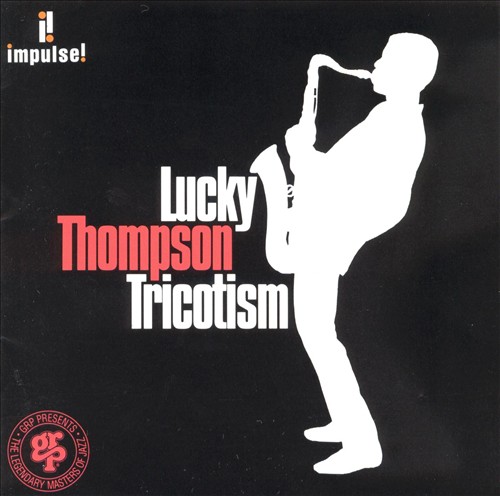
  • Lucky Thompson – Tricotism. Thompson has one of the most gorgeous tones of any tenor saxophonist. In these 1956 sessions, his beautiful sound is displayed to full advantage in a drummerless trio.
  • Gamelan Pacifica – Nourishment. The Seattle-based gamelan ensemble’s 1994 recording Trance Gong was a landmark in combining Indonesian modernism with American new music; this 2015 has more excellent and intriguing work.
  • Nat Birchall – Sounds Almighty. Birchall is a British tenor saxophonist who usually plays jazz, but he is also a devotee of Jamaican music. For this 2018 session he joined up with trombone great Vin Gordon to record some instrumental reggae in the classic style.
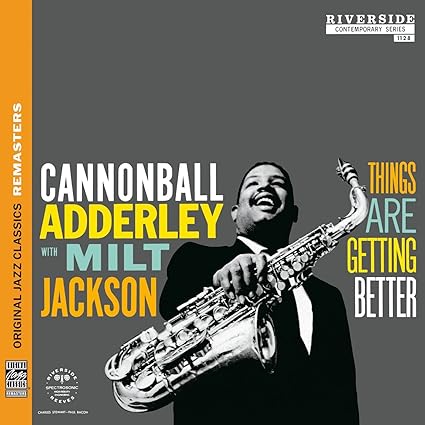
  • Cannonball Adderley & Milt Jackson – Things Are Getting Better. A classic straightahead jazz session from two masters of blues feeling. Also available as part of this compilation.

What will it take to lower China’s investment rate?

The below is from Paul Krugman’s latest on China, an argument also strongly endorsed by Brad Setser:

China really can’t keep investing 40-plus percent of GDP. It needs to shift over to higher consumption, which it could do by returning more profits from state-owned enterprises to the public, strengthening the social safety net, and so on. But it keeps not doing that.

Myself, I think it’s weird that people who want China to invest less tell it to do all these structural reforms rather than just, you know, invest less.

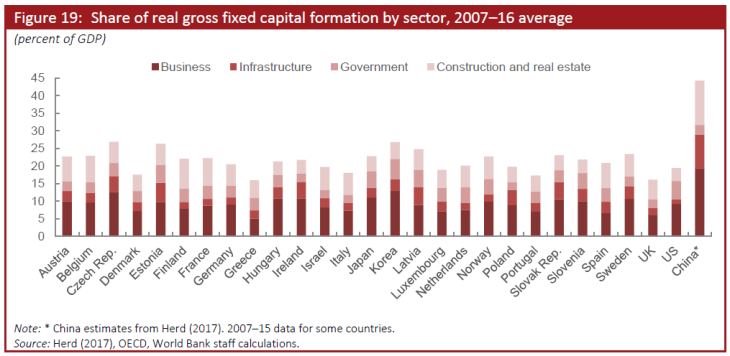
They miss the point that much of the low-return investment in China is done by the government and the state sector: it’s all those local infrastructure projects. That’s really where the buildup of excess investment is happening, not so much in the private business sector (which faces hard budget constraints and often tough access to credit). According to the World Bank’s latest China Economic Update, China’s public investment has averaged 16% of GDP since 1978, while OECD countries spend about 3.7% of GDP.

herd-wb-gfcf-chart

So if the government wanted to make a policy choice to invest less, it can just directly make the state sector invest less in those crappy low-return projects. It doesn’t have to overhaul social policy first.

The point of strengthening the social safety net, in this framework, is to reduce precautionary household savings. But high household savings don’t directly lead to excess investment. They do help keep the banking system liquid which enables a lot of borrowing by SOEs.

But trying to impose financial discipline on SOEs by improving the safety net and lowering household savings is pretty indirect. The central government could just require investment projects by SOEs and local governments to clear more hurdles.

Fundamentally, the reason that China invests a lot is that the government has made a decision to keep public-sector investment high in order to boost aggregate demand. If/when that changes, the investment rate will come down. And so will growth. Which is why China is not in a rush to make that call.

The hard choice that China has to make is not whether to undertake complex and difficult technical reforms to social policy. The hard choice is to decide when the efficiency losses from forced high investment start to outweigh the benefits of the boost to aggregate demand.

Some people are interpreting the government’s recent pledges to avoid “flood- like” (大水漫灌) stimulus as a sign that they have in fact reached this conclusion, and want to wean the economy off low-return infrastructure projects. Maybe a bit, at the margin. But the leadership is also going to a lot of trouble to create new funding mechanisms to ensure local infrastructure projects can continue, so it seems clear they don’t want this shift to happen right now.

Redirecting some fiscal resources from investment to consumption (i.e. more social programs) could certainly help soften the blow. But this is a compelling argument only to macro people; the Chinese interest groups that would lose out from less public investment are not going to feel compensated if more social benefits go to households.

Xi vs. Stalin: What drives the reversal of economic reforms?

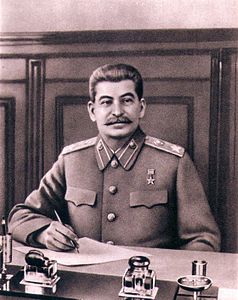
In the parlor game of finding historical analogies for present leaders, Chinese leader Xi Jinping is often compared to Mao Zedong. This is not very apt: Xi is an organization man, whose overriding desire for order is quite different from Mao’s love of chaos. After spending some time with Stephen Kotkin’s Stalin biography, StalinParadoxes of Power 1878-1928, I am surprised more people do not compare Xi to Stalin (though of course some have). Both men rose in an authoritarian system formally run by a collective leadership, and shifted it in the direction of more personalized rule for themselves and tighter political controls on everyone else.

238px-Stalin_office

Stalin, of course, also unleashed a historic economic catastrophe upon the Soviet Union, when he abandoned the market-tolerating New Economic Policy and embarked on a crash course of agricultural collectivization and forced industrialization. Xi has not done that! His endorsement of industrial policy and favoring of state enterprises has disappointed many liberal economists. He wants a strong state, has re-emphasized Marxist ideology and clamped down on public policy debate. But it is also worth remembering that he has allowed technocrats to liberalize the exchange-rate regime and tighten up financial regulation, two long-needed reforms.

Nonetheless, the slowing economy has recently led to more public discontent with Xi’s policies. Xiang Songzuo, the former chief economist of Agricultural Bank of China, is one of those arguing that there is a connection between Xi’s aggressively Marxist rhetoric and weaker growth: he thinks a loss of confidence and fear of expropriation among private entrepreneurs is aggravating problems caused by the buildup of debt and misallocation of investment (see this translation of a speech he gave in December). Some foreign commentators are also warning that there is a “big danger that China will re-nationalize much of its economy.”

So it seems worth posing this question: what caused Stalin to abandon pro-market policies, and could similar factors be at play in Xi’s China?

Continue reading →

The origins of the Communist party-state dual structure

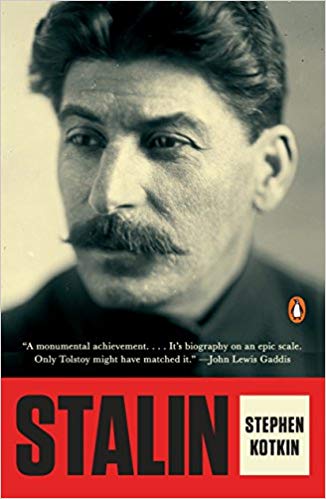
One of the many fascinating tidbits scattered through Stephen Kotkin’s Stalin: Paradoxes of Power 1878-1928the excellent first volume of his Stalin biography, is an explanation of where the unique “party-state” Communist political structure comes from.

In China today, as in the Soviet Union in the past, the Communist Party and the government exist as parallel, intertwined institutions, with Party clearly politically superior even as government bodies do most of the practical work. In the Soviet case, this resulted from the fact that the Bolsheviks had seized power as a minority party but were nonetheless attempting to exercise absolute control over the entire country:

Party thinking equated Bolshevism with the movement of history and thereby made all critics into counterrevolutionaries, even if they were fellow socialists. Meanwhile, in trying to manage industry, transport, fuel, food, housing, education, culture, all at the same time, during a time of war and ruin, the revolutionaries came face to face with their own lack of expertise, and yet the solution to their woes struck them with ideological horror: They had to engage the class enemy—“bourgeois specialists”—inherited from tsarist times, who often detested socialism but were willing to help rebuild the devastated country. …

But the cooperative tsarist experts were not trusted even if they were loyal, because they were “bourgeois.” Dependency on people perceived as class enemies shaped, indeed warped, Soviet politics and institutions. The technically skilled, who were distrusted politically, were paired with the politically loyal, who lacked technical competence, first in the army and then in every institution, from railroads to schools. The unintentional upshot—a Communist watchdog shadowing every “bourgeois expert”—would persist even after the Reds were trained and became experts, creating a permanent dualist “party-state.” …

“The institution of commissars” in the Red Army, Trotsky had explained of the political watchdogs, was “to serve as a scaffolding. . . . Little by little we shall be able to remove this scaffolding.” That dismantling never happened, however, no matter how often commissars themselves called for their own removal.

China went through a similar dynamic as the Communist Party took over government and nationalized companies after 1949: Party figures were installed to oversee managers and technical experts. As in the USSR, this dual party-state structure persisted long after its immediate justification had passed, even when the majority of government officials and company leaders had become Party members. In other words, the Communist Party has continued to treat its own country as a hostile environment that could not be trusted.

The fact that the dual Party-state structure is, essentially, institutionalized mistrust, is one reason why this system is hard to defend on principle. Chinese scholars have been discussing the need for the Communist Party to adapt from being a “revolutionary” party to a “governing” party for decades. In the liberalizing 1980s, there was the beginning of a movement to formally separate the Party and government, but this was reversed in the post-1989 return to conservative politics. Xi Jinping also seems to want to clarify the relationship between the role of the Party and government. But he has taken the opposite approach: formalizing the Party’s leadership over the government (see my previous post on this topic).

51J5DhwkpLL._SX324_BO1204203200_

The best books I read in 2018

My nonfiction reading this year was heavy on specialized works of Chinese history, which were useful to me but not easy to recommend to others, so I’m putting fiction first this time. It’s more fun. As with previous lists, these are just my favorites of books I read in 2018, not limited to books released in 2018.

Fiction

  • Varlam Shalamov, Kolyma Stories. Unquestionably the best thing I read all year, utterly compelling. If there is any justice, the publication of this new translation will reorder the established hierarchy of twentieth-century Russian and world literature.
  • Keith Gessen, A Terrible Country. A charming and moving account of a young American’s complicated relationship with Russia.
  • Madeline Miller, Circe. The witch who entrapped Odysseus and his sailors tells her side of the story; a vivid reimagining that retains the weirdness and force of myth.
  • Caitriona Lally, Eggshells. A mentally disturbed woman rides the bus in Dublin. Often hilarious, sometimes infuriating, with wonderful wordplay throughout.
  • Eric Ambler, The Light of Day. A top-notch thriller from 1962 whose focus on people stuck in between national borders feels very contemporary. Check out Ethan Iverson’s guide to all 18 of Ambler’s novels.
  • Jim Harrison, Legends of the Fall. In this collection of three novellas, the title piece  and “Revenge” are both brilliant, “Westerns” in the widest and best sense of the term (you can skip the middle one though).

Nonfiction

The best music I heard in 2018

I listened to roughly 200 recordings for the first time this year; here are my favorites. As with previous iterations, this list is a purely personal choice not restricted by what was commercially released in 2018. But more new and recent releases did make their way onto my list this year – perhaps I am starting to catch up?

  • Makaya McCraven – Universal Beings. Rarely have I heard music that from the first listen is both so immediately appealing and so obviously different from anything else. Groove-oriented free jazz would be one way to describe it; “organic beat music” is his preferred term. More background on this sprawling masterpiece is in Giovanni Russonello’s profile and Nate Chinen’s review.
  • Thumbscrew – Theirs. I can’t keep up with all of Mary Halvorson’s projects, but I really enjoyed her trio’s fresh takes on other people’s jazz compositions (not quite “standards”). The moody version of Jimmy Rowles The Peacocks is a highlight; by coincidence I also heard the original with Stan Getz for the first time this year, and it is well worth seeking out.
  • Alice Coltrane – Transfiguration. Her more spiritual 1970s work has been getting a well-deserved reassessment, thanks to some recent reissues. But this monstrous live album with Reggie Workman and Roy Haynes is my pick for her best from that era.
  • Wadada Leo Smith – A Cosmic Rhythm With Each Stroke. Smith’s music was one of my great discoveries this year. It’s hard to single out one recording in particular but this duet with Vijay Iyer is a perfect showcase for his gorgeous long tones and masterful use of space.
  • Ergo – If Not Inertia. A gorgeous jazz tapestry featuring trombone, electronics and prepared piano, as well as a couple of guest turns by Mary Halvorson.
  • Jeremy Steig, Flute FeverOn this 1963 recording, Steig seems like he is setting out to prove that the flute is just as powerful a jazz instrument as the tenor sax. He succeeds brilliantly.
  • Don Ellis – Essence. The modernist trumpeter spent most of his career fronting a big band, but for me his most interesting work was a series of small-group albums from the early 1960s. This quartet with Paul Bley and Gary Peacock is my favorite; their trio Out Of Nowhere is also worthwhile.
  • Joe Venuti & Earl Hines – Hot Sonatas. An absolutely delightful duet between two giants of early jazz. It was recorded in 1975, very late in both their careers, but you will hear nothing but tremendous vitality.
  • Johnny Dodds – Blue Clarinet Stomp and New Orleans Stomp. Dodds was the clarinetist in Louis Armstrong’s classic Hot Fives sessions. These small-group recordings, made under his own name from 1926-1929, capture some of that same primal jazz magic.
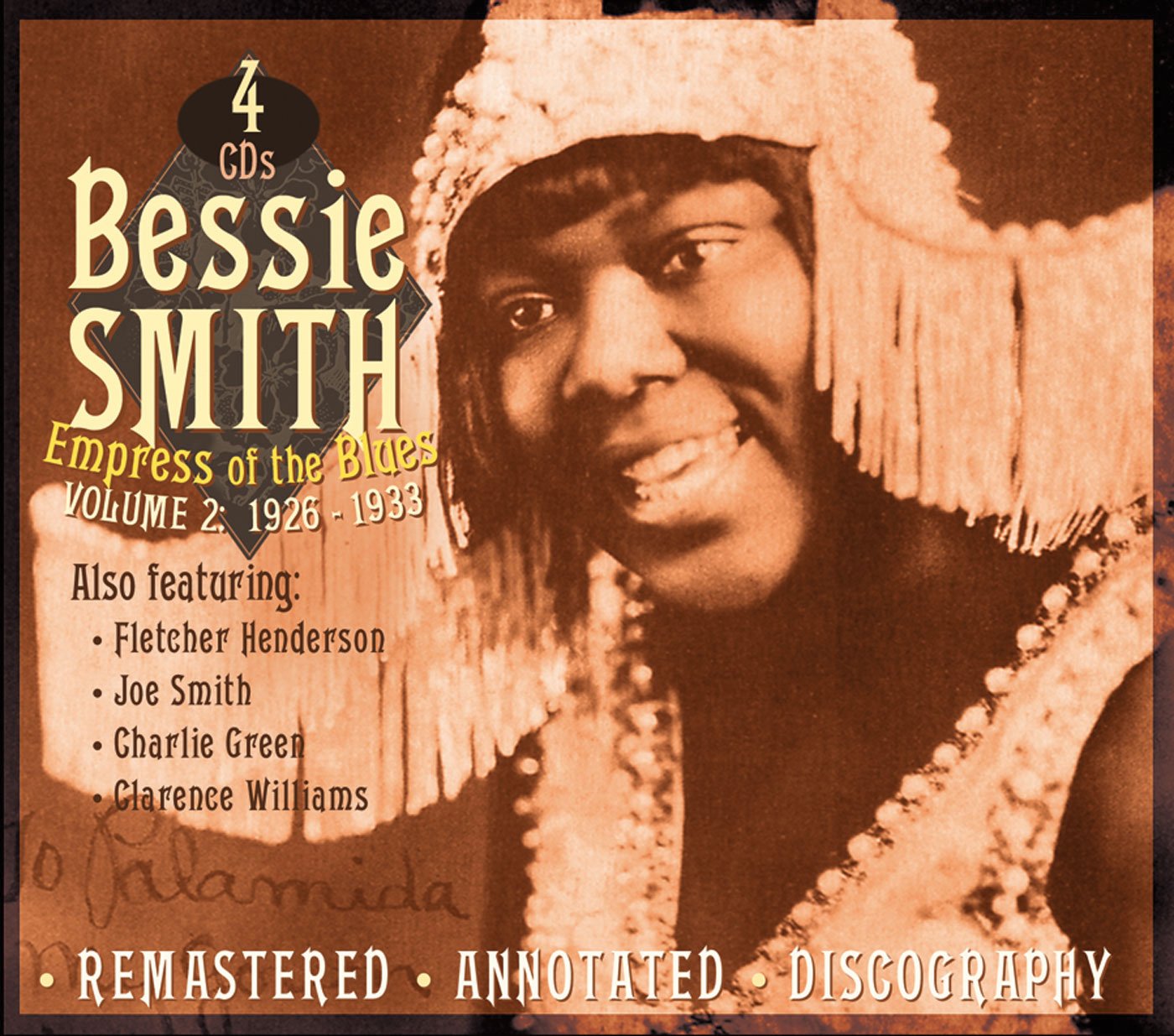
  • Bessie Smith – Empress of the Blues: Volume 2, 1926-33. Bessie Smith is part of the bedrock of American popular music. If like me you had somehow skipped that part of your musical education, this collection is an excellent way to hear her incredible voice.
  • Various Artists – The Keynote Jazz Collection 1941-1947. A massive and wonderful collection highlighting the transition from small-group swing to bop. There is some great Coleman Hawkins and Count Basie here, and some surprising early avant-gardism from Lennie Tristano, but mainly lots of work by less well-known journeymen.
  • Albert King – I’ll Play The Blues For You. An absolutely ripping live album, fusing King’s searing blues guitar with the funk of the Bar-Kays (at the time, Isaac Hayes’ backing band).
  • Errol Brown – Orthodox Dub  & Yabby You – Beware Dub. Brilliant-yet-obscure reggae albums should in theory be a finite resource close to exhaustion, and yet somehow the crate diggers keep finding more to reissue. These are both masterpieces of dub and instrumental reggae.
  • Pierre Fournier – Bach: Six Suites for Solo Cello. I don’t listen to a lot of traditional classical music, but I do find myself often going back to Bach. This year I rediscovered these mindblowing, heartbreaking compositions through this classic 1961 recording.

The world’s most unproductive entrepreneur

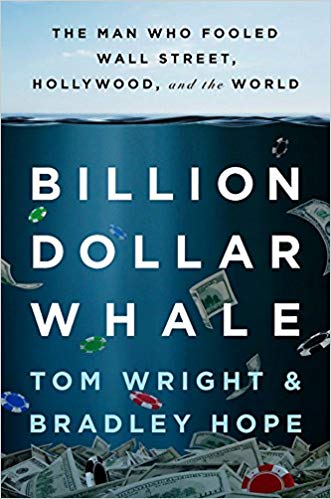
The new book by Wall Street Journal reporters Tom Wright & Bradley Hope, Billion Dollar Whale: The Man Who Fooled Wall Street, Hollywood, and the Worldis amazing. It must be one of the most detailed accounts of high-level corruption ever produced. I had followed their reporting on Malaysia’s 1MDB scandal, and generally understood that the financier Jho Low had colluded with former prime minister Najib Razak to embezzle ungodly amounts of money from the state development fund.

But what I had not really grasped before reading this book is that Low did not just steal money that belonged to the Malaysian state and people–he actually organized the creation of the 1MDB fund, and effectively controlled it. The 1MDB fund in fact never had any other purpose or rationale than as a vehicle for corruption.  The scheme got its start when Low approached the sultan of Terengganu, cleverly exploiting the opportunities for corruption in Malaysia’s system of hereditary monarchies:

He’d built a quick reputation in Malaysia as a deal maker, but, as always, Low was keenly aware of how his success stacked up on a global stage. Low had observed the power and status of Khaldoon Al Mubarak of Mubadala, who ran the Emirati sovereign wealth fund. A fund like that had billions of dollars in investments, not mere millions.

Why, Jho Low wondered, couldn’t he put together a sovereign wealth fund of his own—one based in Malaysia? But where could he find the initial funds? Traditional sovereign wealth funds invest oil profits, and so Low honed in on the Malaysian state of Terengganu, which was rich in offshore oil and gas fields.

But it didn’t take long for that local fund to become a national initiative. In August 2009, Najib announced the launch of the 1MDB fund at a dinner with the crown prince of Abu Dhabi:

The 1MDB fund was simply the Terengganu Investment Authority, which had recently raised $1.4 billion in Islamic bonds, transformed into a federal entity. The 1MDB fund would be responsible for repaying the bonds. Once Najib came to power, Low convinced him to take over the fund, broaden its remit, and look for Middle East backing.

Low’s pitch for the 1MDB fund was basically that it would be a completely unaccountable vehicle for the prime minister to dish out development projects and political patronage to benefit himself and his supporters:

The 1MDB fund was supposed to invest in green energy and tourism to create high-quality jobs for all Malaysians, whether of Malay, Indian, or Chinese heritage, hence the slogan “1Malaysia.” The fund, Low promised the prime minister, would suck in money from the Middle East and borrow more from global markets. But he had another selling point, one which Najib, who was ambitious, found extremely attractive: Why not also use the fund as a political-financing vehicle? Profits from 1MDB would fill a war chest that Najib could use to pay off political supporters and voters, restoring UMNO’s popularity, Low promised.

Over the next few years, Low and his conspirators would use 1MDB to borrow billions of dollars from global capital markets, and would simply take much of the proceeds for themselves. To achieve all this required Low to do constant networking, set up immensely complicated financial and legal arrangements, and splash out tens of millions of dollars along the way to win friends and influence people. Low in fact worked hard at his corruption, and displayed unmistakable entrepreneurial flair–a huge amount of effort deployed to make his country poorer not richer.

Previously I had thought of corruption as mostly acting like a drag or tax on the economy: the extraction of bribes to approve a construction permit or dismiss traffic fines. My imagination had not quite encompassed the idea that corruption could be a motivating force for huge economic initiatives that would be entirely wasteful. So one lesson from the book seems to be that I have been insufficiently cynical about human frailty.

Low’s tale also made me recall the distinction that William Baumol made between productive and unproductive entrepreneurs, in a famous 1990 article:

The basic hypothesis is that, while the total supply of entrepreneurs varies among societies, the productive contribution of the society’s entrepreneurial activities varies much more because of their allocation between productive activities such as innovation and largely unproductive activities such as rent seeking or organized crime. This allocation is heavily influenced by the relative payoffs society offers to such activities. …

If entrepreneurs are defined, simply, to be persons who are ingenious and creative in finding ways that add to their own wealth, power, and prestige, then it is to be expected that not all of them will be overly concerned with whether an activity that achieves these goals adds much or little to the social product or, for that matter, even whether it is an actual impediment to production (this notion goes back, at least, to Veblen). …

There are a variety of roles among which the entrepreneur’s efforts can be reallocated, and some of those roles do not follow the constructive and innovative script that is conventionally attributed to that person. Indeed, at times the entrepreneur may even lead a parasitical existence that is actually damaging to the economy.

Baumol’s article cited many interesting historical examples of unproductive entrepreneurship, but his contemporary examples were all a bit dull: he mentions tax evasion and corporate lawsuits. Low’s audacious scheme to create a sovereign wealth fund in order to plunder it surely makes him the paragon of twenty-first-century unproductive entrepreneurship.

51b7qwohbxl-_sx329_bo1204203200_

What I’ve been listening to lately

  • Hank Mobley – And His All Stars. The perenially underrated tenor saxophonist Hank Mobley recorded a string of interchangeably-titled dates in the mid-50s, all of which have their moments. But this 1957 session is really a cut above thanks to the presence of Milt Jackson, who lifts the proceedings to another level. Just a sterling example of mainstream jazz.

  • Julian Lage – Live In Los Angeles. Lage is a virtuosic young jazz guitarist whose twangy sound pays homage to the country and rock traditions. He won my heart by tackling early jazz obscurities like “Persian Rug,” which I know from a 1928 recording with Fats Waller on organ. But he is not at all a moldy fig–these are modern, free-flowing improvisations. The extended live versions to me are better and more energetic than the ones on his studio album; the whole thing is free on Youtube.
  • Bessie Smith – Empress of the Blues: Volume 2, 1926-33. It turns out I have been a Bessie Smith fan for years without even knowing it. Many of my favorite classic blues tunes that I know from other singers–“Gimme A Pigfoot And A Bottle of Beer”, “Careless Love”, “I Need A Little Sugar In My Bowl”, “Nobody Knows You When You’re Down and Out”–were made famous by her, but I had not sought out the original recordings until now. The sound on this JSP collection is quite impressive, Smith’s incredibly strong voice just punches through.
  • Harry Miller – 1941-1983: The Collection. It’s a bit unfair to put this on a list of recommendations since it is long out of print, but I felt compelled to share since it is by far the best music find I have ever made at a thrift store. Miller was a South African bassist who lived in London, and his work straddles British free jazz and the more groove-oriented South African scene. He has strong groups on Family Affair and Down South which are the most consistent albums, but his solo bass recording Children At Play is also interesting. A live recording from this period is available from the essential Cuneiform Records.
  • The Sun Ra Arkestra – Live At Babylon. The music produced by the current edition of the band, under the leadership of Marshall Allen, is perhaps not as complex and weird as it was under the master himself, but that is really just a quibble. This 2016 live recording captures the Arkestra’s ferocious groove and exuberant melding of the tonal and atonal; the long version of “Discipline 27” is just a monster.

Ideology and the sources of policy error

Stephen Joske has an essay at War on the Rocks that makes a good point about the possibility of a Chinese financial crisis:

We commonly hear that China cannot have a financial crisis because the government owns all the banks and can control them. … In theory, government control is good for stability. In practice, however, two things have to happen to avoid a crisis: First, the government has to use its power to make the right policy choice, and second, it has to avoid making a Lehman-style regulatory mistake. …

While the government owns the banks, that does not stop officials from making regulatory mistakes. We have already seen regulatory mistakes such as mishandling of RMB market volatility in 2015. We have also seen well-handled, timely, and complex crisis management failing financial companies. But that does not mean they always handle every crisis well and will continue to do so. The law of probability indicates that eventually something will go wrong and, like every other country, China will have a financial crisis.

It is a fair point that humans are fallible and will eventually make a mistake, and we should not presume that the Chinese financial authorities are more or less fallible than all other humans.

But I think it is a bit of a cop-out to just say, oh, policy errors happen, and not to inquire more deeply into the actual causes of policy error. I think if we look at the recent history of financial policy mistakes, many them were in fact not driven by random errors but by ideology.

It is hard to separate the US policy errors in the global financial crisis from the strong ideological value placed on the government abstaining from intervening in markets. The day after Lehman Brothers failed, then-St. Louis Fed president Andrew Bullard said: “By denying funding to Lehman suitors, the Fed has begun to reestablish the idea that markets should not expect help at each difficult juncture.”

There would have been technical and legal difficulties to mounting a rescue of Lehman, but these could certainly have been surmounted if officials had been really worried about the impact of a failure on the financial system. They were not that worried (which in hindsight was clearly an error) and were preoccupied with sending signals about the correct relationship between the government and the financial system.

Most financial crises take the form of a “run on the bank,” even if the bank is not called a bank and those doing the running are not retail depositors. When investors no longer wish to hold bank liabilities, the bank cannot fund itself and experiences a liquidity crisis. But if investors know or believe that the government will rescue the financial institution, they are less likely to be so fearful of failure as to stop holding its liabilities, and less likely to fear that the problems of one institution will spread to others.

So a system in which the government is ideologically committed to maintaining a separation between the public sector and a private financial sector, and a system in which the government is ideologically committed to maintaining the union of the public sector and the financial sector, are not at all equivalent in terms of financial risk. In the former, there is much more of a risk that private investors will become worried about the failure of banks and stop funding them. (The latter, of course, has the problem that banks will tend to abuse government support and take more risk than they should.)

So it seems to me that, while Chinese officials are not more or less fallible than other humans, they do operate in a system that tends to minimize one major source of the policy errors that tend to lead to financial crises. Simply put, Chinese officials are more likely to err in favor of providing government support to a failing institution than in favor of denying it. This does not mean that Chinese banks cannot fail–it seems quite likely to me that some smaller institutions will eventually go under–but that such failures are much less likely to cause contagion and a crisis of confidence in the financial system.

Arguably Chinese financial policy is in fact less ideological than American. That may seem a strange thing to say about a system in which ideology is highly formalized and there is a large institutional structure for ensuring compliance with ideology. But the ideology of the Communist Party is inflexible only about ends, rather than means. Continuation of Party rule and its ability to direct social and economic development cannot be questioned.

But China is fairly flexible about the means employed to achieve those ends. American political ideology by contrast puts strong constraints on means: there are often intense arguments about why various things cannot be done or should be done in order to maintain the self-image of the US as a free-market economy.

The US-China trade war as a conflict of values

The tariffs that the Trump administration has imposed on Chinese goods are seen by the Chinese government as unprovoked and unjustified assaults. So there are few opinions more unwelcome right now than that China brought the trade war on itself. Yet that is more or less what a couple of Chinese liberal intellectual are saying openly: that trade conflict with the West is the inevitable result of China’s promotion of a state-centered development model.

One of these voices is Sheng Hong of the well-known Unirule Institute, who published an interesting article on US-China relations on FT Chinese on October 19. The Unirule website has helpfully provided an English translation, but I have re-translated the portions below myself for greater clarity:

China’s reform and opening up is the guarantee of strategic cooperation between China and the US. Such strategic cooperative relations would never have been possible if China was still stuck in the Cultural Revolution, when it practiced class struggle and a planned economy domestically, and exported revolution abroad. Reform and opening up not only brought people economic freedom, but also changes in the political structure. The emancipation of thought has to some extent loosened controls over the freedom of speech, and the freedom of the market economy has allowed people to throw off the shackles of their work units. As the market played a greater role in more areas it reduced government’s direct control over society. Implementing market regulation relied on a just legal system. Only a China that is in this way progressing toward marketization, rule of law and democratization can be accepted by the US on a strategic level, and create the framework for strategic cooperation with the US.

Without a doubt, reform and opening up eliminated the ideological conflict between China and the US, as well as the whole Western world, and gradually brought convergence in terms of values. … Some of the so-called “socialist core values” promoted by the Chinese Communist Party overlap with values recognized by the US and the western world, for instance freedom, democracy, rule of law, equality and justice; while other values, such as civilization, harmony, integrity and dedication, are not in conflict with the values of the US and the western world.

We must clearly recognize that such convergence of values is the basis for strategic cooperation between the US and China. Only through a convergence of values can China be deemed a factor of peace and stability in international relations, and be seen as a trustworthy nation with which close cooperation is possible, rather than one that proclaims the overthrow of the capitalist world and does not renounce the use of violence. Only such a country that advocates peaceful means to resolve disputes between nations,  and does not resort to the threat or use of force, can provide the world with a stable and just international order.

Therefore, China’s reform and opening-up and the China-US strategic cooperation are two inter-related things. That is to say, there is no strategic cooperation without reform and opening-up, nor is there reform and opening up without China-US strategic cooperation. … China should not, and cannot, seek hegemony over the world by going against the rules of civilization accepted by China and most of the countries in the world. Only on the basis of respecting the consensus rules of human civilization can China overcome the mistakes and deviations of the US, and become a civilizational center with moral legitimacy and great economic strength. Today, China faces the risk of leaving the path of reform and opening up, which would risk the loss of strategic cooperative relations with the US. Such a result would be a complete failure.

ShengHong

Sheng Hong

Somewhat similar sentiments appear in an October 14 speech by Zhang Weiying, a prominent liberal economist at Peking University (liberal in the Chinese sense of favoring free-market policies; Zhang is more of a Hayekian libertarian). The following is my translation of some portions of a summary that was posted on the website of the National School of Development (it was later removed after attracting press coverage).

The rapid development of China’s economy and the improvement of people’s living standards over the past 40 years are facts denied by no one, but there is still controversy over how to understand and interpret these facts. At present, there are two interpretations of China’s growth in the past few decades, the theory of the “Chinese model” and the theory of the “universal model.” The former holds that China’s economic development benefited from a unique Chinese model, with a strong government, many large state-owned enterprises, and wise industrial policy.

The latter holds that China’s remarkable achievements are, just as with the rise of Britain, France, postwar Germany, Japan and the Asian tigers, based on the power of the market and the creative and risk-taking entrepreneurial spirit. China also made use of the technologies accumulated by Western developed countries over the past three hundred years. As I explained in an article published early this year, China has in the past 40 years of reform and opening up experienced the three industrial revolutions that took the Western world 250 years. The latecomer’s advantage means that we have avoided many detours and directly share the technological achievements that others have already obtained through experiments of great cost. …

The above evidence shows that the theory of the “Chinese model” is seriously inconsistent with the facts. China’s high growth over the past 40 years has come from marketization, entrepreneurship and the technology accumulated by the West over three hundred years. The bigger problem is that using the “Chinese model” to explain the achievements of the past 40 years is not beneficial for China’s future development.

Domestically, misleading yourself means a future of self-destruction. Blindly emphasizing the unique Chinese model means going down the road of strengthening state-owned enterprises, expanding government power, and relying on industrial policy. This will lead to a reversal of the reform process, the abandonment of our predecessors’ great cause of reform, and ultimately economic stagnation.

Externally, misleading the world leads to confrontation. From the Western perspective, the “China model” theory makes China into an alarming outlier, and must lead to conflict between China and the Western world. The unfriendly international environment we face today is not unrelated to the mistaken interpretation of China’s achievements over the past 40 years by some economists (both Chinese and foreign). In the eyes of Westerners, the so-called “China model” is “state capitalism,” which is incompatible with fair trade and world peace and must not be allowed to be advance triumphantly without impediment.

291205348hwf

Zhang Weiying

In some ways it is not surprising to hear such statements from Sheng and Zhang, whose views are well established, and also far out of the mainstream of Chinese intellectual opinion. What is interesting is that these views are coming out at this moment–although since the comments of both authors are regularly scrubbed from the Chinese internet, it is hard to know how much impact they have.