How the anti-capitalist Cultural Revolution led to the revival of capitalism

Andrew Walder’s essay “Bending the Arc of Chinese History: The Cultural Revolution’s Paradoxical Legacy” was recently recommended to me, and indeed it is an excellent piece (sadly, the full source is behind one of those ludicrous academic paywalls). In it he argues that “the Cultural Revolution laid political foundations for a transition to a market-oriented economy whilst also creating circumstances that helped to ensure the cohesion and survival of China’s Soviet-style party-state.” The reason this legacy is paradoxical is, of course, that the professed goals of the Cultural Revolution were to tear down the Soviet-style party-state and prevent the re-emergence of capitalism. The exact opposite happened.

Furthermore, the historical effects of the Cultural Revolution are one of the fundamental reasons why China and the Soviet Union ended up on such different trajectories. China’s economic reforms of the 1980s were successful in part because they were part of a project of restoring state power and national greatness, and contributed to the strengthening of institutions. The USSR’s economic reforms of the 1980s were not successful because they were a battle against entrenched bureaucratic power, and undermined institutions. Here are some excerpts on this point:

One of the most consequential accomplishments of the Cultural Revolution was that it severely damaged the national bureaucracy, leaving it weak and divided. At the end of the 1970s, it was anything but an entrenched and powerful force capable of defending its privileges and vested interests. Officials at this point in time were grateful to be returned to responsible positions, given real authority over their designated areas of operation, and freed of the constant threat of political accusations for alleged errors. …

Deng would become the acknowledged hero of all those who sought to rebuild the structures of the party-state, purge it of disruptive rebels, and rebuild the Party, economy, and scientific and technical infrastructure. The way in which Deng rose to supplant Hua Guofeng as the Party’s pre-eminent leader at the end of 1978 is testament to the widespread political support that he earned for his efforts during Mao’s last years. …

Mikhail Gorbachev and Deng Xiaoping in 1989

Mikhail Gorbachev and Deng Xiaoping in 1989

When Gorbachev set out to restructure the Soviet economy along more modern and market-oriented lines in the late 1980s, he faced a fundamentally different situation. The Soviet Communist Party, its national apparatus of ministries and bureaus, its massive security apparatus and huge military establishment had not experienced extensive purges for almost 40 years. These centralized structures had grown and enhanced their authority, had accumulated bureaucratic privileges, and were well prepared to defend both against reforms that threatened the status quo. Gorbachev quickly found that his attempts to initiate economic reforms met with delay and obstruction. …

He eventually concluded that the only way to overcome bureaucratic resistance to reconstruction, or “perestroika,” was to reduce the power and influence of the bureaucracy and neutralize the security services and armed forces. This was the origin of “glasnost,” a greater transparency and openness about the flaws and inequities of the Soviet system, past and present, which was a prelude to an attempt to restructure the political system through competitive elections to new national assemblies. By the spring of 1989, Party secretaries of regions and cities were made to stand for election to legislative assemblies, and many of them lost. The momentum of democratization within Soviet structures, however, split the Communist Party and turned into nationalist mobilization that tore the Soviet Union apart. …

Gorbachev’s progressive ideas threatened the vested interests of an entrenched bureaucracy that had grown undisturbed for decades and which now oversaw an enormous military-industrial complex. Deng Xiaoping was in a fundamentally different position. … Deng represented the resurrection of the same forces whose vested interests stood in the way of Gorbachev. Deng was leading the way to their recovery towards a more secure and prosperous future, and as it turned out, an integral part of this package of national revival was the restructuring of China’s command economy. The Cultural Revolution eased the politics of economic reform by bundling that programme together with the revitalization of the party-state. This opportunity was not available to Gorbachev.

Walder also makes the point that the Cultural Revolution, which featured vicious ideological attacks on the Soviet Union, helped push China toward the US; the eventual normalization of relations with the US and the intellectual exchanges with Western economists that followed were also a big factor in the success of Deng’s reforms.

This explanation of the failure of Gorbachev’s reforms is quite close to that in Chris Miller’s new book The Struggle to Save the Soviet Economywhich I recently recommended. Such a historical perspective suggests that the key factor behind the very different Chinese and Soviet outcomes was not gradualism versus shock therapy, or privatization versus state control, but whether the government bureaucracy was enabling change or defending the status quo.

The debate over the alleged higher education glut in China

The latest issue of the Journal of Economic Perspectives has a good group of articles on issues in the Chinese economy; there’s a lot to talk about in there, but the piece on education by Hongbin Li, Prashant Loyalka, Scott Rozelle, and Binzhen Wu is particularly worth flagging. It touches on one of the hotter social debates in China over the past few years: whether the massive expansion of college education since 1999 has created an over-supply of graduates, or is just the beginning of the necessary transformation of the education system to meet the needs of a modern economy.

college-admissions

This debate is interesting not only because it is a very consequential one, but also because the two sides tends to use very different styles of argument. The case for the prosecution tends to rely more on close observation of current social phenomena in China (what you might call anecdotal evidence), while the case for the defense tends to rely more on economic theory. A good example of the argument for an education glut is a recent piece by Edoardo Campanella:

Education is never a bad thing in itself, but the move toward “mass universities” of the type that emerged in the West after World War II is occurring too fast. …

China, with a graduate unemployment rate of 16%, is producing more highly educated workers than the economy can absorb. The wage premium for workers with a bachelor’s degree has decreased by roughly 20% in recent years, and new graduates often must accept jobs – such as street cleaning – for which they are vastly overqualified.

As more Chinese students attend university, fewer are graduating from vocational schools, which teach the skills that the economy actually needs. In fact, the demand for qualified blue-collar employees is so high that in 2015 the country’s 23 million textile workers earned, on average, $645 per month – equal to the average college graduate.

Li et al. in the JEP piece note the same widely-reported factoids: that new graduates take a long time to find jobs, and their starting salaries are often of similar levels to manual laborers. But they counter with a combination of theoretical reasons not to be too concerned by these phenomena, and a more involved estimation of the financial returns to education:

In contrast to this common perception of too many college students, we believe that college expansion is a great policy achievement of China. If we assume that the demand for human capital is fixed in the short-run, then given the unprecedented increase in the supply of college graduates since 1999, it is not surprising that the return to college for young college graduates would decline for a time. However, in the long run, human capital investment can lead to investment in physical capital and skill-biased technological changes, which ultimately will increase the productivity of and return to human capital. In addition, regions and cities in developed nations that experience arguably exogenous shocks to the supply of human capital ultimately also experience increases in the productivity of skilled labor due to human capital spillovers. There is no obvious reason to expect that China’s case would be different in this respect.

Moreover, college expansion could well be a result of rising demand for human capital. Our analysis of data from China shows that the return to college education for the labor force as a whole has continued to rise despite the fast expansion of China’s colleges. In particular, the return for those with 5–20 years of work experience has risen from around 34 percent in 2000 to 41 percent in 2009. A possible reason is the rising demand for skilled workers driven by the influx of foreign direct investment and expansion of trade starting from the early 1990s. The high return to college education for experienced workers implies a high lifetime return (the 10-year lifespan return to college education for the year 2000 graduate cohort is as high as 42 percent), which explains why urban students flood into colleges in spite of the seemingly low short-term return.

My own impression is that the education-glut argument is more popular within China, perhaps because it can be more easily illustrated by tales of struggling new graduates. But the statistics that are usually used to support it seem questionable: if a recent college graduate is making the same wage in their first year of work as a migrant worker is making in their 20th, it’s not obvious that actually indicates the market is devaluing a university education. The proper measure is really the lifetime returns to education, and there seems little reason to doubt that today’s college graduates in China are going to have much higher lifetime incomes than today’s migrant workers without a degree. Perhaps the issue is that new graduates do not feel that the gap between themselves and manual workers is as wide as they expected it to be.

Li and his co-authors do point to some worrying evidence that the quality of higher education in China has in fact suffered as the number of students has massively expanded, an issue that Campanella also highlights. But while Campanella recommends making higher education much more restrictive and shunting most students into vocational education, Li and co. argue for decentralizing and deregulating higher education, so that universities are not mainly trying to meet government-set enrollment quotas but are instead competing to deliver a good educational experience.

A more serious problem than any over-supply of college graduates is likely to be the rather shocking under-provision of high school education for rural students, which the JEP article shows is weighing down the overall education level of China’s workforce.

Are Xi and Trump really so different?

The contrast last week between Xi Jinping giving a pro-globalization speech at Davos and Donald Trump giving his “America First” inauguration speech has captured the imagination of the chattering classes. It has led to the unusual spectacle of the arch-nationalist Steve Bannon and the arch-globalist Martin Wolf actually agreeing on something. Here’s what Bannon told the Washington Post:

“I think it’d be good if people compare Xi’s speech at Davos and President Trump’s speech in his inaugural,” Bannon said. “You’ll see two different world views.”

And here’s Wolf’s latest column:

Xi Jinping, president of China, made a speech last week on globalisation at the World Economic Forum that one would have expected to come from a US president. At his inauguration, Donald Trump made remarks on trade that one would never have expected to come from a US president. The contrast is astounding.

I think there is less to this contrast than meets the eye. A lot of the intellectual class is predisposed to see an epic battle of ideas between globalization and nationalism, and so that is what they saw in the headlines from the speeches. But it has been clear for years that Xi Jinping is one of the premier nationalists of our day: his “China Dream” rhetoric is a not very distant cousin to Trump’s “Make America Great Again.”

In reality, Xi’s speech at Davos had plenty of nationalist self-interest; it was just packaged in a different wrapper. Xi praised globalization not because it is good in the abstract but because globalization has made China rich and powerful.

In the Chinese view, globalization has worked for them not because they blindly embraced Western economic theories, but because they managed the process of globalization appropriately, with a keen eye to China’s national interests:

China has become the world’s second largest economy thanks to 38 years of reform and opening-up. A right path leads to a bright future. China has come this far because the Chinese people have, under the leadership of the Communist Party of China, blazed a development path that suits China’s actual conditions.

Other countries can and should be doing the same:

We should act pro-actively and manage economic globalization as appropriate so as to release its positive impact and rebalance the process of economic globalization. We should follow the general trend, proceed from our respective national conditions and embark on the right pathway of integrating into economic globalization with the right pace.

China has therefore succeeded not because globalization gave them something, but because China has been clever and hard-working in taking advantage of its opportunities:

Such achievements in development over the past decades owe themselves to the hard work and perseverance of the Chinese people, a quality that has defined the Chinese nation for several thousand years. We Chinese know only too well that there is no such thing as a free lunch in the world. For a big country with over 1.3 billion people, development can be achieved only with the dedication and tireless efforts of its own people. We cannot expect others to deliver development to China, and no one is in a position to do so.

Implicit in this line of thinking is that countries for whom globalization has not been a success–a group that Trump and Bannon seem to think includes the US–have only themselves to blame. They didn’t do it right; China did. Trump seems to agree, as he wants to renegotiate US trade deals.

Because China has successfully managed globalization, it thinks globalization is a good thing and wants it to continue. And this is why Xi’s speech is ultimately one of nationalist self-interest. This is not an altruistic conception. In particular, China sees the next stage of its development as involving the spread of its corporations out of its home market and around the globe. So Xi wants to make sure that new barriers are not thrown up in their way:

In the coming five years, China is expected to import $8 trillion of goods, attract $600 billion of foreign investment and make $750 billion of outbound investment. Chinese tourists will make 700 million overseas visits. … we hope that other countries will also keep their door open to Chinese investors and keep the playing field level for us.

If Xi is now trying to present China, however implausibly, as a defender of a liberal global economic order, it’s because he wants something from the rest of the world.

Who lost the battle for Manchuria?

A lot of mythology surrounds the Chinese Communist Party’s peasant origins and guerrilla tactics. But the Communist victory over the Nationalists in the civil war was not a mass uprising around the country, but a military campaign that started with victories in northeast China–Manchuria–and moved south from there. (There are some historical echoes, as when the Mongols and, later, the Manchus, conquered China, they also came from the northeast.) Here is Andrew Walder in his China Under Mao:

Victory was actually attained through conventional warfare fought between large modern armies, involving massive mobilization of material and human support for each side. Guerrilla warfare permitted the CCP to survive and expand during the Japanese invasion, but this survival strategy placed minimal demands on peasants to supply Communist partisans with food, material support, and recruits. Once the civil war began, the CCP abandoned guerrilla operations. As its armies poured into Manchuria after Soviet forces occupied the territory, Mao turned to a strategy of total mobilization for revolutionary war. The Red Army, renamed the People’s Liberation Army (PLA) in 1945, grew from 475,000 in 1944 to 2.8 million by 1948. …

The final years of the civil war resembled the Soviet army’s conquest of Eastern Europe in the last phases of World War II. The PLA rolled south from Manchuria and adjacent regions of North China, conquering vast regions that had never before been under CCP control, and regions like Tibet and Xinjiang that had not been governed by any Chinese state since the fall of the Qing dynasty.

Since the Communist victory was truly a military victory, many have looked to military causes to explain it. Chiang Kai-shek himself, in a book published after the war, focused attention on a series of events in 1946, around the city of Siping in Jilin province. Communist forces had occupied the city but were then dislodged by the Nationalists; at the same time, however, both parties were negotiating with the American envoy George Marshall, and a ceasefire was declared shortly afterward the Communist troops fled Siping. Chiang of course agreed to the ceasefire but in hindsight felt it was a mistake that allowed the Communists to regain the initiative:

This was a war that Chiang had lost in 1949, but which might have come out very differently, Chiang argued, if the Second Battle of Siping and its aftermath had been handled differently. The battle itself, Chiang said, had been “another decisive battle against the Communist troops.” As he described it, the three hundred thousand men under Lin Biao’s command had been utterly defeated: “More than half the Communist effectives became casualties.” Reports from the front, he said, “all agreed that barring some special international complications the Chinese Communists would not be able to fight anew after the terrific punishment they had just taken at the hands of the Government forces.”

Then there came the ceasefire and the suspension of [Nationalist general] Du Yuming’s pursuit of the Communist forces. Chiang believed that if his armies had continued their pursuit, “Communist remnants in northern Manchuria would have been liquidated.” Without a base area in northern Manchuria, the remaining Communist forces in Manchuria would have been deprived of Soviet support and “a fundamental solution to the problem of Manchuria would have been at hand.” Instead, “the morale of Government troops in Manchuria began to suffer” and Lin Biao rebuilt his forces in northern Manchuria. “The subsequent defeat of Government troops in Manchuria in the winter of 1948,” said Chiang, “was largely due to the second ceasefire order.” In this view, Siping was the decisive battle that could have been— if only a ceasefire, negotiated by George Marshall, had not intervened. Defeat had been snatched from the jaws of victory.

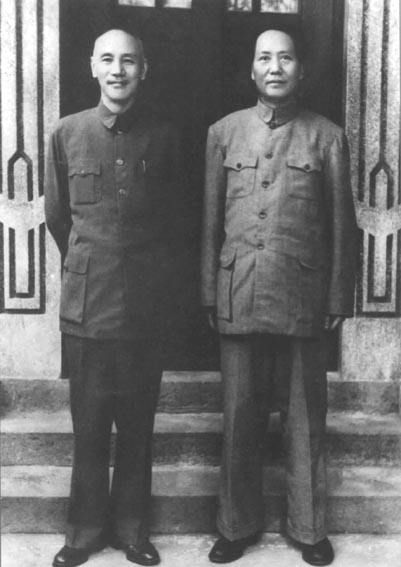
Chiang Kai-shek and Mao Zedong in 1945

Chiang Kai-shek and Mao Zedong in 1945

That is from Harold M. Tanner’s The Battle for Manchuria and the Fate of China: Siping, 1946, which reconstructs the events leading up to and following the battle, and tries to answer the question of whether Siping was truly the turning point that ensured Communist victory in the civil war. While Senator Joseph McCarthy also blamed Marshall’s intervention for “losing China,” a number of more reputable historians have also seen Siping as a key turning point. Tanner however concludes that Chiang’s hope was a false one, in part because the Soviet Union was quietly but effectively supporting the Communists, and both the Nationalists and the Americans were afraid of getting into a direct confrontation with the Soviets:

The Truman administration had decided that while the United States would support Chiang Kai-shek, there would be limits to the extent of that support. Chiang desperately wanted the United States to take a more active role in supporting his government and his army in their struggle against what Chiang portrayed as the Soviet Union’s imperialist designs on Chinese territory. The Truman administration, however, was determined not to get directly involved in the Chinese Civil War, and especially not to challenge the Soviet Union by getting drawn into the struggle in Manchuria.

America was willing to transport Nationalist armies and to supply substantial amounts of weapons and ammunition, but, as we have seen above, American equipment alone could not give the Nationalists a substantial advantage on the battlefields of Manchuria. Even if the United States had been willing to do so, extending unlimited military aid to an army that was pursuing a fundamentally flawed strategy and a government that was proving incapable of winning the political struggle is not likely to have changed failure into success. In any event, the United States did not have unlimited resources to expend on Chiang’s government. Truman’s decision to limit support for Chiang was based on his assessment of American interests and capabilities, including American commitments elsewhere around the globe, and the very real possibility that American embroilment in China could lead to conflict with the Soviet Union.

Marshall’s decision to push for a ceasefire in June 1946 was made in this context, as well as on the basis of his assessment (backed up by the intelligence reports available to him) that the Nationalist Army was simply not capable of achieving victory in Manchuria. Chiang agreed to the ceasefire not only because Marshall was pressuring him to do so (although this was certainly an important factor), but also because he was aware of the limitations of his own armies, the challenges of further operations in North Manchuria, and the possibility that military operations north of the Songhua could elicit a dangerous reaction from the Soviet Union.

The Communist victory in China’s civil war, in this analysis, is ultimately the result of the Cold War and thus of how the Second World War ended. In fact, Peng Shuzhi, a Chinese Trotskyist, made much the same argument back in 1952:

Placed in an unfavorable position in the international situation created by the Second World War, American imperialism was obliged to abandon its aid to Chiang and its interference with Mao. At the same time, the Soviet Union, which had secured a superior position in Manchuria at the end of the war, inflicted serious damage to Chiang’s government and offered direct aid to the CCP. This enabled the latter to modernize its backward peasant army. Without this combination of circumstances, the victory of a party like the CCP, which relied purely on peasant forces, would be inconceivable.

For example, if Manchuria had not been occupied by the Soviet Union but had fallen entirely under Chiang’s control, Chiang Kai-shek would have utilized the economic resources and the Japanese arms in Manchuria to cut off direct connection between the CCP and the Soviet Union. This would have blocked the USSR’s armed support to the CCP. Similarly, the situation would have been quite different if direct intervention against the CCP by American imperialism had been possible. Under either of these two circumstances the victory of Mao Tse-tung would have been very doubtful.

To approach this from another direction, we could recall the defeat of the CCP’s peasant army in the Kiangsi period, 1930-35, when the bourgeois KMT’s power was considerably stabilized as a result of continual aid from imperialism, while the CCP was isolated from the Soviet Union. From this we can also derive sufficient reason to justify the conclusion that today’s victory of the CCP is entirely the result of the specific conditions created by the Second World War.

China raises its target for private-sector hospitals

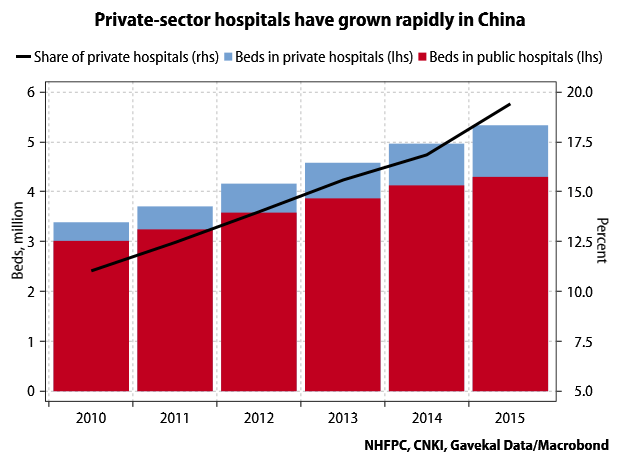
Amid the generally disappointing news on economic reform out of China, one signal I have been keeping an eye on is the government’s intentions on healthcare. A significant component of the previous five-year plan for healthcare, which ended in 2015, was a commitment to raise the private sector’s share of hospital beds to 20% of the national total. In the event they didn’t quite make the target–the final figure was 19.4% for 2015–but I still thought it was a promising way to use China’s planning system to drive liberalization and not just higher output. Healthcare is a fast-growing part of the economy and one where the private sector’s role is obviously increasing, so it is one of the more positive stories in China at the moment.

As many of the healthcare system’s problems, such as corruption and inequality, can arguably be traced to the overwhelming dominance of state-owned institutions, some within China have argued for targeting a much larger private-sector role. But there is an active debate: an authoritative report recently questioned the need to have a quantitative target for raising the private sector’s market share. A regulatory system designed for state institutions is arguably not able to ensure quality as private institutions rapidly proliferate, and scandals and public distrust of private hospitals are a clear issue. So it was not at all clear what would happen to this initiative.

Now the 13th five-year plan for healthcare has finally been published (full Chinese text here), and it does retain a target for raising the private sector’s market share. The new target is to raise private hospitals’ share of total hospital beds to above 30% by 2020 (the plan does not actually use the word “private,” which remains a loaded term in China, instead referring to hospitals “managed by society,” i.e. not the state). This is not a radically higher figure that would force drastic restructuring of the whole healthcare system, but it does maintain a clear, transparent and public commitment to a greater private-sector role. I would call this pretty good news, especially given that there has recently been some backward movement on state-owned enterprises and some other issues.

Public and private hospital beds

How stoves and lamps led to a turning point in China’s reforms

Here is a nice little piece of oral history covering some important episodes in the early history of China’s economic reforms. The translation below is an excerpt from a longer interview with Yang Qixian, a scholar who participated in the reform process in the 1980s (Chinese original here). I like it because it includes both some vivid practical experiences and some theoretical insights.

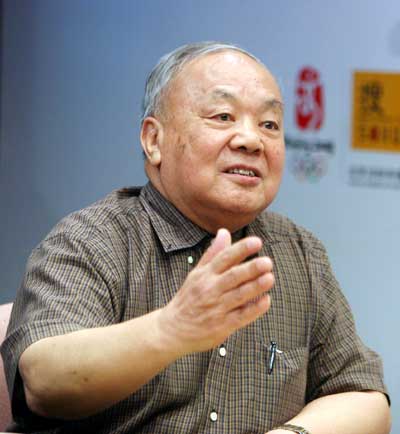
Yang Qixian

Yang Qixian

First, the practical:

In the summer of 1982, Yang Qixian, as a member of the working group formed by the State Commission for Restructuring Economic Systems, went to Changzhou, Jiangsu province to push forward the pilot project for comprehensive reform. At that meeting, there were two things that drew his attention and left a strong impression: the glass chimneys for kerosene lamps, and the “tiger stoves.”

As Yang recalled, because at that time the electricity supply was inadequate, many families used kerosene lamps. The glass chimneys for the kerosene lamps were a commodity whose supply was planned, with the price fixed at RMB0.06. Because they couldn’t make money [at that price], enterprises did not want to produce the lamp chimneys. One residential community could get a quota allocation of one or two every few months, which would then be distributed. The lamp chimneys would first go to the hands of the community leader or production team leader, who could give them to whoever they wanted. Because there was a shortage of lamp chimneys, when people wanted to buy one they would have to treat the team leader to some food and booze; only by having a good relationship could they get the quota. The members of the working group on the comprehensive reform pilot discussed this phenomenon, and decided to liberalize the prices of some small commodities that were not of critical importance, and allow enterprises to organize production according to market demand.

The Changzhou comprehensive reform pilot used the kerosene lamp chimneys as an experiment, and the effect was of course very obvious: the supply shortage was solved very quickly. Yang Qixian recalled that after the price of kerosene lamp chimneys was liberalized, it rose to RMB0.2, a big increase from RMB0.06. “We asked people if they were upset about the price increase, and they said no. The reason they weren’t upset is that before they could sell three eggs for RMB0.06 and buy one glass chimney, now they can sell three eggs for RMB0.2, which can still cover the cost of one chimney,” Yang said. Afterward, the working group wrote a short report about the experiment, and Hu Yaobang [at the time, General Secretary of the Communist Party] immediately approved it; he felt this was a very good example, and that the prices of small commodities should be gradually liberalized.

The situation of the “tiger stoves” was similar to the kerosene lamp chimneys. At that time, for people to boil water they had to fire up the coal stove. Because coal was in short supply, in order to conserve coal they would organize “tiger stoves” [in the area around Shanghai, a traditional name for a local store providing hot water, tea and even baths]. The water jugs were lined up on the stove, and once the water boiled you only had to spend RMB0.01 to fill a jug and take it home.

But tiger stoves could only be run by a collective, and so there were only a few in each city. When people wanted hot water, they would have to walk a long way–it was really not convenient. In the Changzhou reform trial, the working group decided to allow individuals to run tiger stoves, and also allow them to buy coal. Because of this loosening, the number of tiger stoves multiplied, and the price did not rise. People did not have to go so far to get hot water. The working group also wrote up this example in a report, and Hu Yaobang approved it, saying that small businesses should not be excessively restricted, and must be liberalized.

It is quite amazing that a discussion about hot water supply in one city of one province went all the way to the top of the Communist Party hierarchy.

Next, a more theoretical insight:

Another event that made a deep impression on Yang was the International Symposium on Macroeconomic Management held in September 1985, which was a landmark in the history of China’s reform and ideological emancipation. Because it was held on a boat called the “Bashan,” running from Chongqing to Wuhan, the media and scholars have called it the Bashan boat conference. …Foreign experts attending the meeting included Alec Cairncross from the UK, James Tobin from the US, Otmar Etminger from West Germany, Michel Albert from France, Janos Kornai from Hungary, Kobayashi from Japan, as well as Edwin Lim and Adrian Wood from the World Bank. Representatives from China included Xue Muqiao, An Zhiwen, Ma Hong, Liu Guoguang, Gao Shangquan and other scholars and workers, for a total of more than 30 people. As one of the organizers, Yang Qixian drafted the conference synthesis report.

Yang recalled that, although it was only a seminar, and the meeting was not long, it still had a far-reaching impact. The reason is that in the earlier stages of reform and opening up there was a lot of controversy about what the goal of reform should be. In 1984, the Third Plenary Session of the 12th Central Committee clearly put forward the concept of a “planned commodity economy.” But how exactly should a commodity economy be run? What should be the target and the model? What reforms are needed to establish a commodity economy? At that time their views affected us greatly.

For instance, Kornai of Hungary suggested that there were only two kinds of macroeconomic management in the world: one regulates mainly through administrative methods, the other regulates mainly through market methods. The first category can be divided into direct administrative regulation, such as the Soviet model, and indirect administrative regulation, such as the Yugoslav model. The second category can be divided into completely uncontrolled market regulation and market regulation under macroeconomic management. Kornai said that China should follow the model of market regulation under macroeconomic management. “These ideas were a great inspiration to us at the time, and later the target model of our reforms basically followed this line of thought,” Yang said.

These stories are great, and very appealing in their straightforward simplicity, though hindsight probably makes the decisions seem easier than they actually were at the time (the Bashan boat conference and Kornai’s influence have come up before on this blog, in this post).

The practitioner’s view of economic development: “We do what we must and then adjust as we go along”

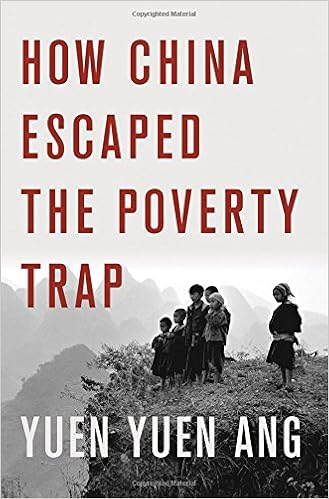
The new book by Yuen Yuen Ang, How China Escaped the Poverty Trap, has some nice passages that give some of the flavor of how Chinese government officials went about developing their local economies. This practitioner’s perspective is often quite distant from the questions that animate scholars of economic development. Here is a sample:

My interviews with local bureaucrats in China deliberately included a question that has long been debated in academic circles: In your locality, do you think it was effective governance that led to growth or growth that enabled the governance to improve? The bureaucrats were consistently astonished by the naiveté of the question. To them, the answer is obvious: causation runs both ways. One regular cadre in a city-level agency, who had no scholarly training whatsoever, gave a memorably insightful reply:

“The economy and the bureaucracy interact and change together. If the economy is poor, then, inevitably, it will be difficult to improve governance. …In reality we do what we must and then adjust as we go along… There must be a process. It’s impossible for a government to reform overnight.”

More bluntly, another bureaucrat bureaucrat griped that the question posed was flawed. In his words, “To say that we should grow the economy and then improve the business environment, or vice versa, are both misguided. Obviously, we must pursue both at the same time, like the pursuit of material and spiritual development.”

These replies suggest that development as a coevolutionary process is a plain reality to many practitioners and probably lay observers too. It is no wonder that they dismissed the question as academic. …

How did development actually happen in Forest Hill? Did the city’s leaders heed the advice of international experts to establish good governance as a first step of development, namely, by furnishing secure property rights to private entrepreneurs and resolutely eradicating corruption? Or did it model itself after the developmental states of East Asia, by establishing technocratic state agencies and channeling resources toward targeted industries? Alternatively, did the city make do with “good enough governance,” delivering only minimal government performance and waiting until it had become sufficiently wealthy before improving governance? The answer to all three hypotheticals is no.

Ang’s own theory of China is a variant on the “regionally decentralized authoritarianism” or Chinese-style federalism argument, which puts the emphasis on the striving of local officials to generate growth. In particular, her book has some good detail on the systems for motivating and evaluating local government officials. But she also, correctly in my view, emphasizes how the pressure on local officials to generate growth ends up having very different outcomes depending on the characteristics of different localities.

The core of the book is a set of detailed narratives of a few different localities in China. These emphasize that government officials did not follow a consistent strategy, or gradually perfect institutions, but instead continuously adapted in response to changes in the economy. Rather than a one-way causation from institutions to economic outcomes, or vice versa, there is a constant feedback between the two. These accounts are well done and pretty convincing for the take-off period of the 1980s and 1990s. The Why Nations Fail crowd has never really managed to provide a decent account of Chinese economic development (which is a bit like having a theory of linguistics that fails to explain the grammar of English), and accounts like this that tackle the detail of China’s actual institutions are good to have as a corrective.

Still, Ang’s narratives get a bit less detailed and convincing as they move into the 2000s. For a book about economic development there is sometimes a vagueness about what has actually happened in China’s economy over the past decade and a half. The impact of the rise of township-and-village enterprises in the 1980s and the privatization of state-owned enterprises in the 1990s are well covered. Yet there is almost no discussion of the growth in foreign investment and exports that followed China’s entry into the World Trade Organization in 2001, or of the enormous real-estate boom that got started around 2003 and is still running, or of the global financial crisis of 2008 and the subsequent surge in infrastructure spending. The focus of the book is, as the title indicates, on the early stages of China’s growth boom, so these are not crippling omissions. But digging into these developments more would help answer the broader question of whether the feedback between economic change and bureaucratic decision-making in China has always been as positive as it was in the early stages of its growth take-off.

Zhao Lingmin on the roots of Chinese elite support for Trump

A definitive overview of this question is over at Ma Tianjie’s Chublic Opinion, but one of the sources in that piece I thought was worth digging into a bit more. It’s a column by Zhao Lingmin, originally published on the FT Chinese site back in October, that focuses on what the enthusiasm for Trump says about Chinese society. My translation follows:

Compared to his American supporters, Trump’s Chinese supporters have two notable differences. One, they have “true love” for Trump. Even though some Americans do not like Trump personally, or even despise him, they have still decided to vote for Trump because of their anger at the status quo. Trump’s supporters in China are not deciding who to vote for, and there are no real interests at stake; many of them simply like Trump himself. Second, it is widely recognized that some of Trump’s supporters in the US are not of high social status and belong to the lower middle class, so Hillary Clinton could say that half of them are “deplorables,” or “people who feel that the government has let them down, the economy has let them down.”

But among Trump supporters in China, there are some successful people and members of the elite: they are well-educated, rational, with high social status. On this point, you only have to look at WeChat or Zhihu; in those places public criticism of Trump’s remarks is rare, and there are a lot of people who excuse them or give them a positive spin.

Why is the Chinese elite not like the American elite in opposing Trump? There are different national conditions, there are differences of opinion, but in my opinion the most important difference between the two countries’ elites is the different environments they have grown up in. This has led some Chinese elites to endorse Trump’s views on political correctness, terrorism, Islam, and other issues.

Trump has been most criticized for his undisguised degradation and humiliation of immigrants, Muslims, and women, which for many American elites, whose awareness of equal rights comes from their baptism in the civil rights movement, is completely unacceptable. The recent revelation of the recording in which Trump insults women touched the bottom line of American society, and made some of the rest of the elite draw the line. By contrast, some of China’s elite, having risen up in an atmosphere of social Darwinism, do not find Trump’s statements so offensive as to cause anger and condemnation—although they do not quite endorse them either.

The past 30 years of China’s economic growth and social development began after a period of chaos [i.e., the Cultural Revolution], and there was no Enlightenment-like intellectual movement. Government officials, in order to mobilize reform, exaggerated the evils of the old benefit system as “everyone eating from one big pot,” which, with the assistance of some scholars, led to an almost complete social consensus that a market economy means completely free competition. With no restraint from ethics or rules, the “law of the jungle” that the weak are prey to the strong became nearly universal in society. Amid all the worship of the strong and disdain for the weak, an atmosphere of care and equal treatment of disadvantaged groups has not formed. Therefore “political correctness,” which is for the protection of vulnerable groups, basically does not exist in Chinese society, and the language of discrimination, objectification of women, and mockery of disabled people is everywhere.

This way of thinking is further reinforced among some Chinese elites: they succeed because they are better able to adapt to and dominate this kind of environment. In this process, they are hurt by others, they hurt others, and gradually they develop a heart of stone and a feeling of superiority—that their success is due to their own efforts and natural abilities, and the losers in competition must be those who don’t work hard because they are lazy or have some other problems. Therefore, they believe in free competition and personal striving even more than ordinary people, and also feel more strongly that poor people deserve their low position, are more wary of the abuse of welfare by lazy people, and are more supportive of Trump’s attacks on political correctness.

Many Chinese elites feel that the Democratic Party and the left represented by Hillary Clinton has turned a blind eye to the many problems of the black community, such as single mothers and the high crime rate, and put the blame on society rather than black people’s own issues. In order to protect the rights of transgender people, they have gone so far as to ignore public safety and allow them to freely choose whether to use male or female toilers. In the face of this obsession with political correctness, Trump has the courage to face reality and is willing to risk offending people in order to tell the truth—this is honest and admirable.

As for Trump’s insulting remarks about women, the Chinese elite also thinks that this is not such a big deal. You could say that many male members of the Chinese elite are the biggest beneficiaries of the current imbalance between men and women in China. The deformed marriage market has made them insufferably arrogant, and in terms of objectifying and demeaning women they are much worse than ordinary people. In the case of a male journalist who raped a female intern, most of the male colleagues supported him, and maintained that the woman was taking revenge on him for refusing her. In the case of a male professor who was suspended for molesting female students, many colleagues and students argued that the punishment was excessive, and some even doubted the female students’ mental state. In fact, a not inconsiderable number of men do not think there was anything fundamentally wrong with the actions of the journalist and the professor. People who have grown up in this kind of social atmosphere naturally cannot understand why Trump has been universally condemned for some dirty talk.

In addition, the vigilance against Islamic extremism displayed in Trump’s speeches is quite similar to the worldview of many of China’s elite. Since 9/11, “Islamophobia” has become a worldwide phenomenon, and China is no exception. Chinese Islamophobia has domestic causes, but it also cannot be separated from the impact of international events, particularly the refugee crisis and frequent terrorist attacks in Europe over the last couple of years. This has made many people shake their head at the European left, and think that Muslims are just using their high birth rate to occupy Europe and destroy the foundations of European civilization. European intellectuals and elites are so burdened by multicultural policies and political correctness that they cannot reject any plea from the refugees, do not dare to point out any of the issues with refugees, and even downplay crimes committed by refugees. Such naivety and wishful thinking in the end is nothing but nourishing a snake in one’s own bosom. Because of these views, Trump’s talk about banning Muslims and attacking terrorists is more welcomed by Chinese people than Hillary Clinton’s rhetoric about inclusiveness and cooperation.

Looking at the personal style of the two candidates, American elites do not like the fact that Trump’s speech is often illogical, vulgar and extreme. But in China’s imperfect market system, many elites come from rough backgrounds. Furthermore, decades of revolutionary ideology have made the whole society valorize coarseness, slovenliness, and lack of hygiene. This makes many people see Trump’s vulgarity and inconsistency as amusing, straightforward and honest. Hillary Clinton’s image as an orthodox politician, by contrast, leaves many people cold.

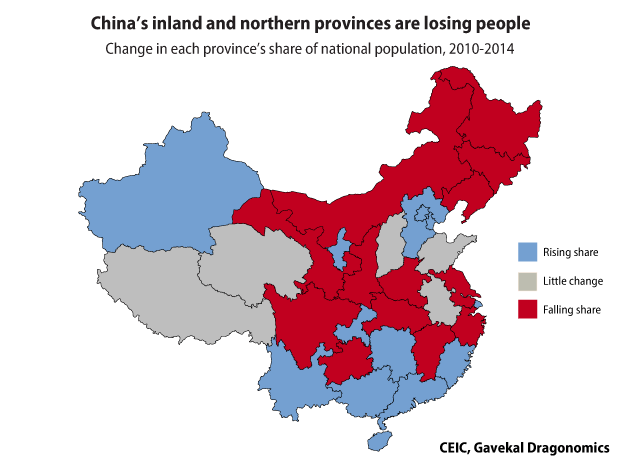
China’s Northeastern Rust Belt is headed for demographic crisis

We’ve been hearing a lot about the economic and political problems of America’s Rust Belt lately, so perhaps this is a good time to take a closer look at the slow-motion crisis that is unfolding in China’s northeastern Rust Belt. The Chinese newspaper Diyi Caijing (aka Yicai Media or China Business News) has over the past two months run a four-part series about the emerging demographic problems in the Northeast, and I think it pulls together what is known about the issue quite well.

This is harder than it might sound: a number of Northeastern cities have stopped publishing population figures in recent years, and data from the 2015 mid-cycle census update has not yet been published. But it seems more likely than not that the severe economic slowdown in the Northeast over the past couple of years has worsened the demographic trends that were already underway. When more data becomes available, which is likely to happen in 2017, the extent of the problem should become quite obvious. (For previous coverage of related issues, see: my maps of six decades of population flows in China; some history of the mass migration into the Northeast in the early 20th century; and portraits of industrial decay outside the Northeast)

Below I translate excerpts from all four articles, which I’ve reorganized a bit by topic (the original reports are here: Part 1, Part 2Part 3Part 4).

The first big problem is a dramatic decline in the birthrate:

The Northeast has a low birthrate, and population growth is stagnating. As early as 1982, the the total fertility rate in the three provinces of Liaoning, Jilin and Heilongjiang had fallen below the global replacement rate [of 2.33], to 1.773, 1.842 and 2.062 respectively, noticeably below the national average of 2.584. Afterward, as the one-child policy was implemented, the total fertility rate of the Northeast fell below 1.0, and in 2010, the the sixth population census showed that it was only 0.75.

What’s behind this fertility situation? There are a lot of state-owned enterprises in the Northeast, and they strictly implemented the one-child policy, so there were not many excess births.

As the “first born” of the People’s Republic, industrialization was earlier and more extensive in the Northeast than in other places. Large state-owned enterprises across the three northeastern provinces provided people with an enviable “iron rice bowl,” but also more stringent birth control. A 58-year-old Harbin taxi driver, Mr. Zhu, told this reporter that in those years, when he used to work at a state enterprise, the pay was high, the benefits were pretty good; he had a lot of face and more confidence in finding a partner. Everyone valued those state-enterprise jobs, so very few people were willing to lose the iron rice bowl in order to have more children than allowed. Even in the countryside, because of the large numbers of state farms and state forests, people needed to keep their iron rice bowls, so very few dared to violate the family-planning rules.

“All these years, among my colleagues, relatives, friends, there is not one who violated the family planning policy. Doing that would mean unemployment, so who would dare?” Mr. Zhu said.

Aside from the family-planning policy, a high urbanization rate is another important factor depressing the fertility rate in the Northeast. Research shows that the fertility rate is inversely related to the urbanization rate–the higher the urbanization rate, the lower the fertility rate. Urbanization in the Northeast preceded rest of the nation by decades. Statistics show that in 1975 the national urbanization rate was 17%, but in the Northeast it was already 35%; in 1990 the national rate was 26% and the Northeast was 48%; in 2010, the national rate reached 50%, but the Northeast was already 58%.

The second big problem is an exodus of people to other provinces:

The Northeast was once a place that attracted a major inflow of people–the “Chuang Guandong” [the massive migration of Han Chinese to Manchuria from the late 19th century through the 1940s] has even today left a deep impression in many people’s memories. But a net inflow of population is now history. According to the Liaoning Blue Book published by the Liaoning Academy of Social Sciences, the fifth population census of 2000 showed there had been a net inflow of 360,000 people into the three northeastern provinces over the previous ten years, but the sixth population census ten years later showed there had been a net outflow of 2 million people.

Luo Dandan, a researcher at the Heilongjiang Academy of Social Sciences, has spent years following up those survey results, and says that the outflow of people from the three northeastern provinces has sped up in recent years. Looking at individual cities, the trend of population outflow is also very obvious. Figures from the municipal statistics bureau of Qiqihar [in Heilongjiang province] show that city had net outmigration of 37,779 people in 2014; the figure was 25,381 people in 2013, so the the outflow is accelerating.

Luo says that in peacetime most population movements are for economic reasons, and that it is uneven economic development in different regions that drives workers to move to places with better job opportunities and higher wages. According to the National Bureau of Statistics, the average urban wage in the Northeast was 57,319 yuan in 2015, below the national average of 62,029 yuan.

Such an obvious gap in income levels drives many young people and technical personnel to choose to “migrate to the southeast like the peacock.” According to a cadre in the Heilongjiang province human resources and social security system, the outflow of university graduates is a major concern for him. Every year in the graduation period of May and June, the hotels near the Harbin Institute of Technology are fully booked with recruiters from Zhejiang and other coastal provinces.

The combined result of these two trends is a population that is aging rapidly:

Because the birthrate is low, the aging of the population in the Northeast is quite serious. According to Liu Kegu, a former vice-governor of China Development Bank, the median age of China’s population was 38 in 2015; but in the Northeast, it was 43, a level that the whole country is not expected to reach until 2027. One direct impact of an aging population is the burden of pensions. The dependency ratio of corporate pensions (the ratio of the number of workers in the pension program to the number receiving a pension) is 1.55 in the Northeast, far below the national average of 2.88. Liaoning is 1.79, Jilin is 1.53, and Heilongjiang at 1.33 is the lowest in the nation.

The low fertility rate has created a serious problem of fewer young people. Demographic statistics show that the Northeast’s share of youthful workers aged 20-39 has fallen from 10% in 1982 to 8.1% in 2010. And in 2010 the Northeast’s share of the population aged 0-19 was 6%, which means that in 2030 the Northeast’s share of the 20-39 youthful workforce will be 6% of the national total.

Zhou Tianyong of the Central Party School argues that this age group is the main economic force in the population, so the decline in the numbers of this group will have a great impact on the economy through labor supply, consumption, investment and other factors.

Another manifestation is the aging of the workforce. In terms of absolute numbers, the working-age population in the Northeast is still quite substantial, but one-third of this population is aged 45-64, so the aging of the workforce is indeed serious.

Population movement also further exacerbates the aging of the population in the Northeast. The Northeast has experienced a net out-migration of population for 20 years, and more than 60% of Northeasterners who leave do so for economic or business reasons. An official report has warned that, because of the fertility level and migration trends in the Northeast, the region is already locked into a trajectory of rapid population loss.

Is there anything to be done? The recent economic troubles have in fact gotten a lot of official attention, and the central government is backing a new version of the “Revitalize the Northeast” campaign. But it does not seem like the demographic aspects are being discussed much:

This reporter has attended many meetings on “Revitalizing the Northeast,” and heard many Northeastern governors and mayors discuss the road to revitalization, but unfortunately not one mentioned that the Northeast is facing a population crisis.

population-shift-2010-14

Still waiting for signs of real centralization in China

We’ve been hearing a lot lately about Xi Jinping’s “consolidation of power” within the Communist Party. But it is still far from clear whether all this consolidation has led to any fundamental change in the relationship between the central authorities and China’s many local governments. One commentator interprets Xi’s consolidation of authority, most recently in arranging for his own designation as the “core” of the leadership, as a way of ensuring that local-level cadres know that they need to follow Xi’s priorities and not anyone else’s. The most sympathetic account of Xi’s concentration of authority is that it is driven by his need to overcome local resistance to wide-ranging institutional and economic reforms (I don’t subscribe to this view myself, but it is held by some reasonable people).

These may indeed be among Xi’s intentions, but it’s hard to get a window on the Party’s internal operations to tell how successful he has been in carrying them out. Following the money is one alternative to reading the tea leaves: the institutions that drive the flows of money between central and local governments are certainly one very important aspect of how centralized, or not, China’s system might be. So here’s a chart to illustrate:

central-local

In the chart, the central government’s “own spending” is that financed by taxes collected at the central level, while local government “own spending” is that financed by taxes collected at the local level. The remainder is spending by local governments financed by taxes collected at the central level and then transferred to local governments. These transfers are one of the most important parts of China’s fiscal system, but they are often skipped over in discussions of central-local finances (I think in part because the statistics on them are somewhat fiddly and not easily available). Perhaps because of this gap, there is a widespread view that the main problem in China’s fiscal system is excessive centralization of revenues; as I have argued before, this view is totally wrong. In fact, as the chart shows the successful (and very necessary) fiscal centralization in 1995 has steadily and gradually eroded. And there has no been no notable reversal of this trend under Xi Jinping.

Arguably what is needed now is another round of rationalization and centralization of the fiscal system: the explosion of off-balance-sheet local government debt is one indication that actual decentralization is much more advanced than shown in my chart. This is one reason why I was  quite excited when Lou Jiwei was appointed finance minister in 2013. China has long been poorly served by its finance ministers, most of whom have been tax-maximizing bureaucrats rather than systematic economic thinkers. Lou by contrast has a clear view of the whole economy, and is known for his controversial public comments on matters like food imports and social benefits that most public officials will not touch. I’m sad to see him go now, since there is still a shortage of straight-talking economic thinkers at high levels of government. But while he has made progress on some important technical reforms, there has not really been a fundamental reshaping of central-local fiscal relations. Institutional inertia is probably the simplest explanation, but some blame probably also has to go to those in the system who have been arguing for even more fiscal decentralization.

So while we may be seeing attempts at various types of re-centralization in China, both in terms of political imagery and fiscal structure, it’s not clear yet that these attempts are succeeding, or must necessarily succeed. China in fact seems to be a good example of a thesis by the economic historian Charles Kindleberger about how the balance of power between central and local authorities tends to evolve:

Under normal circumstances, however defined, but with economic and social change occurring slowly, there is a strong preference for pluralism [Kindleberger’s term for local control]. Lesser units can experiment, adjust to local conditions, including tastes, compete with other cities and towns to their mutual benefit (as a rule). There is a possibility that local units give the individual more freedom, but this last in many communities is not guaranteed.

When a society is confronted with crisis, such as [war, depression, inflation], it is usually desirable, and in some cases necessary, to shift power to the center, especially if it has been widely dispersed. Such shifting, however, is not readily accomplished, and may not be possible at all because of institutional inertia.

The quote is from his Centralization versus Pluralism: a historical examination of political-economic struggles and swings within some leading nations, a somewhat obscure work that I did not know about until Perry Mehrling wrote about it in a different context.